

Imagine standing near a railway switch as a runaway train hurtles down the track toward five unsuspecting people. You realize immediately that doing nothing will result in a horrific tragedy involving multiple casualties. However, you spot a lever within reach that can divert the train onto a side track where only a single individual stands. This scenario captures the essence of the trolley problem, a famous thought experiment introduced by philosopher Philippa Foot in 1967. It forces you to grapple with a deceptively simple calculation regarding the value of human life.
While the math suggests that saving five lives is better than saving one, the decision rarely feels straightforward when you are the one making it. Your logical mind might argue for the greater good, yet your gut instinct often recoils at the idea of actively causing someone’s death. This internal conflict highlights the tension between utilitarian ethics and our deep-seated moral duties. Philosophers use this puzzle not to find a correct answer, but to expose the hidden architecture of how you judge right from wrong. It challenges you to define where you draw the line between being a bystander and becoming an active participant.
Key Takeaways
- The Trolley Problem highlights the fundamental tension between utilitarian ethics, which prioritize the greater good, and deontological duties that forbid actively causing harm to individuals.
- Variations of the dilemma, such as the footbridge scenario, reveal that moral intuition is deeply influenced by the distinction between passive observation and active physical intervention.
- This thought experiment has evolved from a philosophical puzzle into a practical necessity for programming ethical decision-making algorithms in autonomous vehicles.
- Ultimately, the scenario serves as a diagnostic tool to help individuals understand their own ethical boundaries rather than a math problem with a single correct solution.
Philippa Foot’s Classic Switch Dilemma
Picture yourself standing beside a railway track as a heavy runaway trolley speeds toward five workers who are unable to move. You quickly realize that these individuals will almost certainly be killed if the vehicle continues on its current path. However, you notice a lever within your reach that controls a switch in the tracks. Pulling this lever would divert the trolley onto a side spur where only one person is tied down. This crucial moment forces you to confront the immediate mechanics of the situation before weighing the moral implications.
Your decision rests on a stark choice between active intervention and passive observation. If you choose to pull the lever, you become the direct cause of one person’s death to secure the survival of five others. Many people initially argue that the math is simple because saving five lives seems objectively better than saving just one. Yet doing nothing allows the original tragedy to unfold without your direct physical involvement. This hesitation reveals the deep tension between minimizing harm and the reluctance to actively take a life.
Philippa Foot originally designed this thought experiment to test our intuitions about the doctrine of doing versus allowing harm. While a utilitarian perspective demands that you pull the lever to maximize the overall good, other ethical frameworks suggest that killing an innocent person is wrong regardless of the consequences. By placing you in the role of the switchman, the scenario strips away real-world complexities to isolate this specific moral variable. It challenges you to define where your ethical boundaries lie when faced with a catastrophic trade-off.
The Bridge and The Fat Man Variation

Just when you think you have resolved the moral calculus of the lever, philosopher Judith Jarvis Thomson introduces a twist that complicates everything. Imagine you are now standing on a footbridge overlooking the tracks, watching the runaway trolley hurtle toward the five workers. Beside you stands a very large man whose bulk is sufficient to stop the train if he were to fall onto the tracks. Unlike the previous scenario, there is no switch to flip. The only way to save the five people is to physically push this stranger off the bridge. This variation forces you to confront the difference between foreseeing a death as a side effect and directly causing a death as a means to an end.
While the mathematical outcome remains identical, with one life sacrificed to save five, your gut reaction probably screams that this action is wrong. Studies consistently show that while most people agree to pull the lever, the vast majority refuse to push the man. This hesitation highlights a deep psychological distinction between impersonal mechanics and personal physical force. By pushing the man, you are using a human being merely as a tool to achieve a desired outcome, which violates fundamental moral duties. It suggests that our morality is not just about counting numbers but also about how we interact with one another.
This visceral resistance challenges the strict utilitarian view that the ends always justify the means. In the lever scenario, the death of the lone worker is an unfortunate side effect of diverting the train, but pushing the man makes you an active agent of killing. Philosophers often use this distinction to explore the doctrine of double effect, which permits causing harm as a side effect but forbids it as a direct intention. The bridge scenario reveals that moral intuition is heavily influenced by proximity and physical involvement. You must decide if the method of saving lives matters as much as the number of lives saved.
Utilitarian Calculus Versus Kantian Duty
When you look at the track switch, your instinct might be to count heads and choose the outcome with fewer casualties. This approach aligns with Utilitarianism, a framework championed by philosophers like Jeremy Bentham and John Stuart Mill. From this perspective, morality is essentially a math problem where the goal is to maximize overall happiness and minimize suffering. By pulling the lever, you are performing a utilitarian calculus that values five lives over one regardless of the specific actions required. Consequently, the decision rests solely on the consequences rather than the method used to achieve them.
However, hesitation often strikes when you realize that pulling the lever requires you to actively participate in someone’s death. Immanuel Kant argued against this type of calculation, suggesting that certain moral duties are absolute and cannot be violated for the sake of convenience. Under this deontological view, human beings possess inherent dignity and must never be treated merely as a means to an end. By sacrificing the lone worker to save the others, you are effectively using that individual as a tool to solve your problem. A strict Kantian would likely refuse to touch the lever because the act of killing is fundamentally wrong.
This friction between outcome-based logic and duty-based rules creates the core tension of the trolley problem. You are forced to choose between being a passive observer of a tragedy or an active agent in a smaller one. While the utilitarian choice seems logical on paper, the emotional weight of violating a moral rule often feels intuitively wrong. These opposing frameworks demonstrate why ethical decision-making is rarely black and white in the real world. Understanding these theories helps you articulate exactly why the dilemma feels so impossible to resolve.
Algorithmic Morality in Self-Driving Cars
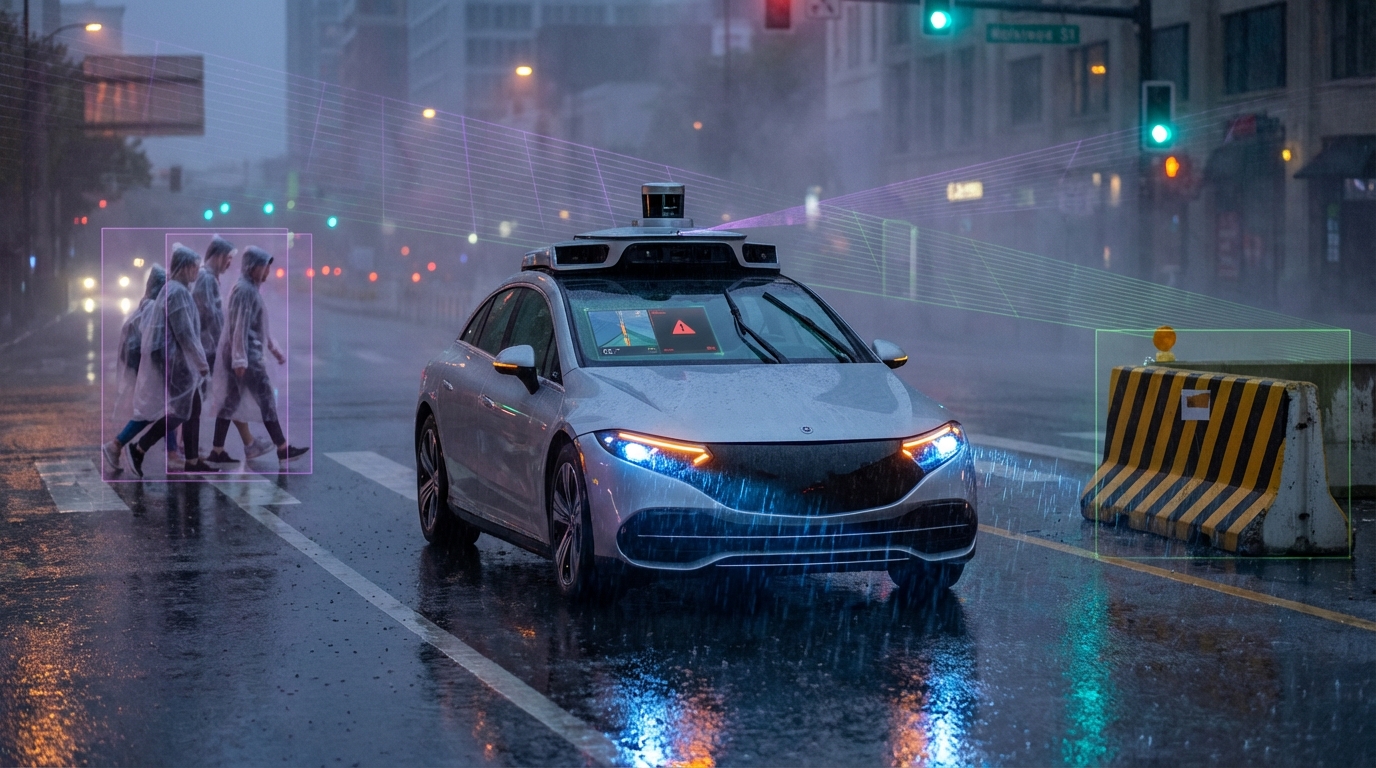
While the classic trolley scenario might feel like a hypothetical exercise, self-driving technology turns it into a practical reality. You might wonder how an autonomous vehicle decides what to do when a collision is unavoidable. Engineers must program these cars with specific algorithms that determine how they react in emergencies, effectively coding morality into the machine. Instead of a human driver making a panicked reaction, the artificial intelligence relies on pre-determined logic to assess the value of different outcomes. This shift places the burden of ethical decision-making on software developers long before an accident ever occurs.
Determining the correct choice for an algorithm is far more complicated than simply counting lives to minimize casualties. Researchers at MIT created the Moral Machine experiment to see how people around the world prioritize different lives in these crash scenarios. You might be surprised to learn that cultural background plays a massive role in whether someone chooses to save the young over the elderly or pedestrians over passengers. These conflicting values make it incredibly difficult for manufacturers to create a universal code of ethics for their fleets. Consequently, the car you ride in may eventually need to adhere to local moral standards rather than a single global rulebook.
Beyond the philosophical debate, these programmed decisions introduce a legal nightmare regarding liability and insurance. If a car is programmed to sacrifice its passenger to save a crowd of pedestrians, you have to ask who is responsible for that death. Manufacturers face the daunting task of justifying these algorithmic choices to regulators and the public in the aftermath of a tragedy. This reality forces society to agree on acceptable risks before fully autonomous vehicles can dominate our highways. Solving the trolley problem is no longer just an intellectual puzzle but a prerequisite for the future of transportation.
What the Trolley Problem Reveals About You
The trolley problem is not about solving a puzzle with a single correct solution. It serves as a mirror that reflects your own moral intuitions and the hidden frameworks guiding your daily choices. By forcing you to decide between active intervention and passive observation, these scenarios highlight the heavy burden of responsibility we all carry. You might find yourself torn between the logic of saving the most lives and the visceral feeling that causing harm to an innocent person is inherently wrong. This internal conflict is exactly what philosophers intended to provoke when they designed these impossible situations.
Grappling with these theoretical dilemmas sharpens your ability to handle complex ethical situations in the real world. As artificial intelligence and autonomous vehicles become more prevalent, the abstract questions posed by the trolley problem are becoming urgent practical realities. You are no longer just an observer in a philosophy classroom but a participant in a society that must determine how to program morality into machines. Understanding the nuances of these choices helps you engage more deeply with current debates regarding technology and public policy. It reminds you that every decision has weight and requires careful consideration of both intent and consequence.
Embracing the discomfort of these unanswerable questions is a crucial step toward ethical maturity. When you analyze your hesitation to pull the lever, you gain valuable insight into the value you place on individual rights versus the greater good. These thought experiments ensure that you never take the concept of right and wrong for granted. They challenge you to remain critical of your instincts and open to understanding perspectives that differ from your own. The trolley problem teaches us that being moral is an ongoing process of questioning rather than a static state of being right.
Frequently Asked Questions
1. What is the core conflict in the trolley problem?
This thought experiment forces you to choose between a utilitarian calculation of saving the most lives and a moral duty to avoid actively killing someone. You must decide if the ends truly justify the means when the cost is a human life.
2. Who created the trolley problem?
Philosopher Philippa Foot introduced this famous dilemma in 1967. She designed it to explore the nuances of the doctrine of double effect and to challenge how we distinguish between doing and allowing harm.
3. Is there a right answer to the dilemma?
There is no universally correct solution because the puzzle serves as a diagnostic tool for your ethics rather than a math problem. It aims to expose the internal clash between your logical mind and your moral instincts.
4. Why does pulling the lever feel so difficult?
Even though saving five people makes logical sense, pulling the lever requires you to become an active agent in someone’s death. This physical intervention triggers a deep emotional response that often overrides simple calculations of the greater good.
5. What is the difference between active and passive choices here?
A passive choice involves doing nothing and allowing the tragedy to unfold on its own course. An active choice requires you to physically intervene and change the outcome, making you directly responsible for the consequences.
6. Why is this thought experiment relevant today?
The trolley problem helps us handle modern ethical challenges in areas like artificial intelligence and autonomous vehicle programming. As machines begin making decisions that affect human safety, understanding these moral frameworks becomes essential for engineers and society.
{
“@context”: “https://schema.org”,
“@type”: “Article”,
“headline”: “The Trolley Problem Explained: Navigating Ethical Dilemmas”,
“description”: “Explore the Trolley Problem explained. Would you pull the lever to save five lives? Dive into this famous ethical dilemma and the philosophy of moral choices.”,
“url”: “https://philosopedia.org/the-trolley-problem-explained-navigating-ethical-dilemmas/”,
“mainEntityOfPage”: {
“@type”: “WebPage”,
“@id”: “https://philosopedia.org/the-trolley-problem-explained-navigating-ethical-dilemmas/”
},
“image”: [
“https://philosopedia.org/wp-content/uploads/2025/12/featured-1764771947871.jpg”
],
“datePublished”: “2025-12-03T14:25:58.784974+00:00”,
“dateModified”: “2025-12-04T14:01:48.553112+00:00”
}