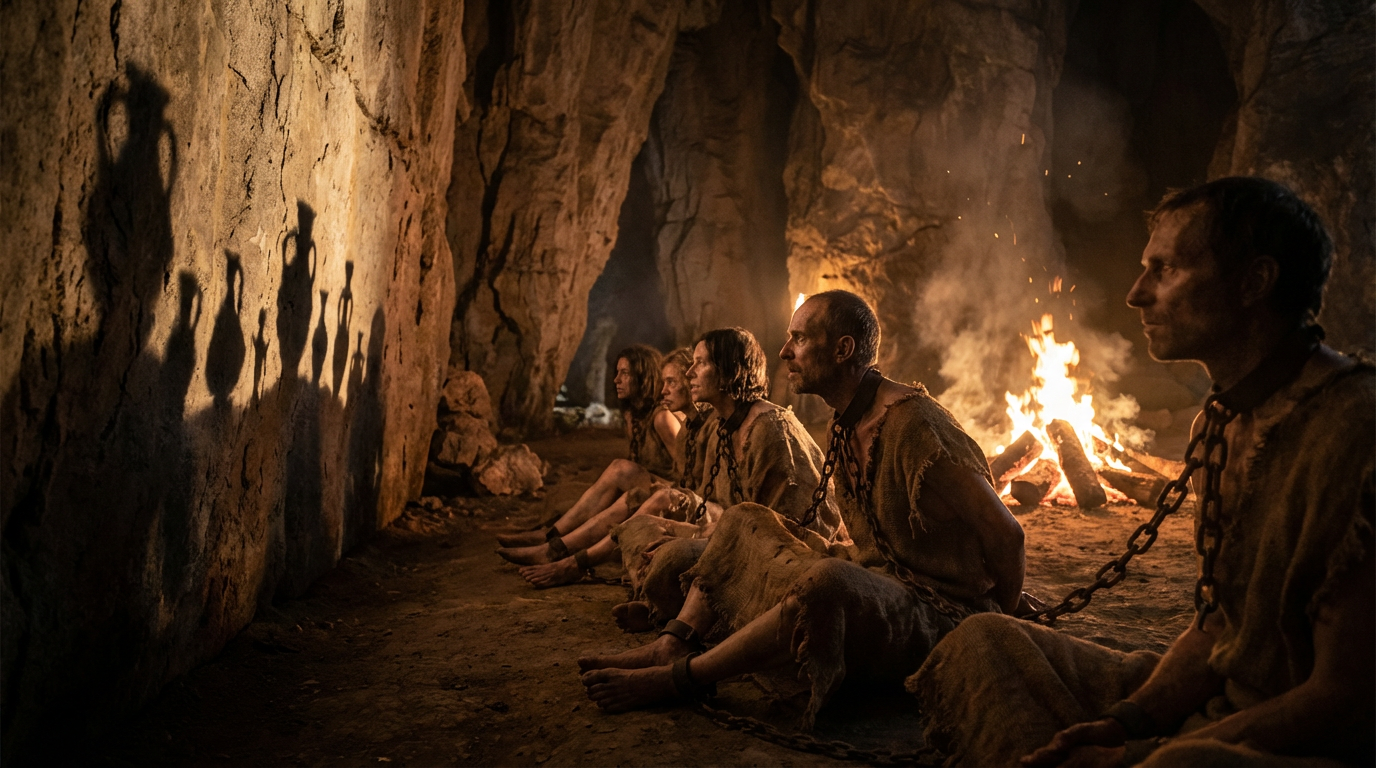
Imagine yourself chained deep inside a cavernous underground chamber since birth, with your head fixed so you can only stare at the stone wall in front of you. Behind your back burns a fire, and puppeteers walk along a raised path casting shadows of various objects onto the wall you face. For you and your fellow prisoners, these dancing silhouettes are not merely reflections but the entirety of existence. Plato uses this striking imagery in Book VII of The Republic to challenge how we perceive the world around us. He argues that most of us live like these prisoners, mistaking sensory appearances for the absolute truth.
If you were suddenly released from your bonds and forced to look at the fire, the sudden brightness would likely cause you pain and confusion. Your eyes would struggle to adjust as you stumbled out of the cave and into the blinding light of the real world. This difficult ascent represents the philosopher’s journey from the realm of opinion to the realm of true knowledge. By leaving the darkness, you eventually encounter the sun, which Plato equates with the Form of the Good and the source of all truth. This suggests that genuine understanding requires a radical shift in perspective and the courage to question what seems obvious.
Returning to the darkness to share your discovery brings a new set of challenges, as those who remain chained often react with hostility toward the enlightened. They cannot comprehend a reality beyond the shadows they have always known and may even consider your new vision to be a form of madness. This part of the allegory serves as a warning about the resistance society often shows toward new ideas or uncomfortable truths. Plato invites you to examine the shadows on your own wall and ask if you are seeing reality as it is or just a projection. Ultimately, the allegory compels you to seek the light of wisdom even when ignorance feels safer.
Key Takeaways
- Plato uses the imagery of prisoners watching shadows to illustrate how humans often mistake sensory illusions and superficial appearances for absolute reality.
- The ascent from the cave represents the painful and difficult journey from ignorance to enlightenment, requiring the courage to question familiar beliefs.
- The sun symbolizes the Form of the Good, serving as the ultimate source of truth that allows the mind to move beyond mere opinion to genuine understanding.
- Returning to share wisdom is fraught with danger, as society often reacts with hostility and ridicule toward those who challenge its comfortable ignorance.
The Prisoners and the World of Shadows
Imagine yourself bound in a dark subterranean chamber where movement is impossible and your gaze is fixed permanently on a blank stone wall. For the prisoners in Plato’s thought experiment, this rigid confinement is the only reality they have ever experienced since birth. Behind you burns a fire that casts a dim light, but you are prevented from turning around to see its source or the walkway behind your back. Instead of seeing the actual objects or people passing behind you, you only perceive the flickering silhouettes projected onto the surface in front of you. This limited perspective forces you to accept these distortion-prone shapes as the absolute truth of existence. It serves as a stark illustration of how restricted sensory perception can trap the mind in a world of total illusion.
The deception goes deeper as puppeteers walk along a raised path behind the prisoners while holding up various figures and artifacts. Because the heavy chains prevent you from seeing these manipulators, you naturally attribute life and agency to the shadows themselves. When a carrier speaks or makes a sound, the echo bouncing off the cave wall seems to come directly from the passing silhouette rather than the person behind you. You and your fellow captives would likely develop a complex system of naming and categorizing these dark shapes as they parade by. In this closed system, wisdom is defined merely by how well you can predict the sequence of these passing phantoms.
Plato uses this grim imagery to suggest that your ordinary view of the world might be just as illusory as those dancing shadows. The prisoners represent the uneducated human soul trapped by superficial sensory experiences and unquestioned cultural assumptions. By mistaking the representation of an object for the object itself, you remain unaware of the higher reality that exists outside the cave. This state of ignorance is comfortable because it is familiar, yet it keeps the mind imprisoned in a realm of mere belief rather than true knowledge. Breaking these mental chains requires a difficult shift in perspective that many are initially unwilling to make.
The Agonizing Journey Toward the Light
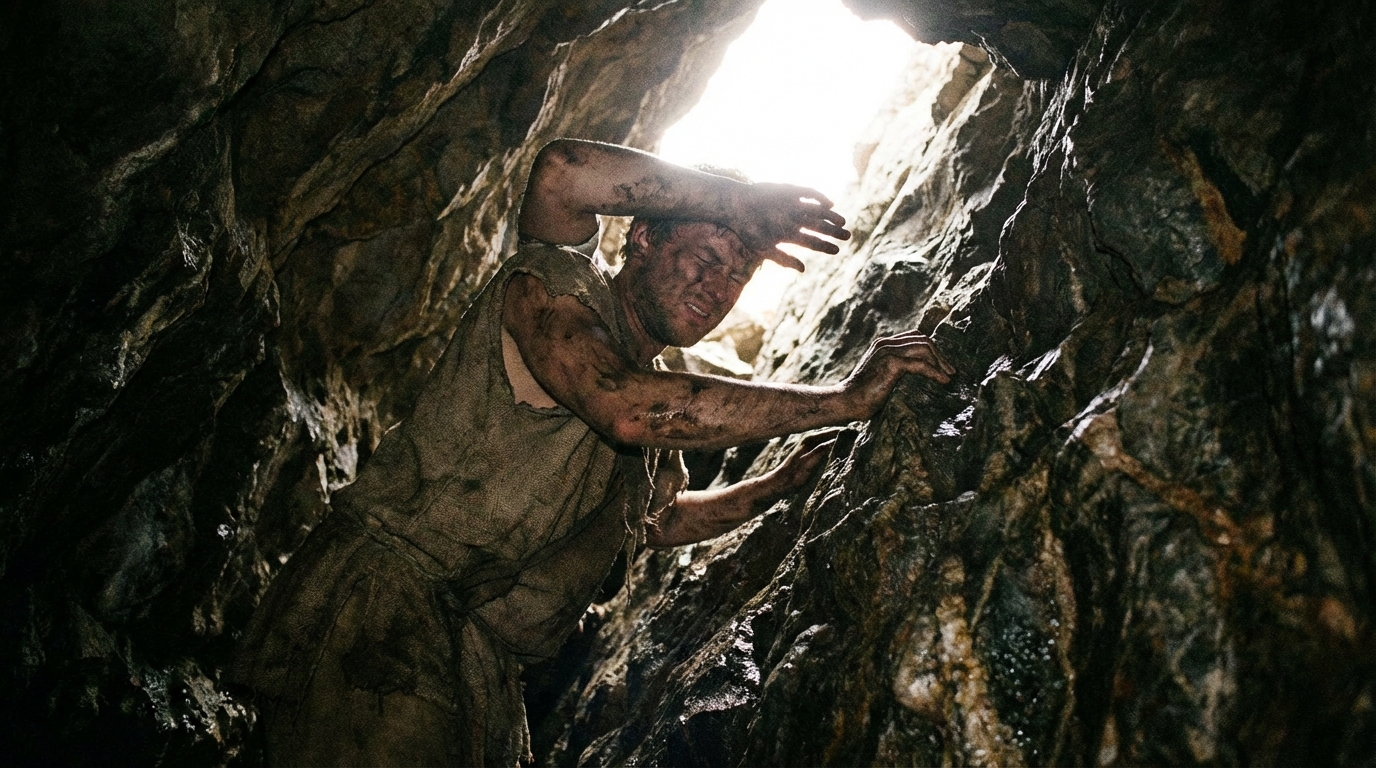
Imagine the sheer shock of being suddenly released from chains you have worn your entire life. When you are compelled to stand up and turn your neck, the movement causes immediate physical distress and confusion. Plato describes this ascent not as a gentle awakening, but as a rugged and steep climb out of the subterranean darkness. You are effectively dragged against your will into a brightness that initially feels more like a punishment than a reward. This part of the allegory emphasizes that the transition from ignorance to knowledge is often difficult and deeply uncomfortable.
Once you step into the open air, the brilliance of the sun overwhelms your eyes after years of seeing only dim shadows. At first, the glare causes such intense pain that you instinctively want to retreat back to the safety of the dark cave. You find yourself unable to see the actual objects that create the shadows or the reality that surrounds you. It takes time and patience for your vision to acclimate to this new environment and accept the sunlight. Plato uses this blinding experience to illustrate how encountering the raw truth requires a painful period of adaptation.
As your eyes slowly adjust to the intensity of the daylight, the world begins to take shape in ways you never imagined. You start by looking at shadows and reflections in the water because looking directly at things is still too difficult. Eventually, you gain the strength to gaze upon the stars, the moon, and finally the sun itself. This gradual progression symbolizes the philosophical journey from perceiving mere illusions to grasping the highest form of reality. The agony of the ascent is ultimately justified by the profound clarity and understanding you achieve at the end.
The Sun as the Ultimate Form of Good
When you finally step out of the cave, the brilliance of the sun might feel overwhelming at first. Just as the fire inside the cave cast artificial light on manufactured objects, the sun illuminates the actual world with pure truth. Plato uses this powerful celestial body to represent the Form of the Good, which is the highest object of knowledge in his philosophy. Without the sun, your eyes would never perceive the vibrant colors and true shapes of the reality surrounding you. It transforms your understanding from mere opinion based on shadows to genuine intellectual insight.
Beyond simply lighting up the physical world, the sun serves as a metaphor for the ultimate source of reality and existence. You can think of the Form of the Good as the intellectual equivalent of the sun in the visible realm. Just as the sun provides the energy for living things to grow, the Good grants being and essence to the abstract Forms you study. It allows your mind to grasp complex concepts like justice, beauty, and truth rather than just their imperfect reflections. Reaching this level of understanding requires you to look past sensory perception and engage in rigorous philosophical reasoning.
The Tragedy of Returning to the Cave
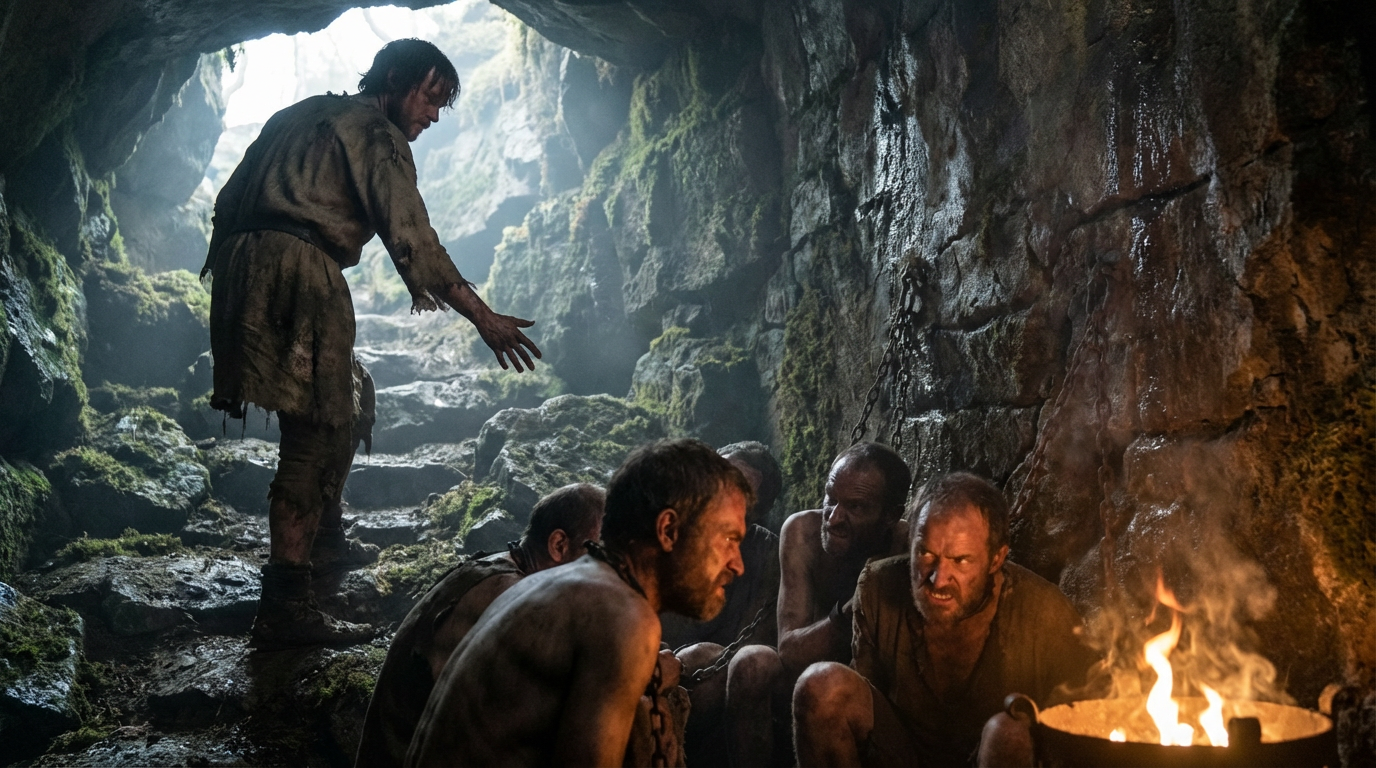
Once you have witnessed the radiant truth outside the cave, you might assume your journey is complete, but Plato insists on a difficult sequel. The enlightened philosopher bears a heavy moral obligation to descend back into the darkness to liberate those still trapped in ignorance. As you stumble back into the gloom, your eyes struggle to readjust to the shadows, making you appear clumsy and confused to the prisoners who never left. They perceive your new perspective not as wisdom, but as a dangerous affliction that has ruined your sight. Instead of welcoming your insights, they ridicule you and fiercely defend the only reality they have ever known.
This specific part of the allegory serves as a grim warning about the hostility that often greets radical new ideas. When you attempt to explain that the shadows on the wall are merely illusions, the prisoners react with fear rather than curiosity. Their comfort lies in the familiar patterns they have memorized, and they view your disruption as an existential threat. Plato suggests that if given the chance, these chained individuals would violently attack or even kill anyone trying to drag them into the light. It is a powerful reminder that possessing the truth does not guarantee you will be heard or understood by the masses.
Applying this ancient metaphor to modern life reveals that we are not so different from the prisoners staring at the cave wall. We often curate our own digital echo chambers where comfortable lies are easier to digest than the complex and blinding truth. The challenge you face today is distinguishing between the projected shadows of social media and the authentic reality existing beyond your screen. Plato ultimately challenges you to question your deepest certainties and remain willing to face the glare of knowledge. True enlightenment requires the courage to turn around and walk the steep path upward, no matter how comfortable the darkness feels.
Questioning Your Reality Beyond the Shadows
Plato’s Allegory of the Cave challenges you to question the reality you perceive every day. The prisoners chained in darkness represent the state of ignorance where shadows are mistaken for the absolute truth. By forcing you to look at the fire behind the scenes, Plato illustrates how easily we can be manipulated by projections and sensory illusions. Recognizing that the flickering shapes on the wall are not real is the first necessary step toward intellectual freedom. This metaphor serves as a timeless reminder that what you see with your eyes is often just a fragment of a much larger picture.
Stepping out of the cave symbolizes the difficult but rewarding journey from mere belief to actual knowledge. As the freed prisoner struggles with the blinding light, you understand that education and enlightenment are often painful processes that require adjustment. The sun represents the Form of the Good, which illuminates the true nature of existence and gives meaning to everything else. Once you behold this higher reality, you can no longer be satisfied with the comfortable ignorance of the underground world. Plato argues that this ascent is essential for anyone seeking to live a virtuous and examined life.
However, true wisdom is not just about personal escape; it involves the responsibility to return and help others. When the enlightened individual descends back into the darkness, they face ridicule from those who are still captivated by the shadows. This part of the allegory warns you that sharing the truth can be dangerous when facing a society resistant to change. Despite the hostility, the philosopher has a moral obligation to lead others toward the light of understanding. By embracing this cycle of learning and teaching, you participate in the continuous pursuit of truth that Plato envisioned centuries ago.
Frequently Asked Questions
1. What is the main message of the Allegory of the Cave?
The allegory challenges you to question whether what you see is reality or simply a projection. It argues that most people mistake sensory appearances for absolute truth, much like prisoners watching shadows on a wall. Ultimately, it compels you to seek the light of wisdom and truth even when ignorance feels safer.
2. Who do the prisoners in the cave represent?
The prisoners represent the majority of humanity who have not yet recognized the difference between appearance and reality. Like them, you might accept the shadows on the wall as the entirety of existence without questioning their source or validity. Plato uses this imagery to illustrate how easily we accept comfortable illusions over complex truths.
3. What do the shadows on the wall symbolize?
These dancing silhouettes symbolize the superficial world of sensory appearances that you perceive every day. They are mere reflections of reality rather than the truth itself, yet they often feel like the only existence that matters. Plato warns that focusing only on these projections keeps you from understanding the deeper nature of the world.
4. Why is the journey out of the cave described as painful?
Stepping into the light represents the difficult transition from the realm of opinion to the realm of true knowledge. The sudden brightness causes pain and confusion because your mind must radically shift its perspective to accept new truths. This struggle highlights that genuine understanding requires the courage to leave behind what feels familiar.
5. What does the sun represent in this allegory?
The sun equates to the Form of the Good and serves as the ultimate source of all truth and knowledge. Just as the physical sun illuminates the world, this higher truth allows you to perceive reality clearly and understand the nature of existence. Reaching this stage marks the culmination of the philosopher’s journey toward wisdom.
6. Why do the remaining prisoners react with hostility to the returning philosopher?
Those who remain chained often fear what they do not understand and view your new perspective as a form of madness. They cannot comprehend a reality beyond the shadows they have always known, leading them to defend their comfortable ignorance. This illustrates the intense resistance society often shows toward uncomfortable truths or radical new ideas.
7. How is this allegory relevant to modern life?
This ancient philosophical concept invites you to examine the shadows on your own wall and ask if you are seeing reality as it is. It encourages you to look beyond media projections or societal opinions to find the absolute truth. By questioning the obvious, you cultivate the critical thinking necessary to distinguish wisdom from illusion.
{
“@context”: “https://schema.org”,
“@type”: “Article”,
“headline”: “Breaking the Chains: Plato’s Allegory of the Cave Explained”,
“description”: “Uncover the meaning of Plato’s Allegory of the Cave. We explain the symbolism of the prisoners and shadows in The Republic to challenge your view of reality.”,
“url”: “https://philosopedia.org/breaking-the-chains-plato-s-allegory-of-the-cave-explained/”,
“mainEntityOfPage”: {
“@type”: “WebPage”,
“@id”: “https://philosopedia.org/breaking-the-chains-plato-s-allegory-of-the-cave-explained/”
},
“image”: [
“https://philosopedia.org/wp-content/uploads/2025/12/featured-1764858009596.png”
],
“datePublished”: “2025-12-04T14:21:06.082269+00:00”,
“dateModified”: “2025-12-04T14:21:06.663297+00:00”
}