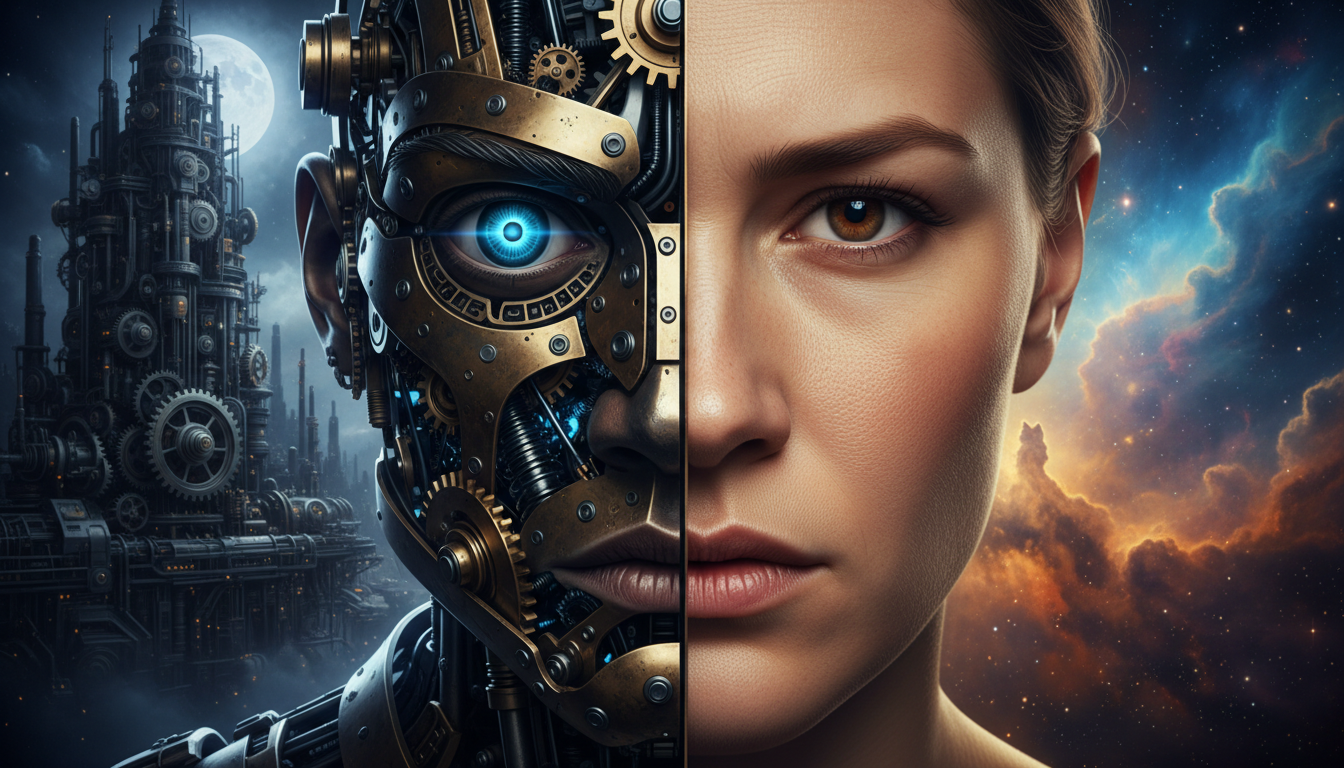

Have you ever looked at the vastness of the cosmos or the intricate beauty of a single leaf and wondered if the divine is hidden within the fabric of reality itself? You might be familiar with the idea that the divine is a distant creator or, conversely, that nature is all there is, but asking what is panentheism reveals a profound middle ground. This perspective suggests that while the entire universe is contained within the divine, the divine also stretches infinitely beyond the boundaries of space and time.
By embracing this “all-in-God” doctrine, you can bridge the gap between a presence that is intimately involved in your daily life and a reality that remains majestic and transcendent. It offers you a way to see the world as a sacred vessel without limiting the divine to the physical laws of science alone. Understanding this balance between immanence and transcendence helps you explore complex spiritual questions with both intellectual rigor and a deep sense of personal connection.
Key Takeaways
- Panentheism serves as a metaphysical middle ground where the entire universe is contained within the divine, while the divine simultaneously transcends the boundaries of space and time.
- The ‘All-in-God’ doctrine balances immanence and transcendence, allowing for a sacred view of the physical world without limiting the divine to the laws of material science.
- The relationship between the cosmos and the divine is reciprocal and evolving, meaning the divine experience expands and changes in response to the growth and consciousness of the universe.
- Adopting a panentheistic lens reconciles intellectual curiosity with spiritual intuition by viewing every particle of matter as a holy manifestation of a larger, infinite reality.
The Middle Path Between Theism And Pantheism
When you explore metaphysics, you often find yourself choosing between a creator who is a distant entity or a universe that is its own divinity. Panentheism offers you a sophisticated middle path by suggesting that the divine is both the substance of our world and something much greater. While classical theism places the divine outside of the physical realm, and pantheism identifies the divine as the physical realm itself, panentheism argues that the universe exists within the divine. This means you do not have to choose between a personal connection to the cosmos and a sense of vast, infinite mystery. It provides a framework where every atom is infused with sacredness without limiting the divine to the boundaries of matter.
You can think of this relationship through the lens of immanence and transcendence working in perfect harmony. Immanence tells you that the divine is present in the rustle of leaves and the pulse of stars, making the physical world inherently meaningful. At the same time, transcendence ensures that the divine is not exhausted by the universe, remaining an infinite reality that extends far beyond space and time. By balancing these two ideas, you gain an intellectual perspective that respects the laws of physics while acknowledging a deeper spiritual dimension. This approach allows you to see the world as a vital part of a larger whole, offering a sense of belonging that feels both grounded and expansive.
Karl Krause And The All In God Doctrine

The term panentheism was first coined by the German philosopher Karl Krause in the early 19th century to describe a metaphysical middle ground between traditional theism and pantheism. You can think of his all-in-God doctrine as a way to bridge the gap between a distant, external creator and a universe that is strictly material. Krause wanted to express that the divine is not just a separate entity watching from afar, but the very foundation in which everything exists. By framing the relationship this way, he offered a path for you to see the sacred within the mundane without losing the sense of something greater. It provides a sophisticated framework for understanding how the finite world can be held within an infinite embrace.
At its core, this philosophy suggests that while the universe is contained within the divine, the divine is not limited to the physical world. You might imagine the relationship like a sponge in the ocean, where the water is both inside every pore of the sponge and simultaneously expanding far beyond it. This distinction is vital because it preserves the idea of transcendence, meaning the divine possesses a reality that exists outside of time and space. Unlike pantheism, which claims the universe and the divine are exactly the same thing, panentheism ensures that the source of existence is never exhausted by its creation. This allows you to value the physical world as a divine manifestation while acknowledging a mystery that goes much deeper.
Exploring this concept allows you to reconcile the presence of the sacred in nature with the intellectual need for a higher, unifying principle. You are invited to see every star, tree, and human experience as being “in” the divine, making the entire cosmos a living expression of a deeper reality. This perspective shifts your focus away from rigid religious tropes and toward a more fluid, integrated understanding of existence. It honors your intuition that the world is meaningful and connected without requiring you to sacrifice the idea of a vast, limitless horizon. By embracing the All-in-God doctrine, you find a balanced worldview that celebrates both the beauty of the earth and the infinite potential of the beyond.
Reciprocal Relationships And The Evolving Divine
When you explore panentheism, you move beyond the idea of a static, distant deity who remains untouched by the unfolding of time. Instead, you encounter a divine reality that is deeply intertwined with the cosmos, where the creator and the creation exist in a state of mutual influence. This perspective suggests that as the universe grows, learns, and suffers, the divine experience expands and evolves right along with it. You are not just a passive observer in a finished masterpiece, but an active participant in a living process that shapes the blueprint of reality.
This reciprocal and evolving relationship means that your actions and the events of the physical world carry profound metaphysical weight. In this framework, the divine is not an unaffected judge, but a sensitive presence that receives and integrates the experiences of all beings. As the universe achieves new levels of growth and consciousness, the divine reality realizes new depths of its own potential. You can think of this as a cosmic feedback loop where the physical and the spiritual are constantly refining one another.
By embracing this dynamic middle ground, you find a path that avoids the limitations of a purely material world or a completely detached deity. It offers you a way to see the universe as a sacred body that is always becoming something more through its relationship with a transcendent source. This view honors the integrity of the natural world while suggesting that there is always a surplus of meaning beyond what we can see. You are part of a grand, unfolding story where both the cosmos and the divine are forever changed by their encounter with each other.
Finding The Sacred In Every Physical Particle

Panentheism offers you a unique metaphysical middle ground that bridges the gap between seeing the universe as purely material and seeing it as a mere reflection of the divine. While pantheism suggests that the universe and the divine are one and the same, panentheism proposes that the divine permeates every atom and star while still maintaining a presence that transcends physical boundaries. This means you can view the cosmos as being contained within the divine, yet recognize that the divine is not exhausted by the physical world. By embracing this perspective, you acknowledge that every particle of matter is infused with sacredness without reducing the infinite to the finite. It provides a sophisticated framework for understanding how the eternal can be intimately present in the temporary.
When you begin to see the world through this lens, your relationship with the material environment undergoes a profound shift in perspective. Instead of viewing a stone or a distant nebula as a cold piece of matter, you recognize them as physical expressions of a greater reality that you are also a part of. This outlook encourages a deep sense of reverence for the natural world because it suggests that the sacred is not hidden away in a distant heaven, but is actively pulsating through the very cells of your body. You are invited to explore the universe as a living, breathing manifestation of something larger than the sum of its parts. This intellectual path allows you to honor the beauty of science and the complexity of physics while still finding room for a deeper sense of meaning and purpose.
Bridging the Divine and the Material
Panentheism offers you a sophisticated middle ground that bridges the gap between traditional religious structures and purely materialist perspectives. By viewing the universe as contained within the divine while maintaining that the divine also transcends physical reality, you can embrace a world that is both sacred and scientifically observable. This framework allows you to find deep, inherent meaning in the natural world without being limited by the boundaries of the physical cosmos. It provides an intellectually rigorous way to explore your place in a reality that is fundamentally conscious and expansive.
You may find that this perspective resonates because it honors your intuition that there is something more to existence than meets the eye. Unlike pantheism, which limits the divine to the sum of all matter, panentheism suggests that you are part of a larger, evolving consciousness that remains ever-present yet boundless. This approach invites you to engage with the world with a sense of wonder and responsibility, knowing that every action occurs within a greater whole. It serves as a powerful tool for modern seekers who want to reconcile their intellectual curiosity with a profound sense of spiritual interconnectedness.
Ultimately, adopting a panentheistic lens empowers you to handle the complexities of modern life with a grounded sense of purpose. You are not merely an observer of a cold, mechanical universe, but a vital participant in a living, breathing reality that extends beyond the reach of time and space. This metaphysical stance provides the clarity needed to integrate your personal experiences with a broader understanding of the infinite. It positions you at the heart of a grand, unfolding story where the divine is as close as your own breath yet as vast as the furthest galaxy. For some, choosing a spiritual path is like playing the odds on what truly matters in the grand scheme of existence.
Frequently Asked Questions
1. What is the simplest way to understand panentheism?
You can think of panentheism as the belief that the universe is contained within the divine, while the divine simultaneously extends beyond the universe. It is a middle ground that allows you to see the sacred in every leaf and star without limiting the divine to just the material world.
2. How does panentheism differ from pantheism?
While pantheism claims that the universe and the divine are exactly the same thing, panentheism suggests the divine is greater than the sum of its parts. You are recognizing that while the world is holy, the divine also possesses a transcendent nature that exists outside of space and time.
3. Is panentheism the same as traditional theism?
Not quite, because traditional theism often views the divine as a separate creator who exists apart from the world. In panentheism, you see a presence that is intimately woven into the fabric of your daily life and the physical environment rather than being a distant observer.
4. What do immanence and transcendence mean in this context?
Immanence refers to the divine being present and active within the physical world you touch and see. Transcendence means the divine also exists beyond our human understanding and the physical laws of science, maintaining a sense of infinite mystery.
5. Can I believe in science and still embrace panentheism?
Yes, because this perspective allows you to respect the physical laws discovered by science while viewing them as part of a larger, sacred reality. It provides a framework where intellectual rigor and spiritual connection can exist together without conflict.
6. Why is panentheism often called the middle path?
It is called the middle path because it bridges the gap between a distant creator and a purely material world. This view offers you the comfort of a personal, present divinity alongside the awe of a vast, infinite mystery that exceeds the universe itself. To better understand how these concepts fit into the broader study of existence, you can explore the different branches of philosophy that shape our worldview.