
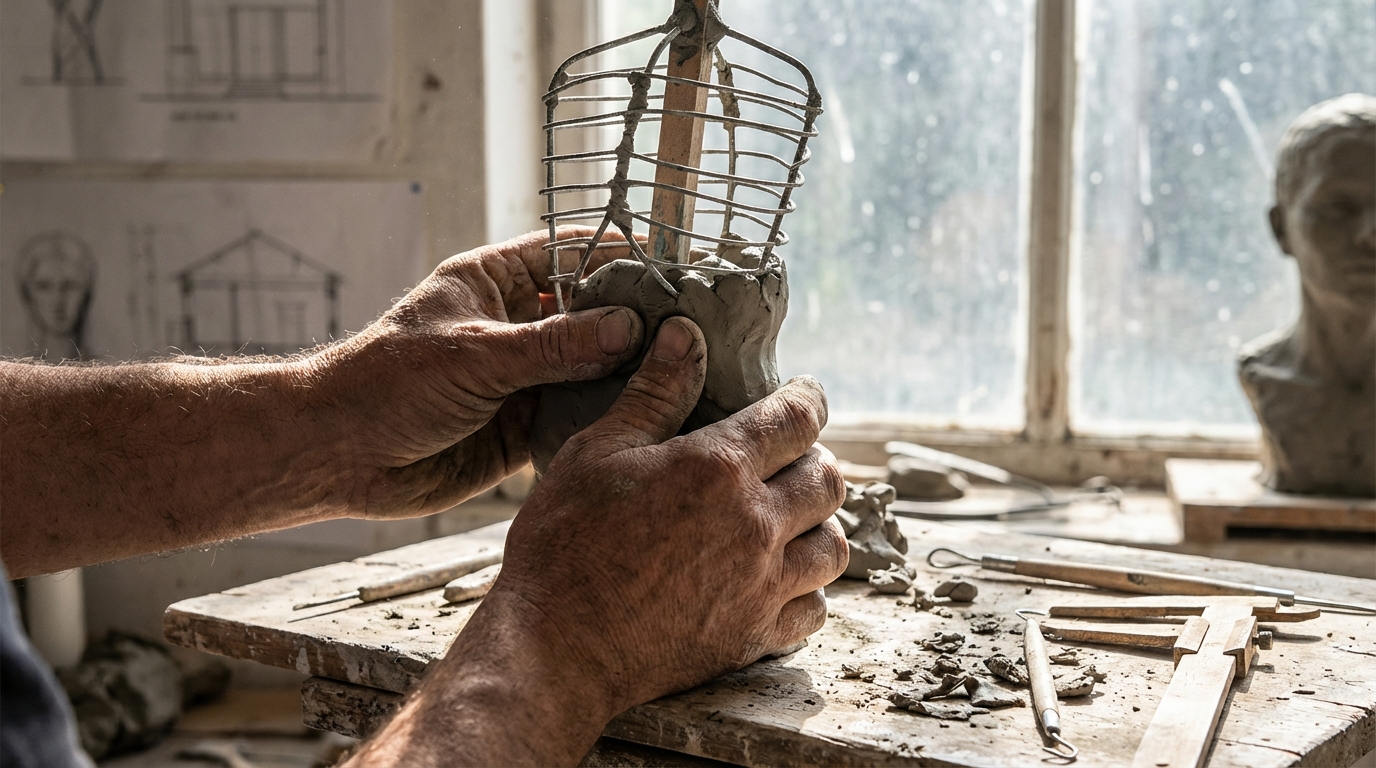
Have you ever looked at a marble statue and wondered where the stone ends and the art begins? To understand the deep structure of the world around you, you need to ask what is hylomorphism, a classic philosophical framework that views every object as a blend of “stuff” and “structure.” Originally developed by Aristotle, this theory suggests that reality isn’t just a collection of random particles, but a meaningful union of matter and form. By viewing the world through this lens, you can begin to see how identity and purpose are woven into the very fabric of physical things.
Think of matter as the raw potential, the “hyle,” and form as the “morphe” that gives that potential a specific identity. While matter provides the physical substrate, it is the form that organizes that material into a tree, a chair, or even a human being. This perspective allows you to move beyond a purely mechanical view of nature and recognize the intrinsic design that makes an object what it is. It offers a sophisticated way to understand the ancient tension between the physical parts of a thing and the unified whole that you actually experience.
Key Takeaways
- Every physical object is a unified composite of matter (hyle) and form (morphe), where matter provides the raw potential and form provides the specific identity and structure.
- Substantial change occurs when an object loses its essential form and acquires a new one, while accidental change merely alters secondary qualities without redefining the object’s fundamental nature.
- Prime matter serves as the ultimate, undifferentiated substrate of reality that remains constant even as objects undergo total transformation.
- Hylomorphism provides a framework for understanding personal and physical identity by viewing the world as a collection of purposeful wholes rather than a random assortment of mechanical particles.
Aristotle’s Vision Of Hylē And Morphē
To understand the foundations of Western ontology, you must first wrap your head around the relationship between hyle and morphe. Aristotle proposed that every physical object you see is a composite of matter and form, working together to create a unified whole. Think of hyle, or matter, as the underlying “stuff” or potential of an object, like the bronze used to cast a statue. On its own, this matter is passive and lacks specific characteristics, waiting for a defining principle to give it a particular identity. By viewing the world through this lens, you begin to see that nothing exists as mere raw material without some kind of organizing structure.
The second half of this equation is morphe, or form, which acts as the active principle that determines what a thing actually is. While matter provides the potential, form provides the actuality by organizing that matter into a recognizable pattern or essence. When you look at a wooden chair, the wood is the matter, but the specific arrangement and purpose that make it a “chair” constitute its form. This is not just about the external shape, but rather the internal blueprint that directs the object toward its specific function. Understanding this distinction allows you to appreciate how objects maintain their identity even as their physical components might change over time.
This powerful framework offers you a crucial tool for exploring complex metaphysical questions about change and persistence. When a block of marble is carved into a body, the underlying matter remains, but a new form is introduced to replace the old one. This process explains how things can transform while still being rooted in a continuous physical reality. By mastering these concepts, you gain a deeper insight into the history of philosophy and the way thinkers have categorized existence for centuries. It serves as a bridge between the tangible world you touch and the abstract structures that give life its meaning and order.
Distinguishing Substantial Change From Accidental Qualities
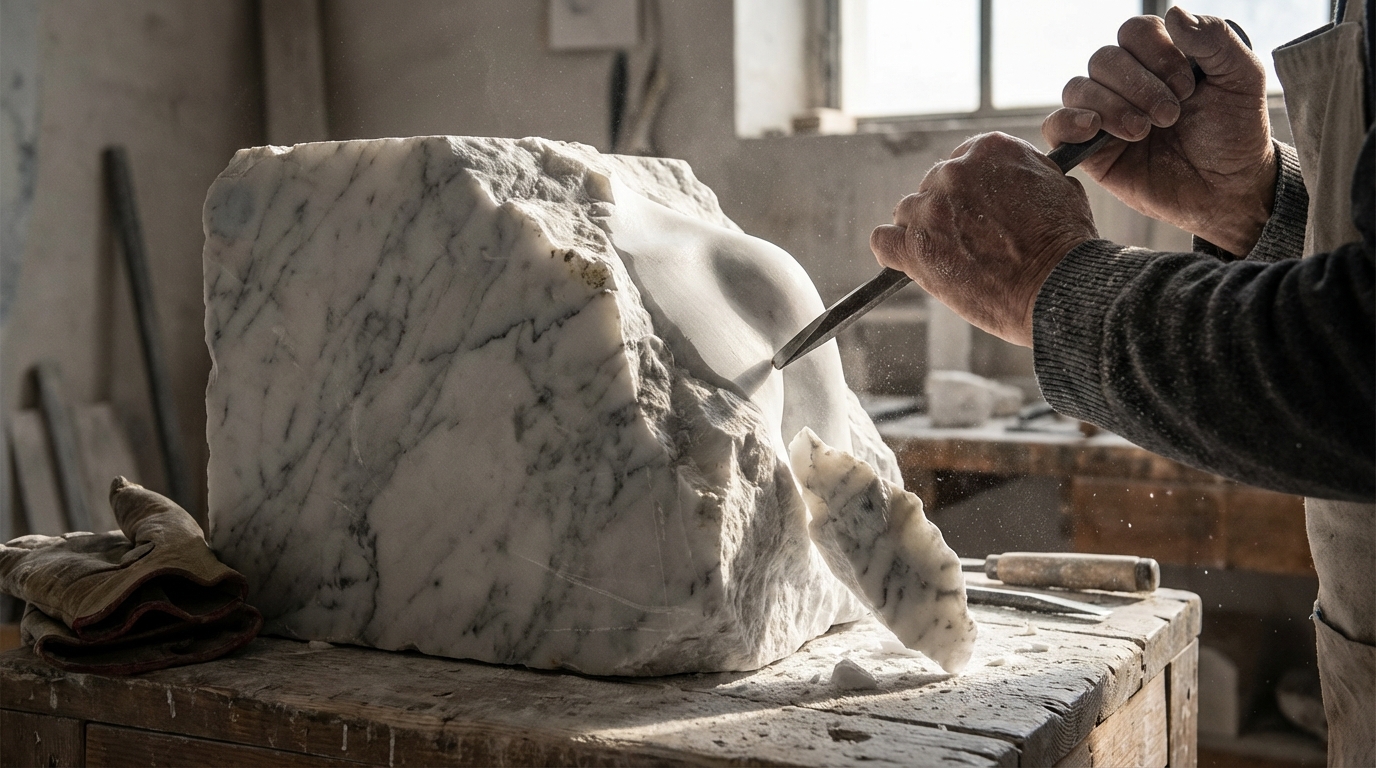
To understand hylomorphism, you must first distinguish between change that alters what a thing is and change that merely alters how it appears. Aristotle used the terms matter and form to explain why a piece of wood remains wood whether it is shaped into a chair or a table. In these cases, you are witnessing accidental change, where the underlying substance stays the same while its secondary qualities, such as shape or location, shift. The form of the wood persists, but it takes on new accidental forms that do not redefine its fundamental nature. This distinction helps you understand the world by identifying which properties are essential to an object and which are merely temporary or superficial.
Substantial change occurs on a much deeper level because it involves the loss of one essential form and the acquisition of another. Imagine you burn that same piece of wood until it becomes nothing but a pile of ash and a cloud of smoke. You are no longer looking at wood that has changed its shape, but rather a complete transformation where the original substance has ceased to exist. In hylomorphic theory, the underlying prime matter remains, but it is now informed by an entirely different set of essential principles. This framework allows you to explain how the universe can be in a constant state of flux while still maintaining a logical structure of distinct, identifiable entities.
By applying these concepts, you gain a powerful tool for understanding the history of Western ontology and the persistence of identity over time. You can see that while your own physical cells are constantly being replaced and your outward appearance changes as you age, your substantial form remains a constant anchor. This perspective prevents you from confusing mere surface level modifications with a total loss of identity. Hylomorphism provides a rigorous way to categorize your experiences, ensuring you can tell the difference between a thing simply moving through space and a thing becoming something else entirely.
Prime Matter And The Potential For Being
To grasp the foundation of Western ontology, you must first look toward the concept of prime matter, the ultimate substrate that lies beneath all physical reality. Think of it not as a specific material like wood or metal, but as pure, undifferentiated potentiality. In this state, matter has no shape, no color, and no defining characteristics of its own. It is the “stuff” of the universe before it becomes any “thing” in particular. By understanding this, you can begin to see how the world is built from a base of absolute receptivity.
When you observe the objects around you, you are seeing prime matter that has been activated by a specific form. This transition from potentiality to actuality is what allows a generic substance to become a tree, a stone, or a human being. Without the presence of form, prime matter remains invisible and unknowable because it lacks the boundaries that define existence. It serves as the silent partner in every physical object, providing the necessary ground for change and growth to occur. This distinction helps you realize that everything in our world is a composite of what it could be and what it currently is.
This philosophical tool is essential for studying the history of metaphysics because it explains how identity persists through change. When a piece of gold is melted and reshaped into a ring, the underlying prime matter remains the same while the form undergoes a total transformation. You can apply this logic to almost any physical process to see the interplay between hidden potential and visible reality. By mastering this concept, you gain a clearer perspective on how ancient and medieval thinkers viewed the structural integrity of the cosmos. It invites you to look past the surface of things to find the deep, underlying unity of all material existence.
Connecting Material Reality with Essential Form
Hylomorphism offers you a profound way to bridge the gap between the physical world you touch and the abstract structures you perceive. By recognizing that every object is a union of matter and form, you gain a framework that explains how things can change while retaining a core identity. This Aristotelian perspective suggests that the material stuff of the world is not just a collection of random particles, but is instead organized by an internal principle that gives it purpose and definition. This contrasts with the idea that physical objects are just shadows of Plato’s Theory of Forms, as Aristotle believed the form exists within the matter itself. When you apply this lens to your own life, you begin to see that your experiences are more than just a series of events. You start to recognize the underlying patterns that inform your growth and character over time.
Integrating this ancient wisdom into your modern worldview provides the ontological clarity needed to understand a complex reality. Instead of viewing the universe as a cold machine made of purposeless matter, you can appreciate the intrinsic design that makes a tree a tree or a person a person. This shift in perspective allows you to move beyond surface level observations and engage with the deeper essence of the world around you. By mastering the relationship between the potential of matter and the actuality of form, you equip yourself with a timeless tool for intellectual discovery. This cohesive vision transforms the way you understand existence, grounding your search for truth in a tradition that has shaped Western thought for centuries.
Frequently Asked Questions
1. What exactly does the term hylomorphism mean?
Hylomorphism is a philosophical framework that views every physical object as a compound of two inseparable elements: matter and form. You can think of it as a way to understand what is hylomorphism and how raw “stuff” becomes a specific, recognizable thing through an organizing structure.
2. How do matter and form work together in an object?
Matter provides the physical potential or “stuff” of an object, while form is the active principle that gives that material its specific identity. You can see this in a bronze statue, where the bronze is the matter and the shape of the figure is the form that makes it a work of art.
3. Why is Aristotle’s view of hyle and morphe important for you to know?
Aristotle’s vision helps you move beyond a purely mechanical view of the world by recognizing that objects have intrinsic design and purpose. It allows you to see the world as a collection of meaningful wholes rather than just a random assortment of particles.
4. Can matter exist without form in the physical world?
In this framework, you will never encounter raw matter that lacks some kind of form. While matter is the underlying potential, it always requires a defining structure to exist as a specific, tangible object in your reality.
5. How does hylomorphism help you understand your own identity?
When you apply this theory to yourself, you can view your body as the matter and your soul or mind as the form. This perspective creates a unified vision of a human being where your physical parts and your conscious identity are perfectly integrated.
6. What is the main benefit of looking at the world through a hylomorphic lens?
This approach gives you a sophisticated way to understand the tension between an object’s physical parts and its unified whole. It helps you appreciate how identity and purpose are woven directly into the fabric of everything you experience.