
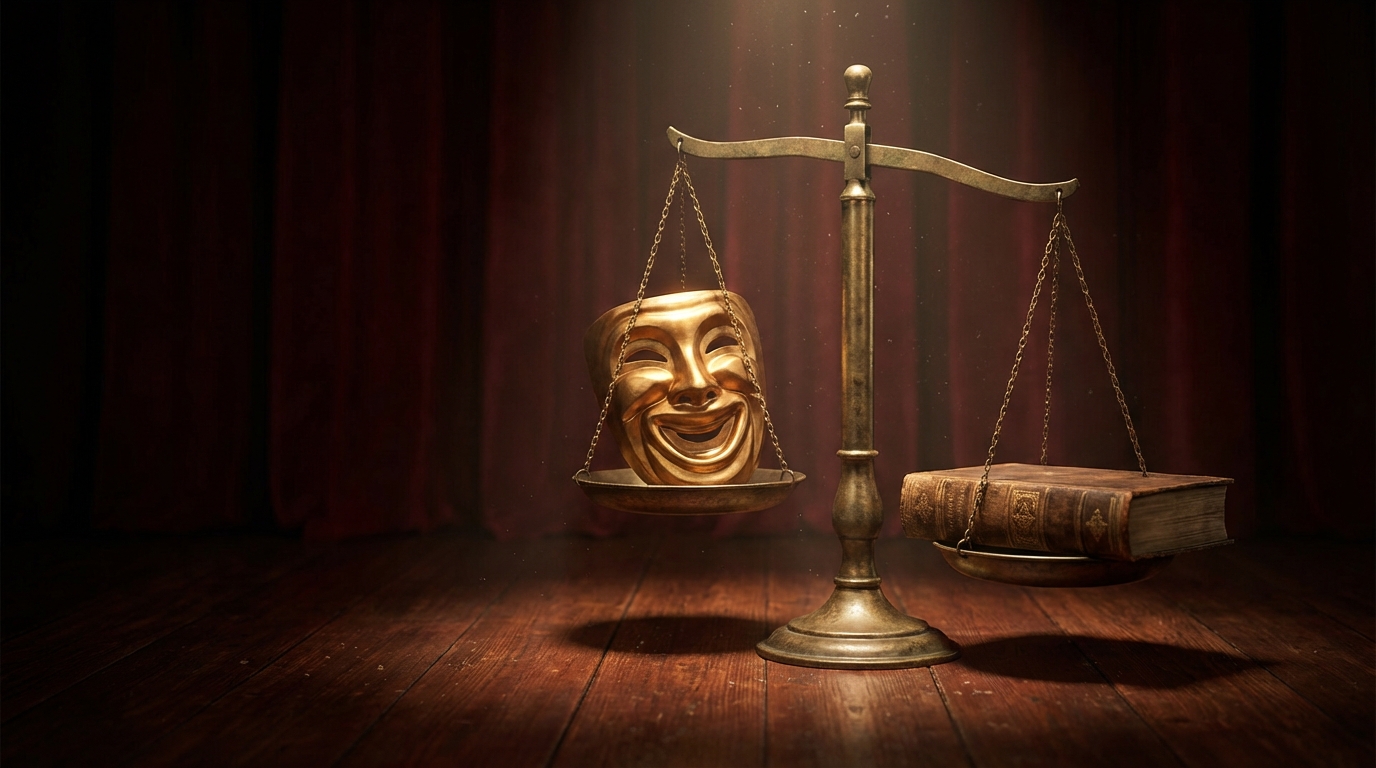
You’ve likely found yourself mid-laugh at a sharp-witted joke, only to pause and wonder if the punchline crossed a line. Navigating the ethics of humor is no longer a simple matter of what is “funny” versus what is “offensive,” as modern social dynamics have added layers of complexity to our collective funny bone. Whether you are a creator or an audience member, understanding why some jokes land while others crash is essential for engaging with modern culture.
Recent shifts in thought have moved us away from rigid rules and toward a more nuanced understanding of power and identity. You can think of it as “joke capital,” a unique social currency that determines who has the standing to tackle certain sensitive subjects. By exploring how context and intent transform a joke from a tool of connection into a weapon of exclusion, you gain a deeper appreciation for the profound impact your laughter has on the world around you.
Key Takeaways
- The Joke Capital Model establishes that a speaker’s identity and lived experiences act as social currency, determining their moral permission to joke about specific sensitive topics.
- Ethical humor is defined by its directionality, where ‘punching up’ at powerful institutions fosters liberation while ‘punching down’ at marginalized groups reinforces oppression.
- Audiences are active participants in the ethical landscape of comedy, using their laughter as a form of social vote that validates or rejects a performer’s perspective.
- Modern comedy requires a shift from rigid right-or-wrong binaries toward a nuanced evaluation of context, intent, and the real-world impact on social hierarchies.
Navigating The Joke Capital Model
When you think about why some people can get away with a risky joke while others face immediate backlash, you are observing the Joke Capital Model in action. This framework suggests that your identity, personal history, and social standing act as a form of comic insurance that dictates your moral permission to speak on certain topics. Much like a bank account, you accumulate capital through your lived experiences and your membership within specific communities. When you tell a joke that touches on sensitive themes, you are essentially drawing from this internal reserve of social credit. If you have plenty of capital because you belong to the group you are joking about, the audience is far more likely to grant you the benefit of the doubt.
The beauty of this model lies in how it moves beyond simple right or wrong binaries to account for the complex power dynamics of the real world. You might notice that a comedian sharing a self-deprecating story about their own culture feels authentic, whereas an outsider telling the same joke feels exploitative or mean-spirited. This happens because the insider has the necessary currency to navigate the nuance of that community without causing harm. By understanding your own joke capital, you gain a clearer sense of where your boundaries lie and why your voice matters in the conversation. It encourages you to consider your relationship to the subject matter before you deliver the punchline.
Navigating these ethical waters requires a balance of self-awareness and empathy for your audience. You should recognize that humor is not just about the words spoken, but also about the person speaking them and the historical context they carry. When you punch up at powerful institutions, you are often using your capital to challenge the status quo, which is widely seen as a virtuous use of humor. Conversely, attempting to joke about struggles you have never personally faced can bankrupt your credibility quickly. By viewing humor through the lens of social currency, you can engage in comedy that is both intellectually rigorous and morally responsible.
Beyond Punching Down And Power Dynamics

When you look at modern comedy, you will notice that the conversation has shifted from simple questions of taste to a deeper examination of social responsibility. The concept of punching up versus punching down serves as a moral compass for both performers and audiences. By focusing on whether a joke targets those in positions of power or those who are historically marginalized, you can better understand how humor functions as a tool for either liberation or oppression. This framework encourages you to consider the real-world consequences of a punchline beyond the immediate reaction of a laugh. It is not just about the words being said, but about how those words interact with existing social hierarchies and the lived experiences of the audience.
The idea of joke capital provides another layer of nuance to your understanding of ethical humor by highlighting the importance of the speaker’s identity. You might find that a joke told by a member of a specific community feels empowering, while the same joke told by an outsider feels like an attack or a harmful stereotype. This suggests that your social standing and personal history act as a form of comic insurance that determines your permission to navigate sensitive topics. When you evaluate a comedian’s set through this lens, you are looking at the moral weight of their perspective rather than just their delivery. This approach moves away from rigid moral rules about what is forbidden and instead asks you to weigh the intent and context of the performance.
Navigating these dynamics requires you to balance your appreciation for wit with a keen awareness of how laughter can reinforce or disrupt power structures. Modern ethics in humor do not seek to stifle creativity, but rather to challenge you to think about who is being invited to join in on the joke. When a joke successfully punches up, it often exposes the absurdities of the powerful and offers a sense of shared catharsis for the audience. Conversely, humor that targets the vulnerable can inadvertently validate prejudice under the guise of irony or satire. By engaging with these concepts, you become a more conscious consumer of comedy who understands that the best humor often speaks truth to power without causing collateral damage.
The Audience Responsibility In Ethical Laughter
When you sit in a comedy club or scroll through a social media feed, you are more than just a passive observer. Your laughter serves as a form of social currency that validates the comedian’s perspective and reinforces the message behind the punchline. By providing an audible or digital reaction, you are essentially voting on the moral permissibility of the joke and its impact on the world. This means that you carry a significant moral weight as a listener, as your response helps determine how language shapes which ideas are celebrated and which are deemed unacceptable. Understanding this dynamic allows you to see your role as an active participant in the ethical environment of comedy.
Evaluating a joke often requires you to consider the concept of joke capital and the social standing of the person speaking. You might find yourself wondering if a comedian is punching up at powerful institutions or punching down at marginalized groups who already face systemic challenges. When you laugh at humor that targets the vulnerable, you may inadvertently contribute to the normalization of harmful stereotypes or social exclusion. It is helpful to view your laughter as a tool for social cohesion rather than just a reflexive physical response. By being mindful of who is being targeted, you can ensure your sense of humor aligns with your personal values and ethical standards.
The context of a performance matters deeply when you are deciding how to engage with provocative material. While humor often pushes boundaries to explore difficult truths, your role is to discern when a joke crosses the line from insightful satire into genuine malice. You do not have to be a moral philosopher to recognize when a joke feels exploitative or reinforces unfair power dynamics. Taking this responsibility seriously does not mean you have to stop having fun or become overly critical of every line. Instead, it positions you as a thoughtful consumer who understands that ethical laughter is about balancing joy with a respect for the dignity of others.
Final section: Conclusion

Ultimately, navigating the ethics of humor requires you to strike a delicate balance between the joy of creative expression and a mindful awareness of your audience. You do not have to sacrifice the sharpness of a joke to be responsible, but you should consider how your words resonate within existing power structures. By understanding that your social standing and identity provide a form of “joke capital,” you can better gauge when a joke will land as a shared insight or a harmful jab. This nuanced approach allows you to push boundaries without losing sight of the human impact behind the laughter.
When you choose to punch up rather than down, you transform comedy from a tool of exclusion into a medium for social reflection and truth-telling. This transition from simple right-or-wrong binaries toward a deeper understanding of context is what elevates humor from mere entertainment to an intellectual art form. You can remain provocatively funny while still upholding a moral standard that respects the dignity of others. Engaging with these ethical frameworks ensures that your laughter remains a bridge for connection instead of a barrier to understanding.
Balancing Laughter with Moral Responsibility
Navigating the boundaries of humor requires you to balance the joy of laughter with a deep sense of moral responsibility. You have seen how modern frameworks, such as the joke capital model, help explain why the identity of the storyteller matters as much as the punchline itself. By understanding the distinction between punching up at power structures and punching down at the vulnerable, you gain a clearer picture of how comedy can either challenge or reinforce social hierarchies. This nuanced understanding moves beyond simple labels of right or wrong to look at the real-world moral relativism of our shared amusement.
As you engage with comedy in your daily life, remember that your role as an audience member is just as vital as the person behind the microphone. You possess the power to validate insightful wit or to question humor that relies on harmful stereotypes or punching down. Developing this ethical lens does not mean you have to stop laughing, but rather that you are becoming a more conscious participant in a complex cultural dialogue. By staying curious and thoughtful about the mechanics of a joke, you help foster a comedic environment that is both intellectually rigorous and genuinely inclusive.
Frequently Asked Questions
1. What exactly is the ‘Joke Capital Model’ in comedy?
The Joke Capital Model is a framework that treats your identity and lived experiences as a form of social currency. You draw from this internal reserve of credit whenever you tackle sensitive subjects, meaning your personal background dictates your moral permission to joke about specific communities.
2. How can you tell if a joke has crossed an ethical line?
You can evaluate a joke by looking at whether it acts as a tool for connection or a weapon of exclusion. When a punchline reinforces harmful stereotypes or targets marginalized groups from a position of power, it typically crosses the line from humor into harm.
3. Does a comedian’s intent matter if the audience finds the joke offensive?
While your intent provides important context, the impact of your words on the audience is the ultimate measure of a joke’s ethical standing. You must balance what you meant to say with the reality of how your humor affects the people listening to it.
4. Why is it often considered acceptable for someone to joke about their own group?
This is because people within a community possess the joke capital earned through shared struggles and lived experience. When you tell a joke at your own identity’s expense, you are punching up or across rather than punching down at a group you don’t understand.
5. Can humor still be used to address serious or sensitive social issues?
Yes, humor is one of the most effective ways for you to challenge status quos and spark difficult conversations. When you approach sensitive topics with empathy and a deep understanding of power dynamics, you can use comedy to foster genuine connection and insight.
6. How has the digital age changed the ethics of humor?
Modern social dynamics have added layers of complexity because jokes now travel far beyond their original context and intended audience. You are now operating in a global environment where joke capital is scrutinized by diverse groups with varying perspectives on what is considered acceptable.