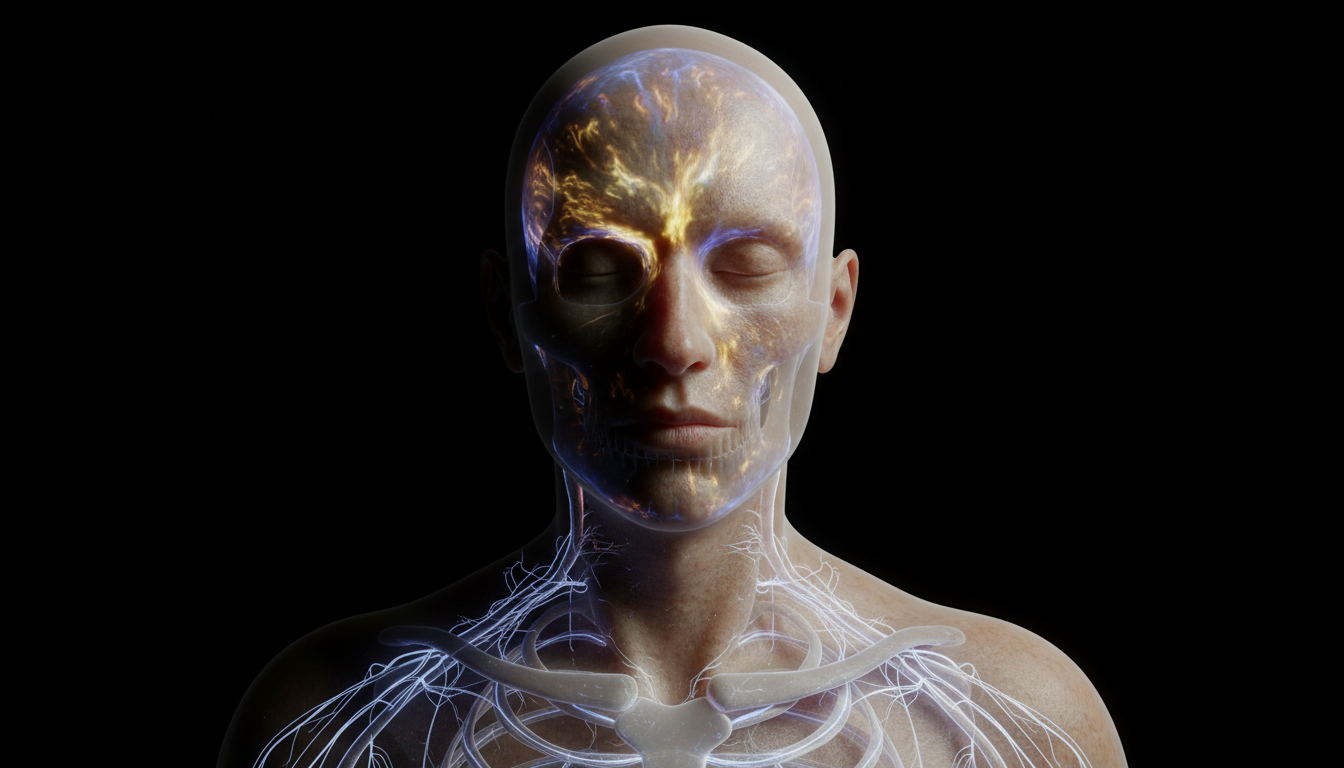

Imagine sitting across from someone who looks, acts, and speaks exactly like you do, but entirely lacks an inner life. If you prick their finger, they will flinch and say “ouch,” yet they experience absolutely no subjective feeling of pain. This eerie thought experiment is the foundation of the philosophical zombie argument, a famous challenge to the idea that human consciousness is purely physical. By asking whether such an empty but perfectly functioning replica is even conceivable, philosophers force you to question the true nature of your own mind.
If you can logically imagine a universe populated by these identical but unconscious beings, it suggests that physical matter alone cannot fully explain human awareness. The implications of this thought experiment stretch far beyond clever hypothetical scenarios, striking at the core of how you understand science, the brain, and your own subjective reality. Grasping this concept reveals why the gap between firing neurons and genuine emotional experience remains one of the most profound mysteries of human existence.
Key Takeaways
- A philosophical zombie is a hypothetical being that is physically and behaviorally identical to a human but completely lacks subjective experience or an inner conscious life.
- The conceivability of these mindless duplicates challenges physicalism by suggesting that physical matter and brain chemistry alone cannot fully explain human consciousness.
- Physicalist critics counter this thought experiment by arguing that human imagination does not dictate physical reality, maintaining that consciousness is an inevitable byproduct of complex neural processes.
- Ultimately, the philosophical zombie concept exposes the profound, unsolved mystery of how mechanical brain functions generate vibrant, subjective human emotions.
Defining David Chalmers’ P-Zombie Concept
When you hear the word zombie, your mind probably jumps to the decaying, brain-hungry monsters of Hollywood movies. However, philosopher David Chalmers introduced a completely different kind of creature to the world of philosophy known as the philosophical zombie, or P-zombie. Unlike a cinematic ghoul, this hypothetical being is physically identical to you down to the very last atom. If you were to place a P-zombie under a microscope or scan its brain, you would find exactly the same biological structures and neural pathways that exist within your own body. The only difference is entirely invisible from the outside, because this duplicate completely lacks any subjective experience or inner conscious life.
To truly grasp this concept, imagine walking up to your exact P-zombie replica and poking it sharply with a pin. The replica will instantly flinch, pull its arm away, and loudly say “ouch” just like you would in that exact situation. Its brain will even fire the precise electrical signals associated with tissue damage, perfectly mimicking human behavior. Despite this convincing outward display, there is absolutely no inner life actually feeling the sensation of pain. The creature processes the physical stimuli and reacts mechanically, but it is completely devoid of qualia, which is the philosophical term for the subjective feeling of an experience.
Chalmers uses this vivid thought experiment to challenge the idea that everything in the universe is strictly physical. If you can logically conceive of a being that functions exactly like a human without possessing consciousness, it suggests that the mind must be something more than just biological machinery. This conceivability argument implies that physical facts alone cannot fully explain the vibrant reality of your conscious awareness. By exploring the eerie possibility of these empty vessels, you can begin to appreciate the profound mystery of your own subjective experience. It forces anyone studying the philosophy of mind to look beyond basic brain chemistry and question what truly creates your inner world.
The Conceivability Argument Against Physicalism

Imagine a universe exactly like ours, down to the last atom, but completely dark inside the minds of its inhabitants. David Chalmers suggests that if you can clearly picture this world of philosophical zombies, you have already taken the first step toward dismantling physicalism. Physicalism claims that everything in existence, including your inner life, is entirely made of physical matter. However, if it is possible to imagine a physically identical world where subjective experience is missing, then consciousness must be something extra. You are essentially acknowledging that physical facts alone do not automatically guarantee the presence of a conscious mind.
The true power of this thought experiment lies in a bold philosophical leap from what you can conceive to what is actually possible. If you can logically imagine these mindless duplicates without any contradictions, philosophers argue that such a zombie universe is metaphysically possible. This distinction is crucial because the physicalist worldview requires consciousness to be an unavoidable byproduct of physical matter. If a universe can theoretically exist with all the right brain chemistry but zero actual feeling, then physical ingredients are simply not enough to explain your awareness. By following this logic, you are forced to conclude that consciousness operates on rules extending beyond current understandings of biology and physics.
Physicalist Objections To Philosophical Zombies
While the idea of a philosophical zombie is a fascinating mental playground, physicalist philosophers are quick to point out a major flaw in the logic. They argue that just because you can vividly imagine a creature identical to humans without any inner life does not mean such a being could actually exist in reality. You can easily picture water that does not boil at 212 degrees Fahrenheit, but the laws of physics make that impossible under standard conditions. In the same way, critics suggest that your ability to dream up a human clone lacking subjective experience is merely a trick of human imagination. Conceivability simply does not automatically translate into physical possibility.
To understand the physicalist perspective fully, you have to look at how they view the machinery of the human brain. These thinkers maintain that consciousness is not some magical extra ingredient sprinkled on top of human biology. Instead, they believe that subjective experience is an inevitable byproduct of complex physical processes firing in a specific way. If you were to perfectly replicate every single neural connection and chemical reaction of a conscious human being, you would absolutely generate a conscious mind. Therefore, a philosophical zombie is a logical contradiction, because the physical structure itself is what guarantees the presence of those inner feelings.
Ultimately, these counterarguments serve to ground the debate firmly in the realm of empirical science. When you evaluate the zombie thought experiment through this rigorous lens, the mystery of consciousness becomes a problem of biological engineering rather than a mystical puzzle. Physicalists challenge you to trust that the physical universe contains all the necessary components for subjective experience, even if science does not completely understand the exact mechanics yet. By rejecting the possibility of philosophical zombies, these critics keep the focus on investigating the real brain to better understand human cognition.
How Your Philosophical Zombie Shakes Up Reality
David Chalmers presented the philosophical zombie argument as a powerful tool to question the very fabric of reality. By asking you to imagine a perfect physical replica of yourself that feels absolutely nothing inside, he forces you to confront the limits of purely scientific explanations. If you can conceive of a world identical to this one without any inner life, it suggests that consciousness is an entirely separate phenomenon from physical biology. This famous thought experiment shakes the foundation of physicalism, hinting that the universe contains fundamental properties humanity has yet to fully understand. You are left grappling with the idea that firing neurons and chemical reactions simply cannot account for the vividness of your own reality.
Thinking about these hypothetical, unfeeling duplicates ultimately turns your attention back to the undeniable complexity of your own mind. Every time you savor the taste of your morning coffee, feel the warmth of the sun on your skin, or experience a sudden wave of joy, you are proving that you are not a zombie. These subjective feelings are the very essence of what makes the human experience so profound. While science continues to map the brain in incredible detail, the mystery of how physical matter creates a subjective experience remains beautifully unsolved. You get to move through life knowing that your inner world is a unique, vibrant reality that no purely mechanical explanation can ever fully capture.
Frequently Asked Questions
1. What exactly is a philosophical zombie?
A philosophical zombie, or P-zombie, is a hypothetical being that is physically identical to you down to the last atom but completely lacks an inner conscious life. If you were to scan its brain, it would look exactly like yours. However, it experiences no subjective feelings, thoughts, or emotions.
2. How is a P-zombie different from the zombies in movies?
Unlike the decaying, brain-hungry monsters you see in Hollywood movies, a P-zombie looks and acts exactly like a normal human being. You would never be able to tell the difference from the outside. They can hold conversations, flinch from pain, and laugh at jokes, all without actually experiencing those sensations internally.
3. Why did David Chalmers create this thought experiment?
Philosopher David Chalmers introduced this concept to challenge the idea that human consciousness is purely physical. By asking you to imagine a perfect physical replica that lacks subjective experience, he highlights a major gap in current scientific understanding. It forces you to question why physical matter alone does not fully explain the depth of your own awareness.
4. What happens if you hurt a philosophical zombie?
If you were to prick a perfectly functioning P-zombie with a pin, it would flinch and say “ouch” exactly like you would. Its body reacts to the physical stimulus through normal neural pathways. The eerie truth is that despite this outward reaction, the zombie feels absolutely no subjective pain inside.
5. What is the main point of the philosophical zombie argument?
The main point is to show that explaining the physical mechanics of the brain is not enough to explain genuine emotional experience. If you can logically conceive of a universe filled with unconscious physical replicas, then consciousness must be something more than just firing neurons. It reveals that subjective reality remains one of the most profound mysteries of human existence.
6. Can a philosophical zombie actually exist in real life?
The argument does not claim that these empty replicas actually walk among humans in the real world. Instead, it is a thought experiment designed to test the limits of logic and physical science. The mere fact that you can imagine such a creature is enough to challenge the belief that biology alone creates your inner life.
7. How does this concept change our understanding of the brain?
This thought experiment shows you that knowing how the brain works mechanically does not automatically explain how it produces feelings. You can map every neural pathway and biological structure, yet still miss the source of your inner conscious life. It bridges the gap between hard science and profound philosophical inquiry.