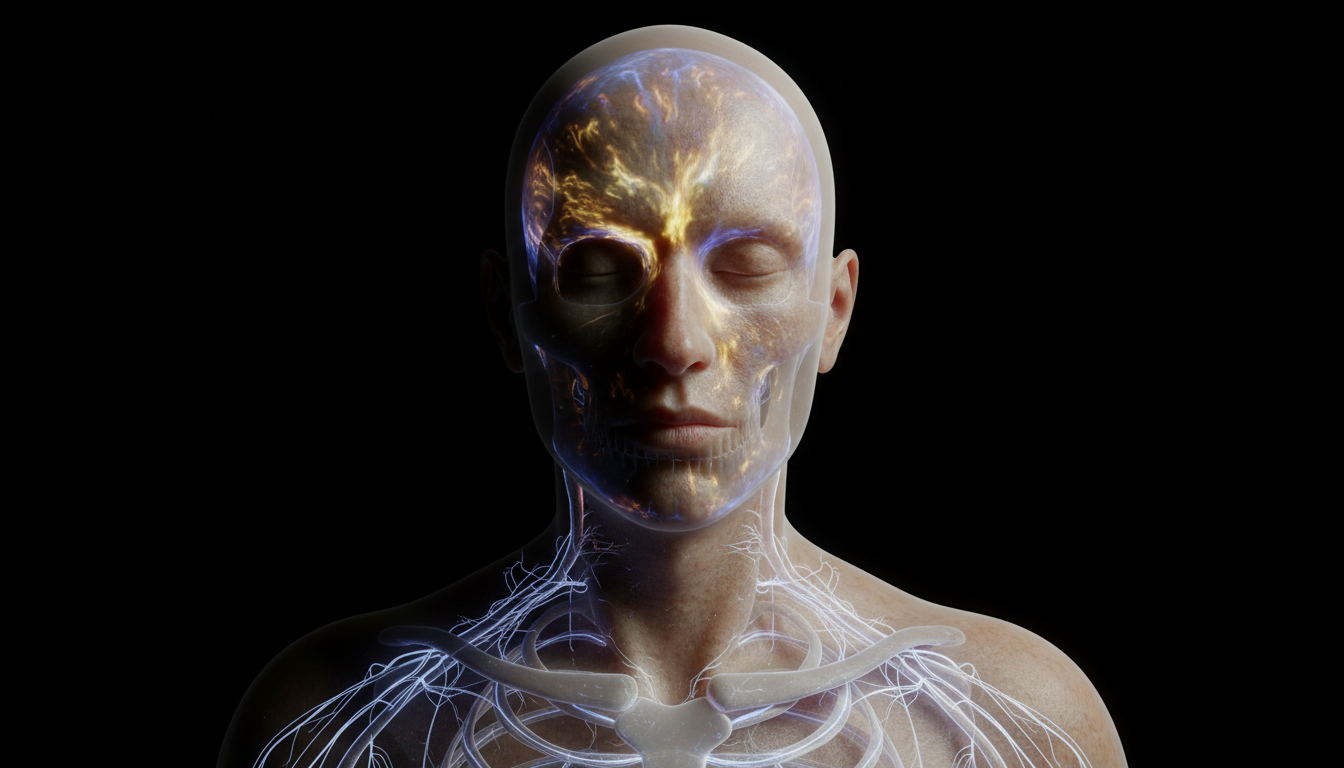
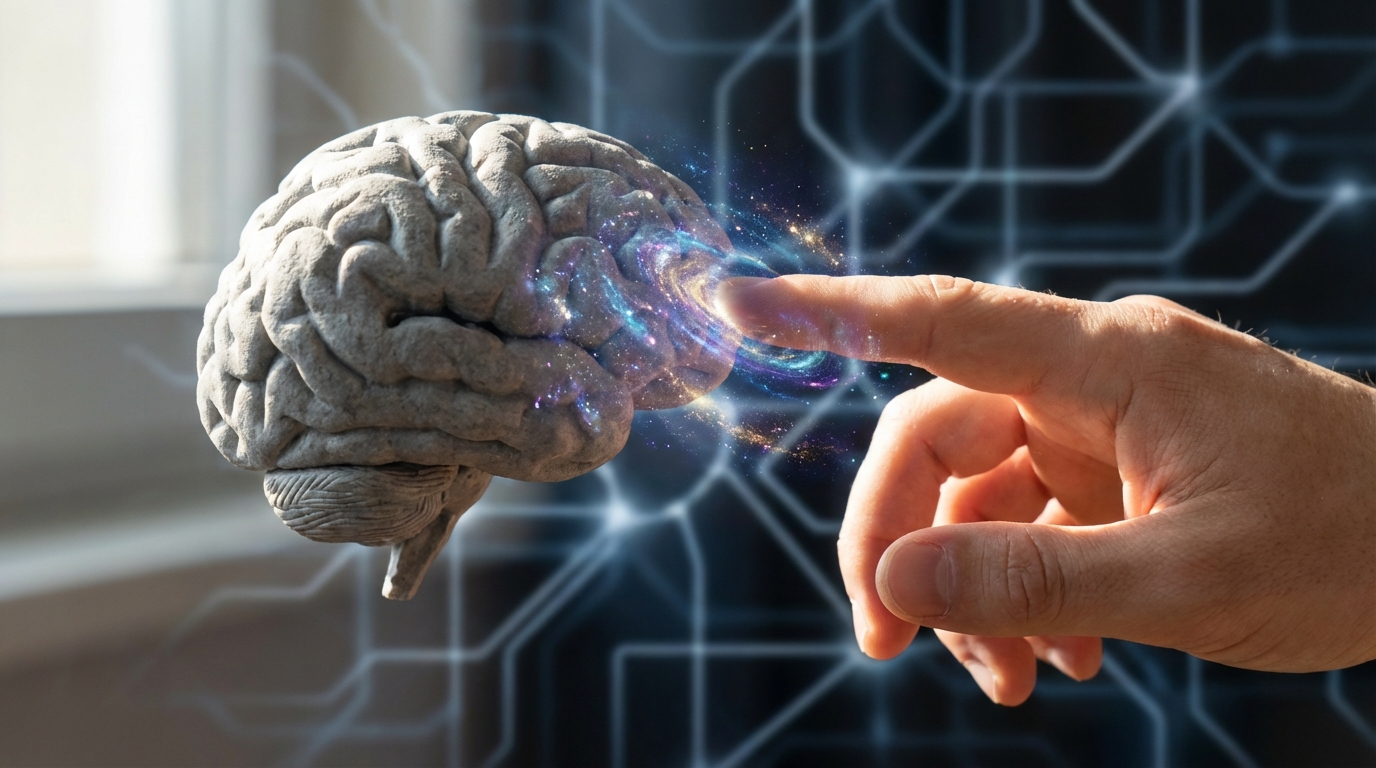
Imagine taking a sip of your morning coffee. You feel the warmth of the mug, taste the bitter roast, and experience a sudden burst of alertness. While neuroscientists can map the exact brain signals and chemical reactions driving these actions, they hit a massive wall when trying to explain why this physical machinery is accompanied by a rich, internal movie of subjective experience. This profound mystery is known as the hard problem of consciousness. It asks a deceptively simple question: why does physical matter give rise to an inner life, rather than just functioning like a complex, unfeeling robot?
You might assume that mapping every neural pathway and synaptic spark will eventually decode the mind, but experts classify these functional tasks as the “easy problems” of human cognition. The true challenge lies in bridging the gap between objective brain mechanics and your uniquely personal, first-person perspective of the universe. Grasping this puzzle forces you to look beyond standard biology and deeply question the very nature of reality and your own awareness.
Key Takeaways
- The ‘easy problems’ of consciousness involve mapping physical brain functions, while the ‘hard problem’ is the profound, unresolved mystery of why these biological mechanics generate a subjective inner life.
- Qualia represents the raw, deeply personal sensations of your awareness, forming an internal movie of experience that standard scientific methods cannot measure or share.
- The philosophical zombie thought experiment illustrates the limits of biological mapping by imagining a being that processes physical stimuli flawlessly but exists in complete mental darkness.
- Recognizing the unexplained gap between brain chemistry and personal feeling transforms everyday moments into miraculous events, fostering a deep appreciation for the simple act of existing.
Separating Easy Brain Functions From The Hard Problem
When you touch a hot stove or taste a sweet piece of chocolate, your brain springs into action to process those sensations. Scientists call the mapping of these neural pathways the easy problems of consciousness. This does not mean the science is simple, but rather that these functions can be observed and measured using standard scientific methods. Researchers can track exactly how your eyes convert light into electrical signals and how those signals travel to your visual cortex to help you recognize a face. Because we can physically map these reactions to specific mechanisms in your nervous system, these biological functions remain firmly in the realm of solvable scientific puzzles.
The true mystery begins when you ask why these mechanical brain processes are accompanied by a feeling of experience. Coined by philosopher David Chalmers in 1995, the hard problem of consciousness challenges us to explain how physical matter creates your rich, internal movie of life. Even if scientists map every neural connection in your head, that blueprint still cannot explain why seeing the color red feels like something to you. There is a profound gap between the objective firing of neurons and your subjective, personal awareness of the world. This leap from physical brain activity to personal feeling remains one of the greatest unresolved mysteries of human experience.
Understanding this distinction helps you appreciate just how remarkable your daily awareness truly is. While modern technology continues to decode the mechanical functions of your mind, the root spark of your personal consciousness stays stubbornly hidden from the microscope. You can think of the easy problems as explaining the complex wiring of a television set, while the hard problem asks why the device is turned on and broadcasting a unique show. Exploring this philosophical boundary invites you to look beyond basic biology and wonder about the very nature of your own existence. Until we discover how physical matter suddenly wakes up to experience itself, the origin of your innermost thoughts will continue to captivate scientists and philosophers alike.
Qualia And Your Internal Movie Of Experience
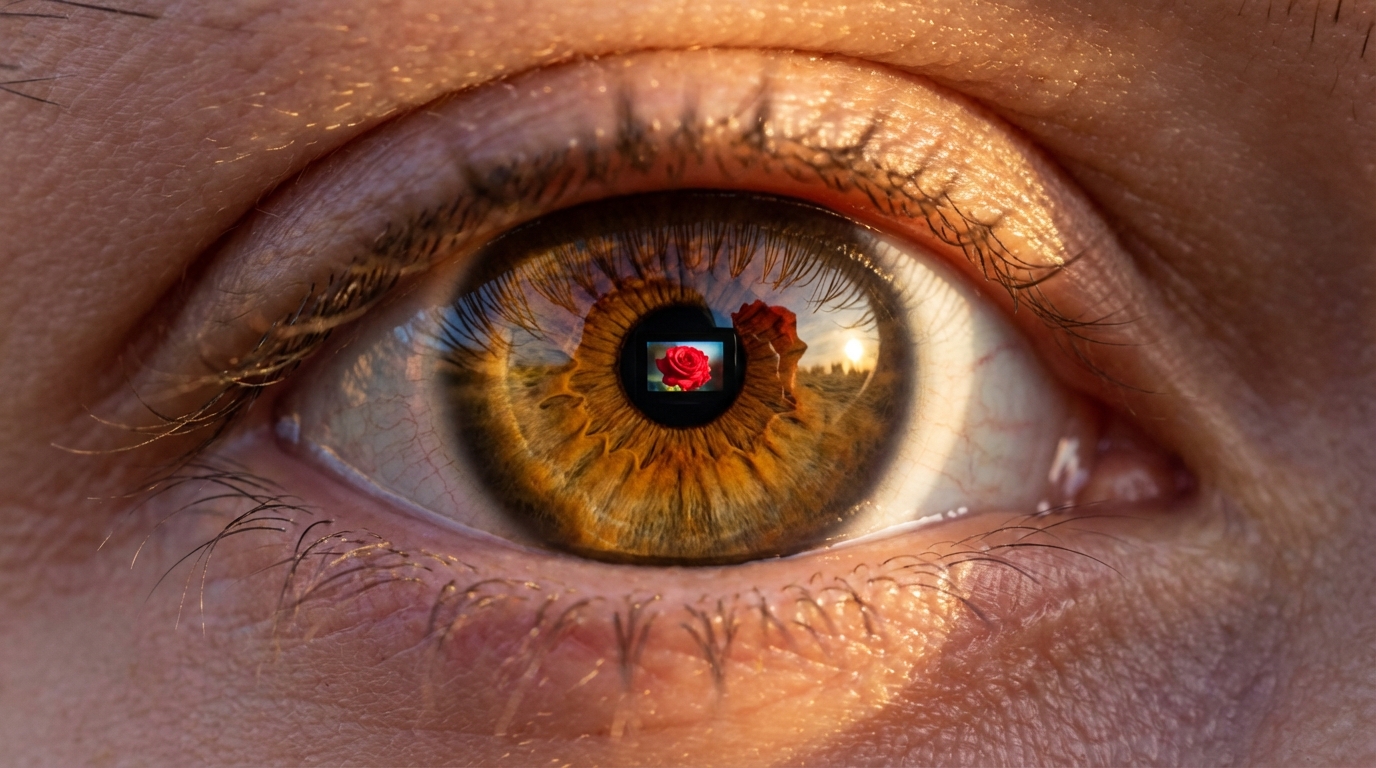
Imagine biting into a perfectly ripe strawberry and noticing its vibrant, rich color. That uniquely personal, subjective feeling of seeing the color red is what philosophers refer to as qualia. It is the raw sensation of your awareness, forming the continuous internal movie of experience that plays in your mind every waking moment. While scientists can easily measure the exact wavelength of light bouncing off that fruit, they cannot measure or share your private sensation of that specific color. This vivid subjectivity is the beating heart of the hard problem of consciousness, a philosophical puzzle that asks why physical brain activity feels like anything at all to you.
To truly grasp why this is such a monumental mystery, it helps to look at what experts call the easy problems of the mind. These functional tasks include mapping how your eyes absorb photons, how your optic nerve transmits electrical signals, and how your brain categorizes the visual data. Researchers can track these mechanical processes with incredible precision using modern imaging technology. However, mapping every neural connection still fails to explain how those cold, biological mechanics suddenly spark into your bright, personal experience of crimson. The physical data simply does not account for the rich, undeniable reality of what it is like to be you in that exact moment.
This gap between physical brain function and subjective awareness continues to fascinate neuroscientists and philosophers today. You can think of your brain as a highly advanced biological computer processing countless inputs, yet no one knows how the lights of personal awareness turn on inside the machine. Even if we eventually decode every physical mechanism responsible for human behavior, the silent, invisible observer watching your internal movie might remain entirely unexplained. Exploring this concept invites you to look at your everyday perceptions with a renewed sense of absolute wonder. Your consciousness stands as one of the greatest unresolved mysteries in science, reminding us that there is something deeply profound about simply experiencing the world.
The Philosophical Zombie Thought Experiment
Imagine walking down the street and running into an exact replica of yourself. This duplicate looks just like you, talks exactly like you, and even reacts to a stubbed toe with the same wince of pain. However, there is one major difference hidden beneath the surface of this perfect copy. In the realm of philosophy, this duplicate is known as a philosophical zombie, a being completely devoid of any internal, first-person subjective experience. While your brain processes a beautiful sunset and creates a rich inner feeling of awe, the zombie processes the same visual data in complete mental darkness.
This strange scenario sits at the very heart of the hard problem of consciousness. Scientists can easily map out the mechanical processes of your brain, tracking how electrical signals travel through your nervous system to make you pull your hand away from a hot stove. The philosophical zombie thought experiment forces you to ask why those physical reactions must be accompanied by a conscious experience at all. If a physical system can theoretically perform every human behavior without feeling anything, then our standard biological explanations fall short. There is a profound gap between mapping the functional wiring of our minds and understanding why the lights are on inside your head.
Grappling with this concept helps you appreciate just how mysterious your everyday reality truly is. You are not just a complex biological machine reacting to stimuli in a dark, empty void. Instead, you have a private, vibrant mental life filled with colors, emotions, and sensations that cannot be fully explained by equations or brain scans. The zombie thought experiment remains a brilliant tool because it clearly separates the easy problems of brain mechanics from the genuine mystery of subjective awareness. It leaves curious minds wondering how exactly the physical matter inside our skulls manages to conjure up the vivid movie of human experience.
The Enduring Mystery of Your Inner World
The hard problem of consciousness continues to stand as one of the most brilliant and enduring mysteries of our time. Even as scientists map the intricate neural pathways of the human brain, the leap from physical chemistry to your rich internal world remains completely unexplained. You can easily understand the mechanics behind how your eyes process light or how your nerves transmit signals to your central nervous system. However, figuring out why those biological functions feel like something to you is a puzzle that defies our current scientific methods. This gap between the physical brain and the subjective mind reminds us that there are still massive frontiers waiting to be explored.
Grappling with this profound philosophical question inevitably transforms how you move through your daily life. When you step outside and feel the warmth of the sun on your skin, you are no longer just experiencing a biological reaction to solar radiation. You are participating in a miraculous subjective event that the world’s greatest thinkers cannot fully explain. This realization invites you to pause and find a deep sense of awe in the seemingly ordinary moments of your day. Every taste of your morning coffee and every vibrant color you see becomes a testament to the incredible mystery of your own awareness.
The lack of a definitive answer is not a scientific failure but a beautiful invitation to keep questioning reality. You do not need a degree in neuroscience or philosophy to marvel at the sheer fact that you exist as a conscious being. As you continue to explore these fascinating concepts, you will find that the questions themselves are just as valuable as the answers. The hard problem of consciousness leaves you with a profound gift, which is a renewed appreciation for the simple, extraordinary act of experiencing the universe. Keep nurturing that curiosity, because your subjective perspective is entirely unique and utterly irreplaceable.
Frequently Asked Questions
1. What exactly is the hard problem of consciousness?
The hard problem of consciousness asks why your physical brain processes give rise to a rich inner life. While scientists can track the chemical reactions in your head, they cannot explain why those reactions create your unique personal experience. It is the profound mystery of why you feel like a conscious being rather than an unfeeling robot.
2. What are the easy problems of human cognition?
The easy problems involve mapping the physical functions of your brain, like how your visual cortex recognizes a face or how you process pain. These tasks are not necessarily simple, but they are considered easy because they can be observed and measured using standard scientific methods. They rely purely on objective mechanics rather than subjective feelings.
3. Why can’t neuroscientists just map your brain to solve the hard problem?
Mapping every neural pathway only explains the mechanical side of your cognition. It shows how your brain processes data, but it completely fails to explain why that data is accompanied by a vivid personal experience. Bridging the gap between objective biology and your first-person perspective requires looking beyond standard scientific measurement.
4. How does the hard problem of consciousness change your view of reality?
Grasping this puzzle forces you to deeply question the relationship between physical matter and your own awareness. It suggests that standard biology might not hold all the answers to human existence. You are left to wonder if consciousness is a fundamental part of the universe rather than just a byproduct of brain chemistry.
5. Why is your subjective experience so difficult to measure?
Your inner life is entirely private and accessible only from your first-person perspective. While a scientist can measure the electrical signals in your brain when you taste coffee, they cannot physically observe the flavor you are experiencing. This invisible gap between physical signals and personal feeling makes subjective awareness impossible to quantify.
6. What is the difference between your brain and a complex robot?
A complex robot can process information, react to stimuli, and perform sophisticated tasks without feeling anything. Your brain performs similar mechanical operations, but it also generates a continuous internal movie of subjective experience. The hard problem highlights this exact difference by asking why your physical machinery produces feelings and awareness.
7. Does the hard problem mean science is failing to understand the mind?
Not at all, as science continues to make incredible breakthroughs in understanding how your brain functions. However, the hard problem highlights a specific boundary where traditional observation methods reach their limits. It simply means that explaining your personal awareness requires an entirely new way of thinking about the universe and human biology.