
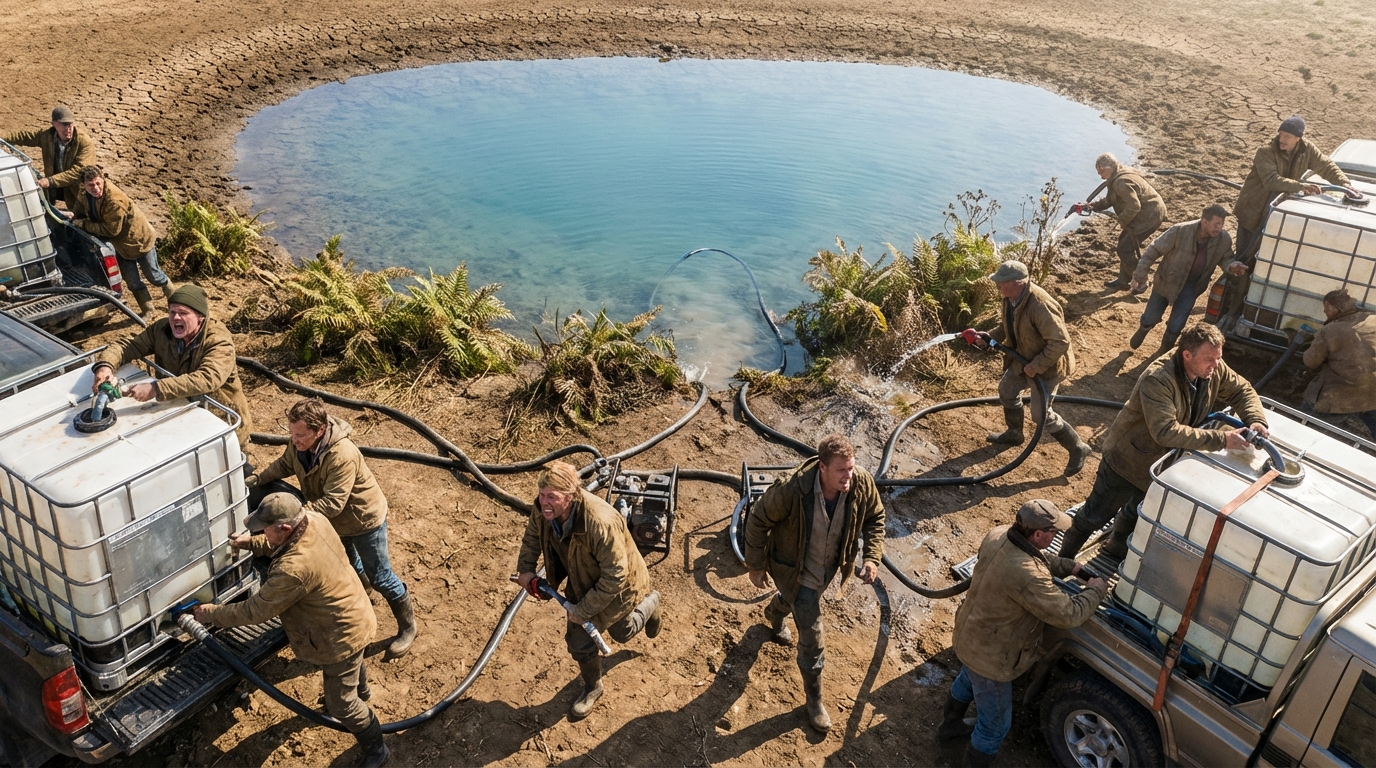
Imagine sharing a lush, green pasture with your neighbors, where everyone agrees to graze just one cow to keep the land healthy. If you quietly add a second cow, you double your profit while the slight damage to the field is absorbed by the entire community. This irresistible temptation to prioritize individual gain over collective survival is the core of the tragedy of the commons. It is a powerful economic and environmental concept explaining why rational people often deplete shared, unregulated resources like our oceans, groundwater, and atmosphere.
When the rate at which you and others extract a shared resource outpaces its natural ability to replenish, the entire system edges toward ecological bankruptcy. Originally popularized in the late 1960s, this theory takes on new urgency today as our global ecosystems approach critical tipping points. Recognizing these hidden incentive structures helps you make sense of why solving modern crises, from climate change to the cluttering of Earth’s orbit, requires entirely new ways of managing the spaces we all share.
Key Takeaways
- The tragedy of the commons is driven by a hidden incentive structure where individuals reap the immediate benefits of exploiting a shared resource while the entire community absorbs the long-term costs.
- Unregulated self-interest is pushing critical modern systems, from global groundwater supplies to Earth’s orbital environment, toward catastrophic tipping points.
- Shifting from a mindset of short-term resource extraction to community-driven collective stewardship is essential to save shared environments from permanent insolvency.
- Prioritizing collective well-being in your daily decisions transforms you from a passive observer into an active participant in preventing global ecological bankruptcy.
Garrett Hardin And The Incentive Structure Flaw
When you look at shared resources like our oceans, groundwater, or even public digital spaces, you might wonder why they so often fall into disrepair. Ecologist Garrett Hardin sought to answer this exact question in his classic 1968 essay about the tragedy of the commons. He proposed a fascinating but unsettling theory about human nature and shared public spaces. According to his framework, individuals acting completely rationally and independently will eventually deplete an unregulated resource. Even when everyone knows destroying the resource will hurt them in the long run, the drive for personal gain pushes them to keep taking.
To understand why this happens, you have to look closely at the underlying incentive structure governing these shared spaces. Whenever you use a public resource, you receive the full and immediate benefit of taking one additional unit for yourself. However, the cost of that depletion is spread out among everyone else who relies on the same system. This creates a dangerous mathematical mismatch where your personal reward always outweighs your individual share of the environmental or social cost. Because every rational person makes this exact same calculation, the community inevitably races toward total resource exhaustion.
You can see this devastating cycle playing out in everyday societal issues ranging from global atmospheric pollution to localized traffic congestion. When the rate of extraction exceeds the natural rate of replenishment, the entire system enters a state of insolvency. Hardin illustrated that without proper regulation or community agreements, self-interest effectively bankrupts the very systems you rely on to survive. By recognizing this inherent flaw in how people interact with unregulated environments, you can better understand why modern global systems are reaching critical tipping points. Solving these complex modern crises requires you to look beyond individual gain and consider the future health of our shared world.
Global Water Bankruptcy And Modern Tipping Points

When you look at the looming 2026 global water bankruptcy, you are witnessing the tragedy of the commons playing out in real time. This classic economic theory explains how people acting in their own self-interest will eventually deplete a shared resource, even when they know it will cause long-term harm. In the case of our global water supply, agricultural and industrial sectors continuously extract groundwater to maximize their immediate profits while sharing the environmental cost with everyone else. Because the rate of extraction far exceeds natural replenishment, the entire system is being pushed toward a catastrophic tipping point. This theoretical insolvency translates into a very real crisis that directly threatens the daily water security of your own community.
Looking beyond our atmosphere, this exact same dynamic is unfolding far above your head in the growing crisis of orbital space debris. Earth’s orbit functions as another shared and largely unregulated commons where private companies and governments rush to launch satellites for immediate technological benefits. Each new launch provides a massive advantage to the individual operator, but the resulting clutter creates a shared risk of collisions for everyone else. Because no single entity is held entirely responsible for cleaning up the mess, the incentive structure encourages continuous pollution of our orbital environment. If this unchecked exploitation continues, the resulting space junk could eventually destroy the satellite networks you rely on for basic communication and navigation.
Understanding these modern environmental crises requires you to look beyond simple policy failures and recognize the underlying ethical dilemma at play. The tragedy of the commons is not just an abstract philosophical framework discussed in university classrooms. It is a highly practical lens that helps you make sense of the everyday societal observations unfolding in your local news. By recognizing how shared resources are spoiled by unregulated self-interest, you can better advocate for sustainable solutions before these critical systems face total collapse. Bridging this classic political thought with our current reality empowers you to protect the vital resources your community needs to survive.
Shifting From Resource Extraction To Collective Stewardship
The classic theory of the tragedy of the commons often paints a bleak picture of human nature, suggesting we are doomed to deplete our shared resources out of sheer self-interest. You can probably see this mindset playing out in your everyday life, whether you are looking at overused public parks, congested highways, or cluttered digital spaces. However, you do not have to accept this gloomy inevitability as the final word on human behavior. By shifting your perspective from individual resource extraction to collective stewardship, you open the door to a much more hopeful and sustainable future. This mental pivot allows you to view shared environments not as chaotic spaces waiting to be exploited, but as valuable communal assets requiring proactive care.
Embracing this new approach means championing cooperative systems and ethical frameworks that prioritize the long-term health of our communities. Instead of asking how much you can take before a resource runs out, you start asking how you can contribute to its ongoing replenishment. You will find that local groups around the world are already successfully managing shared resources through mutual agreements, transparent communication, and shared responsibilities. When you participate in or advocate for these community-driven models, you help create a powerful buffer against systemic collapse. This collaborative energy transforms the way society interacts with the environment, proving that cooperation is an incredibly effective tool for survival.
Moving toward collective stewardship is the most effective way to save our shared environments from permanent insolvency. You have the power to influence this cultural shift by supporting everyday practices that hold everyone accountable for the commons. Whether you are advocating for sustainable water usage in your neighborhood or promoting fair digital ethics, your personal choices matter. By recognizing that your individual well-being is deeply tied to the health of the broader community, you become an active participant in preserving our world. This modernized understanding of shared resources ensures that future generations will inherit a thriving ecosystem rather than a bankrupt planet.
How Your Choices Ripple Through the Commons
The tragedy of the commons serves as a powerful mirror reflecting how individual choices ripple through our shared world. When you look closely at this classic economic and ethical theory, the core lesson reveals that unchecked self-interest can slowly bankrupt the very resources we all rely on to survive. The incentive structure often pushes people to take more than their fair share because the immediate benefits are personal, while the long-term costs are shared by everyone. By understanding this philosophical framework, you can begin to recognize the hidden costs behind everyday societal observations and daily conveniences. This awareness is the first crucial step toward shifting our collective mindset from short-term extraction to genuine sustainability.
You are deeply connected to these global ecosystems, meaning your daily decisions play a direct role in either depleting or preserving our shared environment. Whether we are looking at the atmosphere we breathe, the oceans providing our food, or even the groundwater sustaining our communities, these unregulated spaces require our active protection. It is incredibly easy to feel overwhelmed as many of these vital planetary systems begin to reach critical tipping points. However, recognizing your personal stake in these shared resources transforms you from a passive observer into an active participant in global conservation. Acknowledging your impact helps you see that every small, sustainable choice contributes to the health of the broader system.
Grasping this classic concept gives you a clear and actionable roadmap for inspiring positive change in your community. Recognizing the inherent flaws in unregulated shared spaces empowers you to advocate for better rules and more cooperative social structures. When you choose to prioritize collective well-being over immediate personal gain, you actively help rewrite the narrative from inevitable collapse to resilient cooperation. Bridging this political thought with modern social issues proves that we are not doomed to destroy our shared resources. Armed with this timeless philosophical insight, you hold the power to help build a much more responsible and cooperative society for future generations.
Frequently Asked Questions
1. What exactly is the tragedy of the commons?
The tragedy of the commons is an economic and environmental concept where individuals prioritize personal gain over the collective good. When you use a shared, unregulated resource, the temptation to take a little extra for yourself ultimately leads to the depletion of that resource for everyone.
2. Who came up with the tragedy of the commons theory?
Ecologist Garrett Hardin popularized this concept for us in a classic 1968 essay. He showed how your drive for personal gain can push you to keep taking from a shared space, even when you know it will eventually hurt the whole community.
3. Can you give a simple example of this concept?
Imagine you share a lush pasture with your neighbors and everyone agrees to graze just one cow. If you secretly add a second cow to double your profit, the slight damage is shared by everyone. When everyone follows this same logic, the pasture is quickly destroyed.
4. Why do rational people participate in ruining shared resources?
It all comes down to hidden incentive structures. Whenever you use a public resource, you receive the full benefit of your actions while the negative impacts are spread across the entire community. This makes it incredibly tempting for you to take more than your fair share.
5. What are some modern examples of shared resources at risk?
Today, you can see this tragedy playing out across global ecosystems like our oceans, groundwater reserves, and the atmosphere. It even extends beyond Earth to the cluttering of our orbital space with satellite debris. Any unregulated space that we all share is vulnerable to this ecological bankruptcy.
6. How does understanding this theory help us solve climate change?
Recognizing these hidden incentive structures helps you understand why traditional solutions often fail. To solve modern environmental crises, you need entirely new ways of managing the spaces we all share. By changing the incentives, you can help protect our ecosystems from reaching critical tipping points.
7. Does this only apply to environmental issues?
While it is deeply tied to the environment, you will also see this concept in other shared areas like public digital spaces. Any unregulated system where you and others compete for a limited resource can fall into disrepair. Understanding the underlying incentives helps you protect both digital and physical commons.