

Have you ever looked at a hyper-realistic AI-generated image and wondered what makes it feel both captivating and slightly unsettling? You are grappling with a centuries-old philosophical puzzle known as mimesis art theory. Rooted in the ancient Greek word for imitation, this foundational concept explores how art mimics or represents the real world. While thinkers like Plato and Aristotle fiercely debated its value thousands of years ago, the rise of generative artificial intelligence has thrust this ancient debate right back onto your screen.
To understand why a machine’s ability to replicate human creativity feels so profound, you must look at how these early philosophers viewed imitation. Plato warned that copying reality was a deceptive illusion, while Aristotle celebrated it as a deeply creative and natural instinct. Grasping these historical roots gives you a powerful lens to interpret modern technology, helping you define what it truly means to create art when algorithms can paint and write just like us.
Key Takeaways
- The ancient Greek concept of mimesis contrasts Plato’s view of art as a deceptive illusion with Aristotle’s belief that imitation is a vital tool for understanding human emotions.
- Modern pop culture relies heavily on mimesis, as creators intentionally curate and exaggerate realistic details in movies and video games to manufacture empathy.
- Generative AI acts as the ultimate modern imitation by scraping human creations to produce works that revive centuries-old debates about artistic value and intentionality.
- Understanding the historical roots of art theory provides a vital framework for navigating today’s digital landscape and redefining what it means to create.
Plato and the Deception of Imitation
When exploring the origins of art theory, you will quickly encounter Plato and his skeptical view of creative expression. In his famous work, The Republic, he argued that art is fundamentally deceptive because it is entirely based on imitation, or mimesis. To understand his perspective, imagine the concept of a perfect, ideal chair existing somewhere in a higher realm of pure thought. A carpenter building a physical chair in the real world is simply creating an imperfect copy of that original, flawless idea. Therefore, a painter who creates a portrait of that wooden chair is merely copying an imitation, moving you even further away from the absolute truth.
You can easily grasp this ancient concept by thinking about how we consume modern entertainment. Picture a stunning, highly detailed photograph of a prop lightsaber from your favorite science fiction film franchise. The actual physical prop used on the set is already an imitation of the original concept art and lore dreamed up by the creators. When you look at a photograph of that plastic prop, you are staring at an imitation of an imitation. Plato believed this recursive copying process diluted reality, making artists purveyors of illusion rather than seekers of genuine knowledge.
This philosophical stance positioned mimesis as a potentially dangerous tool that could easily mislead the public. Because a painting or a photograph only captures the surface appearance of an object, you are left with a hollow shell devoid of true substance. Plato worried that audiences would become so captivated by these beautiful illusions that they would forget to seek out deeper philosophical truths. While you might see a gorgeous piece of artwork on a gallery wall, he saw a clever deception designed to distract your mind from reality. Understanding this foundational critique helps you appreciate why the debate over art imitating life has survived for thousands of years.
Aristotle’s Defense of Creative Representation
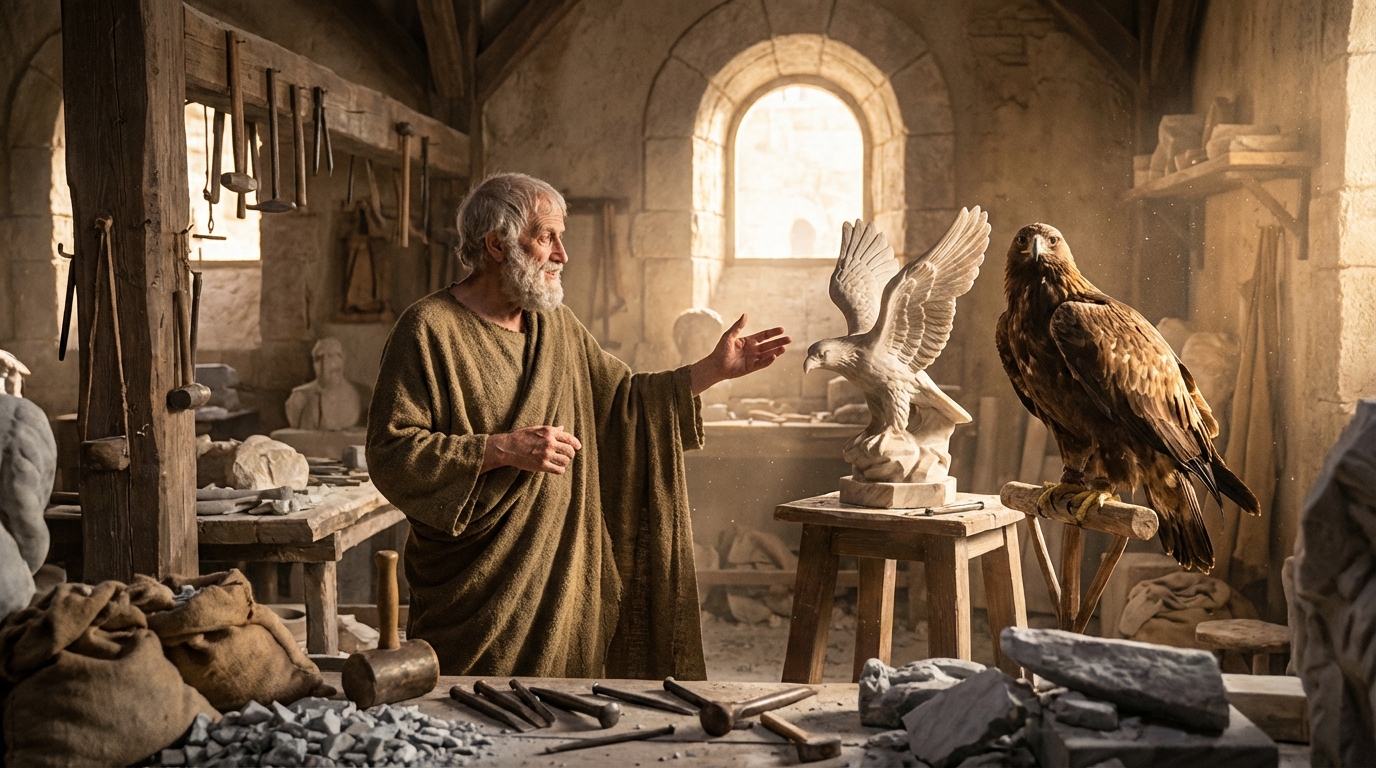
If you have ever felt moved by a beautifully painted scene or a gripping film, you have experienced exactly what Aristotle defended in his theory of mimesis. While his teacher Plato dismissed art as a deceptive imitation that pulls us away from ultimate truth, Aristotle saw creative representation in a much more positive light. He argued that mimicking the world around us is not a cheap trick, but rather a deeply ingrained human instinct that brings us genuine joy. From the time you were a child playing make-believe, you used imitation as a fundamental tool to understand your environment. Aristotle recognized that this urge to recreate reality is how we safely process complex emotions and learn about the human condition.
You can easily see this dynamic at play when you look at modern entertainment and pop culture. Consider the way blockbuster superhero movies or gripping television dramas reflect our real-world struggles through a fictional lens. When you watch a hero overcome seemingly impossible odds on screen, you are not just looking at a fake scenario. Instead, you are engaging with a perfected, concentrated version of human resilience that helps you face your own daily challenges. Aristotle believed that artists capture the essence of what could be, allowing us to learn from these representations and apply those lessons to our own lives.
This powerful framework completely shifts how you might value the creative works you consume every day. From Aristotle’s perspective, art is elevated far beyond a mere carbon copy of the physical world. It becomes a heightened representation of universal truths, distilling the chaotic mess of real life into something clear and meaningful. When a creator mimics reality, they strip away the irrelevant details to expose the core emotions that deeply resonate with us all. This means the art you love does not just imitate life, but actually enriches your understanding of what it means to be human.
Spotting Mimesis in Modern Pop Culture
When you look closely at your favorite movies and video games, you will quickly realize that ancient Greek philosophers were describing the exact media environment we experience today. Mimesis is not just a dusty concept confined to classical paintings or ancient theater. You can see this theory actively at work in the hyper-realistic graphics of modern cinema and the breathtakingly immersive environments of recent video games. These digital worlds strive to mirror our own reality by perfectly replicating lighting, physics, and human expressions. By recognizing this artistic imitation, you can begin to appreciate how modern creators are carrying on a philosophical tradition that started thousands of years ago.
However, these popular mediums are never just blindly copying the physical world around us. Instead, directors and game designers actively curate reality to guide your emotional experience. When a game developer designs a ruined city, they selectively amplify certain details like overgrown vegetation or crumbling architecture to make you feel a profound sense of isolation. Aristotle championed this exact approach, arguing that artistic imitation should capture the deeper essence of a subject rather than serving as a mechanical mirror. Creators carefully select which parts of reality to mimic and which parts to exaggerate to provoke a highly specific reaction from you.
The next time you find yourself entirely lost in a gripping film or a massive open-world game, take a moment to notice how the environment manipulates your senses. This crafted hyper-realism does not exist simply to show off advanced technology or massive production budgets. It functions as a deliberate bridge between the intention of the artist and your personal emotions. By wrapping fictional narratives in a deeply familiar and realistic package, these creators make you care deeply about things that do not actually exist. This incredible ability to manufacture empathy through imitation proves that the ancient theory of mimesis remains the beating heart of modern entertainment.
Generative AI as the Ultimate Imitation
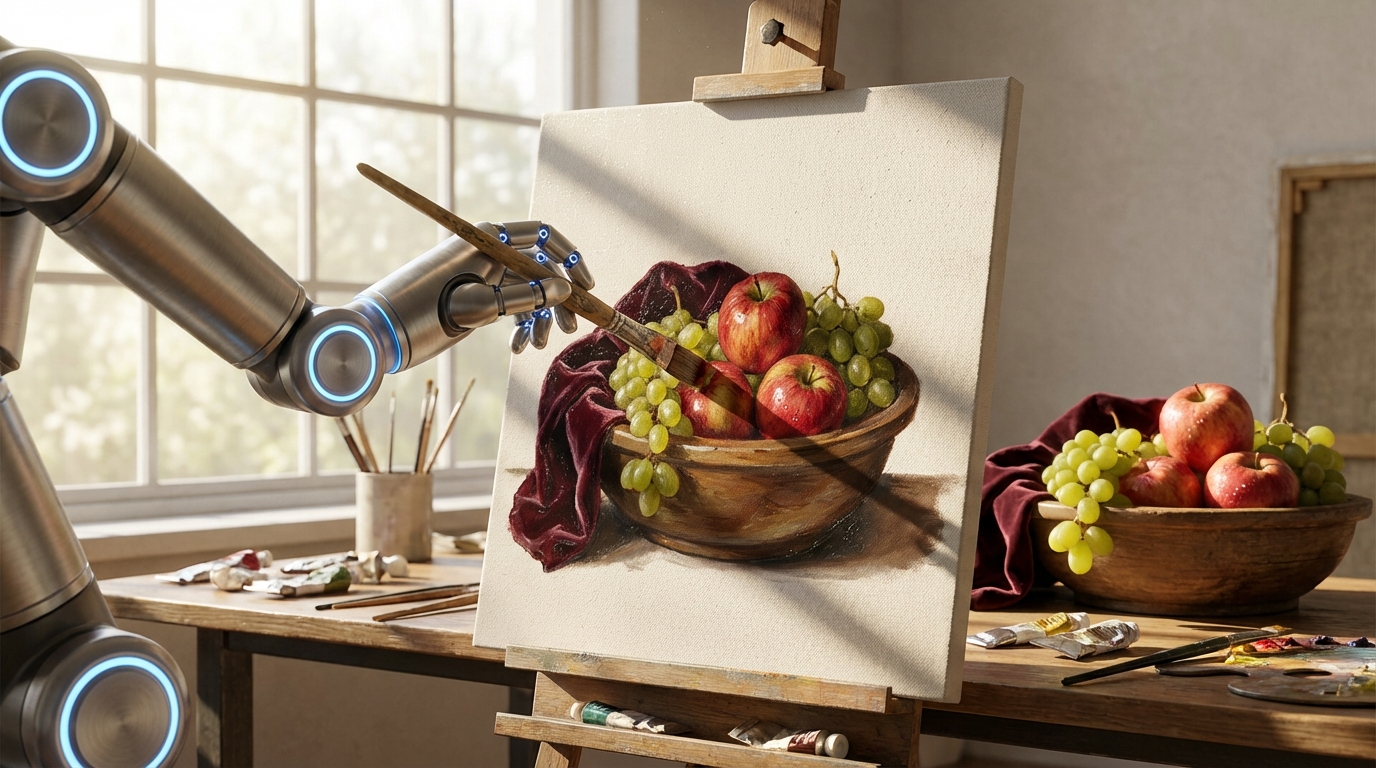
When you look at an image generated by artificial intelligence, you are witnessing the ancient concept of mimesis playing out in real time. Platforms that create these digital artworks do not spontaneously dream up original concepts from thin air. Instead, they scrape millions of human-made paintings, photographs, and illustrations to learn how to mimic our creative output. You might wonder if this process is the ultimate realization of what Plato feared most when he warned about art being an imitation of an imitation. If a human painter creates a flawed copy of an ideal form, an algorithm generating a picture based on that painting is now three steps removed from physical reality.
This modern technological era forces you to completely redefine how you understand artistic imitation today. Generative tools create a fascinating recursive loop where machines imitate human art, and humans then draw inspiration from those machine-generated outputs. As you experience this shift, the boundary between the original creator and the digital mimic becomes incredibly blurred. Algorithms analyze the brushstrokes of historical masters and the digital styles of contemporary artists to produce something that feels both comfortingly familiar and entirely alien. You are left to grapple with whether these systems are simply highly advanced mirrors reflecting our culture back at us or if they represent a new evolution of mimesis altogether.
Consider how often you encounter these artificially generated visuals on your social media feeds or in digital marketing campaigns. Every time you scroll past a hyper-realistic digital portrait or a fantastical scene, you are participating in a modern philosophical experiment. The technology challenges you to ask if an image holds true artistic value when it lacks human intentionality. By applying the lens of mimesis to these everyday digital encounters, you can better appreciate the deep historical roots of our current debates over algorithms. Exploring this recursive relationship helps you understand that our modern arguments about digital creativity are just the latest chapter in a conversation started by Greek philosophers thousands of years ago.
Tracing Mimesis From Plato to Your Screen
When you trace the evolution of mimesis art theory, you uncover a fascinating timeline that stretches from the marble halls of ancient Greece to the digital screens of today. Philosophers like Plato and Aristotle first debated whether a painting was just a pale copy of reality or a profound creative act. Now, we find ourselves having those exact same conversations when we look at hyper-realistic computer graphics in our favorite movies or artificial intelligence artwork on our social feeds. The tools have evolved from simple chisels and pigments to complex algorithms, but the core human drive to mirror our world remains completely unchanged. You can see this continuous thread connecting classic statues to modern pop culture, proving that the urge to imitate is deeply wired into our creative DNA.
Rather than being a dusty academic concept, mimesis serves as a living framework that helps you understand your emotional connection to the art you consume daily. It challenges you to look closer at how creators capture the human experience, whether they are painting a canvas portrait or programming a virtual reality environment. This ongoing dialogue between reality and representation makes the study of aesthetics incredibly relevant to our modern lives. As generative technology continues to blur the line between what is real and what is artificial, we are entering a thrilling new chapter of artistic expression. What do you think the future of imitation will look like when our digital tools become so advanced that we can no longer tell the copy from the original?
Frequently Asked Questions
1. What exactly is mimesis art theory?
Mimesis is an ancient Greek concept that explores how art imitates or represents the real world. When you look at a painting or read a story, you are seeing the artist’s attempt to mirror reality. Understanding this theory helps you grasp the fundamental relationship between human creativity and the world around us.
2. Why did Plato believe that art was deceptive?
Plato argued that true reality exists only in a higher realm of perfect ideas. When a carpenter builds a chair, it is an imperfect copy of that perfect idea, and a painting of that chair is just a copy of a copy. Therefore, he felt that art pulls you further away from the absolute truth by dealing entirely in illusions.
3. How did Aristotle view imitation differently than Plato?
While Plato saw imitation as a dangerous illusion, Aristotle celebrated it as a deeply natural and creative human instinct. He believed that you learn and find joy through copying the world around you. Instead of deceiving us, Aristotle argued that mimesis helps you process emotions and understand complex truths.
4. How does mimesis theory connect to modern AI-generated art?
Generative AI brings the ancient debate of mimesis right to your screen by perfectly mimicking human creativity and real-world imagery. When an algorithm generates a highly realistic portrait, you have to ask whether it is creating true art or simply executing a complex imitation. This philosophical lens helps you make sense of the unsettling yet captivating nature of digital creations.
5. What did Plato mean by an ideal form?
Plato believed that every physical object you see is just a flawed reflection of a flawless, abstract concept existing in a higher mental realm. For example, any physical chair you sit in is just a temporary imitation of the ultimate, perfect idea of a chair. This concept is crucial because it forms the basis of his argument that physical art is inherently disconnected from true reality.
6. Why is understanding mimesis important for you today?
Grasping these ancient historical roots gives you a powerful framework to interpret today’s rapidly changing digital environment. As algorithms learn to paint and write, understanding the nature of imitation helps you define what it truly means to create. It empowers you to look beyond the surface of media and appreciate the deeper philosophical questions behind human expression.
7. Does mimesis mean that all art is just a simple copy?
Not necessarily, as mimesis goes far beyond making an exact photocopy of your surroundings. It involves interpreting, reflecting, and sometimes reimagining reality to evoke specific emotions or ideas. Whether you are looking at an ancient sculpture or a modern digital rendering, mimesis is about how the artwork relates to the human experience.