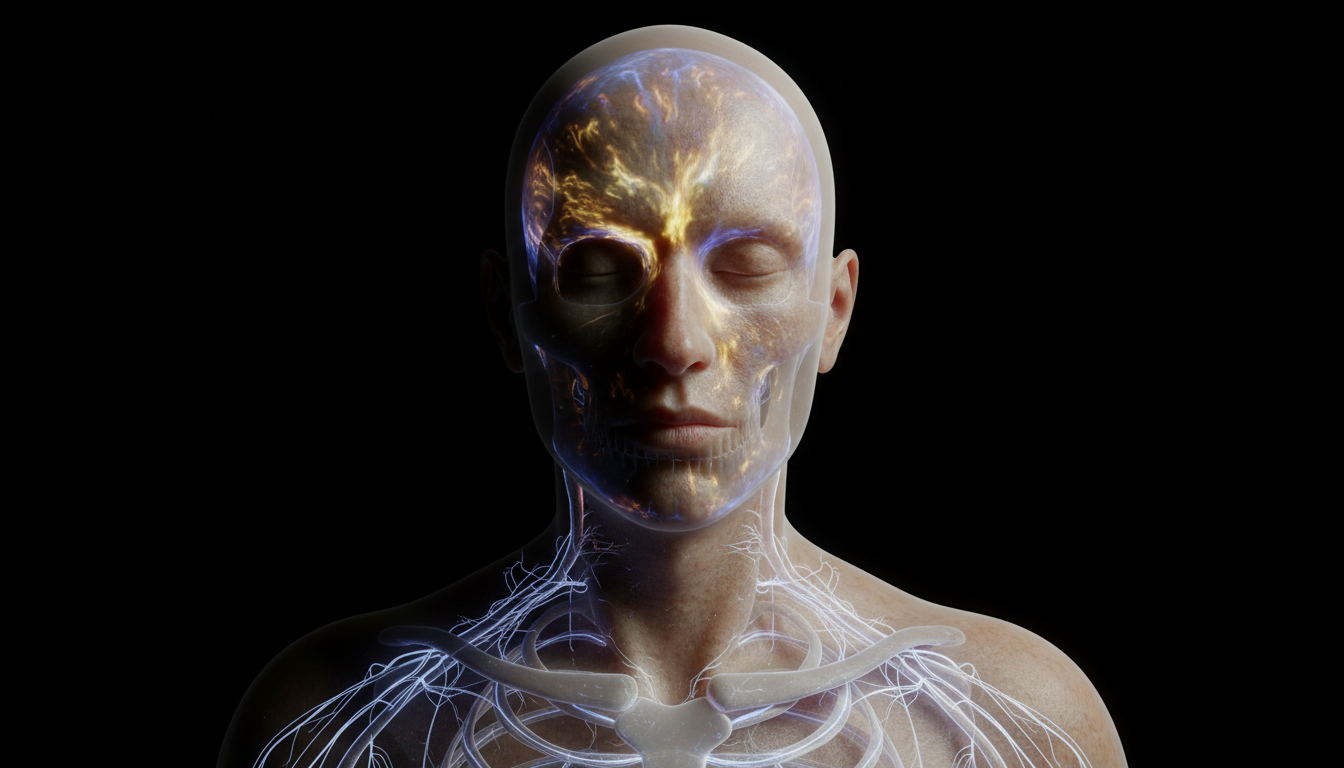

Imagine you are sitting across from a close friend, watching them laugh at a joke or wince after stubbing their toe. You assume they are experiencing the same internal world of feelings and sensations as you, but the philosophical zombie concept challenges that certainty. This thought experiment asks you to imagine a being that is physically and behaviorally indistinguishable from a human, yet possesses absolutely no internal light of consciousness. It can discuss art or cry at a movie, but on the inside, there is total darkness, no subjective “what it is like” to be them.
By exploring this paradox, you begin to peel back the layers of the “hard problem” of consciousness and its relationship to the physical world. If a creature can act exactly like you without actually feeling anything, it forces you to question whether our brains are simply biological machines or if there is something extra that creates the “spark” of experience. Understanding this concept is essential for anyone curious about whether science can ever fully explain the soul or if some mysteries are destined to remain beyond the reach of physical measurement.
Key Takeaways
- The philosophical zombie thought experiment reveals the ‘hard problem’ of consciousness by demonstrating that a being can be physically and behaviorally identical to a human while lacking any subjective inner experience.
- The existence of qualia—the first-person sensations of experiences like color or pain—suggests that consciousness is a distinct phenomenon that cannot be fully explained by physical or biological processes alone.
- If a philosophical zombie is logically cakeable, then physicalism is incomplete because it implies that physical facts alone do not account for the ‘spark’ of awareness.
- Functionalist views of the mind as a biological computer fail to explain why physical inputs must be accompanied by a rich, private internal life rather than just automated behavioral outputs.
Defining The Soulless Double And Qualia
Imagine you are standing face to face with a person who is a perfect, molecule for molecule replica of yourself. This being, known as a philosophical zombie, possesses a brain that fires exactly like yours and a body that reacts to every external stimulus with identical precision. If you were to prick this double with a needle, they would flinch and cry out in the same way you do. From the perspective of physics and biology, there is absolutely no measurable difference between the two of you. However, despite this physical symmetry, something profound is missing behind their eyes.
The critical distinction lies in the total absence of qualia, which are the subjective, first person experiences that define your internal life. When you look at a vibrant sunset, you do not just process light frequencies, you actually feel the warmth and see the richness of the colors. A philosophical zombie processes the same data and might even comment on the beauty of the view, but they experience nothing at all. For them, there is no internal light or felt sensation accompanying their actions. They are essentially a high functioning biological computer running a complex program in total darkness.
This thought experiment challenges you to consider whether physical matter is enough to produce the “what it is like” aspect of being alive. If a creature can act and look exactly like a human without having a single conscious thought, it suggests that consciousness might be something extra. You are forced to wonder if our current understanding of science can truly explain the spark of awareness that makes your life feel like a movie rather than a data stream. By stripping away the soul while leaving the atoms intact, the zombie concept highlights the mysterious gap between the physical brain and the felt experience of the mind.
David Chalmers And The Conceivability Argument

Imagine you are standing next to a person who looks, acts, and speaks exactly like you, right down to the last molecule of their DNA. David Chalmers asks you to consider the possibility that this person is a philosophical zombie, a being that performs every human function perfectly but possesses no internal world. While they might cry at a sad movie or scream if they stub their toe, there is no actual feeling of sadness or pain happening behind their eyes. This thought experiment is designed to test the limits of physicalism, which is the idea that everything in the universe, including your mind, can be fully explained by physical processes. If you can logically conceive of a being that is physically identical to you but lacks any subjective experience, it suggests that physicalism is incomplete because it implies that consciousness might be something extra.
The strength of this argument lies in the logical leap from conceivability to possibility. Chalmers argues that because we can clearly imagine a p-zombie without any logical contradictions, such a being is a metaphysical possibility. If a world could exist where all the physical facts are the same but the “lights of consciousness” are turned off, then physical facts alone cannot account for the existence of the mind. This implies that your feelings, the way you experience the scent of a rose or the vibrant blue of the sky, are not just byproducts of neurons firing in your brain. By following this line of reasoning, you begin to see why many philosophers believe that consciousness is everywhere or at least requires a separate explanation beyond the reach of traditional physics or biology.
Functionalism Versus The Mystery Of Experience
Imagine you are sitting across from a friend who is laughing at a joke or wincing as they stub their toe. To a functionalist, these reactions are simply the result of complex biological inputs being processed into specific behavioral outputs. From this perspective, the mind is like a sophisticated computer program where the internal wiring is all that matters for the system to work. If your friend is a philosophical zombie, they can mimic every external response perfectly without actually feeling a single thing. Their brain processes the information of the stubbed toe and triggers a shout, but the internal light of awareness is completely switched off.
This thought experiment forces you to confront the Hard Problem of consciousness by highlighting the gap between physical data and your own felt reality. You know from your own life that there is a vivid, subjective quality to your experiences, such as the specific warmth of a summer sun or the sharp sting of a paper cut. A p-zombie might describe the sun or the pain with scientific accuracy, but it does so through cold calculation rather than genuine feeling. While the zombie is a functional master of its environment, it lacks the qualia that make your existence meaningful and private.
The real mystery lies in why these physical processes are accompanied by a rich inner movie in the first place. If a p-zombie can navigate the world and hold deep conversations without being conscious, it suggests that physical matter alone might not explain the existence of your soul or mind. This comparison challenges the idea that we can understand the human brain solely by studying its mechanical functions. By looking at the p-zombie, you can see that being a person involves more than just reacting to the world; it involves the mysterious, undeniable fact of being awake.
The Mystery of Your Inner Experience
Reflecting on the p-zombie thought experiment forces you to look inward and appreciate the profound mystery of your own inner life. While it is easy to take your thoughts and feelings for granted, this scenario highlights that your subjective experiences are not just biological byproducts. You realize that there is a distinct difference between the physical firing of neurons and the actual sensation of warmth or the vibrant color of a sunset. This gap suggests that your consciousness might be something more than just a complex calculation performed by your brain. By imagining a version of yourself that lacks this inner spark, you begin to see your own awareness as a remarkable and unique phenomenon.
The enduring power of the philosophical zombie lies in its ability to challenge the idea that science can explain everything about the human mind through physical data alone. If a being can act exactly like you without actually feeling anything, it implies that our current understanding of physics and biology might be missing a crucial piece of the puzzle. This puzzle remains haunting because it suggests that you can never truly prove the consciousness of those around you, leaving you in a world of potential shadows. It serves as a vital reminder that the most intimate part of your existence is also the most difficult to define or measure. Ultimately, the p-zombie keeps the conversation alive by proving that the relationship between matter and mind is far from settled.
Frequently Asked Questions
1. What exactly is a philosophical zombie?
A philosophical zombie is a hypothetical being that is physically and behaviorally identical to a human but lacks any internal consciousness. You can think of it as a perfect biological machine that performs every human action without actually experiencing the world or feeling any sensations.
2. How can someone act like a human without having feelings?
In this thought experiment, the zombie’s brain processes information and triggers physical reactions through pure biology and physics. While you see them laugh or cry, these are merely automated responses to stimuli rather than a reflection of an inner emotional life.
3. What are qualia and why do they matter in this concept?
Qualia are the subjective, first person experiences you have, such as the specific redness of a rose or the sting of a needle. They are the essential ‘missing ingredient’ in a philosophical zombie, highlighting the gap between physical brain activity and the actual feeling of being alive.
4. Does the existence of these zombies mean science is limited?
The concept suggests that even if you mapped every neuron in the brain, you might still fail to explain why we have subjective experiences. It challenges you to consider if there is a ‘hard problem’ of consciousness that physical measurements alone cannot solve.
5. Are philosophical zombies the same as the zombies in movies?
No, they are quite different because movie zombies are usually easy to spot due to their decay or lack of intelligence. A philosophical zombie is a perfect double of you, making it impossible to distinguish from a conscious person through any external test or observation.
6. Why is this thought experiment important for understanding the mind?
It forces you to confront whether consciousness is a necessary part of the physical world or something extra. By imagining a world where humans act the same but feel nothing, you can better explore the limits of human certainty and the deep relationship between your physical body and your inner soul. To see how this applies to technology, you might ask does AI actually understand you or if it is simply another form of a non-conscious processor. For a different perspective on the existence of qualia and the nature of human consciousness, you can explore historical arguments that isolate the mind from the senses.