
Have you ever noticed how the most stressful moments in your life often stem from trying to force an outcome that isn’t ready to happen? In a culture of constant hustle, you are often taught that success requires aggressive effort, yet ancient Daoist wisdom suggests a more effective path to mastery. By understanding wu wei as a state of effortless action, you can begin to see how aligning yourself with the natural flow of life produces better results than sheer willpower alone.
Imagine moving through your day with the fluidity of water, navigating obstacles without friction or ego-driven struggle. This is not about passivity or laziness; it is the sophisticated art of responding to the world with perfect timing and internal harmony. When you stop pushing against the grain of reality, you unlock a sense of clarity and presence that allows your most authentic, impactful actions to emerge.
Key Takeaways
- Wu wei is not a state of passivity or laziness, but a sophisticated form of ‘effortless action’ where you align your efforts with the natural flow of life to achieve better results than sheer willpower alone.
- Adopting the qualities of water allows you to overcome obstacles through persistence and flexibility rather than brute force, bypassing the friction that leads to burnout.
- True mastery requires prioritizing the quality and timing of your actions over the quantity of your efforts, focusing on being present and responsive rather than trying to micromanage every outcome.
- Integrating wu wei into professional and personal life reduces stress by replacing ego-driven struggle with intuitive flow, allowing you to achieve more while expending less emotional energy.
Defining Wu Wei Beyond Mere Passivity
To understand wu wei, you must first look past the literal translation of non-doing because it is far from an invitation to be lazy. In the original Chinese, the term describes a state where your actions are so aligned with the natural flow of life that they feel effortless action. Think of it as being in the zone or finding a state of flow where you are no longer fighting against the current of your circumstances. Instead of forcing an outcome through sheer willpower, you learn to respond to the world with a sense of dynamic ease. This ancient wisdom suggests that the most effective way to navigate your life is not through constant struggle, but through strategic and mindful alignment.
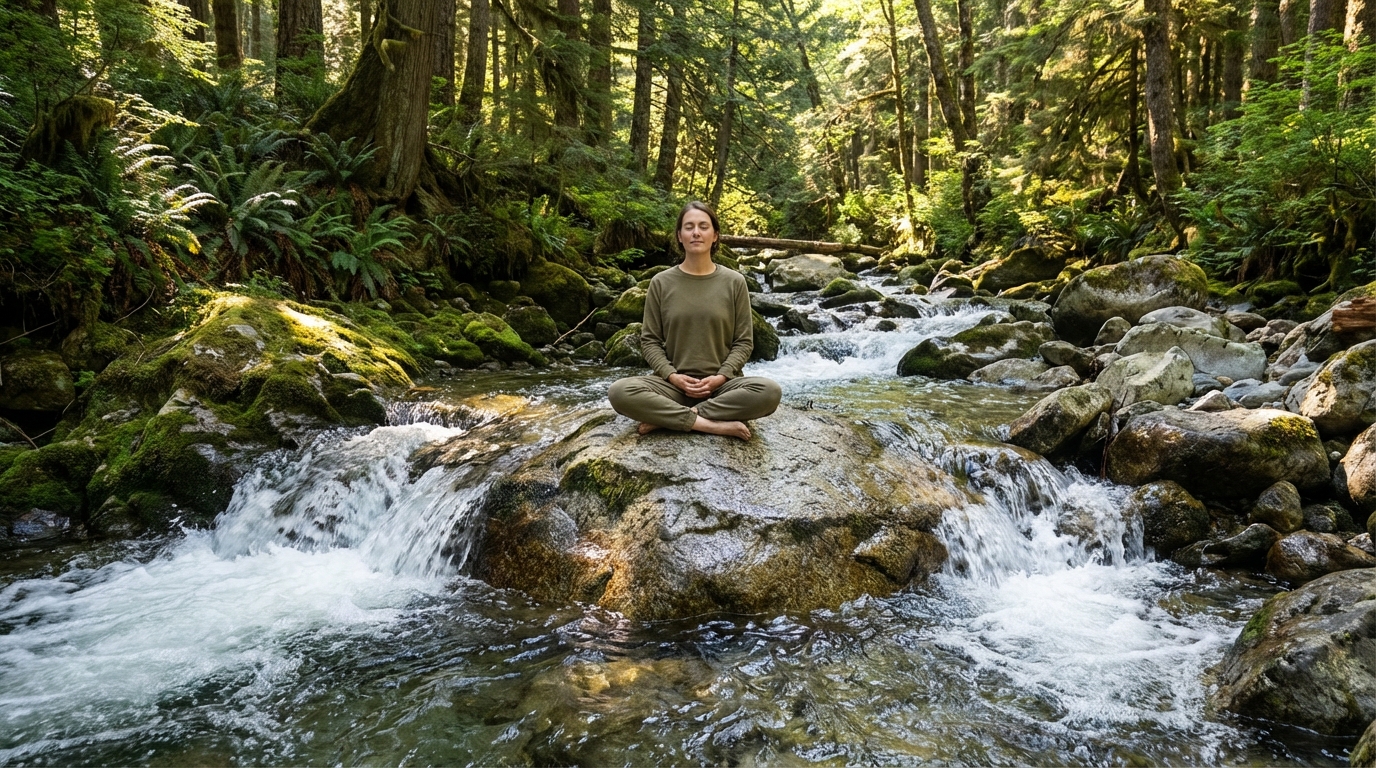
You can visualize this concept by observing how water moves around an obstacle in a stream without losing its momentum. Water does not stop or quit when it hits a rock, yet it also does not waste energy trying to smash through it with brute force. By yielding and finding the path of least resistance, the water eventually overcomes the barrier and continues its journey. This represents a powerful form of action that is purposeful and effective without being aggressive or ego-driven. When you apply this to your daily stress, you begin to see that true mastery comes from knowing when to act and when to let things unfold naturally.
Embracing this philosophy means you are choosing to prioritize quality of action over the quantity of your efforts. In a world that often demands constant busyness, wu wei offers a refreshing alternative that focuses on being present and responsive. It requires a deep level of awareness to recognize the natural rhythm of a situation so you can move in harmony with it. By letting go of the need to micromanage every detail, you unlock a more intuitive and creative way of living. This is not about doing nothing, but rather about doing everything with a sense of grace and focused intention.
Lessons From The Water Metaphor

Think about how water moves through a rocky stream to understand the true power of yielding. It never attempts to smash through a boulder or force its way uphill through sheer ego. Instead, water simply flows around the obstacle, finding the path of least resistance while remaining entirely persistent in its journey. You can apply this same logic to your stressors by stopping the urge to force outcomes that are currently out of your reach. By emulating water, you learn that being soft and flexible is actually a position of strength, allowing you to bypass friction that would otherwise lead to burnout.
When you approach your goals like water, you trade aggressive struggle for high-level effectiveness. Water is the softest substance, yet it has the power to wear down the hardest mountains over time through steady, effortless action. You can achieve similar results by focusing on consistency rather than intensity, allowing your natural momentum to carry you forward. This shift in mindset helps you let go of the need to control every variable, which reduces anxiety and opens you up to spontaneous opportunities. By aligning yourself with the natural flow of events, you overcome life’s hardest obstacles without the exhaustion of a constant uphill battle.
Applying Effortless Action To Modern Stress
You can begin integrating wu wei into your life by shifting your perspective from forced control to intuitive flow. In your professional life, this means recognizing the difference between hard work and unnecessary friction. Instead of trying to bulldoze through a creative block or forcing a rigid schedule upon a chaotic day, you can learn to pause and wait for the natural momentum of the project to reveal itself. This approach allows you to respond to challenges with a clear mind rather than an ego-driven need to dominate every situation. By aligning your efforts with the existing current of your environment, you achieve more while expending significantly less emotional energy.
Applying this philosophy to your personal relationships can dramatically reduce the stress of social expectations and conflict. You might find that many arguments stem from a desire to force someone to see things your way or to control an outcome that is not yet ready to settle. Wu wei encourages you to listen more deeply and act only when the timing is right, much like water flowing around an obstacle rather than crashing against it. When you stop trying to micromanage the emotions of those around you, your interactions become more authentic and less draining. This practice of non-forcing fosters a sense of peace that naturally draws people toward you.
Practicing effortless action requires you to cultivate a heightened state of mindfulness throughout your daily routine. You can start by observing your physical reactions to stress, such as a clenched jaw or tight shoulders, which often signal that you are trying too hard to control the uncontrollable. When you notice these signs, take a breath and consciously decide to let go of the struggle, choosing instead to move with the rhythm of the moment. This does not mean you stop being productive or caring about results, but rather that you find the path of least resistance. This perspective aligns with process philosophy, which views reality as a series of events rather than static things. Over time, this balance of intentionality and ease becomes a powerful tool for maintaining your mental well-being.
Mastering the Art of Effortless Action
Embracing the state of wu wei allows you to step out of the constant cycle of forcing results and into a life of fluid efficiency. When you stop viewing your daily tasks as obstacles to be conquered with sheer willpower, you begin to move in sync with the natural rhythm of your environment. This shift does not mean you stop being productive or ambitious, but rather that your actions become precise and frictionless. By letting go of ego-driven tension, you find that you can achieve more by doing less, transforming your work from a source of stress into a natural expression of your skills.
Integrating this ancient wisdom into your routine offers a powerful antidote to the burnout culture and time anxiety that define modern culture. You will likely notice that as you stop fighting against the clock, your relationship with time becomes more spacious and harmonious. Much like the core beliefs of Zen Buddhism, this practice emphasizes the direct experience of the present moment over rigid conceptual attachments. Instead of feeling drained by every commitment, you act with the grace of water flowing around a stone, finding the path of least resistance to reach your goals. This paradox of effortless action ultimately empowers you to live with greater intention, ensuring that every move you make is both meaningful and deeply connected to the present moment.
Frequently Asked Questions
1. Does wu wei mean I should just be lazy or passive?
Not at all. Wu wei is actually a state of dynamic ease where you act with perfect timing and alignment rather than avoiding action altogether. It is the art of knowing when to move and when to wait, ensuring your energy is never wasted on unnecessary struggle.
2. How can I apply wu wei to my stressful work life?
You can practice this by focusing on the tasks that are ready to be completed rather than forcing an outcome that is meeting constant resistance. By letting go of your ego-driven need to control every detail, you naturally find a state of flow that allows you to be more productively with less exhaustion.
3. What is the difference between wu wei and simply giving up?
Giving up is a state of resignation, whereas wu wei is a sophisticated form of engagement with reality. You remain fully present and responsive to your environment, much like a skilled sailor who adjusts their sails to work with the wind rather than fighting against it. Much like what is Stoicism, this approach provides a practical framework for building mental resilience by focusing on what you can actually influence.
4. Why is water often used to explain this concept?
Water perfectly illustrates wu wei because it is soft and yielding yet possesses the power to move mountains. It does not waste energy smashing through obstacles, but instead flows around them to reach its destination without losing its momentum or purpose.
5. How do I know if I am acting with wu wei or just procrastinating?
The key difference lies in your internal clarity and readiness to act when the moment is right. Procrastination is avoiding what needs to be done, while wu wei is waiting for the precise moment of alignment where your actions will have the greatest impact with the least amount of friction. This balance is a central theme in Taoist philosophy, which encourages living in harmony with the natural world.
6. Can wu wei actually lead to better results than hard work?
Yes, because it replaces brute force with strategic alignment and internal harmony. When you stop pushing against the grain of your life, you unlock a sense of presence that allows your most authentic and impactful work to emerge naturally.