

When you witness a crowd gathered in the streets, you might see a simple act of defiance, but you are actually watching a sophisticated philosophy of protest in motion. Modern dissent has shifted from a reactive no into a proactive, world-building practice that challenges you to rethink how society functions. Instead of just opposing injustice, these movements serve as a generative force, using refusal as a tool to clear the ground for entirely new social structures.
You can view this transition as the essential bridge between recognizing a problem and manifesting a solution. Drawing on the idea that saying no to the status quo is the first step toward a better yes, this approach positions you as an active participant in creating knowledge rather than just a spectator of conflict. By understanding protest as an ongoing philosophical proposition, you begin to see every act of resistance as a blueprint for a more just and imaginative reality.
Key Takeaways
- Protest is a generative act of world-building that moves beyond mere opposition to create new social structures and knowledge.
- Active resistance serves as a vital diagnostic tool that reveals systemic injustices and proves the status quo is a choice rather than a natural law.
- The 3.5 percent rule demonstrates that a committed minority can dismantle oppressive systems by strategically withdrawing consent and making repression unsustainable.
- True political health requires viewing dissent as a moral obligation that ensures the social contract remains a living, just agreement for all citizens.
From Refusal To Knowledge Production
When you choose to stand in opposition to an established norm, you are doing much more than simply registering a complaint. You are engaging in a profound act of refusal that serves as a diagnostic tool for society, stripping away the polish of the status quo to reveal hidden injustices. This initial no acts as a philosophical foundation, proving that the current social contract is not a fixed natural law but a choice that can be questioned. By disrupting the routine, your dissent forces a public conversation about what has been ignored or suppressed. You become a catalyst for a new type of social awareness that challenges the ethics of passive compliance.
This transition from refusal to knowledge production marks the moment where protest becomes a generative force for building a better world. Instead of just pointing out what is wrong, your active resistance creates a space where new narratives and social structures can be imagined and tested. Thinkers like Hannah Arendt suggested that this process is essential for a healthy civil society, as it turns the act of dissent into a proactive contribution to justice. You are essentially writing a new manual for how people can relate to one another outside of traditional power dynamics. This shift ensures that protest is not just a temporary event, but a continuous practice of defining a more equitable reality.
The Ethics Of Active Resistance
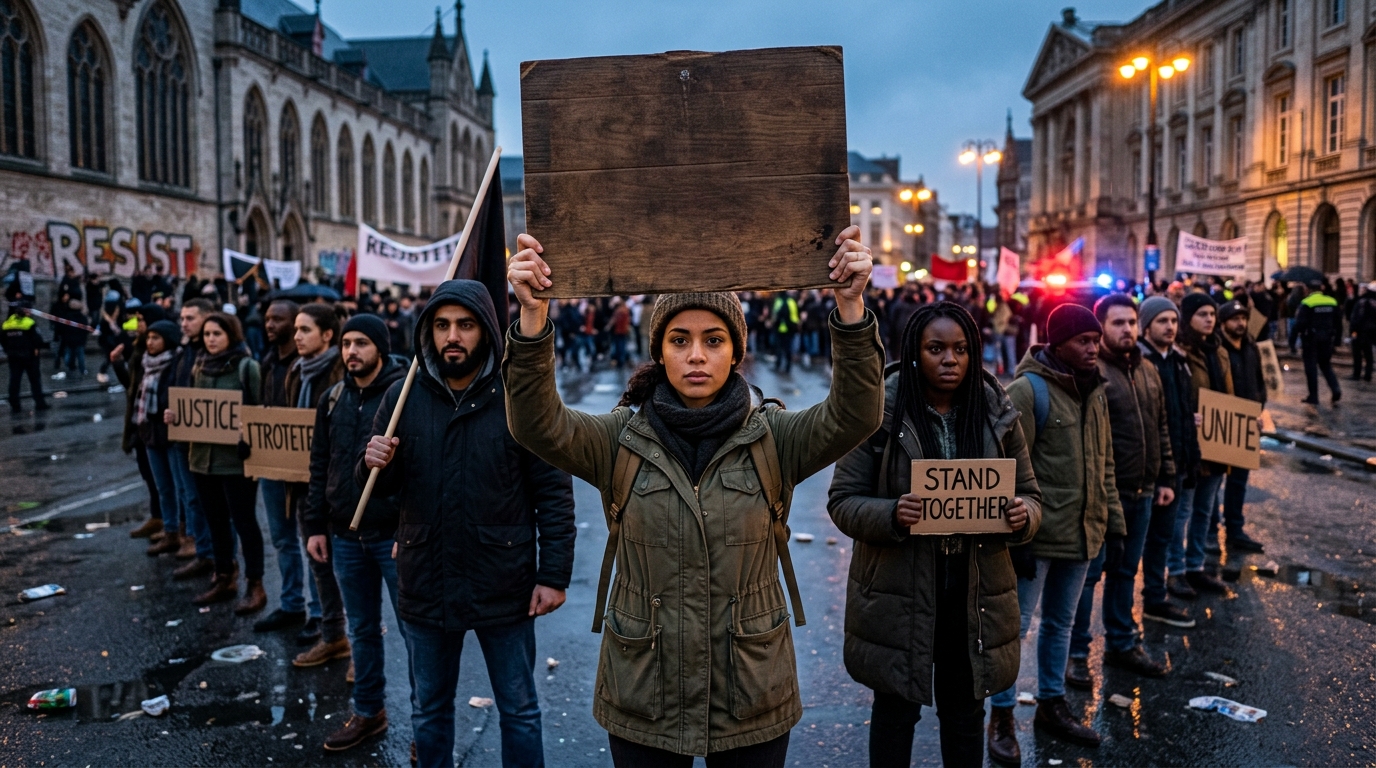
When you consider the traditional social contract, you might view it as a quiet agreement to follow the rules in exchange for security and order. However, the ethics of active resistance suggest that your duty to the state is not a blank check for compliance regardless of the government’s actions. True political health requires you to recognize when the status quo has drifted away from justice and requires a corrective force. By viewing dissent as a moral obligation rather than a disruption, you transform from a passive subject into an active guardian of the common good. This shift ensures that the social contract remains a living document that serves the people instead of a rigid cage that protects systemic inequality.
Protest functions as a generative act of world-building practice where you offer a new vision for society by refusing to accept current failures. Philosophers often argue that saying no to an injustice is the necessary first step toward creating a better yes for the future. When you take to the streets or engage in civil disobedience, you are actually producing new knowledge and social structures through your actions. This process moves beyond mere complaints and positions resistance as a vital tool for maintaining a vibrant and responsive civil society. You are not just breaking the silence, you are clearing the ground to build a more equitable reality for everyone involved.
In the current era, the philosophy of resistance has evolved into a proactive practice that defines the boundaries of modern liberty. You can see this transition in how global movements now prioritize the creation of alternative narratives and community-led solutions. Rather than simply reacting to events, you are participating in an ongoing dialogue about what it means to live in a truly just world. This intellectual rigor helps you understand that your voice matters as an essential component of the democratic process, not an outsider looking in. By embracing the ethics of dissent, you contribute to a robust political ecosystem that can adapt and thrive in the face of complex challenges.
The 3.5 Percent Rule And Strategic Success
The 3.5 percent rule provides a fascinating bridge between abstract political philosophy and the tangible ethics of active resistance. You might assume that toppling a systemic injustice requires a majority of the population to take to the streets, but empirical research suggests otherwise. Political scientist Erica Chenoweth found that no government can withstand a challenge by 3.5 percent of its population without either accommodating the movement or crumbling entirely. This threshold represents more than just a number, as it signifies a profound shift where the social contract is no longer being upheld by a critical mass of citizens. When you see this small but committed group mobilize, they are effectively withdrawing consent that allows a system to function.
This strategic success is rooted in the philosophy of nonviolent discipline and the power of social leverage. By engaging a diverse 3.5 percent of the population, a movement creates a ripple effect that touches every sector of society, from teachers and clergy to the families of the security forces. You are witnessing a proactive form of world building where the act of refusal becomes a generative force for new social structures. Protesters are not merely saying no to an old system, but are instead demonstrating the viability of a more just alternative through their collective action. This level of participation makes the cost of repression too high for any regime to sustain, proving that focused dissent is a powerful tool for dismantling oppression.
Understanding this rule changes how you view your own agency within a civil society. It moves the conversation from the impossibility of total consensus to the practical reality of strategic mobilization. You do not need to wait for everyone to agree with your cause before you can begin the work of transformation. Instead, the philosophy of protest teaches you that a dedicated minority can act as the moral vanguard for the rest of the nation. By focusing on this empirical threshold, you can see how the transition from dissent to deep systemic change is both a philosophical necessity and a practical achievement. This effort is often aimed at designing a fairer world where the rules of engagement are built on equity rather than inherited privilege.
The Power of Your Ethical Refusal
When you choose to stand in dissent, you are doing much more than simply voicing an objection to the current state of affairs. You are engaging in a generative act that moves beyond the social contract into the realm of active, ethical resistance. By refusing to accept an unjust status quo, you are effectively clearing the ground to plant the seeds of a new social narrative. This process of refusal serves as a vital form of knowledge production, proving that the world as it exists is not the only possibility. Your participation transforms the act of protest from a temporary event into a continuous, philosophical commitment to justice.
This transition from saying no to injustice to building a better yes is a cornerstone of modern political philosophy. You are not just a critic of the present, but a proactive architect of a reimagined reality that prioritizes human dignity and equity. As you move through these spaces of resistance, your presence serves as a living proposition for how society can be restructured. This proactive stance ensures that your dissent is never just about destruction, but always about the creative potential of civil society. Ultimately, your engagement in protest is a profound contribution to the ongoing evolution of a more just and inclusive world, often navigating the paradox of tolerance to ensure that the foundations of freedom remain secure.
Frequently Asked Questions
1. What does it mean to view protest as a philosophy rather than just an action?
When you view protest as a philosophy, you see it as a deliberate framework for questioning reality rather than a random outburst of anger. This perspective allows you to recognize each act of defiance as a sophisticated proposal for how society could be restructured more fairly.
2. How does saying no to the status quo lead to a positive outcome?
Your refusal serves as a necessary clearing of the ground that makes space for a better yes to emerge. By rejecting an unjust norm, you prove that the current system is a choice rather than an unchangeable law, which opens the door for you to design superior alternatives.
3. What is the role of knowledge production in modern dissent?
Knowledge production occurs when your resistance reveals hidden social truths and forces the public to confront ignored injustices. You are essentially creating a new type of social awareness that provides the intellectual raw materials needed to build a more ethical world.
4. Can protest really be a generative force for building society?
Yes, because your dissent functions as a blueprint for a new reality rather than just a critique of the old one. It shifts your role from a spectator of conflict to an active architect who uses resistance to manifest practical solutions for a more just future.
5. Why is the transition from refusal to imagination so important?
This transition is the essential bridge that moves you from recognizing a problem to actually implementing a solution. It ensures that your energy is not just spent on opposition, but is channeled into the creative work of world-building and social innovation. This process highlights how your social position influences the unique insights you bring to the collective struggle for change.
6. How does this approach change the way you perceive social contracts?
This philosophy helps you realize that the social contract is a flexible agreement that requires your ongoing consent. By disrupting the routine, you exercise your power to renegotiate that contract and demand a society that aligns with your evolving ethical standards.