
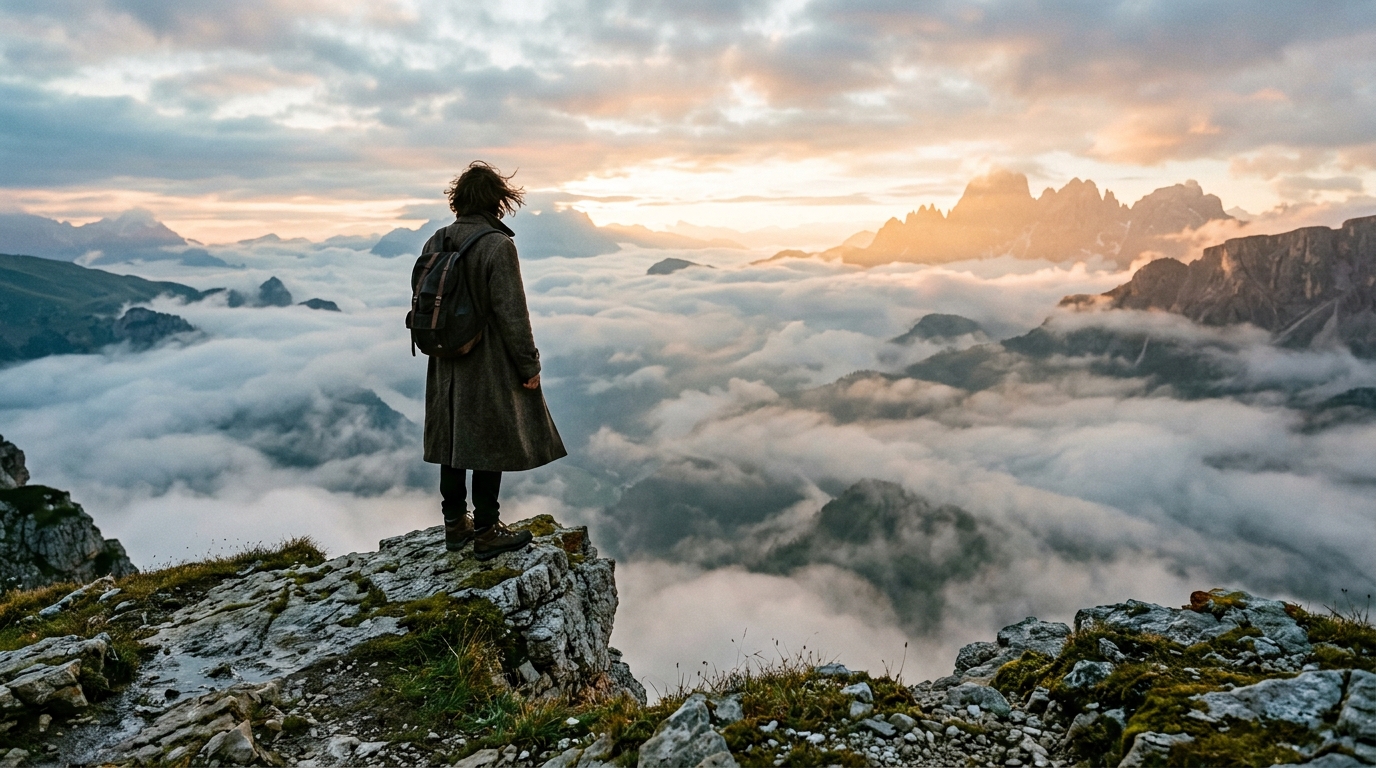
Imagine you are standing on the edge of a rugged cliff, feeling the wind pull at your clothes while the vastness of the horizon stirs something unnameable deep within your soul. This shift from cold, calculated logic to the raw power of your inner world is the heart of the philosophy of romanticism. It emerged as a passionate rebellion against the rigid gears of the Industrial Revolution, inviting you to trade sterile facts for the vivid colors of your own imagination.
When you look at the world through a Romantic lens, you realize that your subjective experience is the ultimate source of truth. Nature ceases to be a mere resource for scientific study and instead becomes a living, breathing mirror for your most profound emotions. By prioritizing your intuition and the pursuit of the sublime, you tap into a transformative way of living that honors the individual spirit over the mechanical crowd.
Key Takeaways
- The Romantic spirit serves as a vital rebellion against a mechanical world, prioritizing subjective emotion and intuition over cold logic and objective data.
- Nature is a living mirror of the human soul rather than a resource to be exploited, offering the ‘Sublime’ experience where awe and terror connect the individual to the infinite.
- Radical individualism and the creative imagination are the ultimate sources of truth, empowering you to be an active creator of your reality rather than a passive observer.
- Embracing nostalgia and folk traditions provides a necessary spiritual anchor, reclaiming the mystery and ancestral wisdom lost to industrialization and modern efficiency.
From Reason To Rebellion Against The Machine
You can think of Romanticism as a passionate rebellion against the idea that the world is just a giant, predictable machine. While the Enlightenment focused on the cold logic of the laboratory and the factory, the Romantics felt that something vital was being lost in all that calculation. They believed that your deepest emotions and sudden flashes of intuition were far more reliable guides than a ruler or a stopwatch. By shifting the focus from objective facts to your own subjective inner life, they transformed the way we understand the human spirit. This movement was not just about art, but about reclaiming your right to feel deeply in a world that was becoming increasingly mechanical and detached.
Imagine standing on a rugged cliffside and feeling a sense of awe that science simply cannot quantify. This is what the Romantics called the Sublime, a powerful experience where the vastness of nature reminds you of your own place in the universe. They rejected the view of nature as a mere resource to be exploited or a puzzle to be solved through chemistry and physics. Instead, they encouraged you to see the natural world as a living, breathing entity that mirrors your own internal moods and struggles. To a Romantic philosopher, a storm was not just a weather pattern, but a profound expression of the same creative energy that fuels your own imagination.
By prioritizing the creative imagination, these thinkers argued that you are not just a passive observer of reality but an active creator of it. They believed that your unique perspective and individual voice were the most authentic sources of truth available to humanity. This shift meant that personal expression and even intellectual defiance became celebrated virtues rather than social distractions. When you follow your heart over a spreadsheet or find meaning in a sunset that logic cannot explain, you are tapping into this rich philosophical tradition. It remains a powerful reminder that your humanity is defined by your capacity for wonder, passion, and the courage to look beyond the visible world.
The Sovereign Self And The Power Of Imagination

You can think of the Romantic movement as a bold rebellion against the idea that you are merely a cog in a giant, mechanical universe. While the Enlightenment focused on objective facts and cold logic, Romanticism invites you to turn your gaze inward to discover your own radical individualism. This philosophy suggests that your personal emotions and unique perspectives are not distractions, but are actually the most authentic sources of truth available to you. By prioritizing your subjective experience, you move away from the rigid structures of societal expectations and toward a more profound understanding of your own spirit.
Your imagination serves as the sacred spark that allows you to reshape the world around you rather than just observing it passively. To the Romantics, this mental faculty was much more than a tool for daydreaming; it was a divine power that could bridge the gap between the mundane and the infinite. When you engage your creative mind, you are participating in a world-shaping force that finds meaning in the beauty of nature and the complexity of the human heart. This perspective empowers you to see the world not as a collection of data points, but as a living canvas waiting for your unique interpretation.
Embracing the sovereign self means recognizing that your inner life has a depth that reason alone can never fully map. You are encouraged to seek out the Sublime, those moments of awe that remind you of your connection to something much larger than yourself. Whether you are standing before a vast mountain range or lost in a powerful poem, these experiences validate your individual journey. By trusting your intuition and the strength of your imagination, you transform from a mere observer of reality into its active creator.
Seeking The Sublime In The Wilds Of Nature
To understand the Romantic spirit, you must first set aside the clinical lens of rationalism that treats nature as a mere machine to be measured or exploited. For the Romantics, the natural world was a vibrant, breathing entity infused with a spiritual presence that spoke directly to the human soul. You are encouraged to see a forest not as a collection of timber, but as a sacred cathedral where your intuition can connect with something much larger than yourself. This shift moved the focus from objective scientific facts to your own subjective experience, making your emotional response to a landscape the most authentic source of truth. By viewing nature as a living spirit, you begin to appreciate how the environment mirrors your internal moods and personal struggles.
When you stand before a massive mountain range or a crashing sea, you encounter a specific psychological state known as the Sublime. Unlike simple beauty, which is pleasing and harmonious, the Sublime is a complex mixture of overwhelming awe and a distinct sense of terror. It reminds you of your own physical fragility in the face of the infinite, yet it simultaneously elevates your imagination to a higher plane of existence. This experience was central to Romantic philosophy because it forced a confrontation with the vastness of the universe that reason alone could never explain. By embracing this feeling of being small yet spiritually connected, you discover a profound depth within your own consciousness that industrialization attempted to silence.
Nostalgia For The Past And The Folk Spirit
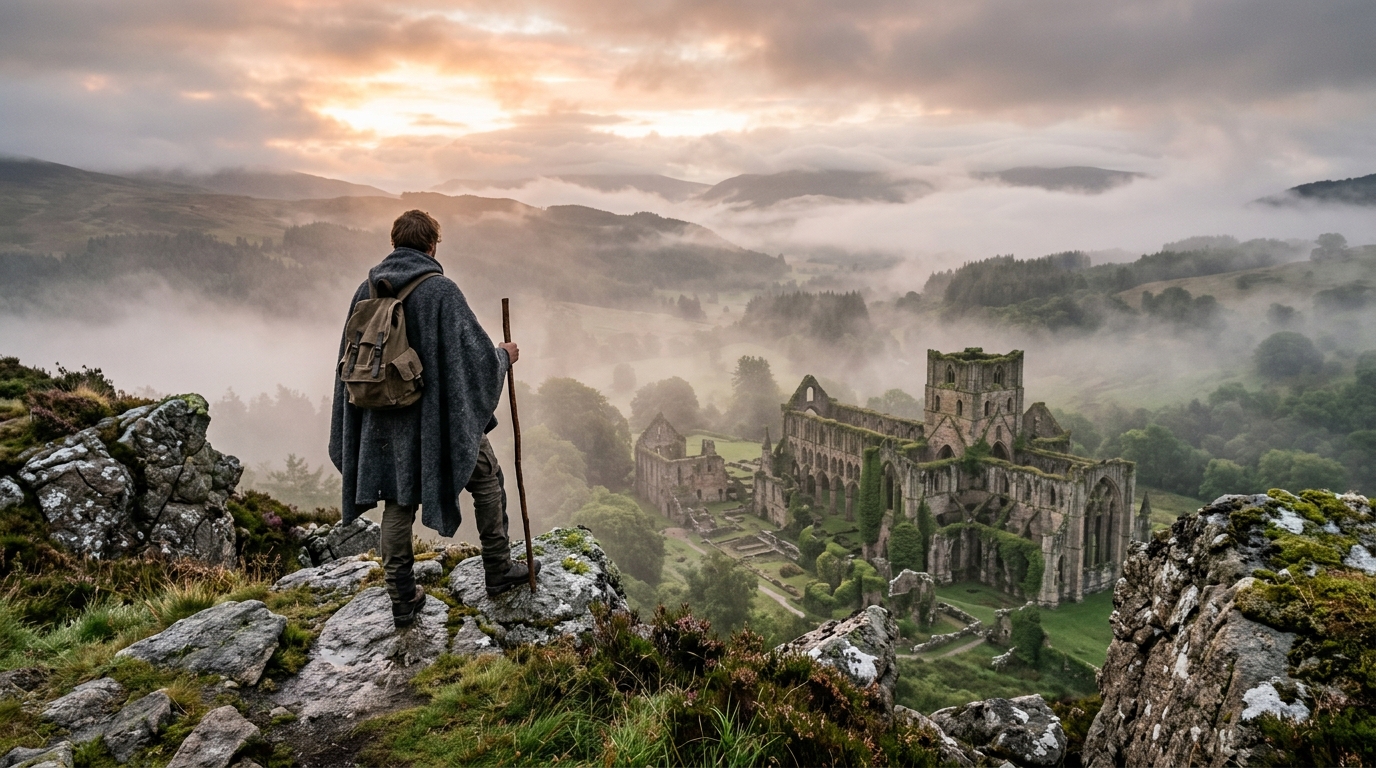
When you look back at the Romantic era, you find a deep seated yearning for a time before cold logic began to dominate human thought. This nostalgia was not merely a wish to live in the past, but a philosophical rejection of a world that felt increasingly mechanical and soul-less. You might notice how Romantics idealized the Middle Ages, viewing that period as a golden age of spiritual unity and chivalric honor. By looking backward, they sought to reclaim a sense of mystery and enchantment that they felt had been stripped away by modern scientific observation. This connection to history allowed them to explore the depths of human emotion through the lens of ancient legends and gothic architecture.
You can also see this philosophy in the way the Romantics pursued the folk spirit, or the authentic identity of a people found in their local traditions. Instead of looking toward elite academic circles for truth, they turned to the songs, fairy tales, and customs of the common people. This search for the Volkgeist, or the spirit of the nation, was a way for you to connect with a more visceral and honest form of human expression. They believed that these stories held a primal wisdom that had been preserved through generations, untouched by the artificiality of urban life. By valuing these folk traditions, the Romantics emphasized that true culture grows from the soil and the collective soul of the community.
This focus on the past and the common folk serves as a reminder that your identity is often rooted in the stories and landscapes that came before you. By embracing the irrational and the traditional, the Romantics provided a powerful counterweight to the rigid structures of pure reason. You are encouraged to see history not as a dry collection of dates, but as a living wellspring of inspiration and emotional truth. This perspective invites you to find beauty in the weathered ruins of an old abbey or the simple rhythm of a traditional ballad. Ultimately, this movement teaches you that the human spirit thrives when it remains connected to its ancestral roots and the natural world.
Finding Authenticity in a Digital Age
In a world of constant connectivity, you might find that the cold efficiency of algorithms often leaves you yearning for something more substantial than mere data. This modern search for authenticity is where the Romantic spirit truly shines, offering you a vital bridge between your screen time and your inner life. By prioritizing your subjective feelings over objective metrics, you reclaim the right to experience the world through a lens of wonder rather than just utility. You are encouraged to look beyond the surface of a curated social media feed to find the messy, beautiful, and deeply personal truths that define your unique human journey.
Embracing this philosophy allows you to reconnect with the natural world as a source of spiritual renewal rather than just a backdrop for a photo. When you stand before a vast landscape or witness a powerful storm, you are tapping into that sense of the Sublime that moved thinkers centuries ago. This perspective shifts your focus away from the mechanical pressures of modern productivity and invites you to consider your moral duty toward nature as much as rational thought. By honoring your imagination, you cultivate a richer emotional depth that helps you handle the complexities of the twenty first century with a grounded sense of self.
Integrating these Romantic ideals into your daily routine serves as a powerful antidote to the disenchantment often felt in a technological age. You begin to see your personal struggles and creative impulses not as distractions, but as the very heart of what it means to be alive and authentic. This approach empowers you to seek out genuine connections and profound experiences that defy the logic of the marketplace. Ultimately, the Romantic tradition provides you with the tools to build a life filled with meaning, ensuring that your spirit remains vibrant and untamed in an increasingly automated world.
Frequently Asked Questions
1. What exactly is the philosophy of Romanticism?
Romanticism is a profound shift in perspective that prioritizes your inner emotions and imagination over cold, mechanical logic. It encourages you to view your subjective experience as the ultimate source of truth rather than relying solely on scientific facts.
2. How did the Industrial Revolution influence Romantic thought?
The movement emerged as a direct rebellion against the rigid, predictable nature of the Industrial Revolution and the Enlightenment. You can see it as a way to reclaim your individual spirit in a world that was becoming increasingly detached and focused on factory-like efficiency.
3. What does it mean to experience the Sublime?
The Sublime is that overwhelming sense of awe and even a hint of terror you feel when facing the vastness of nature. It is a transformative moment where you realize your place in the universe, moving beyond what science can quantify to connect with something much larger than yourself.
4. Why do Romantics place such a high value on nature?
For a Romantic, nature is not a resource to be studied or exploited, but a living mirror for your deepest emotions. You find that the natural world provides a vital space for reflection and spiritual renewal away from the noise of the mechanical crowd.
5. Is Romanticism just about being emotional?
While emotions are central, it is more about trusting your intuition as a reliable guide for living. You are encouraged to honor your unique perspective and creative impulses, recognizing that your internal world carries as much weight as objective reality.
6. How can I apply Romantic philosophy to my modern life?
You can embrace this philosophy by making time for solitude in nature and prioritizing your creative passions over mere productivity. By trusting your gut feelings and seeking out moments of wonder, you shift your focus from being a cog in a machine to a truly vibrant individual.