
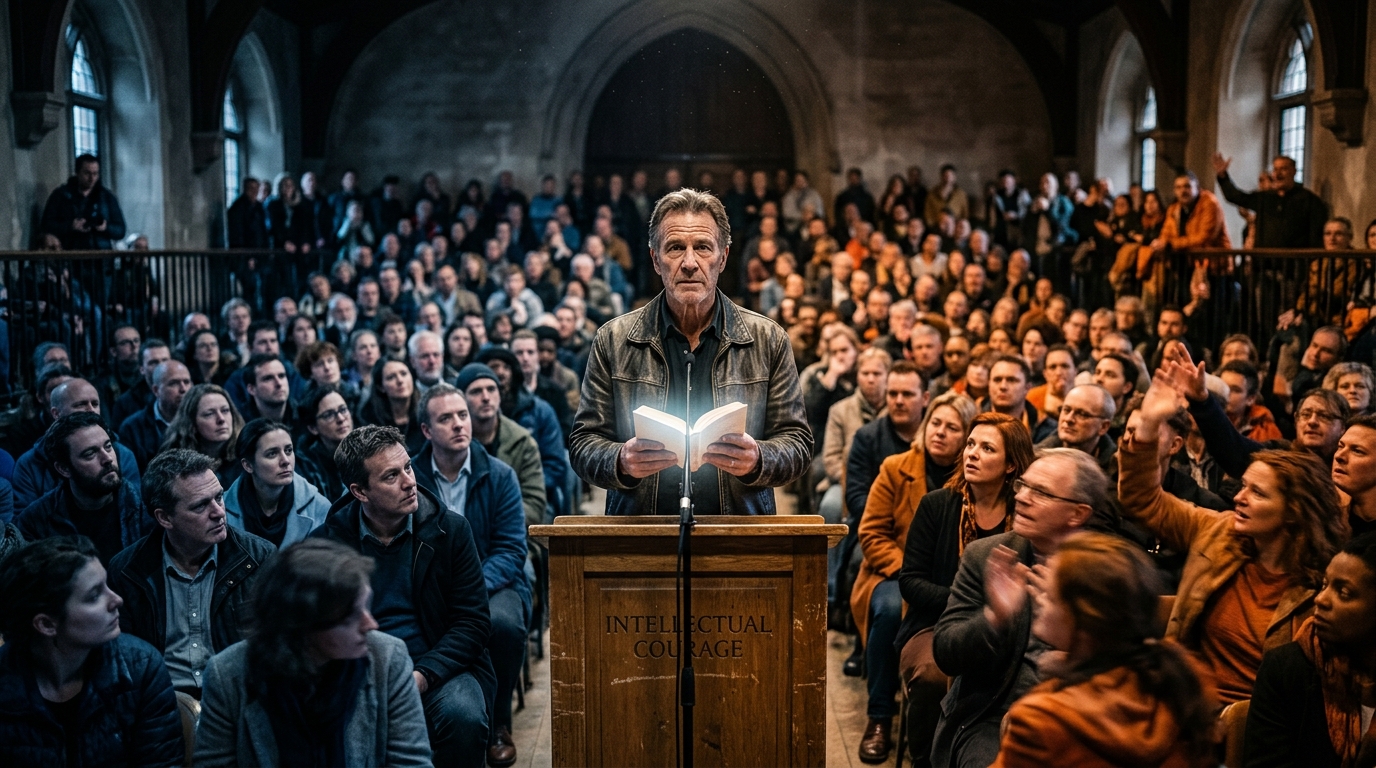
Have you ever felt a sudden flash of defensiveness when someone challenged a belief you hold dear? That internal friction is where the virtue of intellectual courage begins, marking the brave boundary between sticking to what is comfortable and seeking what is true. Unlike physical bravery, this cognitive strength requires you to take epistemic risks, which is the willing vulnerability to be wrong, to face social pushback, or to admit that a dangerous idea might actually have merit.
By cultivating this balance, you move away from the safety of intellectual cowardice without falling into the trap of reckless, evidence-free thinking. It is an exercise in ego management that demands you confront your deepest biases with the same rigor you apply to the views of others. When you embrace this form of courage, you are not just winning an argument; you are refining your character and opening the door to a more authentic understanding of the world around you.
Key Takeaways
- Intellectual courage is the essential middle ground between intellectual cowardice, which fears social pushback, and intellectual rashness, which recklessly adopts contrarian ideas without evidence.
- True intellectual growth requires taking epistemic risks, which involves the willingness to be wrong, face social disapproval, and give a fair hearing to ideas that challenge your core beliefs.
- Changing your mind in the face of new evidence is a profound act of bravery that prioritizes long-term accuracy and character refinement over the temporary security of appearing infallible.
- Cultivating intellectual courage shifts your primary loyalty from social reputation to the truth, allowing you to navigate echo chambers and resist the pressure of crowd-sourced opinions.
Defining The Mean Between Cowardice And Rashness
Intellectual courage operates as the vital midpoint between shrinking away from challenging ideas and recklessly adopting every new theory you encounter. When you fall into intellectual cowardice, you likely find yourself clinging to the safety of the majority or refusing to question your own long held beliefs because the social cost of being different feels too high. On the other hand, intellectual rashness can lead you to adopt fringe ideas without proper evidence simply for the sake of being contrarian or appearing innovative. Finding the mean between these two extremes allows you to move through life with a steady hand, ensuring your convictions are based on reason rather than fear or a desire for attention.
Living in this balanced state requires you to take calculated epistemic risks where you risk your ego and social standing for the sake of the truth. You must be willing to give a fair hearing to viewpoints that make you uncomfortable or that your social circle might consider absurd. This practice does not mean you accept every idea you hear, but rather that you have the strength to stand by a justified belief even when it is unpopular. By treating your mind as a space for honest inquiry, you protect yourself from the pressure to conform while avoiding the trap of becoming a reckless thinker who ignores rigorous evidence.
Developing this virtue helps you understand that changing your mind is not a sign of weakness but a profound act of bravery. You will find that as you practice intellectual courage, your ability to handle social pressure improves because your primary loyalty shifts from your social reputation to the truth itself. This balance keeps you grounded, preventing you from being swept away by crowd sourced opinions or falling for unproven trends. Ultimately, this middle path empowers you to speak your mind with confidence while remaining open to the possibility that you still have much to learn.
Facing The Social Risk Of Epistemic Vulnerability

Intellectual courage requires you to step into a space where your ego feels most exposed. While intellectual humility allows you to recognize your limitations, courage is what drives you to act on that recognition despite the fear of social blowback. You might find yourself hesitating to voice a dissenting opinion or questioning a popular narrative because the threat of being cast out feels visceral. This is the essence of epistemic risk, where the danger is not to your physical safety but to your standing within your community. Choosing to follow the truth wherever it leads means you must be willing to endure the discomfort of being misunderstood by those around you.
Navigating this social pressure involves finding a balance between intellectual cowardice and intellectual rashness. You do not want to recklessly adopt every contrarian idea just to be different, nor should you hide your genuine insights to maintain a comfortable status quo. True courage manifests when you fairly address viewpoints that your social circle might label as dangerous or absurd. By giving these ideas a serious hearing, you demonstrate a commitment to truth that outweighs your desire for easy validation. It is an ego bruising process, but it is the only way to ensure your convictions are built on a foundation of reality rather than peer pressure.
Admitting that a long held belief was wrong is perhaps the most courageous act you can perform in a social setting. When you publicly change your mind, you are signaling that your loyalty to the truth is greater than your need to appear infallible. This vulnerability can actually strengthen your intellectual character and earn the respect of other serious thinkers. You are essentially trading the temporary security of being right for the long term growth of being accurate. Embracing this brand of epistemic vulnerability allows you to lead by example, showing others that the pursuit of knowledge is worth the risk of social friction.
Navigating Echo Chambers With Critical Thinking Dispositions
Intellectual courage is the active engine of truth seeking that requires you to confront ideas that feel uncomfortable or even dangerous. It is not about being reckless with your beliefs, but rather about having the strength to fairly examine viewpoints that you have previously dismissed or ignored. When you step outside the safety of your echo chamber, you face the very real risk of social disapproval or the personal embarrassment of being proven wrong. This virtue sits at the healthy center between intellectual cowardice, which is the fear of questioning the status quo, and intellectual rashness, which is the habit of adopting new ideas without sufficient evidence. By practicing this disposition, you learn to prioritize the pursuit of reality over the comfort of being liked by your immediate social circle.
Embracing this mindset means you are willing to take an epistemic risk by putting your ego on the line for the sake of clarity. You might find yourself in situations where a rational argument supports a conclusion that your peers find absurd or offensive, yet your commitment to truth demands you give it a fair hearing. This process requires you to navigate the intense negative emotions that often arise when your core convictions are challenged by opposing evidence. Intellectual courage empowers you to stand by a well researched conclusion even under heavy social pressure, while also giving you the grace to change your mind when the facts demand it. Developing this trait ensures that your beliefs are built on a foundation of rigorous investigation rather than a simple desire for social conformity.
Cultivating Intellectual Tenacity
In a world of constant information, you are frequently pressured to conform to specific narratives. Intellectual courage is the virtue that allows you to filter this noise by taking epistemic risks, such as questioning the status quo or entertaining ideas that initially make you feel uncomfortable. It requires you to move beyond intellectual cowardice, which is the fear of social repudiation, and instead focus on the rational pursuit of truth. By standing by your convictions when they are backed by evidence, you demonstrate a commitment to integrity that outweighs the temporary comfort of following the crowd. This practice transforms your experience from a passive consumption of trends into an active, courageous search for deeper understanding.
Cultivating this tenacity means you must be willing to face the threat to your ego that comes with being wrong or changing your mind in a public forum. When you encounter a viewpoint that society deems absurd or dangerous, your first instinct might be to dismiss it without a fair hearing to protect your social standing. However, intellectual courage empowers you to fairly address these ideas and weigh them against logic rather than emotion. This process does not mean you should recklessly adopt every new theory you find, but rather that you find the balance between being closed-minded and being overly rash. By embracing the risk of embarrassment, you build the mental strength necessary to remain a sincere truth seeker.
To practice this virtue daily, you can start by engaging with diverse perspectives that challenge your current worldview without feeling the need to immediately defend your territory. You will find that as you prioritize the truth over the approval of your peers, your ability to think independently grows significantly. This commitment involves a deep consciousness of the need to confront your own biases and the courage to admit when a previously held belief no longer stands up to scrutiny. Ultimately, staying committed to the truth seeking process is a marathon that requires you to value your intellectual growth more than the temporary safety of an echo chamber. By doing so, you position yourself as a principled thinker who can function with both confidence and clarity.
Cultivating a Character of Intellectual Bravery
Practicing intellectual courage fundamentally transforms your character by shifting your relationship with the unknown. Instead of retreating into the safety of the status quo, you begin to view the risk of being wrong as a necessary step toward genuine growth. This virtue empowers you to stand by your convictions when they are unpopular, while also giving you the strength to abandon your own ideas when the evidence demands it. By choosing to face ideas that make you uncomfortable, you strip away the power that fear holds over your mind. You eventually find that your ego no longer dictates your reality, allowing you to live with a newfound sense of clarity and purpose.
This commitment to seeking the truth ensures that you are leading an authentic, examined life rather than simply reciting the scripts provided by your social circle. When you are willing to risk social repudiation for the sake of intellectual honesty, you develop a resilience that few others possess. This practice turns every difficult conversation and challenging viewpoint into an opportunity for refinement rather than a threat to your identity. You become a person who values the integrity of the process over the comfort of a quick answer. Ultimately, intellectual courage provides you with the internal authority to function in a complex world with both an open mind and a steady heart.
Frequently Asked Questions
1. What is the virtue of intellectual courage?
This section covers the fundamentals of the virtue of intellectual courage and provides essential information for understanding this topic.
2. How does the virtue of intellectual courage work?
The functionality and operation of intellectual courage depends on various factors. This FAQ provides guidance on typical usage and implementation.
3. What are the benefits of the virtue of intellectual courage?
The virtue of intellectual courage offers several advantages including improved efficiency, better results, and enhanced clarity.
4. How do I get started with the virtue of intellectual courage?
Getting started with intellectual courage involves understanding the basics and following best practices for implementation.
5. What are common challenges with the virtue of intellectual courage?
While intellectual courage is generally effective, you may encounter some common challenges that can be addressed with proper planning.
6. Where can I learn more about the virtue of intellectual courage?
Additional resources and information about the virtue of intellectual courage are available through various educational channels and documentation.