

Imagine wearing a smart headband or earbud to track your focus, only to realize your private brainwaves are being harvested and stored without your explicit consent. As consumer-grade brain-computer interfaces enter mainstream markets, the boundary between personal cognitive privacy and technological intrusion is vanishing faster than current laws can adapt. Analyzing neuro-rights legislation statistics reveals a striking gap between the rapid adoption of neural devices and the legal safeguards meant to protect your mind. Understanding these figures is essential if you want to know who truly owns your most intimate mental data.
Recent empirical findings underscore just how vulnerable your neural data remains under existing regulatory frameworks. A landmark assessment by a prominent neural rights research organization reveals widespread policy loopholes across consumer-grade neural sensors and wearable devices. As governments worldwide begin drafting targeted legal safeguards, analyzing these statistics gives you the clarity needed to evaluate your rights in an increasingly connected world.
96.7%
Of leading neurotechnology companies grant broad rights to access and commercialize private brainwave data.
60%
Of analyzed neurotech companies provide zero information on how neural signals are collected or shared.
2021
Year Chile became the first sovereign nation to amend its constitution to protect cognitive liberty.
Quick Facts
- Corporate Data Access: 96.7% of leading non-medical neurotechnology companies grant themselves broad rights to access and commercialize private brainwave data.
- Data Collection Transparency: 60% of analyzed neurotech companies provide zero specific information regarding how raw neural signals are collected or shared.
- First Constitutional Protection: In 2021, Chile became the first sovereign nation to amend its constitution to explicitly protect brain data and cognitive liberty.
- 2024 Industry Evaluation: A 2024 study titled Safeguarding Brain Data evaluated 30 leading non-medical neurotechnology companies on their privacy policies.
Key Takeaways
- Consumer neurotechnology operates with widespread privacy loopholes, with 96.7% of leading companies granting themselves broad rights to access and commercialize private brainwave data. Standard digital privacy agreements fail to safeguard users’ unfiltered cognitive patterns from corporate monetization.
- Global legal precedents are taking shape to protect mental integrity, highlighted by Chile’s landmark 2021 constitutional amendment and the European Union’s classification of neural signals as high-risk biometrics.
- U.S. state legislatures are stepping in to fill regulatory gaps, with states like Colorado, California, and Minnesota expanding consumer privacy statutes to reclassify neural data as sensitive biometric information.
- Securing cognitive liberty requires establishing unified international legal standards and mandatory opt-in consent models before commercial brain-computer interfaces achieve mainstream adoption.
Global Cognitive Liberty Benchmarks and Constitutional Precedents
When you track how fast consumer brain-computer interfaces are advancing, you quickly realize that constitutional protections are scrambling to keep pace with your neural privacy. Chile made history in 2021 by becoming the first sovereign nation to amend its constitution to explicitly protect brain data and cognitive liberty, setting a global precedent for mental integrity. In the European Union, regulators have increasingly integrated neural data protections into broader digital sovereignty frameworks, treating subconscious brain signals with the highest level of statutory sensitivity. Meanwhile, emerging legal discussions across South America and North America are attempting to define whether your unexpressed thoughts constitute protected personal property. As these legal frameworks take shape, comparing their specific safeguards helps you understand how different regions shield your mind from commercial exploitation.
| Jurisdiction | Primary Legal Instrument | Core Mental Privacy Safeguard |
|---|---|---|
| Chile | Constitutional Amendment (Art. 19, 2021) | Guarantees legal protection for brain identity and mental privacy. |
| European Union | AI Act & GDPR Statutory Standards | Classifies neural data as high-risk biometrics requiring strict consent. |
| International Drafts | UN Human Rights Framework Guidelines | Proposes global cognitive liberty as an immutable human right. |
Despite these groundbreaking constitutional amendments, a severe data gap remains between public policy goals and commercial privacy practices. A landmark 2024 study titled Safeguarding Brain Data evaluated thirty leading non-medical neurotechnology companies and revealed that 96.7 percent maintained privacy policies granting themselves broad access to consumers’ neural data without meaningful limitations. Furthermore, 60 percent of those analyzed companies provided zero specific information to users regarding how their raw neural signals were collected or shared. These alarming metrics highlight why legal scholars argue that standard consumer protection statutes fail to mitigate the subtle risks of neural monitoring. When you use a wearable headband or smart sensor today, your most intimate cognitive patterns remain largely vulnerable under standard corporate terms.
To bridge this enforcement gap, international bodies are moving toward unified legal standards that elevate cognitive liberty to a fundamental human right. You can see this shift taking hold as international advisory councils cite pioneer precedents to establish baseline definitions for mental privacy and psychological autonomy. As these statutory frameworks mature, compliance requirements will likely force consumer technology developers to implement strict opt-in consent models by default. Understanding these shifting benchmarks enables you to evaluate emerging neurotechnologies with a clearer awareness of your legal rights. Ultimately, securing your neural privacy depends on whether global institutions can enact enforceable statutes faster than commercial interfaces capture your subconscious data.
Consumer Neurotech Vulnerabilities and Corporate Data Exposure
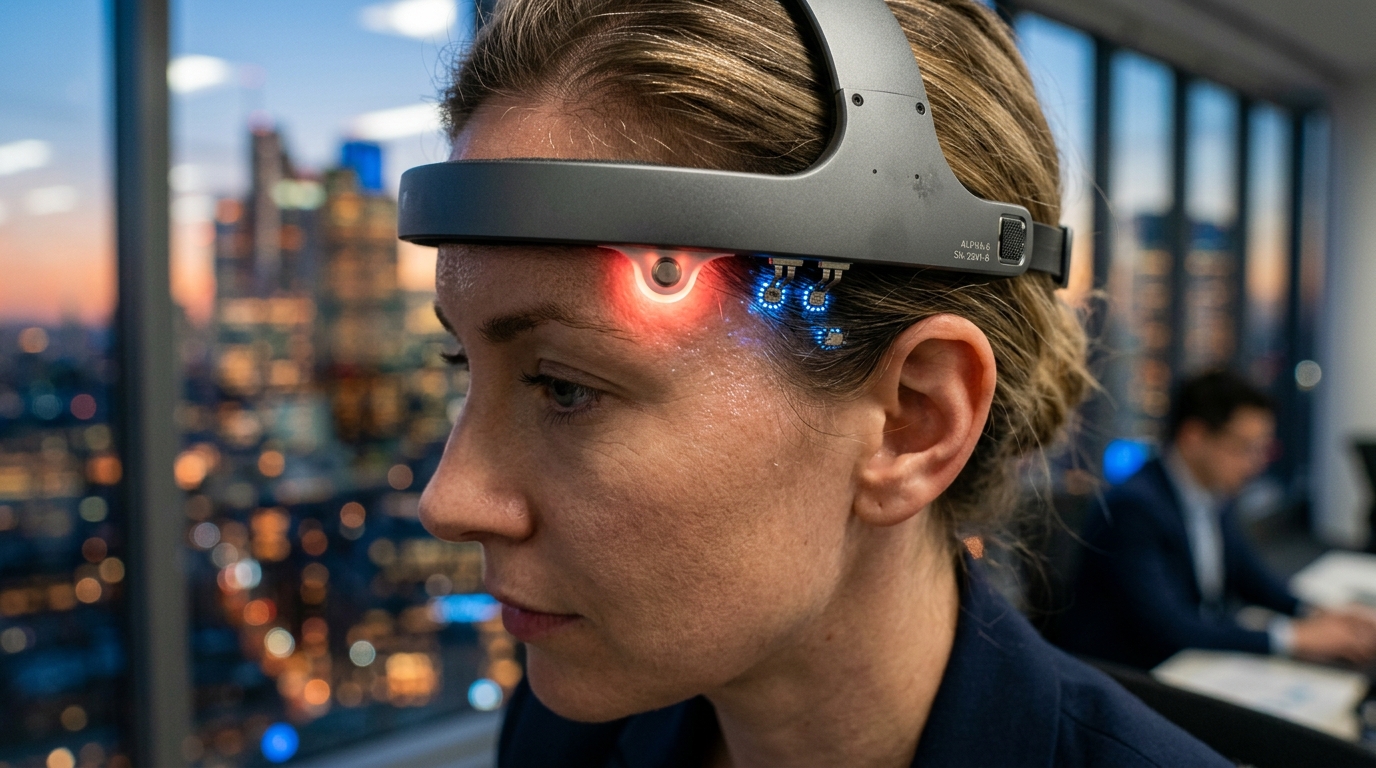
Every time you put on a consumer brain-computer interface or wearable neural sensor, you broadcast your most personal cognitive patterns directly to commercial servers. While these sleek devices promise to optimize your focus or enhance your wellness, industry audits reveal a troubling gap between rapid market expansion and user protections. You might assume your mental privacy is safeguarded by standard digital privacy terms, but neural data functions under entirely different biological rules. Most consumers remain unaware that their unfiltered real-time brain waves, emotional states, and subconscious responses are actively harvested without explicit safeguards. Understanding the scope of this exposure requires looking closely at the empirical data collected from consumer technology audits.
| Audit Metric | Industry Finding | Privacy Risk to Consumers |
|---|---|---|
| Neural Data Access Rights | 96.7% of studied companies | Unrestricted rights to collect and process private neural signals |
| Data Collection Transparency | 60.0% of studied companies | Zero disclosure on how neural signals are gathered or stored |
| Third-Party Data Transfer | 63.3% of studied companies | Neural data shared with or sold to external corporate vendors |
| Data Deletion Policies | 86.7% of studied companies | No clear mechanism for permanent deletion of user brain data |
A landmark audit analyzing thirty leading consumer neurotechnology companies evaluated user protections across the industry. Findings revealed that twenty-nine out of thirty companies, representing 96.7 percent of the sample, embedded terms in their privacy policies granting broad access to user neural signals without meaningful limitations. Furthermore, sixty percent of these non-medical device manufacturers provided zero specific information detailing how your unique neural signals are gathered, stored, or monetized. When you agree to standard terms of service, you often hand over the rights to your cognitive baseline data without your knowledge or consent. This systemic lack of transparency exposes your private cognitive processes to commercial monetization strategies and long-term profiling.
“The vast majority of consumer neurotechnology companies currently reserve the right to access, analyze, and commercialize your brain data with virtually no meaningful restrictions.” Global Neuro-Rights Research Study, Safeguarding Brain Data Report
As of mid-2026, several pioneering jurisdictions have begun enacting targeted laws to establish your legal right to mental privacy and cognitive liberty. However, a significant data gap persists globally because enforcement tracking and legal precedents remain scattered across different regulatory bodies. You face a patchwork of protections where your rights depend heavily on your geographic location rather than universal human rights standards. Without centralized statistical tracking of neuro-rights enforcement, evaluating whether these novel laws successfully stop unauthorized data exploitation remains difficult. Safeguarding your mind requires active public monitoring and rigorous regulatory data to hold consumer tech manufacturers accountable.
United States Legislative Expansion and Statutory Data Reclassifications
When you look at how American privacy law is evolving, you can see a dramatic shift toward treating raw brain wave data with the same legal strictness as your DNA or fingerprints. State legislatures across the country are actively amending consumer privacy acts to expand their legal definitions of sensitive biometric information to explicitly include neural data. Colorado pioneered this statutory path in April 2024 by enacting House Bill 24-1058, which legally reclassified neural data as protected sensitive data under the Colorado Privacy Act (Colorado General Assembly, April 2024, https://leg.colorado.gov/bills/hb24-1058). Shortly after, California reinforced this precedent in September 2024 with Assembly Bill 1008, ensuring that brain signals collected by consumer hardware fall under the California Consumer Privacy Act (California Legislative Information, September 2024, https://leginfo.legislature.ca.gov/faces/billNavClient.xhtml?bill_id=202320240AB1008). By explicitly integrating central and peripheral nervous system outputs into existing biometric definitions, state lawmakers are building an initial defense framework against unauthorized cognitive profiling.
| State Jurisdiction | Legislation & Enactment Date | Statutory Reclassification Details | Primary Citation |
|---|---|---|---|
| Colorado | House Bill 24-1058 (April 2024) | Classifies neural data as sensitive biological data within the Colorado Privacy Act | Colorado General Assembly (April 2024, https://leg.colorado.gov/bills/hb24-1058) |
| California | Assembly Bill 1008 (September 2024) | Expands definition of sensitive personal information to include neural data | California Legislative Information (September 2024, https://leginfo.legislature.ca.gov/faces/billNavClient.xhtml?bill_id=202320240AB1008) |
| Minnesota | House File 4182 (May 2024) | Establishes mental privacy protections and restricts unauthorized neural extraction | Minnesota Office of the Revisor of Statutes (May 2024, https://www.revisor.mn.gov/bills/bill.php?b=House&f=HF4182&ssn=0&y=2024) |
Despite these early statutory breakthroughs, you must navigate a nationwide legal framework that remains overwhelmingly fragmented. Research published in the landmark study Safeguarding Brain Data revealed that 96.7 percent of commercial neurotechnology companies surveyed possessed terms allowing access to user neural data without robust safeguards. Furthermore, 60 percent of these consumer platforms provided no explicit details on how brain wave telemetry is stored, shared, or commercialized. Because federal statutes have not yet created a unified national mandate, state-level statutory reclassifications remain your primary consumer protection shield. This means that unless you reside in a state with explicit statutory language governing neural data, your cognitive privacy relies on outdated, broad-spectrum consumer data standards.
“Neuro-data is the most sensitive data that can be collected from a person, as it reflects the innermost workings of the human mind, and our statutory protections must evolve immediately to safeguard this ultimate sanctuary of privacy.” Leading Neuro-Rights Researcher (April 2024)
As consumer devices increasingly incorporate sub-threshold muscular and bio-electric sensors, understanding your local statutory rights becomes crucial. You can actively evaluate your protections by reviewing whether your state classifies neural outputs under biometric identifier laws, genetic privacy acts, or comprehensive consumer rights statutes. While progressive state measures offer a promising blueprint, the current legislative patchwork highlights an urgent statutory gap in consumer rights. As brain-computer interfaces shift from specialized clinical settings into everyday consumer accessories, statutory data reclassification will dictate how effectively you can guard your mental privacy. Keeping track of these rapid state-by-state statutory updates ensures you remain empowered to protect your fundamental cognitive liberty in a digital world.
Why Lawmakers Are Racing to Protect Your Mind
As consumer brain-computer interfaces shift from medical laboratories into everyday commercial markets, the trajectory of neuro-rights legislation is accelerating at an unprecedented pace. A landmark study titled Safeguarding Brain Data revealed that 96.7 percent of analyzed consumer neurotechnology companies lacked meaningful boundaries on neural data access. In response to these alarming statistics, lawmakers across multiple global jurisdictions are rushing to pass targeted legislative protections for cognitive liberty. These pioneering statutes seek to treat your raw neural signals with the same legal weight as sensitive medical records or genetic identifiers. This rapid evolution in regulatory policy signals a historic shift toward recognizing your internal mental space as a protected human right.
For you as an individual, these shifting legal benchmarks mark a crucial turning point in preserving your personal cognitive autonomy. When regulatory frameworks codify mental privacy, they ensure that your subconscious thoughts, emotional states, and focus levels remain strictly your own property. Without these enforceable metrics, wearable sensors and neural links could easily monetize your unspoken biological responses without your explicit consent. Strong legal precedents provide you with the tools necessary to challenge unauthorized data harvesting and maintain boundaries around your inner life. Understanding these emerging standards empowers you to make informed decisions about the wearable technologies you choose to integrate into your daily routine.
Looking toward the future, the speed of legislative adoption will determine whether technological progress enhances human agency or quietly diminishes it. As global lawmakers refine their approaches to neural data protections, tracking these legal adoption statistics becomes essential for keeping device makers accountable. You hold a direct stake in this policy outcome, as your awareness and consumer choices influence how aggressively developers implement privacy by design. Demanding strict adherence to cognitive liberty safeguards ensures that emerging interfaces serve your personal growth rather than external commercial interests. Ultimately, securing your cognitive autonomy today lays the foundation for a future where technology respects the sanctity of the human mind.
Frequently Asked Questions
1. What are neuro-rights, and why do you need them right now?
Neuro-rights are legal protections designed to safeguard your brain data, cognitive liberty, and mental privacy from unauthorized technological intrusion. As consumer devices like focus-tracking earbuds and headbands proliferate, these rights ensure your subconscious thoughts remain entirely your own. Without strict safeguards, companies can collect, analyze, and profit from your neural signals without your explicit permission.
2. How vulnerable is your neural data when using consumer brain-computer interfaces?
Right now, your neural data is surprisingly vulnerable because standard consumer privacy policies rarely classify brainwaves as sensitive biological data. Recent findings from neuro-privacy research organizations reveal widespread regulatory loopholes across popular wearable devices and focus sensors. This means companies can legally gather and store your unexpressed mental states with minimal oversight.
3. Which country leads the world in constitutional neuro-rights protections?
Chile set a historic global benchmark in 2021 by becoming the first nation to amend its constitution to explicitly protect brain data and cognitive liberty. This milestone ensures your mental integrity receives constitutional safeguards against technological intrusion. Other governments are now following this blueprint to help keep your private thoughts secure.
4. How does the European Union regulate your consumer brain data?
The European Union treats your subconscious neural signals with the highest level of statutory sensitivity by integrating brain data protections into its broader digital sovereignty frameworks. European regulators restrict how tech companies harvest and process neural metrics from consumer wearables. This approach ensures your cognitive privacy receives strict safeguards comparable to sensitive medical data.
5. Can commercial smart headbands and earbuds collect your brainwaves without consent?
Yes, many commercial devices can collect your neural metrics because current consumer privacy laws have not kept pace with neural technology. When you accept standard terms of service for focus-tracking earbuds or headbands, you often inadvertently grant permission for data harvesting. Existing regulatory loopholes allow companies to store and analyze these sensitive signals without requiring explicit, dedicated consent.
6. How can you protect your cognitive liberty as neuro-technology advances?
You can protect your cognitive liberty by carefully reviewing end-user license agreements for any smart wearables that monitor biometric or mental activity. Always opt out of optional data-sharing settings and support legislative efforts that advocate for strict neural privacy laws. Staying informed about evolving neuro-rights standards helps you make empowered decisions about the devices you choose to wear.
7. Are your unexpressed thoughts considered protected personal property under current law?
In most jurisdictions, unexpressed thoughts and subconscious brainwaves do not yet enjoy explicit status as protected personal property. While legal discussions across North and South America are actively addressing this gap, standard consumer laws still fall short. Until dedicated legal frameworks pass globally, your raw neural signals remain subject to basic digital privacy agreements rather than strict mental property protections.