
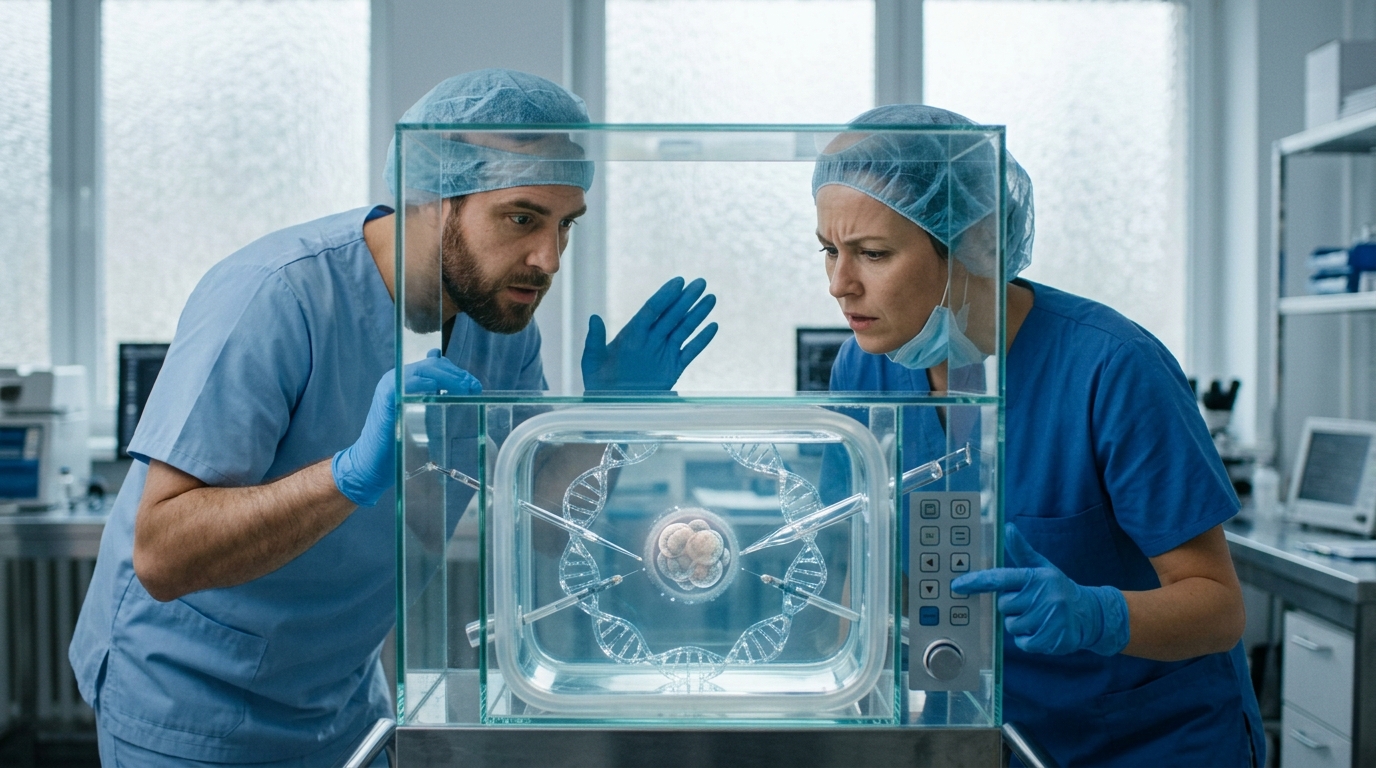
The 2026 biological enhancement debate is no longer science fiction. It is a real discussion about how far you should be able to change the human body and mind. New gene-editing techniques, drugs, implants, and other tools could help treat illness, but they may also improve strength, memory, appearance, lifespan, or productivity in healthy people. The boundary between restoring health and enhancing human ability is where the hardest questions begin.
You may wonder who should have access to these technologies, whether enhancement would deepen inequality, and what responsibilities come with altering future generations. The debate also asks whether greater performance is always beneficial or whether social pressure could make optional enhancements feel compulsory. Understanding these tensions can help you assess the promises, risks, and ethical stakes shaping the next phase of biotechnology.
Key Takeaways
- Biological enhancement blurs the line between treating illness and improving healthy people, making questions of fairness, consent, human identity, and social pressure central to policy decisions.
- Heritable genome editing requires exceptional caution because changes can affect future generations who cannot consent and may face unknown biological consequences. Somatic treatments are generally less ethically contentious because their effects remain limited to one person.
- Enhancement technologies could deepen inequality if access is limited by wealth, while also pressuring people to modify themselves or their children to remain competitive or conform to preferred traits.
- Responsible governance requires strong safety evidence, independent ethics review, transparent reporting, international coordination, long-term monitoring, public participation, and protections for disability rights and human diversity.
WHO Germline Editing Guidelines
The WHO’s germline editing guidance frames responsible research as a matter of careful limits, not simply technical capability. It calls for strong scientific evidence, independent ethics review, international coordination, and transparent reporting so embryo studies do not proceed in secrecy or outpace public safeguards. For you, this means the debate is not only about whether an edit can be made accurately, but also who may authorize it, who bears the risks, and how future generations can be represented in decisions made before they are born. International oversight is especially important because rules can vary across borders, creating pressure to move research to places with weaker protections. Public participation matters alongside expert review, giving affected communities a meaningful role in defining responsible innovation.
Caution, however, has not resolved the deeper disagreement over embryo research or reproductive choice. Supporters of carefully limited research argue that studying embryos could help prevent serious inherited diseases, while critics worry that permission to pursue treatment may gradually expand toward selecting traits or engineering enhanced abilities in otherwise healthy children. You may see this as a conflict between respecting prospective parents and protecting the shared future of people who cannot consent to inherited changes. The possibility of enhancement also raises questions about human nature and the given, including whether abilities should be accepted as part of ordinary human variation or redesigned according to social preferences. WHO guidance can establish principles for accountability and transparency, but it cannot by itself resolve competing views about equality, freedom, disability, and what it means to improve humanity.
Therapy Versus Enhancement
The therapy-versus-enhancement divide asks whether biotechnology should restore health or improve people who are already healthy beyond ordinary human functioning. Treatment usually aims to correct a disease, repair damaged tissue, or reduce disability, while enhancement may seek greater intelligence, strength, attractiveness, productivity, or lifespan. The boundary is not always clear. Editing genes to prevent a serious inherited illness looks therapeutic, but increasing resistance to infection in a healthy person may be viewed as either prevention or enhancement. Recent World Health Organization guidance on germline editing has renewed debate about who gets to define that boundary and whether human traits should be treated as problems to solve.
Somatic treatments change cells in one existing person, so their effects generally end with that individual and can be assessed through ordinary medical oversight. Heritable editing, by contrast, alters embryos, eggs, or sperm, allowing changes to pass to descendants who cannot consent and whose circumstances may differ from those of the people making the decision. That distinction makes a proposed edit for disease resistance far more contentious when it could shape an entire family line, especially if researchers cannot predict every biological consequence. As you weigh these options, the central question is not only whether an edit works, but also who bears its risks and who has the authority to alter the human inheritance.
The hardest cases involve goals that sound attractive but could deepen inequality or narrow society’s idea of a desirable person. Genetic or biological changes intended to increase intelligence, athletic performance, physical appearance, or lifespan might offer individual benefits, yet they could also create competitive pressure to enhance, stigmatize people who remain unmodified, or reduce support for natural human variation. Even a seemingly modest improvement, such as faster recovery or greater endurance, can shift from therapy to enhancement when the recipient has no medical impairment. In the 2026 biological enhancement debate, you are therefore being asked to consider not just scientific possibility, but also fairness, consent, social pressure, and what should remain part of the given human condition.
Heritable Risk And Human Nature
The 2026 biological enhancement debate becomes especially serious when changes can pass from one generation to the next. Somatic treatments affect only the person receiving them, but editing an embryo, egg, or sperm could alter the biology of future children and their descendants. You cannot ask those future people for consent, and long-term effects may remain invisible for many generations. Recent World Health Organization guidance on germline editing has therefore renewed calls for caution, transparency, and strong international oversight. At present, edited embryos have not been proven safe for implantation, making reproductive use a scientific and ethical question rather than an established medical option.
The concern is not limited to technical safety. If enhancement becomes available mainly to wealthy families, inherited advantages could deepen existing inequalities and shape social expectations about which traits are desirable. Parents might feel pressure to select or edit for intelligence, appearance, disease resistance, or physical ability, even when the science is uncertain and the child’s future preferences cannot be known. That raises a difficult question about whether freedom means expanding parental choices or protecting children from irreversible decisions made on their behalf. It also challenges the boundary between restoring health and redesigning human capabilities.
At the heart of the debate is your understanding of human nature and the “given,” meaning the traits and limits you inherit rather than choose. Some people view genetic enhancement as a natural extension of medicine that could reduce suffering and guide human evolution. Others worry that treating every limitation as a defect could weaken humility, acceptance, and solidarity with people who develop differently. As you weigh these views, the central issue may not be whether humans can shape evolution, but whether we can do so responsibly when the consequences belong to people who are not yet born.
Equity Governance And Consent

In the 2026 biological enhancement debate, you have to ask who will actually be able to benefit from new therapies and who will be left behind. If advanced genetic treatments, cognitive drugs, implants, or longevity interventions remain expensive, access may follow wealth rather than medical need. That divide could turn social advantages into biological ones, intensifying pressure to enhance children, compete at work, or conform to narrow standards of ability and appearance. It could also deepen discrimination against people who choose not to enhance, as well as people with disabilities whose differences are wrongly treated as problems to eliminate. Equity therefore requires more than making treatments legal. It requires fair access, strong protections against coercion, and respect for the value of human diversity.
Consent becomes even more difficult when heritable genome editing affects people who do not yet exist. You can obtain informed consent from an adult receiving somatic treatment, but future generations cannot evaluate the risks or reject changes made on their behalf. The World Health Organization’s guidance on germline editing has renewed calls for global rules covering safety evidence, public accountability, long-term monitoring, and clear limits on reproductive use. Those rules must also include disability rights and make room for cultural differences, since communities may disagree about what counts as illness, improvement, or a desirable human trait. Without broad public participation and international oversight, biological enhancement could be shaped by the interests of wealthy families, powerful states, or private markets rather than by the people who will live with its consequences.
Balance Innovation, Equity, and Consent
The 2026 biological enhancement debate is about more than whether science can alter bodies, minds, or inherited traits. As you consider the recent World Health Organization guidelines on germline editing, you also have to ask who will benefit, who may be excluded, and whether future generations can meaningfully consent to changes made today. The distinction between restoring health and enhancing healthy people matters because treatment can promote equal participation, while enhancement may deepen existing inequalities or create new social pressures. These questions place human dignity, the meaning of the given, and our collective responsibility at the center of a conversation often framed as technical progress.
Parental choice is important, but it cannot be the only limit on heritable enhancement when decisions may affect children, descendants, and society as a whole. You should evaluate proposed policies by asking whether they are safe, fairly accessible, transparent about uncertainty, and accountable to the people most affected. That evaluation also requires attention to cultural diversity, disability rights, commercial incentives, and the possibility that modest changes could produce consequences across generations. Scientific progress deserves careful support, but society must be prepared to govern its power with humility, justice, and respect for human dignity.
Frequently Asked Questions
1. What is the 2026 biological enhancement debate?
The 2026 biological enhancement debate concerns whether technologies such as gene editing, drugs, implants, and other tools should only treat illness or also improve healthy people’s abilities. It examines potential gains in memory, strength, appearance, lifespan, and productivity alongside questions about safety, fairness, freedom, and human identity.
2. How is biological enhancement different from medical treatment?
Medical treatment aims to restore health or function that has been lost or impaired, while enhancement seeks to move a person beyond typical human abilities. The boundary is not always clear because some interventions can both treat a condition and improve performance beyond an ordinary baseline.
3. What does the WHO recommend for germline editing?
WHO guidance emphasizes strong scientific evidence, independent ethics review, transparent reporting, and international coordination before germline editing advances. These safeguards are designed to prevent secret experimentation, limit preventable harm, and ensure that decisions affecting future generations are not made solely by researchers, companies, or individual clinics.
4. Why is germline editing especially controversial?
Germline edits can be passed to future children and later generations, none of whom can consent to the risks. Supporters see carefully controlled research as a possible path to preventing serious inherited diseases, while critics warn about unintended effects, unequal access, eugenic thinking, and permanent changes that society may later regret.
5. Could biological enhancement increase inequality?
Yes, especially if effective enhancements are expensive or available only in certain countries or healthcare systems. Wealthier people could gain advantages in health, education, employment, or lifespan, creating new forms of social division unless access, pricing, and public oversight are addressed.
6. Could enhancement become socially compulsory even if it is legally optional?
It could, because employers, schools, parents, or competitive environments might pressure people to enhance themselves in order to keep up. Protecting meaningful choice would require safeguards against discrimination, coercion, and the assumption that anyone who declines an enhancement is less capable or less committed.
7. Who should decide which biological enhancements are acceptable?
No single group should make these decisions alone. Scientists, medical professionals, ethicists, policymakers, affected communities, and the wider public should contribute through independent review, transparent regulation, and international cooperation, particularly when research could affect people who cannot represent themselves.
8. How should you evaluate a proposed biological enhancement?
You should consider its purpose, evidence of safety and effectiveness, possible long-term effects, impact on consent, and who can access it. You should also ask whether the intervention addresses a serious need, creates unfair pressure, shifts risks to future generations, or produces benefits that justify its individual and social costs.