
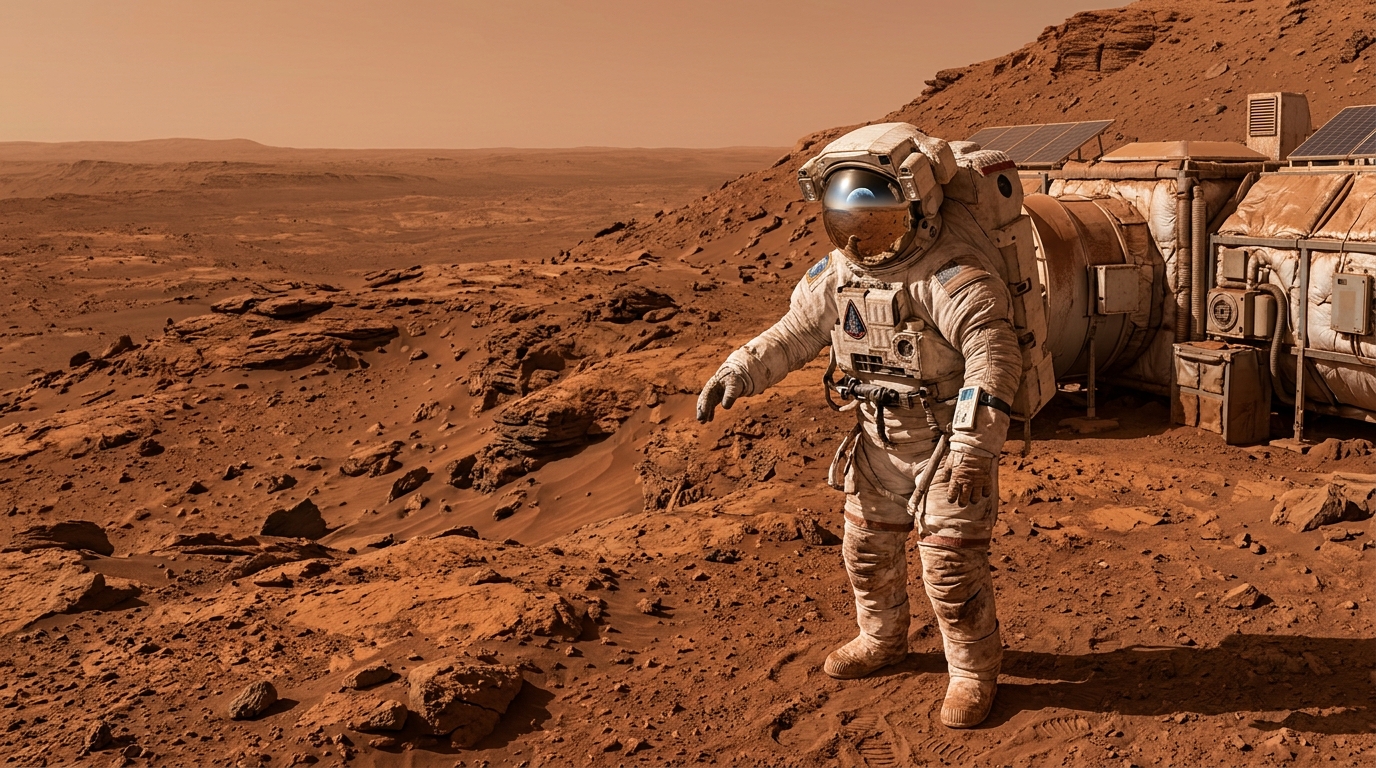
The philosophical impact of Mars-2026 is not defined by a human landing or definitive proof of life. It lies in how exploration brings you closer to questions once treated as science fiction. As missions, commercial partnerships, and crewed Mars plans advance, you must consider what evidence would truly count as life and whether discovery gives humanity the right to intervene. Mars turns abstract debates about knowledge, responsibility, and human destiny into practical decisions.
You must also weigh exploration against preservation, private ambition against shared governance, and technological capability against moral obligation. If humans can settle Mars, does that mean they should? The choices taking shape in 2026 may determine whether Mars becomes a laboratory, a protected heritage site, a new home, or a test of how wisely humanity uses its power.
Key Takeaways
- Mars exploration in 2026 turns philosophical questions about life, responsibility, and human destiny into practical decisions about evidence, contamination, settlement, and resource use. A successful landing demonstrates capability, not proof of Martian life.
- Planetary protection must guide exploration because Earth microbes could destroy evidence of native life, while Martian organisms could pose unknown risks to Earth. Mars should be treated as a scientifically and potentially intrinsically valuable world, not merely an empty resource.
- Human settlement is not automatically justified by technological capability. Any expansion must weigh possible Martian life, irreversible environmental damage, future generations’ rights, and humanity’s responsibility to address urgent problems on Earth.
- Mars requires transparent international governance that limits unequal control by powerful governments or private organizations. Decisions about exploration, labor, resources, and settlement should prioritize shared stewardship, public accountability, scientific access, and justice.
A New Test for Planetary Ethics
The successful landing of an international Mars mission in 2026 has made planetary ethics feel less like an abstract thought experiment and more like a practical decision you may see unfold. You are now asked to consider whether Mars should remain primarily a scientific preserve, become a potential habitat, or serve as a source of materials for human expansion. Each choice reflects a different view of your responsibilities to nature, future generations, and the possibility of life beyond Earth. Treating Mars as untouched heritage could protect its scientific value, while carefully managed exploration might expand human knowledge without assuming that every accessible resource is ours to claim.
Planetary protection becomes especially important when you consider contamination in both directions. Microbes carried from Earth could compromise the search for native Martian life, while unknown Martian organisms could pose risks to Earth if samples or crew return without strict safeguards. Even without confirmed evidence of life, preserving scientifically significant regions gives you reason to favor caution over convenience. If researchers discover living organisms, or compelling signs that life once existed, the moral limits on drilling, construction, and settlement would likely become much stronger. Mars would no longer be viewed as merely an empty world.
The deeper question is whether technological ability creates a moral obligation to establish a human presence on another world. Supporters may argue that becoming multiplanetary could protect humanity from disasters on Earth and give future generations new opportunities. Critics may ask why expansion should take priority over repairing the planet that already sustains us. Mars-2026 therefore tests more than engineering progress. It tests whether you can imagine exploration governed by consent, shared stewardship, and restraint. The most responsible path may be neither total preservation nor unrestricted development, but a framework that treats Mars as a world with scientific, ecological, and possibly intrinsic value.
Colonization And Moral Responsibility
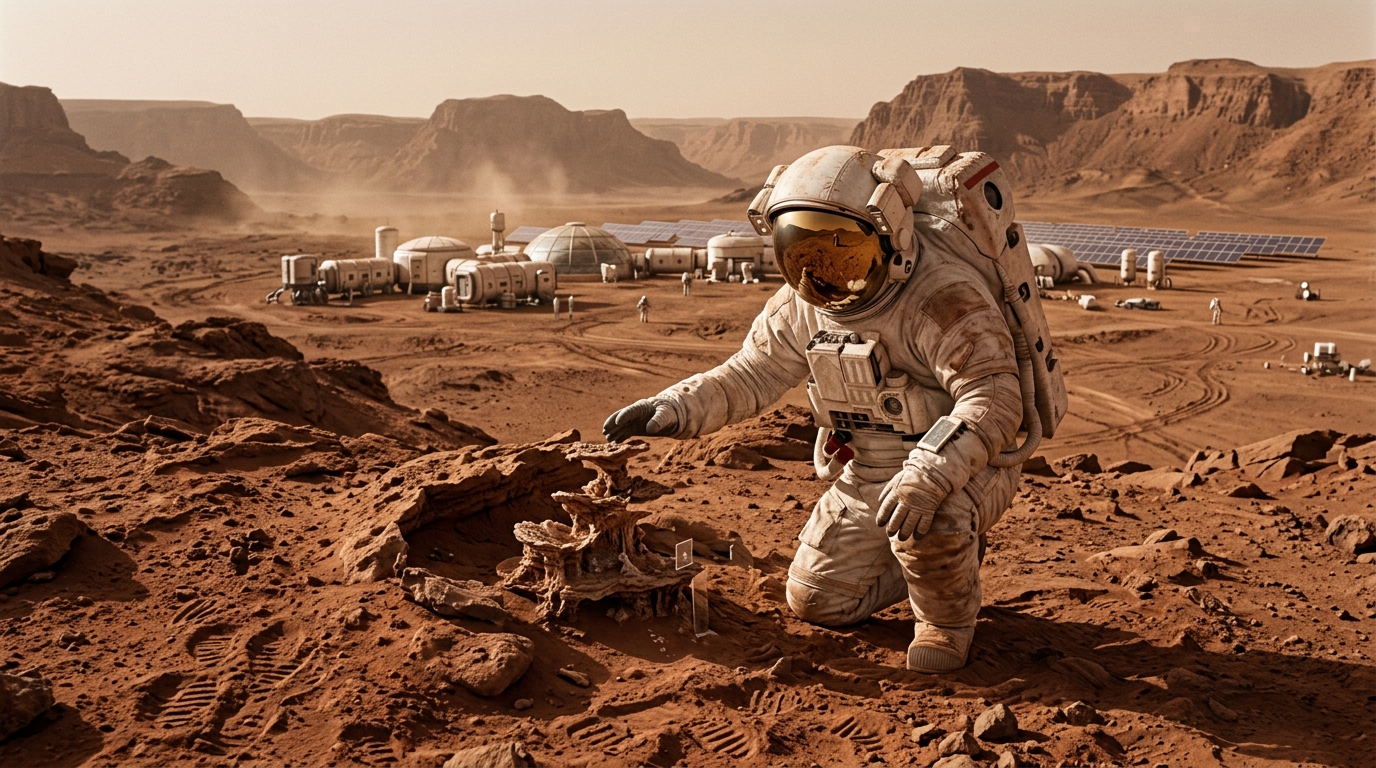
The successful landing of an international Mars mission in 2026 has made planetary ethics feel less abstract. You can see the appeal of a permanent human presence: Mars could expand scientific knowledge, inspire cooperation, and offer humanity a safeguard against disasters on Earth. From this perspective, settlement represents progress and perhaps a responsibility to preserve life beyond a single vulnerable planet. Yet technological ability does not automatically create a moral duty, especially when urgent problems on Earth remain unresolved.
A permanent settlement would also force you to ask whether Mars is a destination or an environment with value in its own right. Even without confirmed evidence of life, Martian ice, soil, and possible microbial habitats deserve protection from contamination and irreversible disruption. If future settlers treat the planet only as a source of materials or living space, exploration could repeat the extractive patterns that have damaged Earth. Environmental ethics therefore challenges the assumption that an untouched world is simply available for human use.
Questions of justice become sharper when you consider who would control Mars and who would benefit from it. If access depends on a small group of governments or powerful organizations, colonization could create new forms of inequality, with private interests shaping laws, labor, resources, and basic rights far from public oversight. A morally defensible project would require transparent international governance, meaningful protection for workers and possible indigenous life, and fair access to scientific gains. Mars-2026 presents colonization not as an inevitable triumph, but as a choice that tests whether human expansion can be guided by humility, responsibility, and shared values.
Human Identity In A Multiplanetary Future
Mars exploration in 2026 makes the question of human identity feel less abstract. As you imagine living under reduced gravity, inside engineered habitats, and millions of miles from Earth, “home” becomes more than a place on a map. Communication delays would prevent instant conversation, while isolation could reshape friendship, family life, and political participation. Over time, you might see yourself as Earthborn, Martian, or part of a broader human community that no longer depends on a single planet.
The prospect of settlement also forces you to confront the ethics of changing another world. Even without definitive evidence of Martian life, contamination concerns raise a difficult question: does humanity’s desire to explore justify disturbing environments that have remained untouched for billions of years? A responsible multiplanetary future would need to treat Mars as more than a resource or escape route, balancing scientific discovery with planetary protection and the rights of future generations. The successful landing of an international mission can therefore represent not only technical progress, but also a test of whether exploration can be guided by restraint.
If permanent settlements eventually emerge, Mars may develop new ideas about freedom, community, and belonging. A small habitat could make cooperation essential, yet its dependence on life-support systems might also invite strict rules that challenge individual autonomy. Generational settlers would inherit a world they never chose, creating a distinctly Martian culture shaped by distance, risk, and shared responsibility. Your understanding of humanity could then expand from being Earthbound to becoming custodians of multiple worlds, while still asking what should never be sacrificed in the name of progress.
Governing Mars Before Arrival
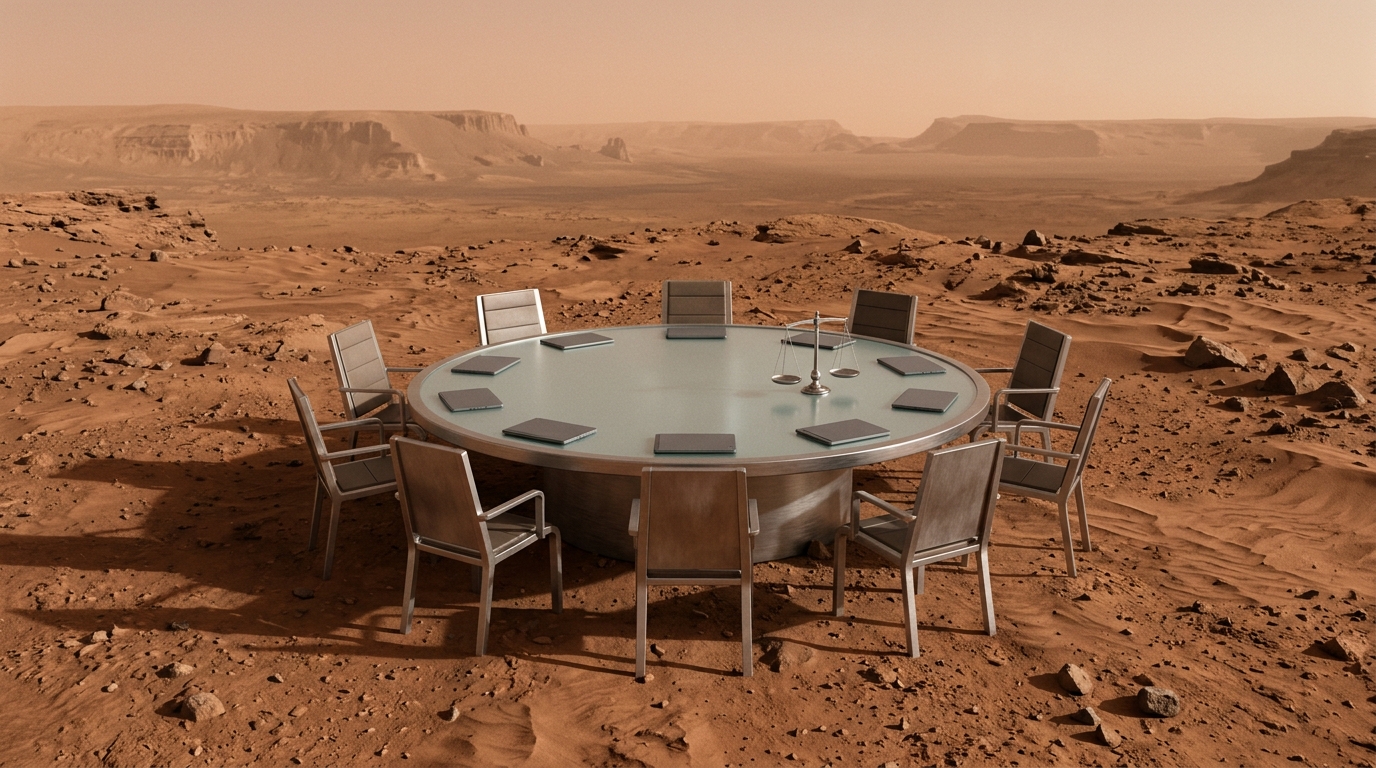
Before permanent settlements or commercial industries take root, you should ask who has the authority to shape Mars’s future. Existing international space law treats Mars as the province of all humankind and rejects national claims of sovereignty, but it leaves important questions unresolved about private ownership, resource use, and enforcement. Decisions made now by governments, scientists, organizations, and international institutions could establish habits that later become difficult to reverse. That makes Mars governance not merely a technical issue, but a test of whether humanity can manage a shared world without allowing the most powerful actors to define the rules alone.
Public participation also matters because the consequences of Mars exploration will reach far beyond the people who travel there. If private organizations control access, infrastructure, or extracted resources, you could see a new form of unequal settlement in which public funds support projects whose benefits remain concentrated in a few hands. Democratic accountability requires transparent agreements, independent oversight, and meaningful opportunities for communities around the world to influence decisions. It also requires honesty about risk, including who bears the physical dangers, environmental costs, and economic burdens of becoming a multiplanetary species.
Mars therefore invites you to confront the colonial patterns embedded in familiar language about conquest, frontiers, and owning new territory. The planet is not an empty stage simply because it lacks human cities, and possible microbial life would make preservation an ethical responsibility rather than a minor scientific preference. A responsible approach would treat Mars as a shared ecological and cultural trust, prioritizing planetary protection while carefully weighing exploration against irreversible change. The philosophical impact of Mars-related developments in 2026 lies in this choice: whether humanity carries its history of extraction into space or uses the opportunity to create a more accountable model of stewardship.
Mars-2026 Forces New Ethical Questions
The philosophical impact of Mars-2026 lies less in a single landing than in the questions renewed exploration makes impossible to avoid. As new missions gather data and prepare for future human activity, you are asked to consider whether Mars is a resource, a scientific archive, or a world with its own moral value. Even without definitive evidence of Martian life, the possibility of contamination changes the meaning of discovery because an irreversible experiment could destroy the very evidence we hope to find. Planetary protection therefore becomes more than a technical rule. It becomes an expression of humility toward an environment you barely understand.
Mars also brings questions of justice and responsibility into sharper focus. If settlement becomes possible, you must ask who gets to make decisions, who benefits from the resources, and whether expansion would repeat the inequalities and environmental damage associated with Earth’s history. The desire to become a multiplanetary species may inspire courage, but it should not become an excuse to neglect the living world that sustains you now. View Mars not only as a destination, but as a test of whether humanity can explore another world without abandoning its responsibility to life, justice, and Earth.
Frequently Asked Questions
1. What is the philosophical impact of Mars exploration in 2026?
Mars exploration in 2026 turns abstract questions about knowledge, responsibility, and human destiny into practical choices. You must consider what evidence would count as life, who has the right to make decisions about Mars, and whether technological ability creates a moral obligation to act.
2. Does a successful Mars mission prove that life exists there?
No. A successful landing demonstrates exploration capability, but it does not establish that Mars has ever hosted life. Strong evidence would require carefully verified signs, such as biological patterns or samples that can be ruled out as products of nonliving processes and contamination from Earth.
3. Why is planetary protection a philosophical issue, not only a scientific one?
Planetary protection reflects your responsibility to preserve knowledge, avoid unnecessary harm, and protect both Earth and Mars. Earth microbes could obscure evidence of native life, while Martian material could pose unknown risks if returned without strict containment. Exploration is therefore an ethical decision as well as a technical task.
4. Should Mars be treated as a scientific preserve or a place for human settlement?
There is no simple answer because each choice expresses a different view of humanity’s duties to nature and future generations. Preserving Mars could protect its scientific and cultural value, while carefully managed settlement could expand knowledge and create new opportunities without assuming that every accessible resource belongs to us.
5. If humans can settle Mars, does that mean they should?
Capability alone does not establish moral permission. Before settlement, you should weigh risks to possible Martian life, the effects of contamination, the rights of future generations, and whether the project serves a defensible public purpose rather than ambition alone.
6. Who should govern Mars exploration and resource use?
Mars should not be governed solely by whichever nation or organization reaches it first. Shared international rules are needed to balance scientific access, commercial interests, planetary protection, and the interests of humanity as a whole, especially because decisions made in 2026 could shape Mars for generations.
7. How could commercial involvement change the meaning of Mars exploration?
Commercial partnerships can accelerate innovation, reduce costs, and make missions more ambitious, but they can also encourage a view of Mars as property or a source of materials. You should judge commercial activity by whether it follows transparent rules, protects scientific goals, and accepts responsibilities that extend beyond private profit.
8. What does Mars exploration reveal about humanity’s values?
The way you choose to explore Mars will show how humanity balances curiosity with restraint and progress with responsibility. Mars could become a laboratory, a protected heritage site, a new home, or a test of whether technological power is guided by wisdom rather than used simply because it is available.