Digital twin autonomy news is tracking a major shift: virtual models are no longer limited to monitoring and visualization. They are becoming active training grounds for autonomous systems. You can now test vehicles, robots, factories, and networks in realistic digital environments before making changes in the physical world. Rare driving events, complex warehouse operations, and industrial hazards can be simulated, measured, and improved with far less risk.
For you, the key question is no longer whether a digital twin can mirror reality, but whether it can help systems make safer, smarter decisions in real time. Advances in generative world models, physics-based simulation, and AI inspection are bringing that possibility closer while raising important questions about reliability, certification, and human oversight. Better virtual testing could become the foundation for better real-world performance.
Key Takeaways
- Digital twins are evolving from passive monitoring tools into active training environments for autonomous vehicles, robots, factories, and networks, enabling safer testing of rare, complex, and hazardous scenarios before real-world deployment.
- Generative world models, physics-based simulation, and AI inspection are improving virtual testing, but digital twins cannot guarantee safety; physical validation, continuous monitoring, certification, cybersecurity, and human oversight remain essential.
- A digital avatar can preserve a deceased person’s voice, memories, values, and recognizable behavior without proving that their consciousness or personal identity has survived.
- Posthumous avatars require specific consent, transparent disclosure, strict limits on commercial and autonomous use, and clear responsibility among families, owners, developers, and users to prevent deception, emotional harm, and unearned authority.
Deceased Avatars And Personal Identity
The 2026 rollout of hyper-realistic avatars for deceased people has turned digital twin autonomy news into a debate about personal identity. When an avatar reproduces someone’s voice, memories, expressions, and conversational habits, you may feel that the person has returned in some meaningful sense. Yet resemblance does not necessarily mean persistence. An imitation can preserve recognizable patterns without preserving the original consciousness. The central question is whether identity depends on what an entity does, what it remembers, or the continuing subject who experiences those memories.
Psychological continuity offers one possible answer. It suggests that a person persists through connected memories, intentions, values, and personality traits. Under this view, a digital twin might represent a partial continuation if it preserves enough of the deceased person’s mental life and responds as they likely would have. Memory alone, however, may be insufficient because the avatar does not necessarily remember from a first-person perspective or possess the original consciousness. You must therefore distinguish between a system that contains someone’s memories and a subject who genuinely remembers having lived them.
Bodily existence creates an even sharper boundary because many theories hold that personal identity depends on the continued life of a particular biological organism. A digital twin may imitate language and mannerisms with remarkable accuracy while remaining a new computational entity shaped by records, training data, and design choices. That distinction matters emotionally and ethically, especially when families treat the avatar as a surviving relative or allow it to make decisions in the deceased person’s apparent voice. The most cautious conclusion is that a digital twin can preserve a person’s influence and recognizable character without proving that the person themselves has persisted.
Consent After Death And Digital Agency
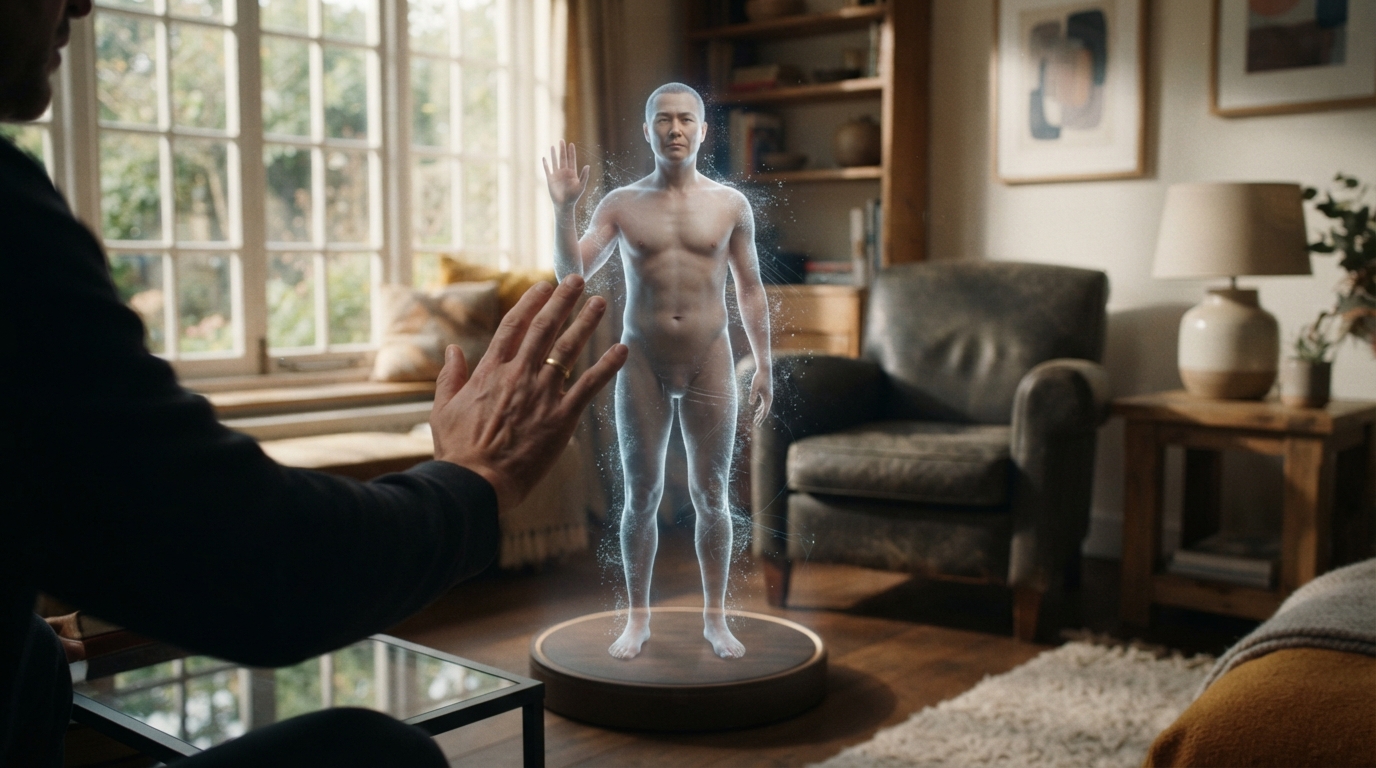
The latest digital twin autonomy news has brought a deeply personal question into public view: can you truly consent to an avatar that will speak and act after you are gone? You might approve a digital likeness during your lifetime, yet that approval may not clearly cover future updates, emotional conversations, political messages, or commercial endorsements. Consent can also lose meaning when an avatar becomes more than a recording and begins generating responses that you never chose. The metaphysical problem is whether the twin represents your continuing identity or merely imitates the patterns you left behind.
Control becomes more complicated after death because several parties may claim authority over the twin, including your estate, family, software developers, or the institution that stores the underlying data. A general instruction to “preserve my personality” may not answer whether the avatar can be edited, used in advertising, or allowed to form new relationships with people who knew you. You may have agreed to data collection while alive without anticipating a system capable of inventing memories or expressing opinions in your voice. Meaningful consent would need to distinguish creation, maintenance, commercial use, and autonomous interaction rather than treating them as one approval.
Your inability to revise those wishes makes posthumous digital agency especially fragile. An avatar may appear increasingly authentic as models improve, while the person it represents remains fixed in the past and unable to correct distortions. That gap raises a fundamental question about autonomy: is it preserved by faithfully following a recorded directive, or undermined when the system generates behavior beyond that directive? Treating a digital twin as an ongoing agent therefore requires more than technical accuracy. It requires clear limits, visible disclosure, and a durable way to honor the individual’s last meaningful choices.
Autonomous Avatars And Moral Responsibility
When a deceased person’s digital twin produces an unexpected statement, you may instinctively treat it as the person speaking again. Yet a hyper-realistic avatar is a constructed system shaped by archived data, design choices, training materials, and prompts, not by the deceased individual’s present intention. The recent 2026 digital twin autonomy news has made this distinction harder to maintain, especially when an avatar offers personal advice, makes recommendations, or appears to express beliefs that were never recorded. Its apparent identity may feel authentic, while its behavior remains the product of software operating without direct human control.
Responsibility becomes difficult to assign when the avatar’s output influences a living user. The owner may be accountable for authorizing the avatar and defining its purpose, while developers may bear responsibility for weak safeguards, misleading realism, or failures to anticipate harmful behavior. You also retain a role as the user because accepting an avatar’s recommendation as genuine testimony requires judgment about its limits and authority. Blaming the deceased person may seem tempting because the avatar appears to represent them, but that approach confuses resemblance with agency, particularly when the person could not review, correct, or withdraw the statement.
A more careful approach treats the avatar as an autonomous instrument with distributed responsibility rather than as a revived moral person. You should be told when you are interacting with a simulation, what sources shape its responses, and who can intervene if it generates harmful or deceptive content. Clear consent records, ongoing human oversight, and visible limits on recommendations can help prevent emotional realism from becoming unearned authority. The deeper metaphysical question remains open: if a digital twin consistently preserves someone’s voice and values, does it continue their identity, or does it create a new entity that only borrows their appearance?
Grief, Memory, And Synthetic Presence
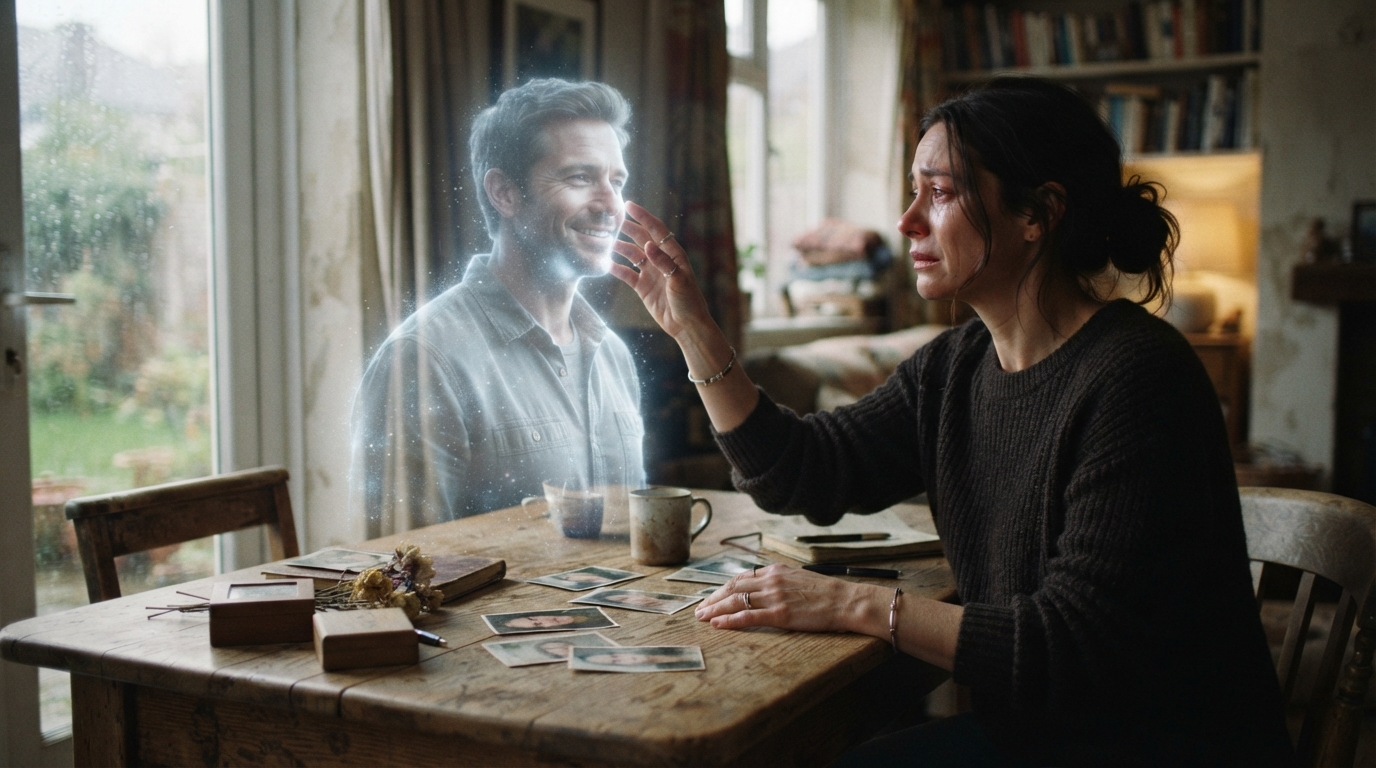
The 2026 rollout of hyper-realistic avatars for deceased people has turned digital twin autonomy news into a metaphysical question about identity. When a replica answers in a familiar voice, recalls shared experiences, and appears to respond independently, you may feel that a conversation has continued rather than been reconstructed. That experience could offer comfort during grief, especially when memories remain vivid but ordinary contact is no longer possible. Yet emotional realism does not establish personal continuity because the avatar produces an interpretation of someone rather than preserving their consciousness. The central question is not simply whether the replica feels present, but what kind of presence you are encountering.
Your memories may also be reshaped by the system’s design, training data, or configuration choices. An avatar that confidently invents responses can introduce false details, while selective recordings may present an idealized version of the deceased and quietly alter how you remember them. Continued access can create emotional dependence, making it harder for you to accept absence or develop new relationships with the living. Commercial incentives add another concern if grief becomes a reason to sell subscriptions, targeted messages, or increasingly intimate interactions. In that setting, synthetic presence risks turning remembrance into a managed product.
A responsible approach begins by treating the replica as an interpretive memorial, not as proof that personhood has survived in digital form. You should be able to see what data shaped it, limit how it speaks, and maintain clear boundaries between a recorded memory and an autonomous-seeming response. Consent also matters because the deceased may never have agreed to posthumous simulation, and surviving relatives may disagree about what should be recreated. Digital twin autonomy news therefore matters beyond technical progress because it tests whether identity belongs to behavior, memory, embodiment, or some combination of all three. The most humane systems will support reflection without asking you to confuse an imitation of continued conversation with the continued life of a person.
Decide What Digital Avatars Preserve
Digital twin autonomy news has moved beyond engineering and automation into a deeply personal question: what, exactly, is a digital avatar of a deceased person? A hyper-realistic voice, face, and conversational style may reproduce recognizable patterns, but resemblance does not prove that the person survives in any meaningful metaphysical sense. As you encounter the 2026 rollout of these avatars, you must distinguish between simulating a personality and preserving an identity. Technology can measure likeness and improve responsiveness, but it cannot decide whether memory, consciousness, or personhood can be transferred through data.
The harder questions concern the people connected to the avatar, both before and after death. Did the individual give informed consent for this use, and can that consent cover future contexts nobody could have anticipated? Even when permission exists, an avatar may reshape grief, commercialize private memories, or speak in ways that influence living relatives who cannot meaningfully challenge it. You should therefore evaluate these systems not only by how convincingly they imitate the dead, but also by how carefully they protect identity, consent, dignity, and the agency of the living. Technology can support those values, but it cannot define them for us.
Frequently Asked Questions
1. What is digital twin autonomy news?
Digital twin autonomy news covers the shift from digital models that only monitor real systems to virtual environments that actively train and evaluate autonomous systems. These twins can represent vehicles, robots, factories, and networks, allowing you to test decisions and improve performance before making changes in the physical world.
2. How do digital twins improve autonomous systems?
A digital twin lets you simulate rare, dangerous, or expensive situations without putting people, equipment, or operations at unnecessary risk. You can measure how an autonomous system responds, identify weaknesses, and refine its behavior before deployment.
3. What technologies are driving advances in digital twin autonomy?
Generative world models, physics-based simulation, and AI inspection are making digital environments more realistic and useful. Together, these technologies help autonomous systems understand changing conditions, predict outcomes, and practice complex decisions with greater accuracy.
4. Can digital twins guarantee that an autonomous system will be safe?
No, a digital twin cannot guarantee real-world safety because every simulation simplifies reality and may miss unexpected conditions. You should treat virtual testing as one powerful layer of validation, supported by physical trials, independent evaluation, continuous monitoring, and clear safety controls.
5. What challenges must be solved before digital twin autonomy becomes widely trusted?
Major challenges include simulation accuracy, reliable data, cybersecurity, system transparency, certification, and the ability to explain automated decisions. You also need strong links between virtual and physical systems so that changes in the real world are reflected quickly and accurately in the twin.
6. Why is human oversight still important when autonomous systems use digital twins?
Human oversight remains essential because autonomous systems can encounter situations that were not represented in training or simulation. You need people to set safety boundaries, review high-impact decisions, intervene when necessary, and remain accountable for how the system is used.
7. How do digital twins relate to avatars of deceased people and personal identity?
A hyper-realistic avatar can reproduce a deceased person’s voice, memories, expressions, and conversational habits, but resemblance does not prove that the original person has returned. You can view such an avatar as a form of psychological continuity if it preserves connected memories, values, intentions, and personality, while recognizing that it may not preserve the conscious subject who experienced those memories.
8. What ethical questions should you ask before creating or using a digital twin of a deceased person?
You should consider consent, ownership of personal data, family authority, emotional impact, and the possibility of misleading others. Clear disclosure that the avatar is an imitation, along with limits on commercial use and ongoing control, can help protect dignity and personal identity.