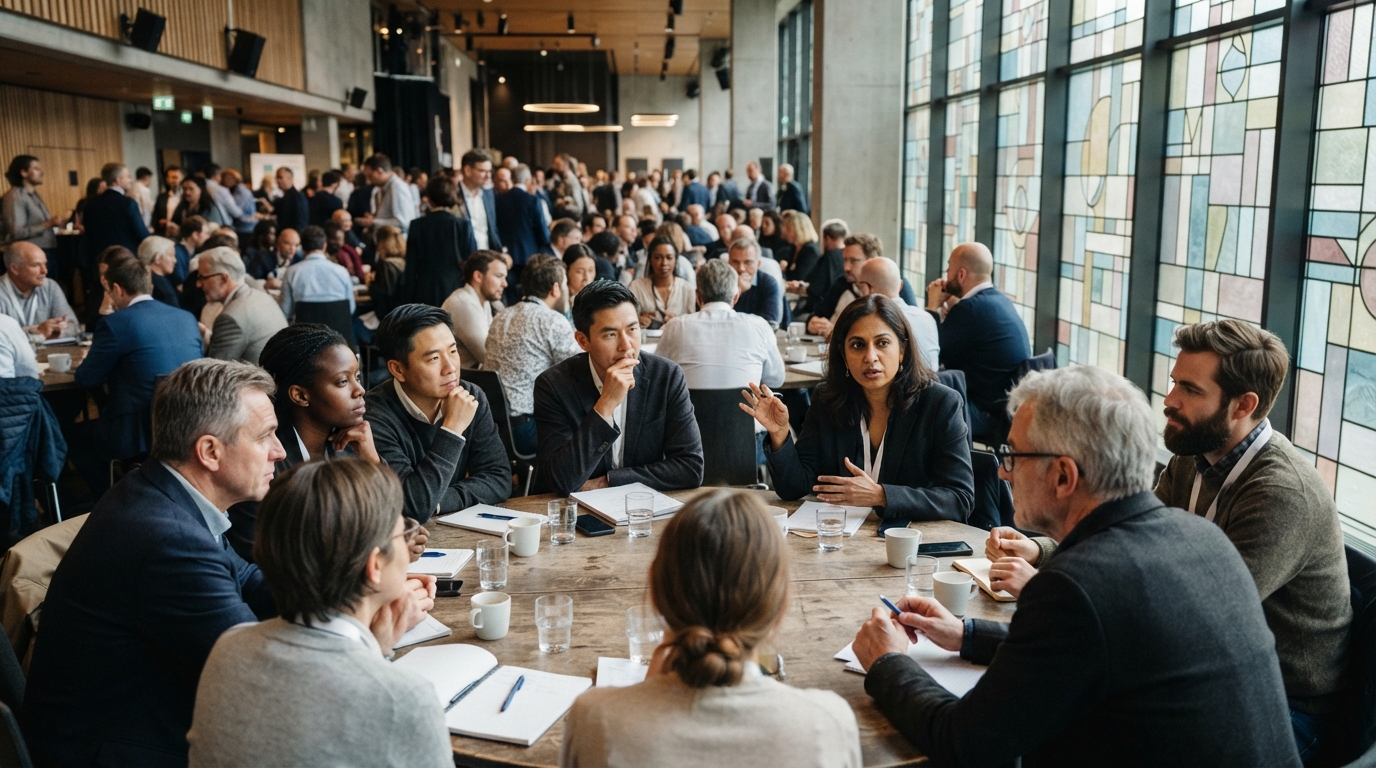
The 5th World Congress on Logic and Religion (WoCoLoR 2026) was a five-day congress on logic and religion, held in Vancouver from September 23–27, 2026. Its program connected logic and theology with metaphysics, AI, Indigenous knowledge, and other fields.
With 10 workshops, keynote talks, performances, and a field trip, WoCoLoR offered more than a specialist philosophy meeting. The dates have passed, but the program gives you a concrete way to assess the event’s scope and decide whether to follow future congresses.
Key Takeaways
- WoCoLoR 2026 took place in Vancouver from September 23–27, 2026, so you should treat its program and registration rates as information about a completed event, not an upcoming opportunity.
- WoCoLoR 2026 connected logic and theology with fields including computer science, psychology, linguistics, and cognitive science, while its 10 workshops explored topics such as AI and faith, religious paradoxes, Indigenous knowledge systems, and logic in Jain, Sikh, and Chinese traditions.
- WoCoLoR 2026 featured keynotes by Paul Bartha on infinite utility and Pascal’s wager, Alfred Hermida on AI and belief, and Susana Gomez on paraconsistency and the logical problem of the Eucharist, but the program’s topics do not show that the congress resolved those questions.
- For future research or attendance, follow announcements from WoCoLoR and the Logic and Religion Association, check for the planned invitation to submit papers for peer-reviewed post-conference volumes, and wait for a dated call and current registration details before making plans.
What WoCoLoR 2026 Offered
If you wanted to see how logic, religion, and neighboring disciplines could be brought into conversation, WoCoLoR was worth following. The 5th World Congress on Logic and Religion (WoCoLoR 2026) took place in Vancouver from September 23–27, 2026. Its official materials describe a program that gives you a concrete basis for assessing the congress’s scope.
The four previous editions were held in João Pessoa in 2015, Warsaw in 2017, Varanasi in 2022, and Sinaia in 2023. WoCoLoR’s stated reach spans logic, philosophy, mathematics, computer science, psychology, linguistics, cognitive sciences, and theology. The Vancouver meeting was part of an ongoing effort to connect religious inquiry with multiple areas of study.
Logic, Faith, And Interdisciplinary Questions

WoCoLoR described its scope as bringing together scholars in logic, philosophy, mathematics, computer science, psychology, linguistics, cognitive sciences, and theology. That range matters because questions about religious belief involve more than whether an argument is valid. They can also concern how people reason, how language shapes claims, and how formal systems represent them.
The official program listed 10 workshops, including sessions on AI and faith, religious paradoxes, Indigenous knowledge systems, and praxis-based logic in Jain, Sikh, and Chinese traditions. These topics brought different kinds of inquiry into view: how artificial intelligence relates to belief, how religious paradoxes can be analyzed, and how logical practice is shaped by particular intellectual traditions. Their inclusion showed the congress’s breadth, not that the program settled those questions.
The keynote talks further illustrated the meeting’s range. Paul Bartha addressed infinite utility and Pascal’s wager, Alfred Hermida spoke on AI and belief, and Susana Gomez examined paraconsistency and the logical problem of the Eucharist. Paraconsistency offers ways to reason in the presence of contradiction without treating every conclusion as valid. These keynote topics framed problems for discussion, but their appearance in the program does not mean the congress resolved them.
A Program Across Vancouver
The published schedule placed events at SFU Harbour Centre on September 23, at University Canada West on September 24–25 and 27, and at UBC Robson Square on September 26. The congress used three university-associated venues rather than holding every session in one place.
On September 26, the program combined the performance “Simone Says,” two book talks, a talk by Samir Gandesha, and a field trip to Granville Island. This range of formats went beyond formal presentations, while the venue change made the city part of the congress experience.
The September 23–27, 2026 dates have passed, so these details describe this edition, not current opportunities to attend. For future events, the itinerary offers a practical point of comparison: a varied schedule can connect disciplines through more than talks, though it cannot show on its own how participants engaged with one another.
Fees, Access, And The Next Research Step

Because WoCoLoR 2026 has concluded, its published rates describe access options for that edition, not prices for a future congress. Regular-scholar registration was US$300 early bird and US$400 after July 31, 2026. Scholars earning US$2,000 or less per month could register for US$150 early bird or US$200 after July 31.
For non-presenting attendees, the published full-conference fee after July 31 was US$170. A daily ticket cost US$43, and a student daily ticket cost US$22. The rates offered options ranging from attending a single day to joining the full conference, with separate rates for scholars and non-presenters.
The organizers said participants would be invited to submit papers for peer-reviewed post-conference volumes. This described a planned next step; it did not guarantee publication or mean the volumes were already available.
For future travel to Canada, entry-document requirements depend on your citizenship and how you travel. Immigration, Refugees and Citizenship Canada’s current guidance says U.S. citizens are exempt from the eTA requirement. Lawful U.S. permanent residents are also exempt, but need valid travel documents and proof of their U.S. permanent-resident status.
Following Logic And Religion Beyond Vancouver
WoCoLoR 2026 offers a snapshot of researchers bringing formal logic into conversation with religious traditions and neighboring fields, not a final account of the field. The completed Vancouver meeting is distinct from any future World Congress on Logic and Religion.
If you are deciding whether to follow the series, watch for official announcements from the congress and the Logic and Religion Association. The next meaningful development is the organizers’ planned invitation for participants to submit work to peer-reviewed post-conference volumes, which may offer a later route into selected research.
Following Logic And Religion Beyond Vancouver
Your next step depends on whether you want to read or participate. If you are tracking scholarship, check the official WoCoLoR site for the post-conference volume invitation. Then review a published collection’s contents and peer-review information to see which questions developed into papers.
If you are considering a later congress, follow announcements from WoCoLoR and the Logic and Religion Association, then wait for a dated call and registration details before making plans. If you are considering a submission, check the new call’s scope, deadline, and required format before deciding whether your work fits. Compare the next program’s themes, format, venues, and fees with your interests and travel constraints. The Vancouver edition alone cannot tell you what a future meeting will offer.