
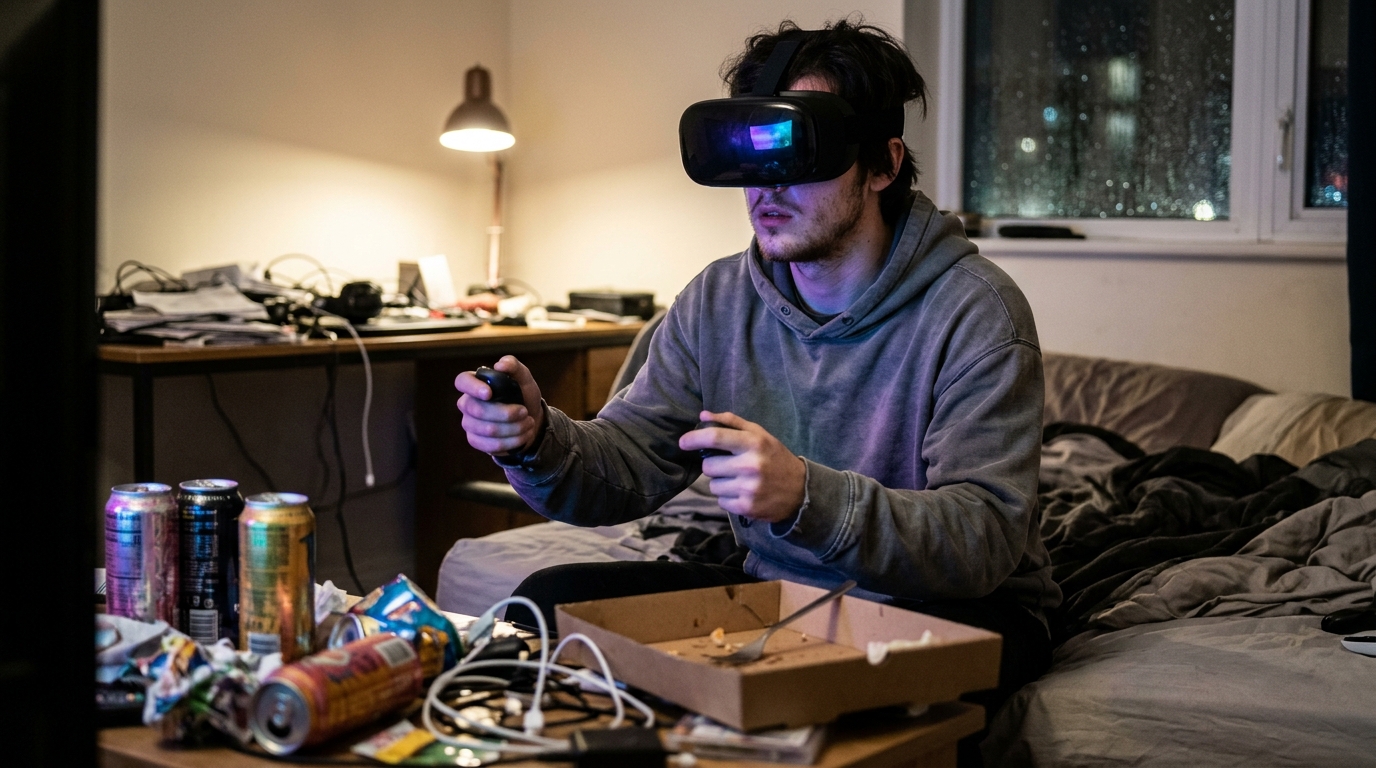
Virtual reality addiction ethics begins with a surprise: the sources reviewed do not establish a separate VR addiction diagnosis, so the closest formal yardstick is the World Health Organization’s gaming disorder category in ICD-11. Its criteria focus on impaired control, harm to daily life, and a pattern normally evident for at least 12 months, not simply long sessions.
Estimates of compulsive VR use vary widely. A 2022 survey of 754 frequent VR users produced figures from about 2% to 20%, depending on the criteria applied. That spread is the first lesson for developers and users alike: how you define the problem changes how big it appears, and the ethical choices that follow depend on which measure you trust.
Key Takeaways
- The WHO’s gaming disorder category in ICD-11 is the closest formal yardstick for VR addiction, so you should judge compulsive headset use by impaired control, harm to daily life, and a pattern lasting at least 12 months rather than by session length alone.
- The 2022 survey of 754 frequent VR users produced compulsive use estimates of 1.72%, 4.11%, or 20.29% depending on the threshold, so you should ask which line was drawn before trusting any single percentage.
- Weekly time spent in VR and feelings of embodiment were both linked to higher addictive-use scores in that 2022 survey, so if you build VR experiences, you should weigh session length and immersion features carefully in your design.
- Movement, eye, and heart-rate signals from body tracking can reveal health or identity, so if you develop VR software, you should treat that data as sensitive from the first prototype, since the EU’s GDPR Article 9 generally prohibits processing health and biometric data without an applicable exception.
- Haptic suits such as the Kinethreads research design are not a stated consumer release, so you should not assume a lab system has been tested for everyday home use, and you should not assume that ISO/IEC 5927:2024 covers a garment because its stated scope does not address haptics.
What Counts as VR Addiction Under WHO Rules?
Under WHO rules, VR addiction has no diagnosis of its own. The closest match is gaming disorder in ICD-11, which requires a specific pattern of behavior, not simply a lot of time in a headset.
The first criterion is impaired control. You might struggle to start, stop, or limit your gaming, which in VR could mean repeatedly failing to take off the headset when you had planned to. The second is priority. Gaming moves ahead of work, sleep, exercise, and friendships that you used to value. The third is continuation or escalation despite negative consequences, such as losing sleep, missing deadlines, or facing repeated arguments at home and still returning to the headset.
Those signs must also cause significant impairment in important areas of life, and they would normally have been evident for at least 12 months. A single intense weekend in a headset, or a long workout session in a fitness game, does not meet that bar. Long sessions and high engagement, on their own, are not the diagnosis.
That is why “compulsive VR use” works best as a practical description rather than a formal label. It gives developers, families, and players a way to talk about a worrying pattern without treating it as a clinical category. If you are checking your own habits, ask whether you keep returning to the headset after it has started costing you something important, and whether that pattern has lasted for months rather than one busy week.
How Common Is Compulsive VR Use?
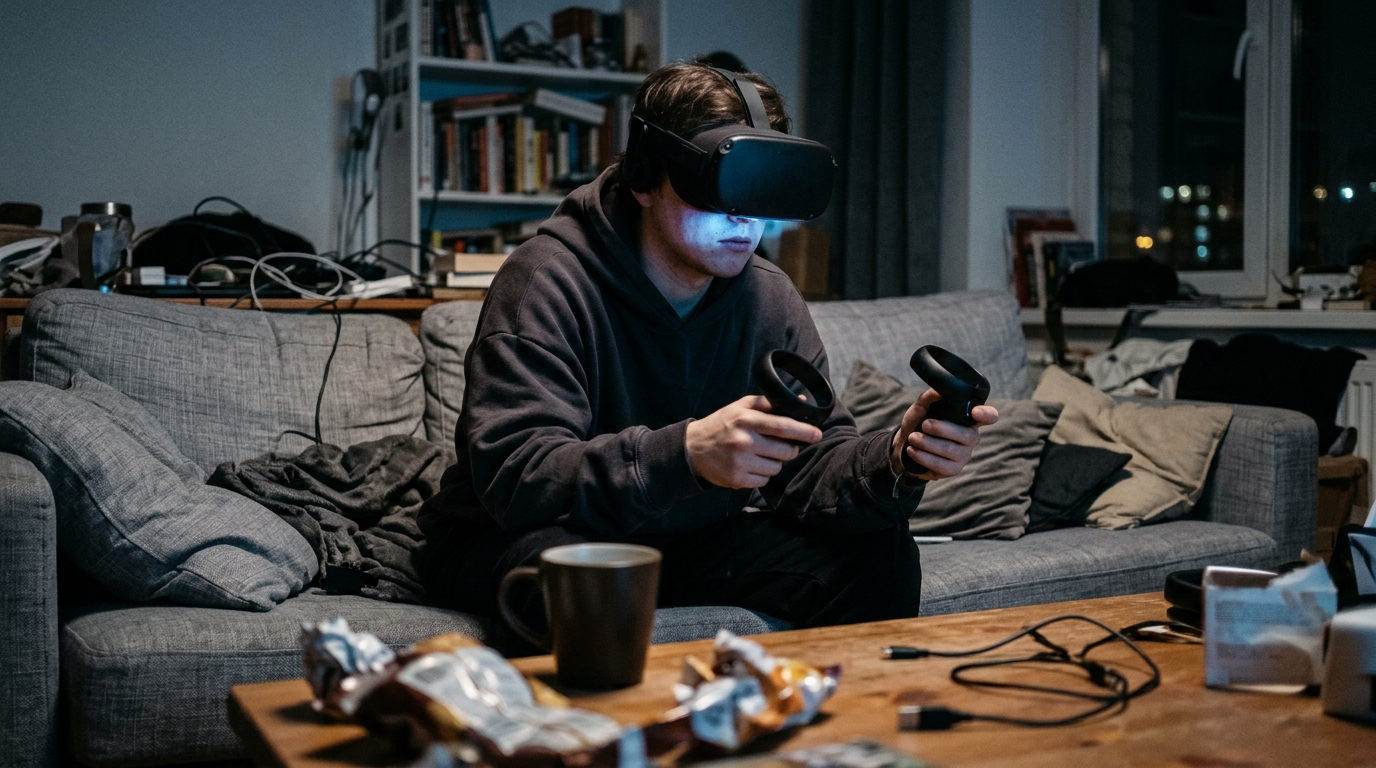
Depending on the threshold, the 2022 survey of 754 adult VR users put compulsive use at 1.72%, 4.11%, or 20.29%. All three figures come from the same sample, so the differences come from how the researchers drew the line between heavy enthusiasm and a genuine problem. When you see a single percentage in a headline, ask which line was used.
The broadest estimate, about 20%, is the one most likely to overstate the problem. A looser threshold counts people who show a few warning signs, such as long sessions or strong attachment to the headset, alongside people whose daily lives are actually being disrupted. A developer who reads that number might rush into heavy-handed design changes, while a player might start to see a normal hobby as alarming.
Who was asked matters just as much. Participants were recruited through VR-related Facebook groups and Reddit during February and March 2022. These are places where people already discuss headsets, so the sample leans toward enthusiasts. The final group was 82% male and 60% U.S.-based, so the results do not describe all VR users, and they say little about women, older adults, or players in other countries.
The study also found that weekly time spent in VR and feelings of embodiment were linked to higher addictive-use scores. Treat the numbers as a prompt for questions about your own habits, or about the people you design for, rather than as a verdict on how many users are addicted.
Where Compulsive Patterns Tend to Take Hold
Two factors stand out in the 2022 study. The first is weekly time spent in VR, which predicted higher addictive-use scores. The second is embodiment, the sense of being inside a virtual body, which also predicted higher scores. Neither fact means headsets are harmful by themselves, but together they show where design choices matter most.
Embodiment is where immersion features come in. When a game tracks your hands precisely, gives you a convincing avatar, or follows your whole body, your brain can begin to treat the virtual body as your own. Highly immersive experiences may strengthen that feeling, which raises an ethical question for designers: if a feature makes a world feel like home, how much responsibility does the studio carry for the hours that follow?
Developers control several levers here. Session length is the most direct. A game that ends after a defined mission gives you a natural stopping point, while an endless arena with no pause invites you to keep going. The international standard ISO/IEC 5927:2024 provides setup and safe-use guidance, with particular attention to safe immersion time, which makes session design a practical concern rather than an afterthought.
Reminders matter too. A break prompt that appears after a long stretch and can be dismissed without losing progress respects your choice. A reminder that resets your timer or penalizes you for leaving does the opposite.
Rewards deserve the closest scrutiny. Daily login bonuses, streaks that punish a missed day, and rare items tied to timed play all pull you back at fixed hours. Those mechanisms can turn a pleasant habit into a pattern of returning despite the costs, which is exactly the pattern that matters most.
Are High-Immersion Haptic Suits Ready for Everyday Use?
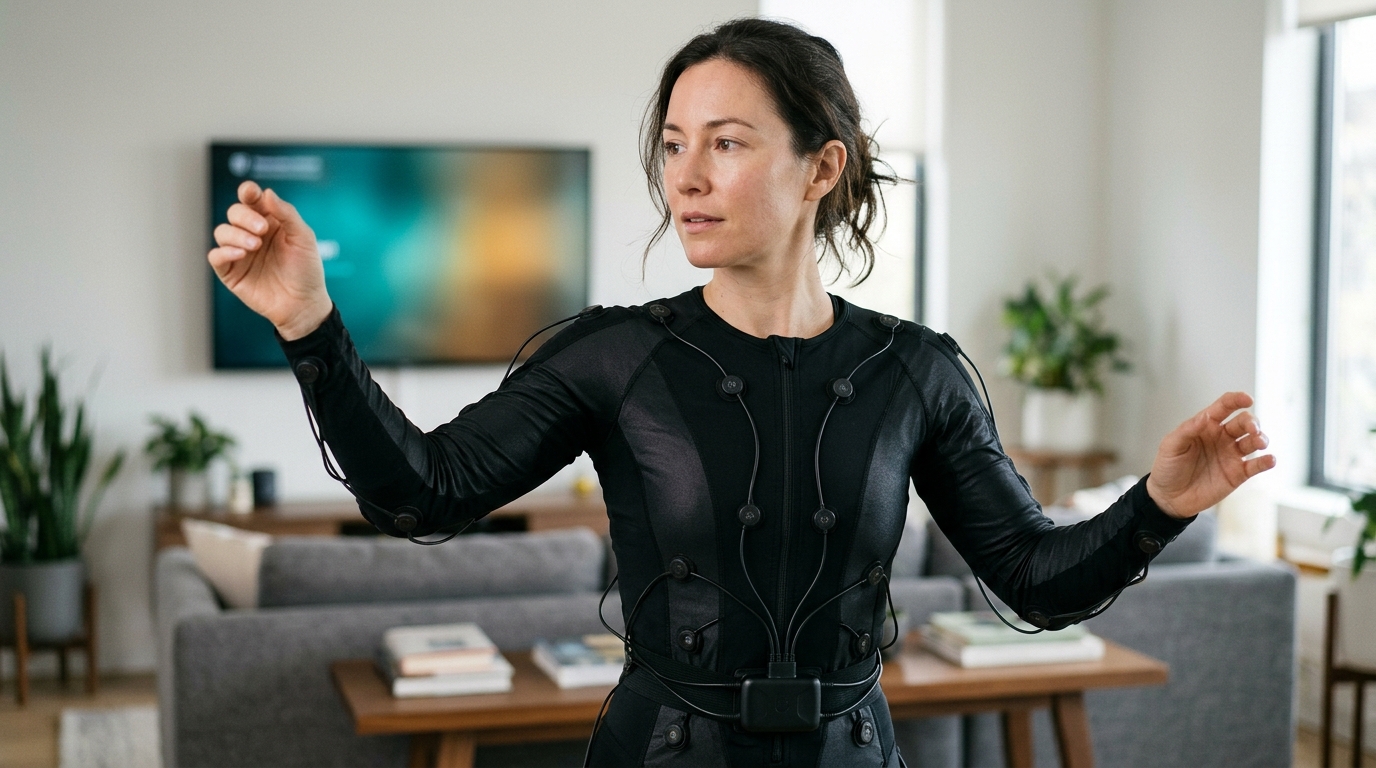
No, not as a general consumer release. In May 2026, Carnegie Mellon University’s Extended Reality Technology Center announced Kinethreads as a haptic-suit research design, not a stated retail launch. The announcement put its estimated cost at about $400, described a suit weighing under 5 kg, and said it can generate forces up to 120 N. Those figures show where the technology may be heading, but they do not mean you can order a Kinethreads suit today.
Commercial vests are a different matter. Products such as the bHaptics TactSuit Air and TactSuit Pro are listed for sale as separate items, so if you already own a compatible headset and game library, you can buy one now. The distinction matters. A research system built for study and a product sold to the public are held to different expectations, and you should not assume that a lab design has been tested for everyday home use.
The safety picture is less settled. ISO/IEC 5927:2024 provides AR/VR setup and safe-use guidance, with particular attention to safe immersion time and workplace safety. Its stated scope, however, does not address haptics. If you are a buyer, do not assume that a standard written around headsets covers a garment that presses against your chest, shoulders, and arms. If you are a developer, do not treat the existence of an AR/VR standard as proof that your force-feedback features have been checked against safety guidance.
That gap has ethical consequences. Physical feedback can make a virtual world feel more convincing, and the feeling of being inside a virtual body is one of the factors linked to higher addictive-use scores. Until safety guidance catches up, the responsibility for session limits, clear stopping points, and honest product claims falls largely on the people designing and selling these suits. Ask what a vest is meant to do, how long it is designed to run, and what happens to your body after an hour of strong pulses.
What Privacy Risks Come With Body Tracking?
Body tracking raises serious privacy questions because the signals a headset collects can reveal who you are and what your health looks like. In Europe and the United States, those signals can trigger strict legal duties. Movement, eye, and heart-rate signals can all reveal health or identity, so developers should treat them as sensitive from the first prototype.
In the European Union, the General Data Protection Regulation sets its strictest tier under Article 9. Biometric data processed to uniquely identify a person, and data concerning health, are special-category data. Processing them is generally prohibited unless an applicable exception applies, so a feature being convenient is not a legal justification on its own.
Consider what a movement log can show. Gait changes, tremors, or unusual posture may hint at a medical condition. Eye-tracking patterns can point to fatigue or attention problems. Heart-rate readings from a connected strap can reveal stress or illness, even when a game only needed them to adjust difficulty.
In the United States, the Children’s Online Privacy Protection Act applies to services directed to children under 13. It also applies to general-audience services that have actual knowledge they collect personal information from children under 13. Covered operators generally must obtain verifiable parental consent before collecting that information.
If your title was not built for children but your analytics show players under 13, you have actual knowledge, and the consent duty applies. Do not wait for a complaint to find out who is using your headset.
Parents should check whether a headset account asks for a birthdate, whether a fitness game turns on body tracking by default, and whether you are asked before a child’s heart-rate data is recorded. Ask what is stored, where it is sent, and how to delete it.
Cybersickness and Long-Term Wellbeing
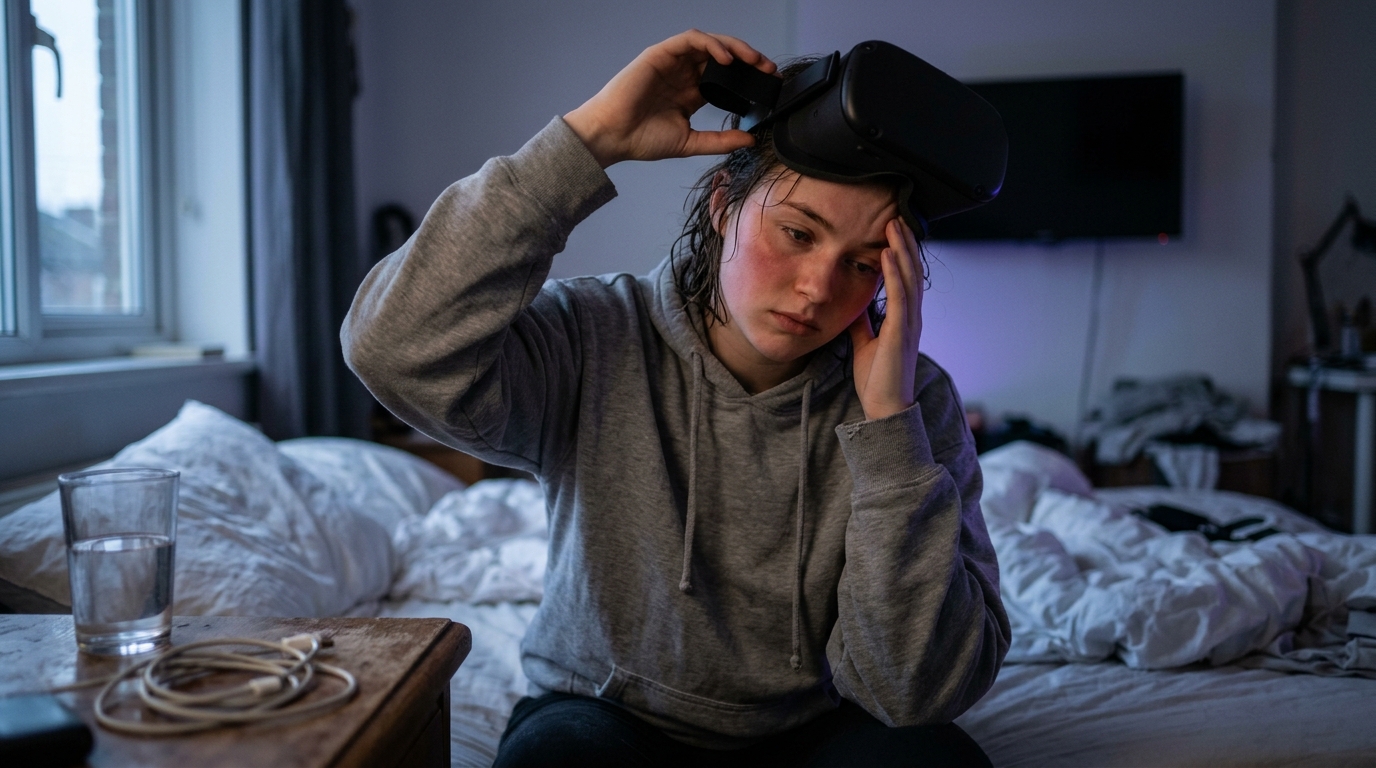
Cybersickness is the physical side of VR ethics, and it is easy to dismiss as a minor annoyance. The European Commission’s virtual-worlds FAQ lists its symptoms as nausea, dizziness, fatigue, headaches, and sweating. For users who experience them, the advice is to limit use and take regular breaks.
Developers owe you more than a warning label. A duty of care means designing for those breaks: letting you pause without penalty, avoiding sudden camera movement you cannot control, and offering comfort settings that reduce motion. A well-built game should still work when players stop at the first sign of queasiness.
For users, a simple self-check helps. After a session, notice whether your head aches, whether you feel unsteady when you walk across the room, or whether you are more tired than the game should have made you. Those signals are information, not weakness.
The longer-term picture is less clear. The FAQ notes that there are still not many studies on the mid-to-long-term effects of extended-reality exposure on workers, even as headsets spread into training, meetings, and play. Uncertainty is not proof of harm, but it is an ethical reason for caution. Keep sessions shorter than you think you need, and pay attention to how your body feels over weeks, not just minutes.
Building Healthier Habits in Immersive Spaces
Start with a short self-check. Ask whether you often struggle to stop or limit your headset time, whether VR now comes before work, sleep, or friendships you used to value, and whether you keep returning even after it costs you sleep or strains your relationships. If those patterns have lasted for many months, not just one busy stretch, talk with a doctor you trust.
Before buying a haptic vest such as the bHaptics TactSuit Air or TactSuit Pro, ask three questions. What body, movement, or health data does the suit and its companion app collect, and can you switch that collection off? Has the maker tested the suit for safe immersion time? A headset standard may not cover a garment that presses against your torso, so look for evidence specific to the vest. Finally, can you adjust the strength of the pulses?
Developers should make four commitments. Add break reminders that can be dismissed without losing progress or penalties. Publish plain-language data practices that explain what is recorded, where it goes, and how to delete it. Set age-appropriate defaults, so body tracking and heart-rate sharing start off for younger players. Treat cybersickness as a design target by offering comfort settings and a pause option that works at any moment.
Practical Steps to Track and Test Your Habits
Start with a log kept over several weeks. For each headset session, write down the date, the time you put the headset on, the time you took it off, and whether you stopped when you had planned to. Keep the notes on paper or in your phone’s notes app, not in the game. At the end of that period, count how often you overran your plan and what you put off to make room for play. If the overruns are frequent and the pattern has been building for months, bring the log to a doctor you trust, since a written record makes the conversation far more useful than memory.
If you build VR experiences, run your own version of the log with a small group of testers. Give them a timer and watch for the moment they say “one more round.” Note what was on screen just before that choice: a daily reward, an unfinished streak, or an endless arena with no natural end. Then change one of those elements before your next release, and test again with a fresh group.
If you are a parent, sit down with the headset your child uses this weekend. Check the account for a birthdate prompt, look at whether body tracking or heart-rate sharing is switched on by default, and find the setting that deletes stored data. Make one change together, then ask your child what they noticed.
Frequently Asked Questions
1. Is cybersickness the same as motion sickness?
Cybersickness is a form of motion sickness that happens in virtual reality. It usually occurs when your eyes report movement that your inner ear does not feel, so the brain receives conflicting signals. Its symptoms, such as nausea, dizziness, and headaches, closely resemble those of motion sickness on a boat or in a car.
2. Are children at higher risk of compulsive VR use than adults?
The 2022 survey of 754 adult VR users included no children, so its estimates of 1.72%, 4.11%, and 20.29% describe adults only and offer no figure for how common compulsive use is among children. Children do have separate privacy protections in the United States under COPPA, which apply to data collection from children under 13 and are a different question from addiction risk.