
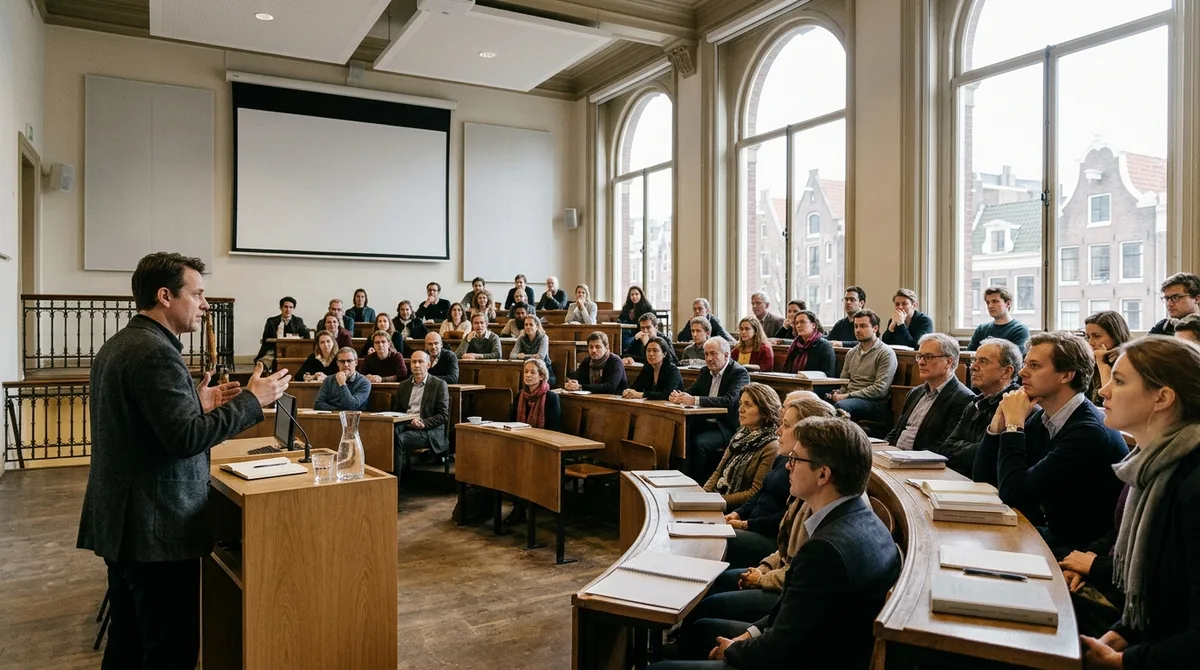
The Amsterdam Kant Conference 2026 was a two-day meeting scheduled for October 22–23, 2026, to examine Kantian moral epistemology and metaphysics. According to the University of Amsterdam’s event listing, Thomas Nys and Tijn Smits organized the meeting, and registration was free but required.
The program brought together four keynote speakers and eight additional presenters around questions of value, moral knowledge, practical judgment, and moral supersensible arguments. If you are new to these debates, it offers a clear view of where current Kant scholarship is focused.
Key Takeaways
- The Amsterdam Kant Conference 2026 was a free but registration-required two-day meeting, scheduled for October 22 and 23, 2026, that you could attend to examine Kantian moral epistemology and metaphysics, organized by Thomas Nys and Tijn Smits.
- The Amsterdam Kant Conference 2026 has already passed, so for reports of how its sessions unfolded, look to sources published after the event.
- Kant’s universal law test, developed in the second section of his Groundwork of the Metaphysics of Morals, asks whether the principle behind a practical judgment could be willed as a universal law, and you can apply it to a promise you have made.
- The research project ‘Moral Truth: Exploring the Concept of Practical Cognition in Kant’s Ethics’ uses practical cognition to describe knowing through acting and deciding, not only through observing.
- If you want to follow the debate, you should read one paper each by keynote speakers Andrew Chignell, Anja Jauernig, Patrick Kain, and Jessica Tizzard and note where they differ on whether moral knowledge comes from reason alone.
Amsterdam Kant Conference 2026 Brings Moral Knowledge to Focus
The Amsterdam Kant Conference 2026 is now a past event. The Amsterdam Institute for Humanities Research at the University of Amsterdam scheduled it as a two-day meeting on October 22 and 23, 2026, with a focus on Kantian moral epistemology and metaphysics. Thomas Nys and Tijn Smits organized the gathering.
Moral epistemology asks how people can come to know what is right and wrong. Metaphysics, in this setting, asks what kinds of facts or values exist at all. Registration was free but required, so anyone planning to attend had to sign up in advance.
As of November 10, 2026, the scheduled dates had passed. This article therefore describes the meeting’s scheduled focus, program, and organizers rather than its sessions.
Four Keynotes and Eight Presenters Shape the Program
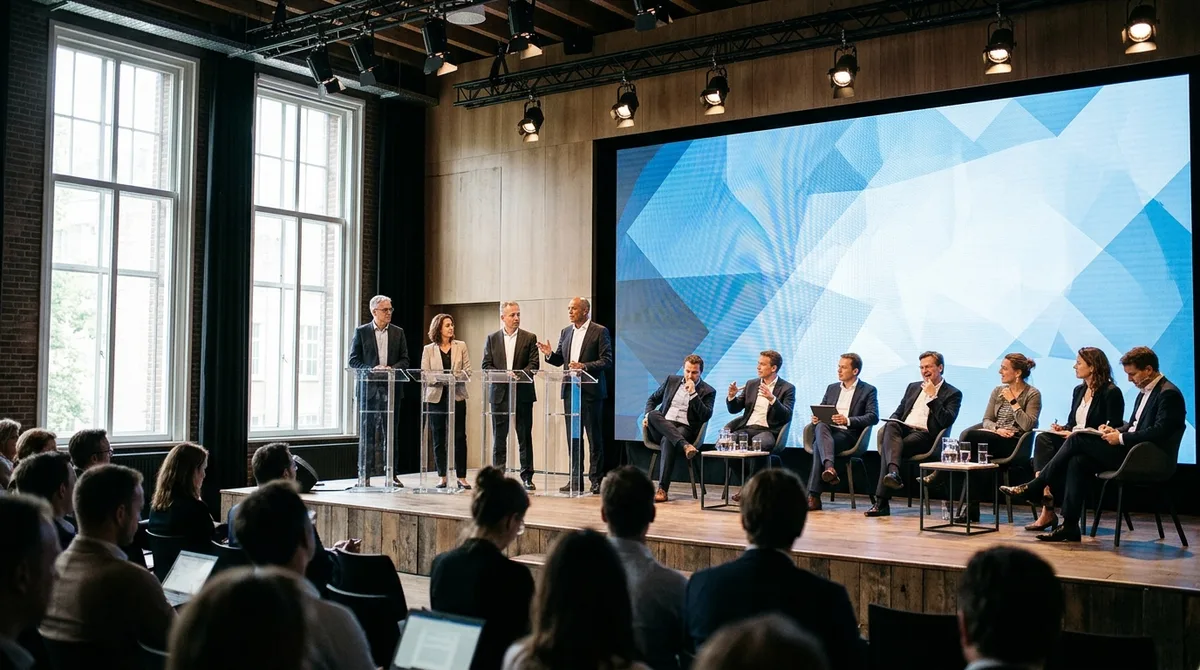
Four keynote speakers headline the program: Andrew Chignell of Princeton University, Anja Jauernig of New York University, Patrick Kain of Purdue University, and Jessica Tizzard of Universität Tübingen. Three of them work at American universities and one at a German university, so the lineup brings together more than one academic tradition.
Eight additional presenters complete the schedule: Katie Coyne, Tijn Smits, Davide Dalla Rosa, Caleb Reidy, Bas Tönissen, Amy Duong, Noam Hoffer, and Martina Favaretto.
At most academic conferences, keynote speakers give the main lectures. They are usually invited because of their standing in the field, and their talks often frame the questions that the rest of the event explores.
Presenters typically give shorter papers, each developing a specific argument. The audience then discusses those papers, and this is where competing views about moral knowledge are tested in direct exchange.
Values, Moral Knowledge, and Supersensible Arguments Explained
The first topic, the nature of values, asks whether moral value is something we discover, like a fact waiting to be found, or something we construct through our practices and reasoning. Kant’s answer is that the moral law has its source in reason itself, so you can work out what it requires without relying on experience.
The conditions of moral cognition ask what must be true for you to know what is right. Kant argued that knowledge of morality can be gained through pure practical reason, but he also asked what capacities a rational agent needs for that knowledge to guide action. Scholars still debate how much of this knowledge is available to ordinary people.
Practical judgments differ from theoretical ones. “The window is open” describes how the world is. “I should keep my promise” tells you what to do. Kant treats the second kind as an expression of a will guided by reason, and he tests such judgments by asking whether the principle behind them could be willed as a universal law.
Moral supersensible arguments reach beyond sense experience. Kant held that freedom, the soul, and God cannot be observed, yet moral life seems to presuppose them. He later called these ideas postulates of practical reason. Whether such reasoning yields genuine knowledge or only rational faith remains one of the most contested questions in Kant scholarship.
The Moral Truth Research Project Behind the Meeting

The conference is tied to a research project titled “Moral Truth: Exploring the Concept of Practical Cognition in Kant’s Ethics.” Its central concept, practical cognition, refers to knowing through acting and deciding, not only through observing. A physician deciding how to tell a patient a hard diagnosis, for example, must grasp what honesty and care require by making a choice and carrying it out. The knowledge is shown in the deed as well as in the thought.
Four bodies are listed as supporters of the event: the Dutch Research Council, the University of Amsterdam Philosophy Department, the Philosophy and Public Affairs group, and the Amsterdam School for Cultural Analysis. Their combined support suggests that questions about moral knowledge are being approached from philosophy, public affairs, and cultural analysis at once. If you want to follow the debate, you can see how Kant’s account of practical reason connects to these wider concerns.
Why Kant’s Questions About Moral Knowledge Still Matter
Kant argued that morality rests on reason rather than on feeling, inclination, or the customs of a particular society. Compassion may move you to help someone, but Kant held that the moral worth of the action depends on the principle you act on, and that reason is what tests that principle. Scholars disagree about whether moral knowledge is available in the way he describes. Some readers hold that ordinary people can recognize moral demands through reason alone. Others argue that Kant needs a richer account of judgment, or that moral knowledge depends more on experience than he allowed. These answers reach beyond the seminar room. If reason can establish moral truths, debates over human rights, public policy, and personal promises may share a common footing. If it cannot, you may need to ask how far shared values can be justified at all.
Following Kant Scholarship After the Amsterdam Meeting
If you want to follow this debate, start with Kant’s Groundwork of the Metaphysics of Morals, where he develops the universal law test for practical judgments. Read its second section slowly, then choose one promise you have made and ask whether the principle behind it could be willed as a universal law.
Next, take the four keynote speakers one at a time. Search for Andrew Chignell, Anja Jauernig, Patrick Kain, and Jessica Tizzard, read one paper by each, and note where they differ on whether moral knowledge comes from reason alone.
Use Philosopedia’s articles and educational content to clarify terms such as practical reason and postulate before you begin.