When you look up at the night sky, you aren’t just seeing a vast, empty void; you are staring into one of the most profound puzzles ever pondered by the human mind. The philosophy of space challenges you to consider whether this cosmic expanse is a physical container that exists on its own or simply a set of relationships between the stars and planets. As our understanding of general relativity and quantum gravity evolves, these questions have shifted from abstract musings into essential frameworks for understanding the fabric of reality itself.
Imagine for a moment that every atom in the universe suddenly vanished, leaving you to wonder if the space they occupied would remain behind. This thought experiment sits at the heart of the debate between substantivalism, which views space as a fundamental entity, and relationalism, which sees it as a network of distances. By exploring these concepts, you gain more than just theoretical knowledge; you begin to see your own place in the cosmos through a lens of intellectual rigor and wonder.
Key Takeaways
- The fundamental nature of space is defined by the tension between substantivalism, which views space as an independent physical container, and relationalism, which sees it as a mere network of distances between objects.
- Supersubstantivalism and general relativity suggest that matter and space are not separate, but rather that physical objects are localized warps or ‘knots’ within the continuous fabric of spacetime geometry.
- Emerging theories in quantum gravity propose that space may not be a fundamental reality at all, but rather an emergent illusion generated by deeper, non-spatial quantum connections and entanglement.
- Human expansion into the cosmos transforms space from a neutral void into a moral environment, requiring a shift in perspective from mere travelers to responsible stewards of the celestial fabric.
Substantivalism Versus Relationalism In The Cosmic Container
Imagine for a moment that you could instantly remove every planet, star, and atom from the entire universe, leaving behind a total void. If you side with the substantivalists, you believe that a physical structure called space would still remain, acting as a permanent stage even when the actors have left. This perspective treats space as a real, independent entity that possesses its own properties and governs how objects move through its vast expanse. It is a compelling way to view the cosmos because it provides a fixed framework for understanding the geometry and physics of our existence.
On the other hand, you might find yourself leaning toward relationalism, which suggests that space is not a physical container at all. From this viewpoint, space is merely a useful mental map we use to describe the distances and directions between actual material objects. If there were no matter in the universe, a relationalist would argue that space itself would cease to exist because there would be no relationships left to define. This substantivalism versus relationalism debate challenges you to reconsider whether the universe is a solid vessel or simply a complex web of connections between the things we can touch and see.
Modern physics adds a fascinating layer to this classic puzzle by integrating space and time into a single, dynamic fabric called spacetime. When you look at Einstein’s equations, you see that the presence of matter actually warps the geometry of this fabric, blurring the lines between a fixed container and a relational network. As you explore these deep metaphysical questions, you are participating in a long tradition of trying to define the very nature of reality. Whether space is a fundamental substance or a mathematical abstraction, understanding its identity is key to finding your place within the grand design of the cosmos.
Spacetime Curvature And The Radical Truth Of Supersubstantivalism
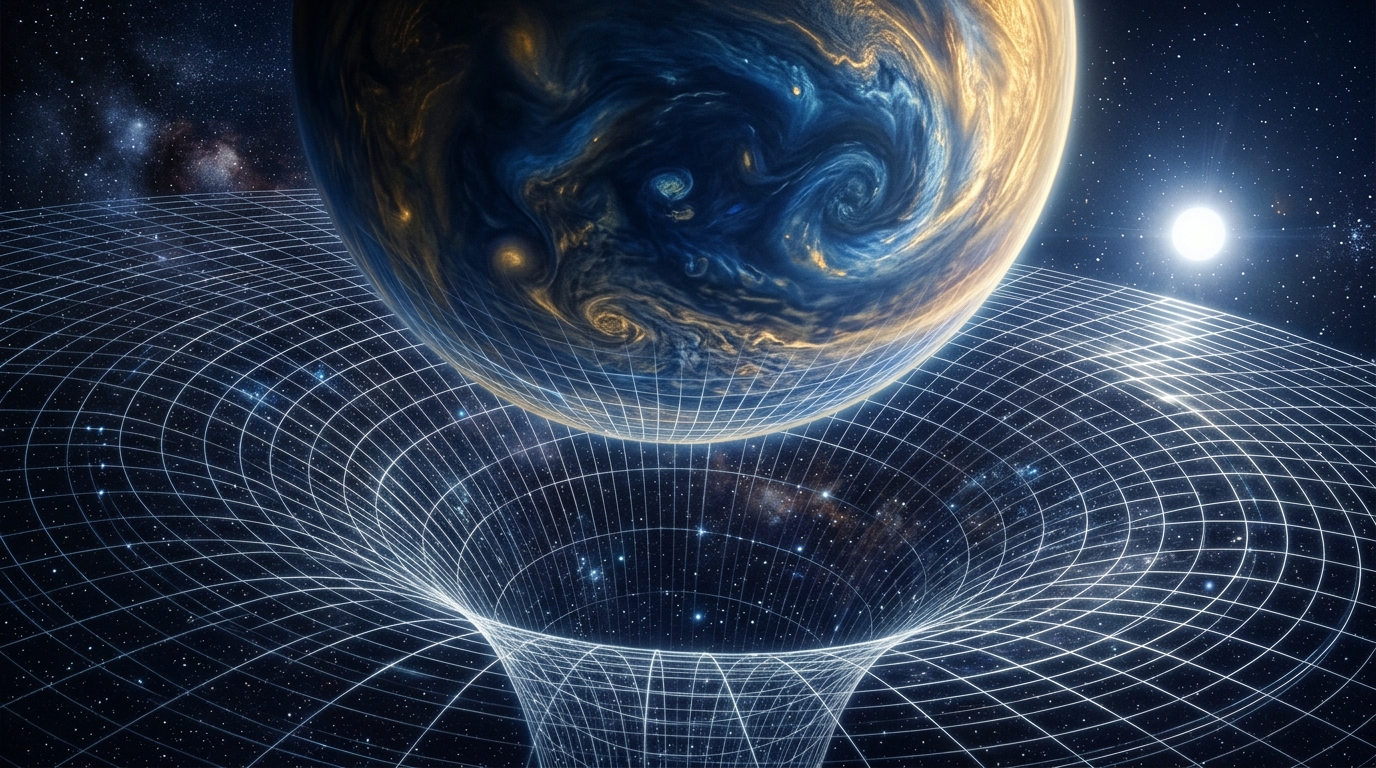
Imagine for a moment that the solid objects you see around you, such as your desk or your coffee mug, are not actually separate entities sitting inside a cosmic container. Instead, general relativity suggests that the very fabric of spacetime is a dynamic, flexible medium that curves and ripples in response to energy. Supersubstantivalism takes this scientific reality to its logical philosophical conclusion by proposing that matter is nothing more than a localized warp in the geometry of space itself. In this view, you are not a traveler moving through a void, but rather a complex, concentrated knot of the void itself.
This radical perspective effectively erases the traditional boundary between the object and the environment, challenging your fundamental intuition about what it means to exist. If there is no distinction between a physical particle and the space it occupies, then the universe is a single, continuous substance manifesting in different shapes and densities. You can think of it like a wave in the ocean; the wave is not a separate thing from the water, but rather a specific behavior or movement of the water. By viewing the cosmos through this lens, you begin to see a deeply unified reality where the distinction between “thing” and “nothing” finally dissolves.
Exploring these concepts allows you to appreciate the profound elegance of a universe where geometry and substance are one and the same. This shift in thinking transforms your understanding of the physical world from a collection of isolated parts into a seamless, interconnected tapestry of spacetime. As modern physics continues to probe the deep structure of quantum gravity, the philosophy of supersubstantivalism offers you a rigorous way to bridge the gap between abstract equations and your personal experience of reality. You are invited to reconsider your place in the cosmos, not as an occupant of space, but as a vibrant expression of its infinite geometry.
Quantum Gravity And The Potential Illusion Of Extension
Imagine for a moment that the vast distance between you and the furthest stars is not a physical void, but rather an emergent illusion generated by a deeper layer of reality. Many physicists and philosophers suggest that space is not a fundamental stage where the drama of the universe unfolds. Instead, they propose that what you perceive as extension and volume might be an emergent property, similar to how the smooth image on your computer screen is actually composed of discrete pixels. This shift in perspective challenges your most basic intuitions about the world, inviting you to consider that “here” and “there” are just convenient labels for complex quantum connections.
At the heart of this mystery lies the concept of quantum entanglement, which suggests that particles can remain instantly connected regardless of the distance separating them. You can think of this as a cosmic web where the relationships between objects are more fundamental than the space they appear to occupy. If space is built from these information-rich links, then the three-dimensional world you navigate daily is more like a projection than a solid container. This relational view implies that geometry itself is a secondary effect, born from a deeper, non-spatial network of quantum interactions that we are only beginning to decode.
Understanding space as an emergent phenomenon changes how you view your own place in the cosmos and the very nature of existence. If distance is an illusion, the separation you feel from the rest of the universe might be less absolute than it seems on the surface. This intersection of metaphysics and modern physics pushes you to look past the physical appearance of the world to find a more unified, interconnected reality. By re-evaluating the nature of extension, you are not just studying abstract science, but exploring a profound philosophical shift that redefines what it means for anything to exist in a specific location.
Ethical Frontiers Of Human Presence In The Cosmos
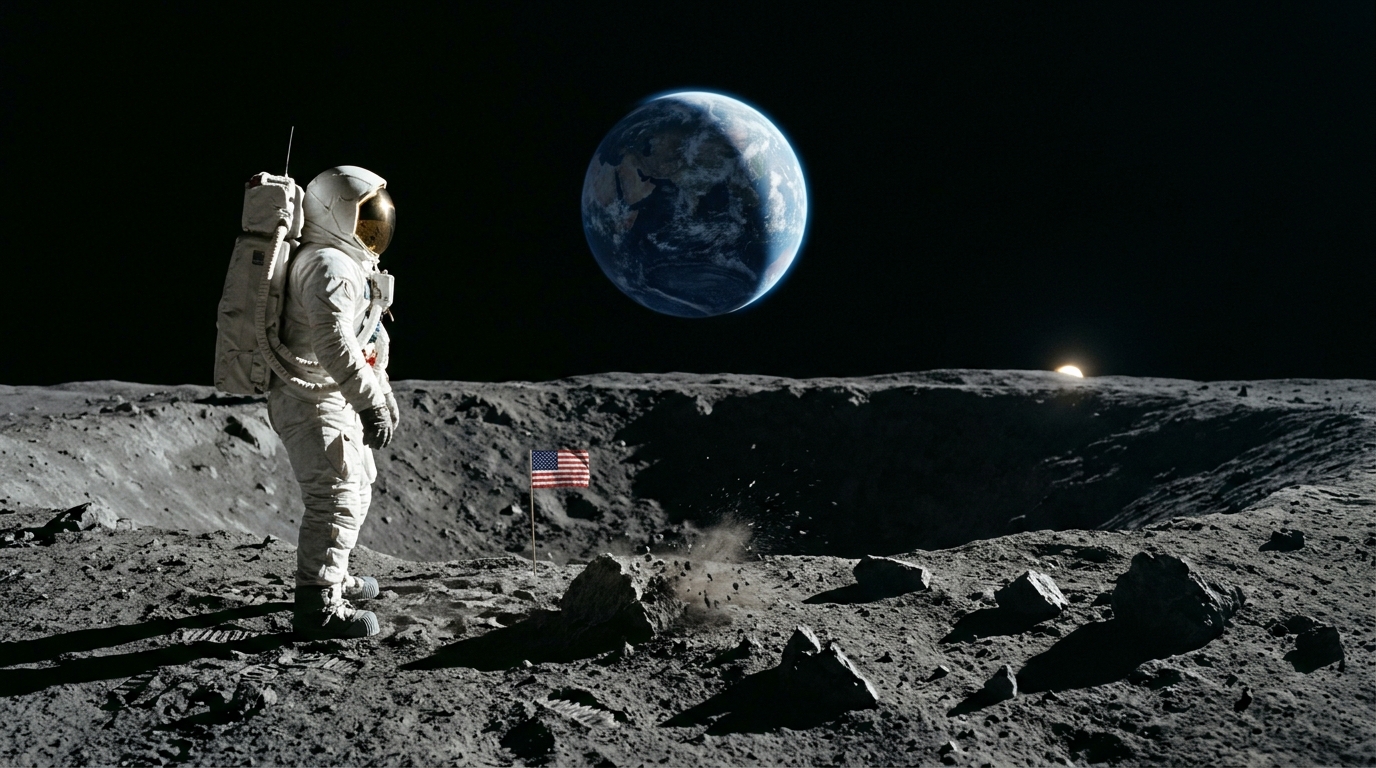
As you look up at the night sky, you might see a vast silence void, but your presence in the cosmos fundamentally alters the moral environment of that emptiness. When you consider the leap from being an Earth-bound observer to an active participant in the stars, you must grapple with whether space is a blank canvas for human utility or a realm with its own intrinsic value. If space is indeed a substance as substantivalists suggest, then moving through it is more than just shifting positions between objects. You are entering a physical entity that may require a new kind of stewardship, shifting your role from a mere traveler to responsible stewards of the celestial environment.
The ethical weight of your footprint in the universe grows as you realize that human expansion is not just a technical feat but a metaphysical shift. You have to ask yourself if the vacuum of space remains nuclear once you introduce human intent, waste, and permanent structures into its depths. This transition forces you to rethink the nature of existence, moving beyond terrestrial boundaries to define what it means to be a responsible cosmic citizen. By applying your moral frameworks to the stars, you are essentially extending the reach of human ethics into a territory that was once considered beyond the scope of worldly concern.
Your journey into the philosophy of space invites you to bridge the gap between abstract physics and tangible human responsibility. As you ponder the relationship between matter and the void, you begin to see that the universe is not just a backdrop for human history but a partner in our ongoing evolution. Balancing the drive for exploration with a deep respect for the structural integrity of spacetime ensures that your expansion remains meaningful rather than merely exploitative. Ultimately, your engagement with these cosmic questions helps you understand the delicate intersection of scientific progress and the preservation of the universal order.
Beyond the Void: Your Place in Space
The debate between substantivalism and relationalism is more than a technical dispute for physicists because it fundamentally alters how you perceive your place in the cosmos. By viewing space as either a tangible substance or a complex web of relationships, you begin to see that the emptiness around you is actually a sophisticated structure governed by precise metaphysical laws. This journey through the philosophy of space reveals that the universe is not just a backdrop for human activity, but a dynamic participant in the story of existence. You are now equipped to look at the night sky and recognize that the distances between stars are as meaningful as the stars themselves.
As you integrate these theories with the realities of modern physics, the boundary between abstract thought and physical reality begins to blur. Whether you lean toward the idea of space as an independent entity or a system of relational connections, you are engaging in a tradition of inquiry that stretches from ancient thinkers to the frontiers of quantum gravity. This intellectual framework provides you with a deeper appreciation for the ancient puzzles that shape every moment of your life. Understanding these invisible structures allows you to approach the mysteries of the universe with both a critical mind and a sense of profound wonder.
Frequently Asked Questions
1. What is the core difference between substantivalism and relationalism?
Substantivalism treats space as a physical container that exists independently of the objects within it. In contrast, relationalism views space as nothing more than the sum of distances and relationships between objects, meaning it would cease to exist if all matter disappeared.
2. If all matter were removed from the universe, would space still exist?
Your answer depends on which philosophical framework you embrace. Substantivalists would say yes, as space is a fundamental stage that remains even when empty, while relationalists would argue that space vanishes once there are no longer objects to relate to one another.
3. How does general relativity change our philosophical view of space?
General relativity shifts your perspective by showing that space is not a static backdrop but a dynamic fabric that can curve and stretch. It bridges the gap between philosophy and physics by proving that the geometry of the universe is actively shaped by the mass and energy within it.
4. Is space a physical object you can touch or measure?
While you cannot touch space like a solid object, you can measure its properties through the movement of light and the behavior of gravity. It functions as a real entity in modern physics, possessing a specific geometry that dictates how every atom in your body moves.
5. Why should a non-scientist care about the philosophy of space?
Exploring these questions allows you to engage with the deepest mysteries of existence and your place in the cosmos. It sharpens your intellectual rigor and transforms the night sky from a simple view into a profound puzzle about the nature of reality.
6. How does quantum gravity complicate these classical views?
Quantum gravity challenges your traditional understanding by suggesting that space may be composed of discrete, fundamental units rather than being a smooth, continuous field. This evolution in thought forces you to reconsider whether space is a primary feature of the universe or an emergent property of deeper quantum interactions.