

Imagine standing in a gallery where every portrait, map, and timeline has been curated through a single lens, leaving you to wonder what stories remain hidden in the shadows. This is the core of the afrocentrism vs eurocentrism debate, a profound clash between two worldviews that shape how you understand human history and your place within it. While one framework has long positioned European achievements as the universal standard for progress, the other emerged as a vital reclamation of identity, centering African agency and intellectual contributions.
When you look beneath the surface of these academic terms, you discover they are more than just theories; they are the blueprints for how society validates knowledge and power. By shifting your perspective, you can begin to see how historical narratives often prioritize Western discovery while marginalizing the civilizations that flourished long before. Understanding this tug-of-war allows you to deconstruct biased narratives and develop a more inclusive, rigorous appreciation for the diverse tapestry of global heritage.
Key Takeaways
- Eurocentrism functions as an invisible framework that falsely positions European history and values as the universal gold standard for human progress.
- Afrocentrism serves as a vital intellectual correction that restores African agency and recognizes the continent as a primary architect of science, philosophy, and social governance.
- The intellectual debate over Ancient Egypt highlights how historical narratives have been used to detach African achievements from their geographic and cultural roots to support Western-centric hierarchies.
- True global literacy requires moving beyond a single-center narrative to synthesize diverse worldviews, creating a more accurate and inclusive understanding of shared human history.
The Invisible Framework Of Eurocentric Thought
When you open a history textbook or watch a documentary about global development, you are likely viewing the world through an invisible framework known as Eurocentrism. This framework suggests that the story of human progress began in Greece and Rome, moved through the Renaissance, and eventually culminated in the modern Western world. It positions European values, legal systems, and scientific methods as the universal gold standard for all of humanity. You might notice that other cultures are often framed as supporting characters or obstacles to this central narrative of Western advancement. By treating one specific regional history as the default human experience, this perspective subtly suggests that Western achievements are the sole engine of global civilization.
You can see the influence of this framework in the way knowledge is categorized and taught in schools across the globe. For decades, the intellectual achievements of Africa, Asia, and the Americas were often relegated to the margins or viewed only in relation to their contact with Europe. This structural bias creates a knowledge monopoly where Western philosophy is seen as objective truth while other worldviews are labeled as mere folklore or tradition. When you begin to question these assumptions, you realize that the European experience is just one thread in a much larger tapestry of human ingenuity. Understanding this invisible framework is the first step toward appreciating a more balanced and inclusive history.
This dominance does not just affect how we view the past, but also how you perceive modern success and cultural value. When Western standards of beauty, governance, and economic theory are treated as the only valid paths forward, the rich contributions of non-Western societies are often overlooked. Afrocentrism and other global philosophies challenge this by reminding you that African civilizations were pioneers in mathematics, astronomy, and social organization long before the colonial era. By broadening your perspective beyond the objective lens of the Eurocentric canon, you gain access to a diverse array of solutions for contemporary global challenges. Moving past this singular lens allows you to engage with a world that is far more complex and intellectually vibrant than a single-continent narrative suggests.
Reclaiming Agency Through Afrocentric Perspectives
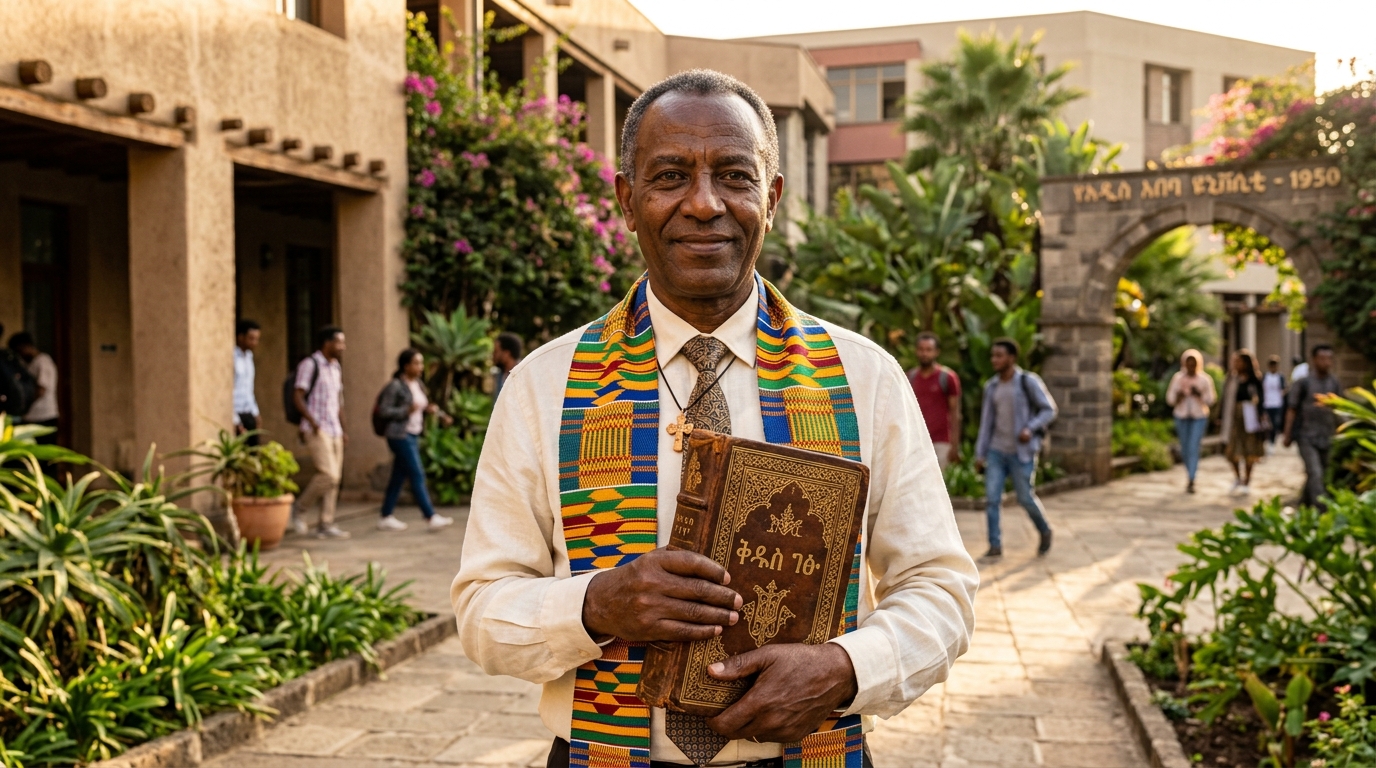
When you examine the traditional educational environment, you will likely notice that history is often presented through a lens that centers European achievements as the universal standard for progress. This Eurocentric framework frequently relegates African contributions to the sidelines, treating the continent as a passive recipient of history rather than a primary architect of civilization. By shifting your perspective toward Afrocentrism, you begin to see Africa as a central actor in the development of mathematics, philosophy, and social governance. This shift is not about replacing one bias with another, but rather about restoring a sense of African agency to a people whose intellectual history was systematically obscured.
As you explore this framework, you will discover that Afrocentrism serves as a vital tool for decolonizing the way we categorize and value knowledge. It challenges the assumption that the Western canon is the only source of rigorous thought, instead highlighting the sophisticated systems of logic and ethics found in African traditions. By placing African experiences at the heart of the narrative, you can better understand how early kingdoms like Mali or Kush influenced global trade and culture long before the colonial era. This intellectual reclamation allows you to appreciate a more balanced and inclusive view of human history that honors the diversity of global thought.
The Intellectual Battle For Ancient Egypt
When you look at the majestic pyramids of Giza, you are witnessing more than just an architectural marvel; you are standing at the center of a profound intellectual tug-of-war. For centuries, a Eurocentric lens has dominated the narrative, often detaching Ancient Egypt from its African geography to claim its achievements as a precursor to Greco-Roman civilization. This perspective suggests that the intellectual foundations of science, mathematics, and philosophy were imported or developed in isolation from the rest of the continent. By framing Egypt as an outlier rather than an African heartland, this worldview reinforces a hierarchy that positions Western progress as the primary driver of human history.
You can see the Afrocentric response as a necessary correction to this long-standing marginalization of African agency. This framework invites you to view Egypt as an indigenous African civilization, deeply rooted in the cultural and linguistic traditions of the Nile Valley. By centering African experiences, scholars aim to reclaim the historical validation that was stripped away during the colonial era. This shift is not just about changing names or dates on a timeline, but about recognizing that the cradle of civilization is inextricably linked to the diverse cultures of the African continent.
Understanding these two worldviews helps you see how the categorization of knowledge impacts your own perception of global history. While the Eurocentric model has historically controlled the global curriculum, the rise of Afrocentrism encourages you to question who gets to write the story of humanity. This debate serves as a powerful case study in how cultural identity shapes the way we validate truth and academic authority. Ultimately, exploring these clashing perspectives allows you to appreciate a more inclusive and rigorous approach to the origins of human achievement.
Integrating Diverse Worldviews For Global Literacy

Developing global literacy requires you to look past the traditional borders of the Western canon to see how different cultures validate knowledge. For centuries, Eurocentrism has acted as the default lens, framing European progress as the primary driver of human history while often relegating other civilizations to the sidelines. When you rely solely on this single-center narrative, you miss the complex contributions of non-Western societies and risk viewing global development through a narrow, distorted filter. By recognizing Eurocentrism as one specific perspective rather than a universal truth, you begin to open your mind to a more authentic and rigorous study of the world.
Afrocentrism serves as a vital intellectual counterweight by placing African agency and experiences at the heart of the historical record. This framework is not just about learning new facts, but about shifting your entire orientation to acknowledge that African people have always been subjects of their own history rather than passive objects of Western study. As you explore this viewpoint, you will see how it corrects historical marginalization and restores a sense of cultural continuity that was often erased by colonial narratives. Embracing this shift allows you to appreciate the diverse ways that different regions have shaped science, philosophy, and social governance throughout time.
True global literacy is achieved when you learn to balance these diverse worldviews to form a more complete picture of our shared heritage. Moving beyond a single-center narrative allows you to synthesize information from multiple cultural hubs, creating a richer and more accurate understanding of how humanity evolved. Instead of choosing one correct center, you can view history as a vibrant tapestry of interconnected ideas and achievements. This inclusive approach equips you with the critical thinking skills needed to decode the past and participate in an increasingly interconnected world with empathy and intellectual depth.
Balancing the Scales of Global Perspective
Understanding the tension between Afrocentrism and Eurocentrism allows you to see how the very foundations of global knowledge have been constructed over centuries. While Eurocentrism has long functioned as the default lens for history and progress, you can now recognize it as just one specific cultural perspective rather than a universal truth. By positioning European achievements as the sole engine of civilization, this framework often overlooks the profound contributions of other societies. Recognizing this bias is the first step toward developing a more inclusive and accurate understanding of our shared human story.
When you engage with Afrocentrism, you are exploring a necessary intellectual correction that restores African agency and voice to the center of its own narrative. This framework encourages you to look past the margins of traditional textbooks to find a rich history of innovation, philosophy, and social organization. It is not merely about replacing one bias with another, but about validating experiences that were systematically silenced by colonial structures. By shifting your perspective, you gain a deeper appreciation for how your social position shapes how different cultures interpret their own place in the world.
Ultimately, balancing these two worldviews helps you move toward a more holistic and global approach to education and philosophy. You are no longer limited to a single mainstream account, but are instead equipped to navigate a diverse array of human thought. This journey of unlearning and relearning empowers you to question who is telling the story and whose interests that story serves. As you continue to explore these structural ways of categorizing knowledge, you will find yourself better prepared to participate in a truly global conversation.
Frequently Asked Questions
1. What exactly is the difference between Afrocentrism and Eurocentrism?
Eurocentrism is a worldview that positions European history and values as the universal standard for human progress. Afrocentrism is a necessary shift in focus that centers African agency and intellectual contributions to reclaim a more accurate global narrative.
2. How does Eurocentrism influence the way you learn history?
You often see Eurocentrism in textbooks that frame the story of humanity as starting in Greece and Rome before moving through the Renaissance. This perspective treats Western achievements as the default human experience, which subtly marginalizes the civilizations that flourished elsewhere long before.
3. Is Afrocentrism just a replacement for Eurocentrism?
No, Afrocentrism is not about replacing one bias with another but rather about validating knowledge that has been hidden in the shadows. It provides you with a more inclusive and rigorous appreciation for global heritage by ensuring African perspectives are not treated as supporting characters.
4. Why is it important for you to understand these two frameworks?
Understanding this debate allows you to deconstruct biased narratives and see how society validates power through specific stories. By recognizing these blueprints, you can develop a more balanced view of how different cultures have shaped the modern world.
5. Can a person value both Western and African contributions simultaneously?
You can certainly appreciate both by moving away from the idea that one regional history is the sole engine of civilization. Adopting a more pluralistic view helps you see the diverse tapestry of global heritage without prioritizing one lens over the other.
6. How can you spot Eurocentric bias in everyday media?
You can spot this bias when global development is described solely through Western discovery or when non-Western societies are framed as obstacles to progress. Pay attention to whether the narrative treats European methods as the only valid way to achieve scientific or legal advancement.