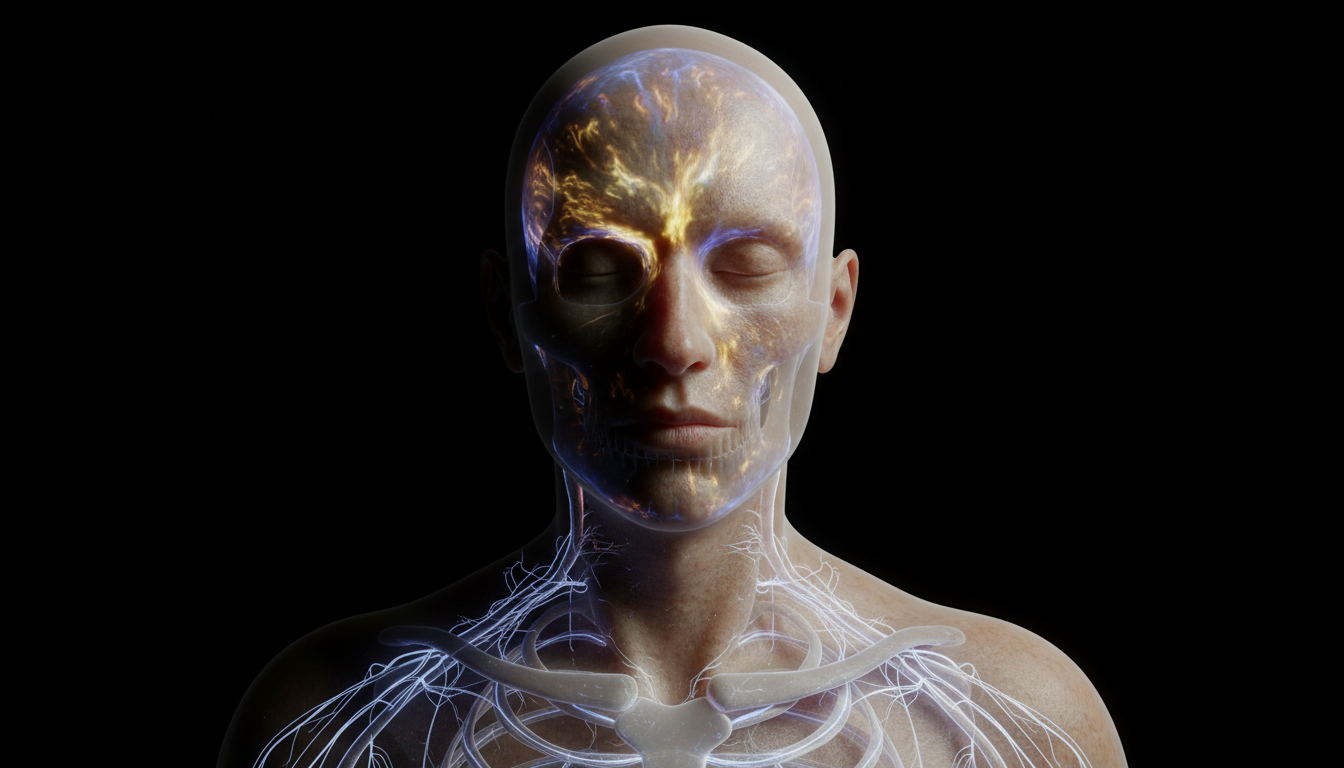

When you reach out to grab a cup of coffee, you aren’t just processing raw data or executing a mental command; you are engaging in a seamless dance between your body and the environment. This lived experience is at the heart of the phenomenology of perception, a field that challenges the old idea that your mind is a detached observer trapped inside a skull. By exploring how you inhabit the world through your senses, you begin to see that consciousness is not something you have, but something you do.
Maurice Merleau-Ponty transformed this study by moving beyond the “I think” to focus on the “I can,” grounding your existence in physical movement and presence. Instead of viewing your body as a mere biological machine, you can start to understand it as the very lens through which reality gains its meaning. This shift in perspective turns abstract philosophy into a practical tool for understanding your daily interactions, from the way you navigate a crowded room to how you feel the texture of the world around you.
Key Takeaways
- Consciousness is not a detached mental process but an active, physical engagement where thought and flesh are inextricably linked.
- The body is more than a biological machine; it is the primary lens and ‘lived’ medium through which reality gains its meaning and logic.
- Human intelligence is fundamentally embodied, meaning your physical intuition and ability to move precede and support abstract intellectual thought.
- Meaningful existence shifts from the Cartesian ‘I think’ to the Merleau-Pontian ‘I can,’ defining your reality by your physical potential and direct sensory dialogue with the environment.
Beyond the Cartesian Split of Mind and Body
For centuries, the Western world has been shaped by the Cartesian idea that your mind is a detached pilot steering a mechanical body. This perspective treats your physical self as a mere vessel, a biological machine that carries your real consciousness around like a passenger. When you embrace the phenomenology of perception, you begin to see that this separation is actually an illusion. You are not a ghost trapped in a machine, but rather a unified being where thought and flesh are inextricably linked. By moving past this split, you can start to appreciate how your physical presence defines your entire psychological reality.
Your body serves as your primary point of view and your fundamental way of belonging to the world. Instead of your brain simply processing data like a computer, your hands, eyes, and skin are actively thinking through their interactions with your surroundings. Think about how you navigate a crowded room or catch a falling object without needing to consciously calculate the physics involved. These moments prove that your intelligence is embodied, manifesting through your physical capabilities rather than just abstract reflection. Your physical existence provides the very framework through which any meaning or logic can emerge.
Shifting your focus toward this unity allows you to experience life with a deeper sense of wholeness and presence. You no longer have to view your mental health and physical health as two separate categories that rarely influence one another. Every sensation you feel and every movement you make contributes to the ongoing story of who you are as a conscious individual. This perspective invites you to trust your physical intuition as a valid source of wisdom and insight. Ultimately, recognizing yourself as an embodied subject helps you engage with the world more authentically and directly.
The Primacy of Your Embodied Perception

When you look at the world around you, it is easy to assume that your brain is simply a computer processing data from your eyes and ears. However, Maurice Merleau-Ponty suggests that your perception is actually an active, physical dialogue between your body and your environment. You do not just observe a chair or a tree as a detached mind, but rather you encounter them through your physical presence and potential for movement. This lived experience is the bedrock of your reality, forming the raw material from which all your later thoughts and theories are built. By acknowledging this, you begin to see that your body is not just an object you own, but the very medium through which you inhabit the world.
Long before you ever learned a scientific formula or a logical proof, you were already making sense of the world through your senses. This pre-reflective awareness means that your immediate, bodily engagement with your surroundings is more fundamental than any abstract calculation. Scientific models are useful tools, but they are actually second-order expressions that rely on the primary evidence of your direct perception. When you reach for a cup of coffee, your hand understands the distance and weight without needing a mathematical equation to guide it. Your body possesses its own kind of intelligence that precedes and supports your intellectual life.
This shift in perspective invites you to move past the old idea that the mind and body are two separate entities working in isolation. Instead, you should view yourself as an embodied consciousness where your physical actions and your mental perceptions are completely intertwined. Every thought you have is rooted in the way you move, touch, and see the space around you. Recognizing the primacy of perception allows you to trust your direct experiences as the ultimate source of truth. By grounding your knowledge in this physical reality, you gain a deeper and more authentic understanding of what it means to be human.
Navigating Space Through the Lived Body
When you reach for a cup of coffee, you do not first calculate the distance of your arm or analyze the mechanics of your joints. Instead, your hand moves toward the object with an intuitive grace because you experience your body as a unified field of potential action. Maurice Merleau-Ponty describes this as the lived body, a state where you are not merely a mind inhabiting a machine, but a being that exists through movement. Your body serves as your primary anchor in the world, allowing you to navigate physical space without needing a mental map. This perspective shifts the focus from what the body is to what the body can do in any given moment.
Consider how you move through a crowded room or duck under a low doorway without pausing for conscious thought. You possess a bodily schema that automatically adjusts to your surroundings, treating your physical form as a subject that interacts rather than an object to be observed. This internal sense of space means your body is the very medium through which the world is revealed to you. You do not just occupy space like a statue, you inhabit it through your intentions and gestures. By recognizing this active role, you can see how your physical presence shapes every perception and interaction you have.
This lived experience is fundamentally different from looking at yourself in a mirror or studying an anatomical chart. In those moments, you are treating yourself as an object, but in your daily life, you are the center of a world that unfolds around your capabilities. Your perception is not a separate mental process, but is deeply rooted in the way your limbs and senses engage with the environment. Space becomes meaningful only because you have the capacity to move within it and reach toward the things that matter to you. Understanding this connection helps you appreciate the profound depth of your own embodied existence.
Awakening to Your Lived Experience
Embracing the phenomenology of perception changes the way you move through your daily life by shifting your focus from abstract thoughts to lived experiences. Instead of viewing your body as a mere machine that carries your brain around, you begin to recognize it as your primary means of communication with the universe. Every morning coffee or brisk walk becomes a deliberate act of engagement rather than a mindless routine. You start to notice how the weight of a ceramic mug or the resistance of the wind against your skin creates a unique, unfolding story. This perspective invites you to step out of your head and into the vibrant, tactile world that has been waiting for your attention.
Viewing your surroundings through this lens transforms even the most mundane interactions into a meaningful dialogue with reality. When you speak with a friend, you are no longer just exchanging data, but participating in a shared physical and emotional space. You become more aware of how the environment shapes your mood and how your presence, in turn, influences the space around you. This deep sense of interconnectedness replaces the feeling of being a detached observer with the realization that you are an integral part of the world. By honoring your sensory experiences, you cultivate a richer and more intentional way of existing within the branches of philosophy that define our understanding of life.
Frequently Asked Questions
1. What exactly is the phenomenology of perception?
It is the study of your lived experience, focusing on how you encounter the world through your physical senses rather than through detached thought. This perspective teaches you that consciousness is an active process of doing and moving within your environment.
2. How does this view differ from traditional ideas about the mind?
Traditional views often treat your mind as a pilot inside a mechanical body, but phenomenology rejects this separation entirely. You are a unified being where your physical presence and your psychological reality are inextricably linked.
3. Who was Maurice Merleau-Ponty and why is he important?
He was a philosopher who shifted the focus of existence from the abstract (I think) to the practical (I can). By grounding your reality in your physical capabilities and movement, he transformed how you understand your body as the source of all meaning.
4. Is my body just a biological machine for processing data?
No, your body is actually the primary lens through which you belong to and interpret the world. Your hands, eyes, and skin are not just sensors for a computer-like brain, but are actively participating in the creation of your reality.
5. How can I apply these concepts to my daily life?
You can use these ideas to become more aware of how you navigate physical spaces or interact with objects, like the simple act of grabbing a coffee cup. It helps you recognize that every interaction is a seamless dance between your physical self and your surroundings.
6. Why is the shift from ‘I think’ to ‘I can’ so significant?
This shift moves you away from passive observation and into a state of active engagement with your life. It emphasizes that your potential and your understanding of the world are defined by what you are physically able to do and experience.