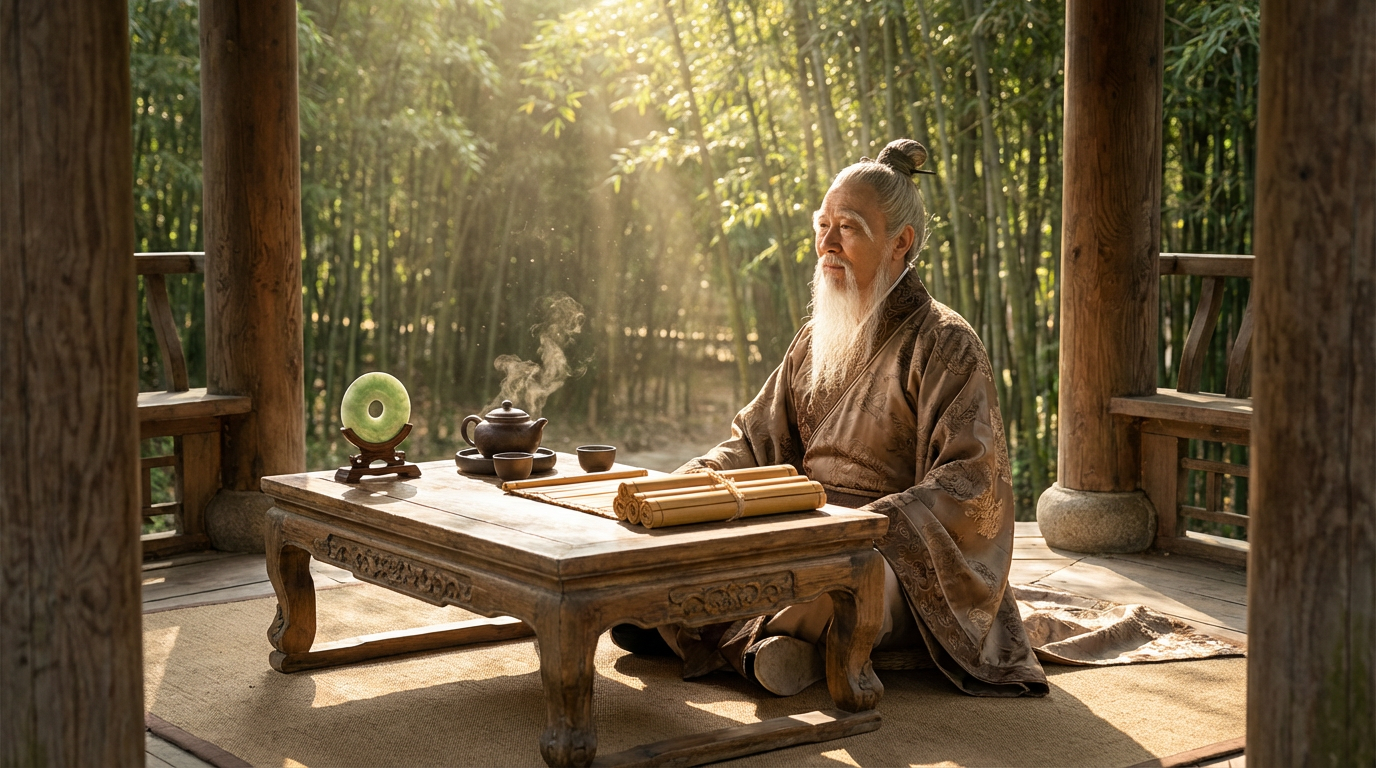
Tracing its roots back to the 6th century BCE in eastern China, Taoism emerged as a profound response to the social turmoil of the time. Legend attributes the foundation of this tradition to Laozi, a sage who penned the Tao Te Ching before vanishing into the western wilderness. The central concept is the Tao, often translated as the Way, which represents the fundamental principle underlying all existence. While it began as an ancient cosmological view, you will find that its teachings have transcended centuries to influence culture, art, and daily life across the globe. Understanding this holistic tradition requires looking beyond simple definitions to see the universe as a flowing, interconnected process.
Modern society often prizes relentless hustle and constant connectivity, but the ancient wisdom of Taoism offers a refreshing alternative focused on balance. One of its most powerful tenets is wu wei, or effortless action, which encourages moving with the current rather than fighting against it. By aligning yourself with the natural rhythm of the Tao, you can handle complex challenges with greater ease and less unnecessary friction. This philosophy invites you to observe the effortless growth of nature and apply that same organic spontaneity to your own decisions and relationships. Instead of forcing outcomes, you learn to cultivate a mindset of receptivity that brings clarity to the chaos of daily living.
Key Takeaways
- The Tao is the fundamental, unnamable principle underlying all existence that is best understood through intuition rather than rigid definitions.
- Practicing wu wei, or effortless action, allows you to navigate life’s challenges by moving with the natural current rather than fighting against it.
- Embracing the concept of the ‘uncarved block’ involves unlearning social conditioning to return to a state of authentic simplicity and potential.
- Recognizing the interconnected nature of Yin and Yang allows for greater emotional resilience by accepting that opposing forces are complementary rather than adversarial.
Interpreting the Unnamable Tao
The Tao serves as the fundamental principle behind everything in the universe. When you try to grasp this idea, you might find it elusive because it represents the source of all existence rather than a specific deity or object. The Tao Te Ching famously opens by stating that the Tao that can be told is not the eternal Tao. This means that as soon as you assign a name or definition to it, you limit its boundless nature. It is the silent, formless origin from which heaven and earth spring forth, existing before words or concepts were ever created.
Language acts as a tool for categorization, yet the Tao resists being put into a box or separated from the whole. By trying to describe this cosmic force, you inevitably place boundaries on something that is infinite and all-encompassing. Think of it like trying to describe the taste of water or the feeling of being alive. Words can point toward the experience, but they cannot fully capture its essence. The philosophy encourages you to look beyond intellectual understanding and instead perceive the Tao through intuition and direct experience. Embracing this mystery requires letting go of the need for precise definitions and accepting the flow of reality as it is.
Cultivating Wu Wei and Effortless Action

A core pillar of Taoist practice is Wu Wei, often translated as “non-action” or “effortless action.” This concept asks you to stop forcing outcomes and instead align yourself with the natural flow of the universe. Think of it like swimming in a river. You can exhaust yourself fighting the current, or you can use its power to propel you forward. By observing the natural order of things, you learn to act at the precise moment when your effort will have the greatest impact. It is about efficiency and intuitive response rather than passive resignation.
Implementing this philosophy requires you to release the rigid need for control that often dictates modern life. When you approach challenges with a mindset of flexibility, you become like water, which yields to obstacles yet eventually wears down the hardest stone. You might notice that your best ideas often come when you stop straining to find them and simply let your mind relax. Cultivating this state allows you to manage complex situations with a sense of calm and clarity. Instead of imposing your will upon the world, you work in harmony with the circumstances as they arise.
Mastering this art of effortless action leads to a paradoxical increase in productivity and overall well-being. You begin to conserve energy that was previously wasted on unnecessary worry or friction. Just as a tree does not struggle to grow but simply follows its nature, you can achieve your goals by trusting the process. This approach transforms your routine into a more rhythmic and sustainable pace of living. Wu Wei teaches that by doing nothing that is contrary to nature, nothing is left undone.
Embracing Simplicity and the Uncarved Block
Another essential element of Taoist practice is the concept of Pu, which translates to the uncarved block of wood. This powerful metaphor represents your original state of being before society imprinted its expectations and artificial values upon you. Imagine a piece of wood in its natural form, holding infinite potential and inherent simplicity without the complications of carved details. By embracing this state, you return to a mindset that values honest simplicity over complex pretense. The philosophy encourages you to look inward and recognize that your true power exists in your unshaped, authentic nature.
Living in the modern world often means accumulating layers of stress, ambition, and material desire that obscure your inner clarity. Taoism suggests that wisdom is not gained by learning more every day, but rather by unlearning and subtracting these accumulated burdens. You are invited to shed the heavy weight of social conditioning and the constant need for validation from external sources. When you let go of these imposed definitions of success, you create space for contentment and peace to flourish naturally. This subtraction reveals a version of yourself that is spontaneous, honest, and aligned with the flow of the universe.
Living as the uncarved block does not mean you must abandon all knowledge or live in isolation. It simply requires you to approach life with a lack of prejudice and a flexible, open mind. By valuing function over ornamentation, you find that ordinary experiences hold profound significance and joy. This return to simplicity allows you to react to changing circumstances with the effortless grace of water rather than rigidity. Embracing your natural state grants you the freedom to exist just as you are without the exhaustion of constant striving.
Balancing Yin and Yang Dualities

Central to Taoist thought is the iconic concept of Yin and Yang, which illustrates how seemingly contrary forces are actually interconnected. You might instinctively view the world through a lens of strict opposites, categorizing experiences as strictly good or bad, but Taoism encourages a different perspective. Instead of seeing light and dark as adversaries fighting for dominance, you should understand them as complementary halves that define and sustain one another. Just as a mountain requires both a sunlit side and a shadowed side to exist, your reality depends on the interplay of these dynamic energies. Recognizing this mutual dependence allows you to stop resisting the natural flow of life and find stability amidst constant change.
Embracing the duality of Yin and Yang offers a profound pathway toward achieving greater psychological harmony and emotional resilience. When you accept that periods of rest or sadness are just as essential as moments of activity and joy, you cease the exhausting battle against your own nature. This philosophical approach teaches you that rigidity often leads to breaking, while flexibility allows you to weather life’s inevitable storms. By integrating the darker aspects of your experience rather than suppressing them, you cultivate a sense of wholeness that feels both grounded and authentic. Finding balance is not about achieving a static state of perfection but learning to dance gracefully between these shifting polarities.
Applying Effortless Action in Modern Life
Embracing the wisdom of Taoism does not require you to retreat to a mountaintop or abandon modern life completely. Instead, it invites you to find pockets of stillness and harmony amidst the chaos of your everyday schedule. By practicing the art of Wu Wei, or effortless action, you can handle challenges with grace rather than force. Simple shifts in perspective allow you to move with the current of events instead of constantly swimming upstream. Start small by observing the natural rhythms around you and aligning your own pace with that gentle flow.
Remember that aligning with the Tao is a continuous process of self-discovery rather than a final goal to be achieved. There is no perfect state of enlightenment that you must rush to reach by checking boxes on a spiritual list. Life unfolds in cycles, and your understanding of these philosophical principles will deepen naturally over time. Treat every moment of resistance or stress as an opportunity to let go and return to a state of balance. This path asks for patience and humility as you learn to trust the unfolding mystery of the universe.
Frequently Asked Questions
1. What is the fundamental concept of the Tao?
The Tao, often translated as the Way, represents the underlying principle that connects all existence. Instead of seeing the universe as separate parts, you learn to perceive it as a flowing and interconnected process.
2. Who is credited with founding Taoism?
Historical tradition attributes the origins of Taoism to Laozi, a sage from the 6th century BCE. He is credited with writing the foundational text, the Tao Te Ching, before disappearing into the western wilderness.
3. How do I practice wu wei in my daily life?
Practicing wu wei, or effortless action, means moving in harmony with the current of life instead of struggling against it. You align your actions with the natural order to handle challenges with ease and avoid unnecessary friction.
4. Can Taoism help manage modern stress?
Yes, Taoist wisdom provides a powerful counter-balance to the relentless hustle of today’s world. By adopting a mindset of receptivity and balance, you can find clarity and calm amidst the chaos of daily life.
5. Why is the Tao described as unnamable?
The Tao is considered the source of all existence, making it too vast to be captured by simple definitions or names. When you try to label it, you miss its essence because the eternal Tao exists beyond the limits of language.
6. What does Taoism teach about making decisions?
Taoism encourages you to observe the effortless growth of nature and apply that same organic spontaneity to your choices. Instead of forcing specific outcomes, you learn to cultivate a receptive mindset that allows the right path to emerge naturally.