
The gene-editing moratorium associated with 2026 was not proposed at an identifiable international summit that year. The documented call was for a 10-year global pause, issued in May 2025 by ISCT, the Alliance for Regenerative Medicine, and ASGCT. It followed a Washington conference on March 26, 2025, not an international summit, as the joint statement explains.
The call may be confused with the Third International Summit on Human Genome Editing, held in London on March 6–8, 2023. Its organizers said heritable editing should wait until adequate safety and efficacy, legal authorization, and rigorous oversight are in place, as the summit statement makes clear. This distinction matters: precaution can support restraint, but it does not mean a new global ban exists or that laboratory research has stopped.
Key Takeaways
- The 10-year global moratorium proposed on May 27, 2025, by ISCT, the Alliance for Regenerative Medicine, and ASGCT followed a Washington conference, not a 2026 summit, so you should not treat the proposal as a worldwide legal ban, as the Alliance for Regenerative Medicine’s announcement explains.
- The proposed moratorium concerns clinical heritable editing, not every laboratory study of embryos or reproductive cells, and you should check the laws in the relevant jurisdiction, as the Alliance for Regenerative Medicine’s declaration describes.
- A 2026 PCSK9 embryo study reported developmental findings alongside chromosome abnormalities, unintended edits, and embryo arrest, so you should not mistake laboratory progress for evidence that reproductive gene editing is safe. Read the Nature study.
- CRISPR is not subject to a universal U.S. ban: NIH funding limits on certain embryo research are not a blanket prohibition, so you should distinguish those restrictions from a general ban, as the NIH policy explains.
Was There a 2026 Moratorium Summit?
No. The available record identifies no 2026 international summit proposing new restrictions on heritable human genome editing.
The likely source of confusion is the joint call issued on May 27, 2025, by the International Society for Cell & Gene Therapy, the Alliance for Regenerative Medicine, and the American Society of Gene & Cell Therapy. The groups proposed a 10-year global moratorium in their joint statement.
The call followed a conference in Washington, DC, on March 26, 2025, not an international summit, according to the Alliance for Regenerative Medicine’s announcement. The word “global” describes the scope the organizations sought, not a ban already enacted worldwide.
A separate event was the Third International Summit on Human Genome Editing, held in London on March 6–8, 2023. Its organizing committee said heritable editing should not be used until safety and efficacy standards, legal authorization, and rigorous oversight were in place. It also said those conditions had not yet been met, according to the summit statement.
The distinction is important: the 2023 summit set out conditions for responsible use, while the organizations’ 2025 call proposed a moratorium. Neither statement, by itself, creates a single worldwide legal ban, as the Alliance for Regenerative Medicine’s announcement makes clear.
What Would the Moratorium Restrict?
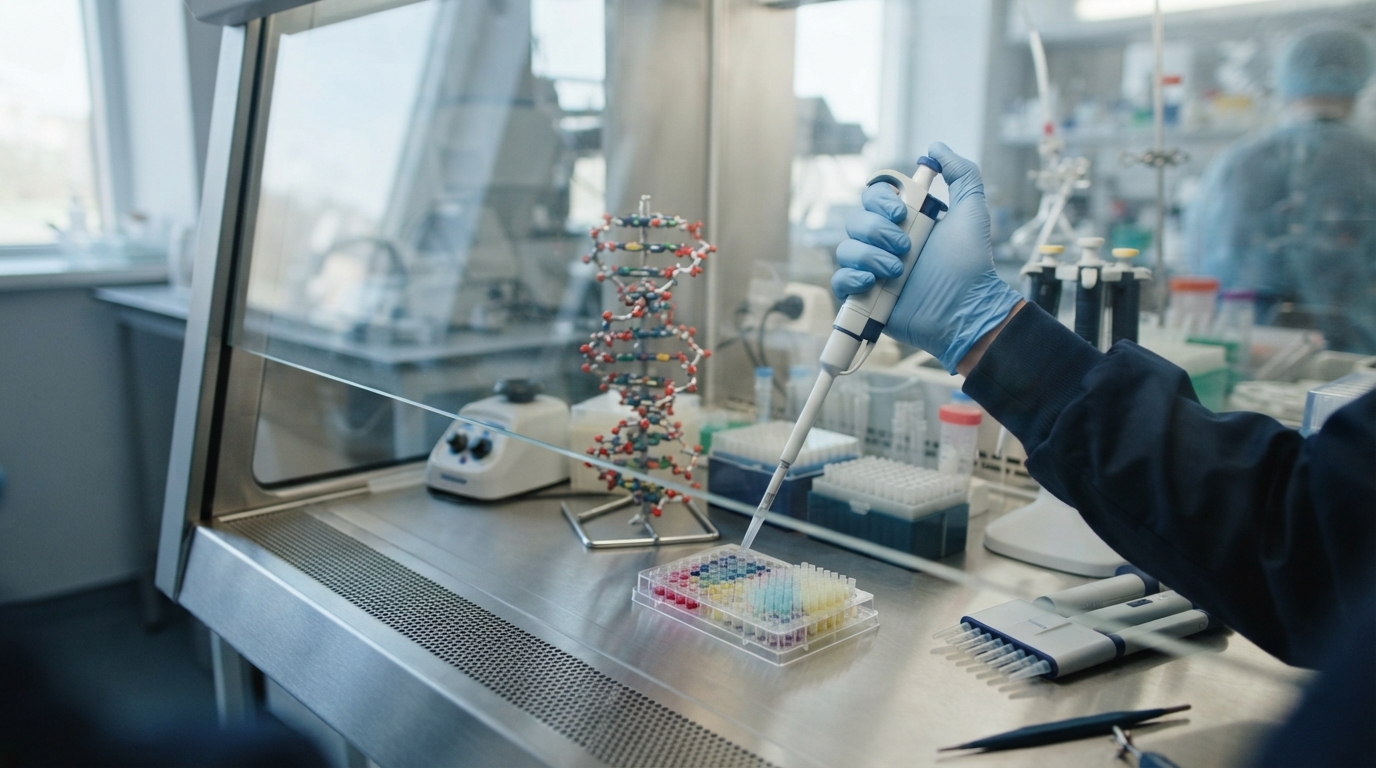
The proposed moratorium would target heritable editing intended to produce a pregnancy, not every experiment involving human embryos or reproductive cells. Heritable human genome editing means editing embryos or gametes for use in reproduction. Resulting changes may pass to descendants, as defined by the Third International Summit on Human Genome Editing.
The 2025 declaration proposed strengthening national and international legal prohibitions on clinical use, withholding academic or financial incentives for unsanctioned work, and restricting access to implementation resources and regulatory pathways, according to the Alliance for Regenerative Medicine. These were proposed policy tools, not rules already adopted worldwide.
Germline research without an intention to establish a pregnancy is distinct from reproductive use. An embryo or reproductive cell may be studied without the research itself being reproductive use, as the Third International Summit on Human Genome Editing explains. Requirements vary by jurisdiction, so the declaration would not itself create a global legal ban. National laws and regulatory rules have their own legal status.
Why Invoke the Precautionary Principle?
You invoke the precautionary principle when a decision could cause serious, lasting harm, even though the evidence cannot yet tell you exactly how likely that harm is. The principle does not require proof that damage will occur. It asks decision-makers to take plausible risks seriously before they become irreversible. Heritable editing raises this concern because an edit made for reproduction could be passed on to descendants who had no say in the decision. You are weighing risks not only for the person born after an edit, but potentially for future people too, as the World Health Organization explains. But precaution is not the only ethical concern. An open-ended pause could delay a possible way to prevent some inherited conditions from being passed on. This raises questions about fairness and reproductive choice: people might reasonably ask whether caution should rule out a future option for families facing inherited disease. That is not evidence that reproductive gene editing is currently a safe or established clinical benefit. A temporary pause can therefore help manage uncertainty without declaring all gene editing inherently wrong. You can support time-limited restraint while still asking what evidence, safeguards, and public oversight would justify reconsidering it.
Is CRISPR Banned in the United States?
No. CRISPR is not subject to a universal U.S. ban. The FDA requirement concerns clinical studies, not a general ban on editing. Before a clinical study of genetically manipulated cells, or their derivatives, can proceed, the FDA says an Investigational New Drug application is required under 21 CFR Parts 50, 56, and 312, as described in its guidance on therapeutic cloning and genome modification. The key distinction is what you intend to change. Editing a patient’s cells is somatic gene therapy: the intended change affects that patient, not their descendants. Editing an embryo or reproductive cell for a pregnancy aims to make a change that may be inherited. These uses are not legally or ethically identical.
Do 2026 Embryo Studies Change the Debate?
A 2026 embryo study sharpens the scientific picture, but it does not show that reproductive gene editing is safe. A Nature study of PCSK9 base editing reported that edited embryos could develop to the blastocyst stage. However, the researchers also observed rare chromosome breakage or abnormalities, mosaic bystander and off-target edits, and frequent embryo arrest when the editor was introduced as mRNA. Reaching an early developmental stage in a laboratory is not evidence that an edited embryo could safely establish a pregnancy or that resulting changes would be safe for descendants. The reported chromosome abnormalities, unintended edits, and developmental arrest highlight important uncertainties. Technical progress can inform ethical deliberation, but it cannot settle the safety question. That gap helps explain why precautionary calls persist.
Who Governs Heritable Editing?

No single global authority governs heritable editing. International guidance, regional agreements, and national laws shape what researchers may do. The World Health Organization established its multidisciplinary Expert Advisory Committee in December 2018 and published governance recommendations in July 2021. Those recommendations offer an international framework, not a uniform global ban, as the WHO governance overview explains.
Regional rules can set specific limits. Article 13 of the Council of Europe’s Oviedo Convention restricts interventions on the human genome to preventive, diagnostic, or therapeutic purposes and prohibits interventions intended to introduce a modification into descendants’ genomes, according to the Council of Europe.
National requirements and enforcement vary by jurisdiction, so the same research may face different legal pathways across borders. International recommendations can guide policy, but they do not automatically become national law. Treaties and domestic rules also differ in reach and enforcement, as the Council of Europe’s discussion of the Oviedo Convention illustrates. This makes coordination difficult: shared principles must be translated into rules and oversight that governments can apply. How could international agreement, national law, and scientific oversight work together without confusing a voluntary call for a moratorium with an enforceable rule?
What To Watch In The Moratorium Debate
If you are following the policy question, start with the joint declaration and check whether a government or regulator has adopted any proposed measures. Distinguish proposed prohibitions, limits on incentives, and restrictions on implementation pathways from rules that bind researchers. The Alliance for Regenerative Medicine’s statement identifies those mechanisms. Track the legislative or regulatory record where you live rather than treating an international call as enacted law.
If your concern is scientific readiness, read the methods and results of the 2026 embryo studies, not headlines about editing success. Check whether the evidence concerns laboratory development, pregnancy establishment, healthy development, or safety for descendants. These are separate thresholds: the Nature PCSK9 study reports embryo-stage findings, not proof of safe reproductive use.
For a cross-country comparison, label each rule by its authority and instrument: national law, clinical-study regulation, or treaty obligation. Start with the WHO governance recommendations, then check how the jurisdiction you are studying has implemented or supplemented that guidance. Your next question is whether a policy proposal has changed that legal record.
Frequently Asked Questions
1. Can an international moratorium be enforced without a treaty?
An international moratorium can influence policy without a treaty, but the call alone does not create binding law in every country. The 2025 declaration proposed strengthening national and international prohibitions and limiting incentives and access to resources, while legal requirements remain specific to each jurisdiction. See the Alliance for Regenerative Medicine’s statement.
2. How do researchers detect off-target changes in edited embryos?
The findings summarized here do not specify which methods researchers used to detect off-target changes. A 2026 human-embryo study reported mosaic bystander and off-target edits. See the Nature study on PCSK9 base editing.
3. What does mosaicism mean in embryo editing?
Mosaicism means that an edited embryo contains cells with different genetic outcomes, rather than every cell carrying the same edit. The 2026 PCSK9 study reported mosaic bystander and off-target edits, showing that an intended change may not occur uniformly across an embryo. See the Nature study.