

A device that translates your brain signals into speech, movement, or digital commands could restore independence, but it could also change how you understand privacy, identity, and choice. The neuroethics of brain-computer interfaces examines who controls neural data, where personal agency begins and ends, and how society should protect you when technology can access or influence the brain. These questions matter now as BCIs move from experimental research toward real-world medical use.
You may be drawn to BCIs because they could help you communicate, move, or manage a neurological condition. Yet every breakthrough raises difficult questions about consent, security, fairness, responsibility, and what happens when a device becomes part of your everyday life. Understanding these tensions is essential to ensuring that BCIs expand human freedom rather than quietly redefine it.
Key Takeaways
- BCIs can restore communication, movement, and independence, but neural signals may also reveal sensitive information about attention, emotion, health, and intentions. Strong mental-privacy protections must limit data collection, storage, access, interpretation, and commercial use.
- Consent must be ongoing, informed, and voluntary—not a one-time agreement. Users should understand system capabilities and data practices and retain the ability to pause, modify, withdraw, or safely disengage whenever possible.
- Closed-loop BCIs must preserve meaningful personal agency through transparent operation, user-adjustable settings, override controls, and clear accountability when errors occur. Responsibility should be shared among users, clinicians, manufacturers, software developers, and institutions.
- Ethical BCI deployment requires robust cybersecurity, clear ownership and governance of neural data, and equitable access to therapies. Innovation should expand human freedom without making privacy, identity, communication, or mobility dependent on wealth or institutional power.
BCI Neural Signals And Mental Privacy
A brain-computer interface records patterns of neural activity and translates them into commands for a computer, prosthetic limb, communication tool, or therapeutic device. Implanted systems use electrodes placed in or near brain tissue to capture relatively detailed signals, while endovascular BCIs collect activity through sensors delivered inside blood vessels near the brain. Non-invasive systems, such as EEG headsets, detect electrical activity through sensors placed on the scalp, although their signals are generally less precise. In each case, software learns to associate particular patterns with an intended action, such as moving a cursor, selecting a letter, or controlling a robotic device.
You should keep current capabilities in perspective because most BCIs decode limited, task-specific signals rather than unrestricted thoughts. You may train a system to recognize an attempted hand movement or a small set of communication commands, but that does not mean it can read your inner monologue or reveal every private belief. Even so, as high-bandwidth neural implants become more capable, the boundary between deliberately expressed information and passively inferred information may become harder to maintain. A system designed to detect movement or speech could potentially expose patterns linked to attention, emotion, fatigue, health conditions, or intentions that you never consciously chose to disclose.
That possibility makes neural data more than another category of personal information because it can appear closely connected to your identity, agency, and sense of self. If an employer, insurer, platform, or public authority could access inferences about your mental states, you might lose meaningful control over how others understand you, even when the underlying interpretation is uncertain. Neuroethics therefore asks whether cognitive liberty should include a right to mental privacy, including the freedom to keep your thoughts and intentions from being measured or interpreted without genuine consent. Protecting that freedom will require clear limits on data collection, strong controls over retention and access, transparent decoding practices, and safeguards that preserve your ability to remain more than what a neural algorithm predicts.
Cognitive Liberty And BCI Consent
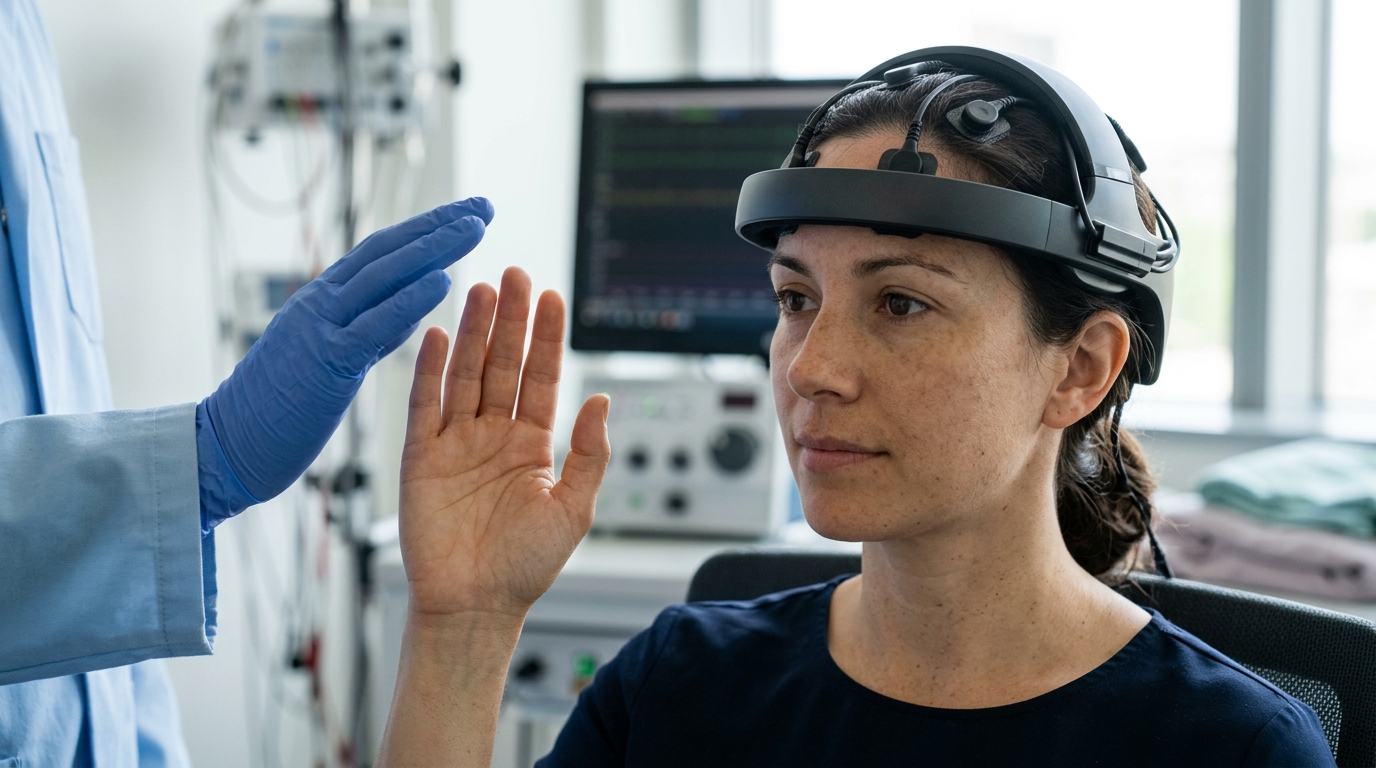
Cognitive liberty means you should be able to think, decide, and manage your mental processes without unjustified interference. In the context of a BCI, that principle supports your right to choose whether the device records or stimulates your brain, understand what it can do, and refuse participation without losing essential care. Informed consent must therefore explain more than surgical risks or technical performance. You should also know what neural signals may reveal, how they will be interpreted, who can access them, and what happens if the system behaves unexpectedly.
Consent becomes more complicated when a BCI continuously senses or stimulates your brain rather than operating during a single clinical session. Your preferences may change as the device affects communication, movement, mood, or your sense of personal identity, so consent should be revisited throughout treatment and after major software, hardware, or stimulation changes. You should have a practical way to pause, adjust, or withdraw from the system, along with safeguards against treating silence, dependence, or impaired communication as agreement. These protections matter especially when a device becomes part of daily life and stopping it could feel costly or disruptive.
Control over neural data is another central part of cognitive liberty because brain signals can become closely tied to your identity, intentions, and private experiences. You should be told whether you own the raw data, the interpretations produced from it, and any models trained using it. You should also know whether the information can be sold, shared, or used to influence decisions about you. Commercial pressure can weaken voluntary participation when employers, insurers, schools, or platforms reward BCI use or make refusal difficult in practice. An ethical system treats consent as an ongoing relationship grounded in meaningful choice, not a one-time form that permits permanent access to your mind.
Closed Loop BCIs And Personal Agency
Closed-loop BCIs can create a continuous partnership between your nervous system and a machine. The system may interpret neural activity, predict your intended movement, and adjust stimulation or prosthetic action in real time, often faster than you could consciously monitor each step. This can restore communication or mobility, but it also complicates personal agency when an algorithm fills in gaps between your intention and the final output. You may initiate an action without selecting every detail, yet the result can still express your goals, preferences, and identity. The ethical question is not simply whether the device acted for you, but whether it acted in a way you could reasonably understand, guide, and reject.
Responsibility should reflect the relationship among you, the device, its software, and the people who designed or configured it. If a prosthetic hand grips too firmly because the system misread your neural signal, blaming you alone would ignore the device’s role, especially when its behavior was difficult to predict. At the same time, you should retain meaningful control over settings such as sensitivity, stimulation limits, privacy permissions, and automatic corrections whenever safety allows. That control should include the ability to pause, override, or safely disengage the system without asking another person for permission. For therapeutic users in particular, preserving this practical freedom supports cognitive liberty rather than treating access to assistance as a reason to surrender authority over your own actions.
Transparency must go beyond a technical data sheet when a closed-loop BCI makes decisions you cannot independently interpret. You should be told what neural signals the system records, how long it retains them, what inferences it draws, and how those inferences affect stimulation, movement, or digital communication. Clear explanations of confidence levels, error patterns, updates, and unexpected behavior can help you distinguish your intention from an algorithmic guess. Because neural data may reveal intimate information about attention, emotion, or health, privacy protections are also essential to protecting your sense of self. A trustworthy system does not require you to understand every calculation, but it should give you understandable reasons, meaningful choices, and a reliable way to challenge its decisions.
Neural Implants And Personal Identity

A neural implant can become more than a medical tool when it helps you speak, move, or interact with the world again. Restoring a lost ability may feel like a return to your authentic self, yet the experience can still change how you understand your body and agency. If an implant translates neural signals into words or actions, you may wonder whether you are acting freely or whether the device is completing an intention that remains distinctly yours. These questions become more complex as high-bandwidth systems respond more quickly and become integrated into everyday routines. Personal identity is not necessarily erased by technological assistance, but it may be reshaped by a new relationship among your brain, body, and environment.
Enhancement raises a different concern because it can affect preferences, habits, memory, or performance without addressing a prior impairment. You might welcome an implant that improves attention or communication while also questioning whether choices made under its influence still express your own values. The issue is not simply whether the device changes you, since education, medication, and relationships do that as well. The deeper question is whether you can understand, control, and revise its effects. Meaningful consent therefore requires more than agreeing to implantation once. It may require continuing access to information about how the system operates and the ability to pause, adjust, or remove it. Without those safeguards, convenience or commercial pressure could gradually turn a voluntary enhancement into an expectation.
Privacy is especially personal when neural data can reveal patterns connected to intentions, emotions, memories, or vulnerabilities. You may be able to protect a password by changing it, but you cannot easily replace the neural history that an implant records or the inferences others draw from it. This makes cognitive liberty, the ability to govern your own mental life, central to debates about ownership, access, and permissible uses of brain data. Preserving your identity means protecting not only your physical safety but also your authority to decide which thoughts and preferences are acted upon, shared, or kept private. As BCIs become more deeply woven into daily life, ethical design should help you remain the author of your choices rather than treating your mind as an open interface.
Protect Your Mind in the BCI Era
The neuroethics of brain-computer interfaces reaches far beyond whether an implant is technically reliable or medically safe. As high-bandwidth neural systems become more capable of recording and influencing brain activity, you must also consider who can access your mental data, whether you can meaningfully refuse neural monitoring, and how technology might affect your sense of identity. These questions connect BCI development to human rights, dignity, cognitive liberty, and your ability to define yourself without unwanted interference. They also complicate responsibility, especially when a device helps produce an action or changes how you communicate, decide, or relate to others.
A responsible approach treats people who use BCIs as rights-bearing individuals, not simply as sources of data or recipients of innovation. You should have clear control over how neural information is collected, interpreted, stored, and shared, along with meaningful choices about stimulation, updates, withdrawal, and long-term care. At the same time, ethical safeguards must not make transformative therapies available only to those with wealth, influence, or access to specialized medical systems. The future of BCI development should protect mental privacy and cognitive liberty while ensuring that therapeutic benefits remain accessible to the people who need them most.
Frequently Asked Questions
1. What is the neuro-ethics of brain-computer interfaces?
The neuroethics of brain-computer interfaces examines how BCIs affect privacy, autonomy, identity, consent, responsibility, and fairness. It asks who should control neural data, how much influence a device should have over your choices, and what protections you need as the technology becomes part of everyday life.
2. Can a brain-computer interface read your thoughts?
Most current BCIs cannot read unrestricted thoughts or reveal your entire inner monologue. They generally decode limited, task-specific signals, such as an attempted hand movement or a trained command, and their accuracy depends on the person, device, and context. Even so, the possibility of collecting sensitive neural patterns raises important questions about mental privacy.
3. Who owns the neural data collected by a BCI?
You should have meaningful control over neural data produced by your brain, including the ability to understand how it is collected, stored, analyzed, and shared. Ownership rules vary by jurisdiction and device agreement, so you need clear policies that distinguish your raw neural signals from software-generated interpretations. Ethical governance also requires limits on commercial use, secondary research, surveillance, and access by employers, insurers, or other third parties.
4. How does consent work when you use a brain-computer interface?
Informed consent means you understand what the BCI can do, what it cannot do, which risks it creates, and how your data will be handled before you agree to use it. Because implanted and long-term systems can affect your body, behavior, and privacy, consent should be ongoing rather than a one-time form. You should also be able to pause, modify, or withdraw from participation whenever medically and technically possible.
5. Could a BCI interfere with your free will or personal agency?
A BCI can support your agency when it reliably translates your intentions into communication, movement, or therapeutic action. However, inaccurate decoding, unwanted feedback, software changes, or pressure from caregivers and institutions could make it harder to distinguish your choices from the system’s predictions. Strong user control, transparent settings, override options, and regular evaluation are essential for protecting meaningful choice.
6. How should you think about identity and responsibility after receiving a BCI?
A BCI may become closely connected to how you communicate, move, work, or express yourself, but using the device does not erase your identity or moral status. When a system makes an error, responsibility may be shared among you, clinicians, manufacturers, programmers, and institutions rather than placed automatically on you. Clear accountability rules are needed before BCIs are used in high-stakes settings.
7. What cybersecurity risks do brain-computer interfaces create?
BCIs can face familiar digital threats, including unauthorized access, data theft, manipulation, and software failure, while their connection to the brain or body creates additional safety concerns. A compromised system could expose sensitive neural information or interfere with communication, movement, or treatment. You need strong encryption, secure updates, access controls, independent testing, and rapid procedures for reporting and correcting vulnerabilities.
8. Will brain-computer interfaces be available fairly to everyone?
BCIs may improve independence for people with paralysis, communication disorders, or other neurological conditions, but high costs, limited clinical access, and unequal research participation could widen existing health disparities. Fair access requires inclusive design, transparent eligibility standards, insurance or public funding where appropriate, and research that represents diverse bodies and experiences. Ethical deployment should expand freedom without making essential communication or mobility dependent on wealth.