

Press freedom perceptions in the United States reached a new low in 2026. Gallup’s May to June 2026 survey found that 69% of U.S. adults said the media have a lot of freedom, down from 75% in 2025 and 86% in 2022. That is the lowest figure in the series. The partisan gap is wide. In Gallup’s 2026 results, 91% of Republicans gave that answer, compared with 57% of Democrats and 68% of independents, so the same news environment can look very different depending on where you sit politically.
Pew Research Center’s June 2026 survey points in the same direction, though it asks a different question. Only 28% of adults said the press is completely free to report the news, down from 33% in 2025. In its findings on press freedom and its limits, Pew also reported that 44% said the press had become less free during the second Trump administration. Among Democrats, 72% held that view, compared with 15% of Republicans. Because the two surveys word their questions differently, it is best to read them as related signals rather than a single running score. Keep these numbers in mind as you read on, because they raise a central question: how do Americans weigh a free press against the limits they are willing to accept?
69%
U.S. adults who said the media have a lot of freedom in Gallup’s May to June 2026 survey, a new low in the series
17 pts
Drop in Gallup’s share saying U.S. media have a lot of freedom since 2022 (86% to 69%)
34 pts
Gap between Republicans (91%) and Democrats (57%) saying U.S. media have a lot of freedom in Gallup’s 2026 results
28%
U.S. adults who said the press is completely free to report the news in Pew’s June 2026 survey, down from 33% in 2025
Quick Facts
- Gallup 2026 low: In Gallup’s May to June 2026 survey, 69% of U.S. adults said the media have a lot of freedom, a new low in the series and down 17 points from 86% in 2022.
- Partisan gap in Gallup: In Gallup’s 2026 results, 91% of Republicans said U.S. media have a lot of freedom, compared with 57% of Democrats and 68% of independents, a 34-point gap between Republicans and Democrats.
- Pew view of second Trump administration: Pew found that 44% of adults said the press had become less free during the second Trump administration, with 72% of Democrats and 15% of Republicans holding that view.
- Concern about press restrictions: In Pew’s June 2026 survey, 46% of adults said they were extremely or very concerned about possible restrictions on press freedom.
Key Takeaways
- Treat Gallup’s decline from 86% in 2022 to 69% in 2026 as a reliable trend, because the question never changed.
- Partisanship is among the strongest patterns in the data, with a 34-point gap in Gallup’s 2026 results.
- Gallup’s 2026 OECD benchmark is only an estimate, so the U.S. position against it should be treated as provisional.
- Your support for a free press in principle can differ from your view of a specific takedown case.
- Every press freedom percentage needs its survey source, field dates, and exact question wording before anyone cites it.
U.S. Media Freedom Ratings Have Fallen Since 2022
The clearest way to see the trend is to follow Gallup’s question year by year. In 2022, 86% of U.S. adults said the media have a lot of freedom. That share fell to 78% in 2023, rebounded somewhat in 2024, slipped to 75% in 2025, and reached 69% in 2026.
| Year | Share saying U.S. media have a lot of freedom (Gallup) | Notes on the series |
|---|---|---|
| 2022 | 86% | Highest of the years shown |
| 2023 | 78% | Decline of 8 points from 2022 |
| 2024 | Higher than 2023 | Partial rebound; did not return to the 2022 level |
| 2025 | 75% | Previous low in the series |
| 2026 | 69% | New low in the series |
The 2026 figure is the lowest the series has recorded, and it sits 6 points below the 2025 low. Across the four years since 2022, the share has fallen 17 percentage points. The 2024 rebound was real but modest, and it did not restore the level measured in 2022.
Pew Research Center’s measure moves in the same direction, but it asks a narrower question. Pew asked whether the press is completely free to report the news. In June 2026, 28% of adults chose that answer, down from 33% in 2025. Another 48% said the press is somewhat free, and 23% said it is not very free or not free at all.
Put side by side, the two results describe a public that is less willing to call the press fully unrestricted. Gallup’s question is broad and invites a general judgment about the media. Pew’s “completely free” option is the most absolute wording offered, so a drop in that category reflects a narrower kind of confidence. Both measures point the same way, even though neither is a direct substitute for the other.
Concern about the future is also visible in the data. That concern is not spread evenly across the public, and the gap between groups is large enough to deserve its own discussion.
It also helps to separate two things that often get blended together. One is how much freedom people feel the media have, which is what Gallup and Pew measure. The other is the legal protection the press holds. The First Amendment’s press clause, part of the U.S. Bill of Rights, bars Congress from making laws that abridge freedom of the press. Public ratings can rise or fall while that text stays the same. The falling numbers tell you about perception, not about the wording of the Constitution.
Before turning to why the numbers diverge so sharply along party lines, it is worth being precise about what has moved. The public’s rating of press freedom has dropped steadily since 2022, and the latest readings are the lowest yet.
Why Do Partisan Views of the Press Differ So Sharply?
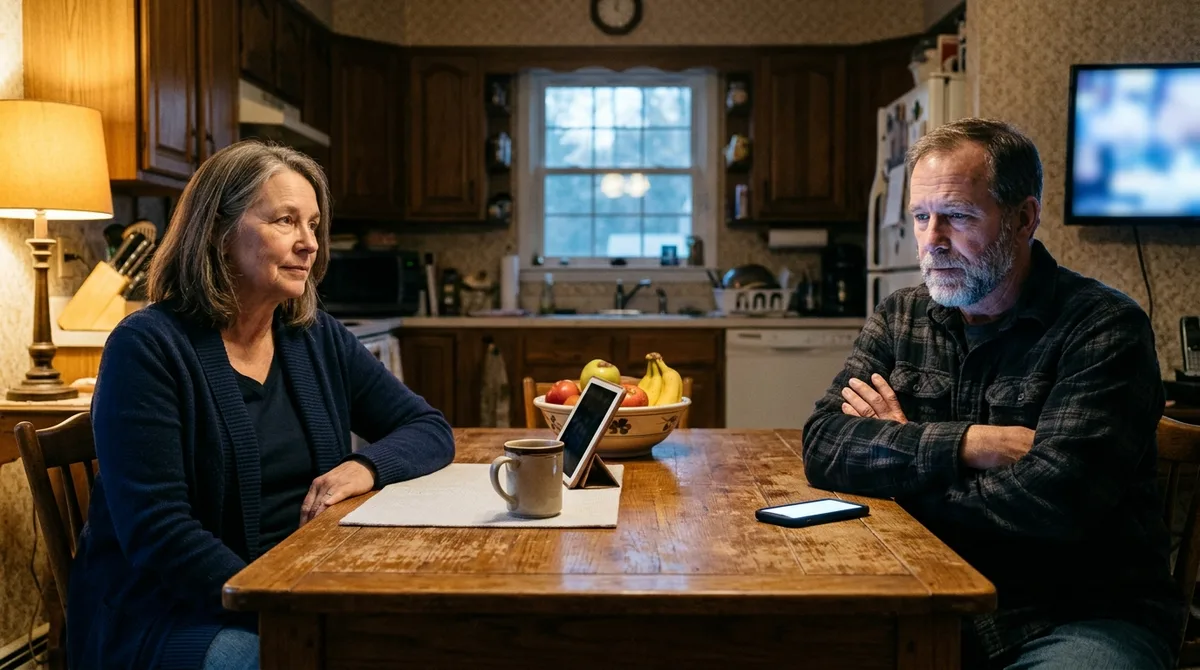
Partisan views differ because people start from different assumptions about what a free press looks like and who is most likely to threaten it, so the same evidence can support opposite conclusions. The 34-point gap between Republicans and Democrats is twice the 17-point fall in the overall figure since 2022, which makes party one of the strongest patterns in the data. Pew’s findings show a similar split when the question turns to the second Trump administration. Pew found that 44% of adults said the press had become less free during that period, 12% said more free, 26% said there had been no change, and 17% were unsure. The divide between the parties is wide: 72% of Democrats said the press had become less free, compared with 15% of Republicans. A sizable share of the public saw no change or did not know, which tells you that the judgment is not universal even within the same survey.
Concern follows the same line. Among Democrats, 64% said they were extremely or very concerned about possible restrictions on press freedom, compared with 29% of Republicans. Concern about restrictions is a forward-looking worry, so it depends on what you think the government is likely to do next, not only on what has already happened.
The same decline can be read in two very different ways. For one group, a falling rating of press freedom is evidence that government officials are pressuring or restricting journalists, and the drop is an early warning. For another group, the same fall can signal that media standards have changed, perhaps because coverage has become more opinionated, because some outlets have lost their credibility with them, or because they see the press as having moved away from the role it once played. Both stories fit the same number, so the public’s verdict depends heavily on the lens people bring to it.
It helps to separate a disagreement about facts from a disagreement about interpretation. A factual dispute asks what happened: whether a particular official acted, whether a reporter was denied access, or what a specific policy actually requires. Those questions can be checked against documents, court records, and careful reporting, although checking takes time, and people do not always agree on which sources to trust. An interpretive dispute accepts a set of facts and asks what they mean. Is a restriction justified by national security? Does a change in coverage reflect outside pressure or the newsroom’s own choices? Is a drop in trust a warning or a correction? Two people can agree on every fact and still reach opposite conclusions. Many political arguments about the press mix these two kinds of disagreement, and that mixing is part of why the numbers split so sharply. You may believe you are debating facts when you are really debating interpretation, or the reverse. Neither kind of disagreement is simply more serious than the other. Some disputes can be narrowed by settling the facts, while others remain open even when everyone agrees on what happened.
On Philosopedia, when a question has several serious answers, articles aim to explain the disagreement rather than give a single conclusion. That approach fits this data well. The polls report how people feel about the press, and the real disagreement lies in how those feelings should be interpreted. A useful habit is to ask what each side would count as evidence that it was wrong. If you cannot name any observation that would change someone’s mind, you may be looking at a disagreement about values or basic assumptions rather than a dispute about the record. Asking that question makes the partisan gap easier to examine, and it keeps the numbers from being read as a verdict on either party.
How Does the United States Compare With Other Advanced Economies?
The United States matched the OECD benchmark in 2025 and is expected to fall below it in 2026. Gallup compared the American figure with the median for 38 member countries of the Organisation for Economic Co-operation and Development (OECD), a group made up mostly of wealthy democracies. Here is how the numbers line up.
| Measure | Share saying media have a lot of freedom |
|---|---|
| U.S., 2025 (Gallup) | 75% |
| OECD median, 2025 (Gallup) | 75% |
| U.S., 2026 (Gallup) | 69% |
| OECD median, 2026 (Gallup estimate) | 70% to 76% |
A median is the middle value when a set of numbers is arranged from lowest to highest. Half of the values sit above it and half sit below. When the count is even, as it is with 38 countries, the median is the midpoint between the two central values. Researchers often prefer the median to the average because a few extreme cases cannot pull it sharply up or down, so it describes a typical country more faithfully.
Gallup’s 2026 benchmark is an estimate rather than a final figure. Its data collection for that year was incomplete, so it gave a range of 70% to 76%. The U.S. figure of 69% sits below the bottom of that range, which is why Gallup said the country would rank below the median in 2026. A rank can change even when a country’s own score stays the same, because the benchmark around it moves. If the median rose to 76% while a country held at 75%, that country would slip from matching the middle to falling beneath it without any change in its own number.
Global press freedom indices take a broader view than public opinion polls. They are compiled by international organizations that look at the conditions journalists face, and their criticisms of the Americas and other regions tend to focus on a few recurring concerns. Reporters are sometimes harassed or attacked while working, access to officials and public records can be limited, and the physical safety of journalists covering protests, crime, or elections is a frequent worry. Similar concerns appear in many parts of the world, though the specific cases differ from one country to the next.
Global indices and national opinion polls measure different things, so they should not be merged into one scale. A survey asks people how they feel about the media, while an index assesses events and conditions using different evidence. Placing a Gallup percentage beside an index score would treat two separate kinds of measurement as if they were the same. The OECD comparison is most useful as a picture of how the public in each country perceives its media.
Do Americans Accept Limits on What the Press Can Publish?
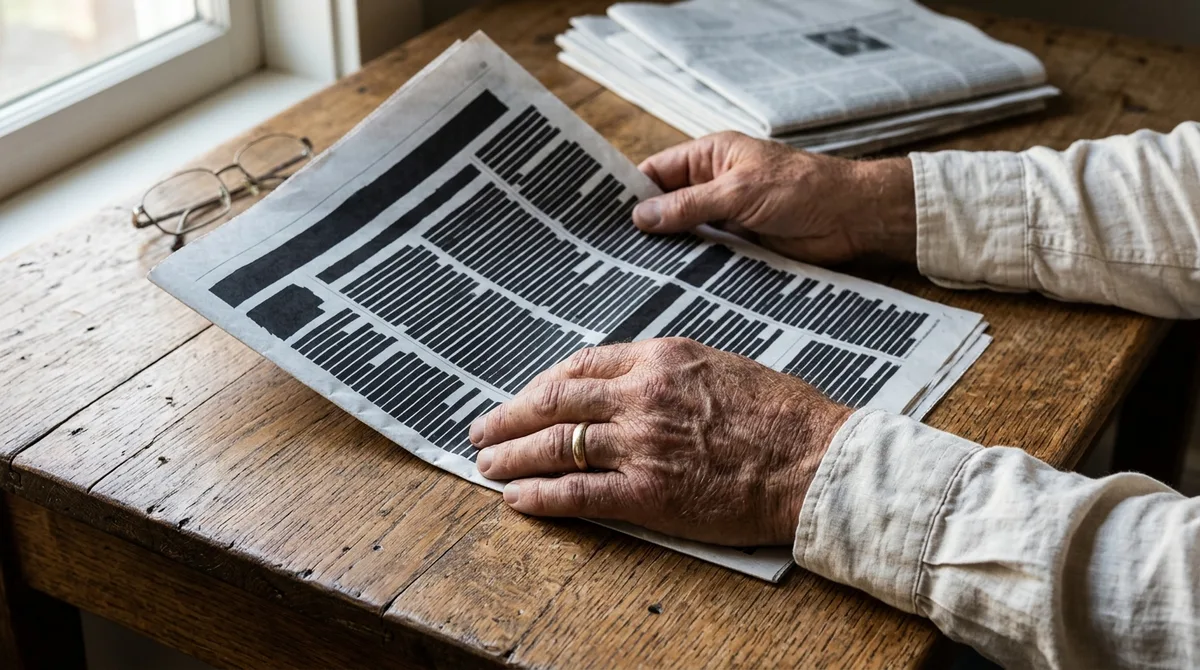
Most Americans say a free press matters, but many also accept limits on what news outlets can publish in certain cases. In Pew’s June 2026 survey, 60% of U.S. adults said the government should be able to require a news organization to take down a story posing a national security risk, and 51% said it should be able to do so for a story containing false information. Those figures come from a separate Pew report on censorship of news. They show that support for a free press in general does not automatically translate into opposition to every specific restriction.
The gap is easier to see when you separate an abstract principle from a concrete case. Saying a free press is important is a broad statement about how society should work. Saying a particular story should be removed is a judgment about one set of facts, often involving a risk to troops, intelligence sources, or public safety, or a claim that appears to be false. Someone can hold the first view firmly and still accept the second when the stakes feel high enough.
The First Amendment is the starting point for any legal discussion. The National Archives’ transcript of the Bill of Rights records that the Bill of Rights was ratified on December 15, 1791. Its press clause bars Congress from making laws abridging the freedom of the press. Over time, courts have applied that protection to state and local governments as well, so the principle now covers the wider apparatus of government, not only federal lawmaking.
The clause restricts government. It does not require a newspaper owner, a television network, or a social media company to publish anything, and it does not stop private businesses from deciding what they will run. That distinction matters for the poll. A person who worries that a wealthy owner is shaping coverage is raising a concern about private power. That is a legitimate question about media ownership and influence, but it is not a First Amendment violation. Public opinion about government and private influence can overlap, yet they are different questions with different answers.
Public support for limits is also a question of values, not a legal ruling. When 60% of adults say the government should be able to require a takedown in a national security case, they are expressing what they think should happen. They are not describing what courts have decided or what the Constitution permits.
Several legal tools create pressure on the press without any single dramatic act of censorship. National security laws, including those covering classified information and the handling of leaked material, can expose reporters and their sources to investigation, particularly when a story depends on documents the government considers secret. The pressure is often felt before a case reaches court, because editors must weigh the risk of prosecution against the value of publishing.
Criminalisation of journalism is a related concern. When reporters are arrested, charged, or detained while covering protests, police actions, or government facilities, the question becomes whether gathering the news is being treated as a crime. Many press advocates argue that even short detentions can discourage reporting, while officials often say that the reporter was caught up in an unlawful act or ignored by law enforcement.
Strategic lawsuits against public participation, usually called SLAPPs, are a different kind of pressure. These are abusive lawsuits filed mainly to drain a publisher’s money and time rather than to win on the merits. A weak case can still be expensive to defend, and small outlets with limited legal budgets feel the strain most. Some states have passed anti-SLAPP laws to allow faster dismissal of such suits, but the protections vary, and the cost of fighting a lawsuit can shape editorial decisions before a judge rules on anything.
Government retraction demands work differently again. An official who publicly asks a news organization to correct or withdraw a story has no power to order it, yet the request can carry weight, especially when it comes with threats of investigation or loss of access. Newsrooms have to decide whether a demand reflects a real error or an attempt to change coverage, and that decision is harder when the demand is loud and the reporting is contested.
Broadcast licence rules form another pressure point. The Federal Communications Commission issues licences for broadcast stations, and that licensing relationship has long been used to justify different treatment of television and radio compared with newspapers. Critics argue that a regulator with the power to renew or challenge a licence can influence content, even without a formal order. Defenders respond that licences exist to manage scarce public airwaves, not to police opinion.
Public funding for NPR and PBS illustrates how government money can shape the press without any censorship order. Supporters argue that public broadcasting reaches communities commercial outlets often neglect, and they see federal support as a way to keep programming independent of advertisers. Critics respond that taxpayer money creates a relationship of dependence, and they question whether the public should pay for news that competes with private media. The debate is less about whether a funding decision silences anyone and more about whether financial ties influence what gets covered and how.
Taken together, these tools show why the public’s answers to the takedown questions cannot be read as a single verdict. A respondent who accepts a national security takedown may be thinking of a narrow, specific case, while another who rejects it may be thinking of the risk that the same power could be used against critics of the government.
Who Do Americans Trust to Keep the Public Informed?
Most Americans in these surveys name the government, not the press, as the actor most likely to keep important news from them, and few express strong confidence in the media. In Pew’s June 2026 survey, 59% of U.S. adults said the government extremely often or often intentionally keeps important news from reaching the public. The figures for news organizations and social media companies were both lower, at 46% each.
| Who the respondent suspects | Share saying they extremely or often intentionally keep important news from the public (Pew, June 2026) |
|---|---|
| U.S. government | 59% |
| News organizations | 46% |
| Social media companies | 46% |
The question is about intentional withholding, which is a stronger charge than making mistakes or missing a story. That makes the government’s higher figure notable, because it means many people see officials as the most likely source of deliberate concealment. The press is not seen as blameless, but it is not the main suspect in most respondents’ minds.
Trust in the media itself remains low. Gallup’s September 1–17, 2026 Governance poll found that 33% of U.S. adults had a great deal or fair amount of confidence in mass media to report news fully, accurately and fairly, up from 28% in 2025. That is a modest rise, but it still leaves most adults without that confidence. The field period closed before White House press-access restrictions began on September 18, so the poll predates them.
The press has long been described as a watchdog, a term for institutions that watch those who hold power and report what they find. The idea rests on a simple principle in political philosophy: people cannot meaningfully consent to, or correct, decisions they cannot see. James Madison argued that self-government depends on citizens who have access to information, and journalism is one of the main ways that information moves from officials to the public. When reporters can examine records, question officials, and publish what they learn, the public’s knowledge depends partly on an institution that is independent of the people it checks.
Low trust and low perceived freedom can reinforce each other in a loop. If many people believe the government keeps important news from them, they have more reason to rely on the press to expose what is hidden. If they also doubt the press, however, its reporting on officials can be dismissed as partisan, which weakens the check that the watchdog role is supposed to provide. Officials then face less scrutiny, and the public has less reliable information about them, which can deepen the sense that something is being withheld.
The surveys ask about press freedom in terms of whether the media are free to report the news, and most Americans say that freedom matters to society. Pew’s findings suggest that people can hold both views at once: they can doubt that the press is fully free and still believe that a free press is important. Someone who worries that officials are restricting reporters may care more about press freedom, not less, because the value of the principle becomes clearer when it seems under threat.
How Were These Polls Compiled and Compared?

Gallup and Pew measured press freedom with different questions, at different times, and with different answer options, so each series should be read on its own terms. Gallup asks how much freedom the media have, which invites a general judgment about the media as a whole. Pew asks whether the press is completely, somewhat, or not free to report the news, which is a narrower question about reporting. On Philosopedia, our editorial approach is to define unfamiliar terms, set ideas in context, and distinguish an argument from an example used to illustrate it. That approach matters here because the wording of a question determines what a percentage actually measures.
Pew’s 2026 press-freedom work drew on two field periods. Its first survey covered 3,507 U.S. adults from March 23 to 29, and its second covered 3,488 adults from June 22 to 28. Pew also ran 10 online focus groups with 74 adults between May 20 and June 4.
Focus groups serve a different purpose from surveys. A survey asks a fixed set of questions of a large sample and produces percentages. A focus group brings a small number of people together to talk through their views, so its value lies in the reasons people give. The 74 participants are not a sample of the public, so the percentages in this article come only from the surveys.
Merging the series into one line would be a mistake. Gallup’s “a lot of freedom” and Pew’s “completely free” are different scales, and a point on one does not equal a point on the other. The two organizations also used different field dates and samples. Placing their results side by side is useful for seeing that both point downward, but it does not produce a single, reliable national score.
The safest comparison is a trend within one series. Gallup’s figures from 2022 through 2026 all come from the same question, so the fall from 86% to 69% describes change in the same measure. Pew’s movement from 33% in 2025 to 28% in 2026 is also a like-for-like comparison, since the question stayed the same. When you compare across series, treat the result as a rough signal of direction rather than a measured gap.
When you cite these figures, give four things: the source name, the survey date or field period, the question in plain terms, and the answer category you are reporting. A sentence such as “In Pew’s June 22 to 28, 2026 survey, 28% of U.S. adults said the media were completely free to report the news” gives a reader everything needed to find and check the claim. A sentence that says only “press freedom fell to 28%” drops the wording and the date, and it invites the reader to compare figures that do not belong together.
Reading the Next Press Freedom Survey With Care
Before you react to the next press freedom headline, write down four details: the field dates, the sample size, the exact question, and the answer category being reported. Gallup’s 69% and Pew’s 28% answer different questions, so a headline that places them in the same sentence is asking you to compare unlike things.
Next, find the earlier figure in the same series. If Gallup releases a new “a lot of freedom” number, set it against 69% and the 86% from 2022. If Pew repeats the “completely free” question, measure it against 28% and 33%. Within one question, you can read the direction of change with confidence.
Then check the field period against the events people are debating. A survey that closes before a policy takes effect captures conditions from before it, so a September poll and a later one may describe very different conditions.
Finally, skip the summary and open the full report. Read the question wording and the methodology notes, and use Philosopedia’s explanatory articles to sharpen the questions you bring to any new number. Start with the next poll’s question wording, and you will know what its percentage can and cannot tell you.
Frequently Asked Questions
1. Does a 69% figure from Gallup mean most Americans think the press is censored?
No. Gallup’s 69% is the share of adults who said U.S. media have a lot of freedom, which is a question about how much freedom the media have, not a direct question about censorship. A majority choosing “a lot” points toward a generally favorable view, while the remaining respondents could hold many different opinions, from seeing some freedom to seeing significant limits. To measure belief in censorship itself, a survey would need to ask about it directly.
2. Is press freedom the same thing as freedom of speech?
Not exactly, although the two are closely related. Freedom of speech covers everyone’s right to express opinions and ideas, while press freedom refers to the ability of news organizations and journalists to gather and publish information. In the U.S. Constitution, both appear in the First Amendment, so they share a common source, but the press protection is aimed at the work of reporting the news.
3. How can I tell whether a poll’s sample is representative of the population?
Start with the methodology section of the report, which should explain how respondents were selected and whether the results were weighted to match the population on traits such as age, education, region, and race. Find out whether people were chosen through random selection from a probability-based panel, since volunteer online samples can overrepresent people who are most interested in a topic. A large sample alone does not guarantee representativeness, because a big sample drawn from a narrow group still misses much of the public.
4. Where can I find global press freedom rankings for countries other than the United States?
Reporters Without Borders publishes an annual World Press Freedom Index that ranks countries using assessments of the conditions journalists face. Freedom House also reports on press freedom as part of its wider assessments of political rights and civil liberties in many countries. Because each index uses its own method, compare countries within the same index and year rather than mixing scores from different sources.
5. What would a meaningful change in press freedom perceptions look like over several years?
A meaningful change usually appears as a sustained movement in the same question across several survey years, rather than a single-year swing that could reflect normal variation or a passing news event. You would want the change to be larger than the poll’s margin of error, so that it is unlikely to be random noise. Movement that appears across different question wordings and different pollsters would add more weight, because it suggests the shift is not an artifact of one survey’s phrasing.