

The bioethics of longevity in 2026 turns on a hard fact: no radical life-extension service has been proven to deliver a longer life. The real debate is about uncertainty, cost, fairness, and what a longer life is for. The World Health Organization frames healthy ageing around functional ability and wellbeing rather than simply added years, a distinction that matters when a clinic promises to reverse your age.
Consumer programs range from hundreds of dollars a month, while premium memberships are advertised at tens of thousands of dollars a year. Yet price does not establish clinical value. A four-month trial of 20 adults aged 50 to 75 shifted two DNA-methylation clocks by 3.4 and 1.9 years, but a biomarker shift is not the same thing as a longer or healthier life.
Key Takeaways
- No radical life-extension service has been proven to deliver a longer life, and the National Institute on Aging found that none of the studied substances has been proven to extend human lifespan or healthspan, so you should not take them without consulting a doctor.
- A biological-age test estimates how old your cells look rather than how many years you have left. The TM5614 trial’s shifts of 3.4 and 1.9 years in two DNA-methylation clocks, observed over four months in 20 adults aged 50 to 75, describe a biomarker change, and the report itself notes that whether such changes extend healthspan requires further testing.
- Price does not establish clinical value, so add up the full annual cost of a longevity program, including medication and laboratory fees, before you compare it with what the evidence supports. Monthly fees are often quoted at $349 or $499, plus a one-time $350 onboarding fee, and the monthly figure can understate what you actually pay, sometimes by far.
- When you evaluate a longevity claim, you should ask whether it targets healthspan or lifespan, search ClinicalTrials.gov for registration, and get a second opinion from a doctor with no financial stake in the program before you commit any money.
What Does Longevity Actually Promise in 2026?
Longevity in 2026 is a contested goal, not a settled service that can deliver radical lifespan extension. Healthy ageing is defined as developing and maintaining the functional ability that enables wellbeing in older age, and that ability depends on three things: your individual capacity, your environment, and how the two interact. On this view, a good old age is measured by what you can still do, think, and enjoy, not only by how many birthdays you celebrate.
That is why healthspan and lifespan are different targets. Lifespan counts the total number of years you live, while healthspan counts the years you spend in good physical and mental function, free from the illness and frailty that limit daily life. A treatment could in principle improve one without changing the other, yet marketing often blurs the two so that a gain in healthspan sounds like a promise of more life.
Aging biology is advancing quickly. Researchers are mapping the molecular changes that accompany growing older and testing compounds that target them. Still, the field has not produced a proven way to extend human life. The National Institute on Aging reviewed a group of studied substances and found that none has been proven to extend human lifespan or healthspan. It advises people not to take them without consulting a doctor.
When you read a longevity pitch, check which target it claims to move. A claim about years of independent living is a healthspan claim, and a claim about longer survival is a lifespan claim. Ask what evidence supports each one, and notice when a company reports an improvement in a measurement but speaks as though it has improved your future.
Do Biological-Age Tests Prove You Will Live Longer?
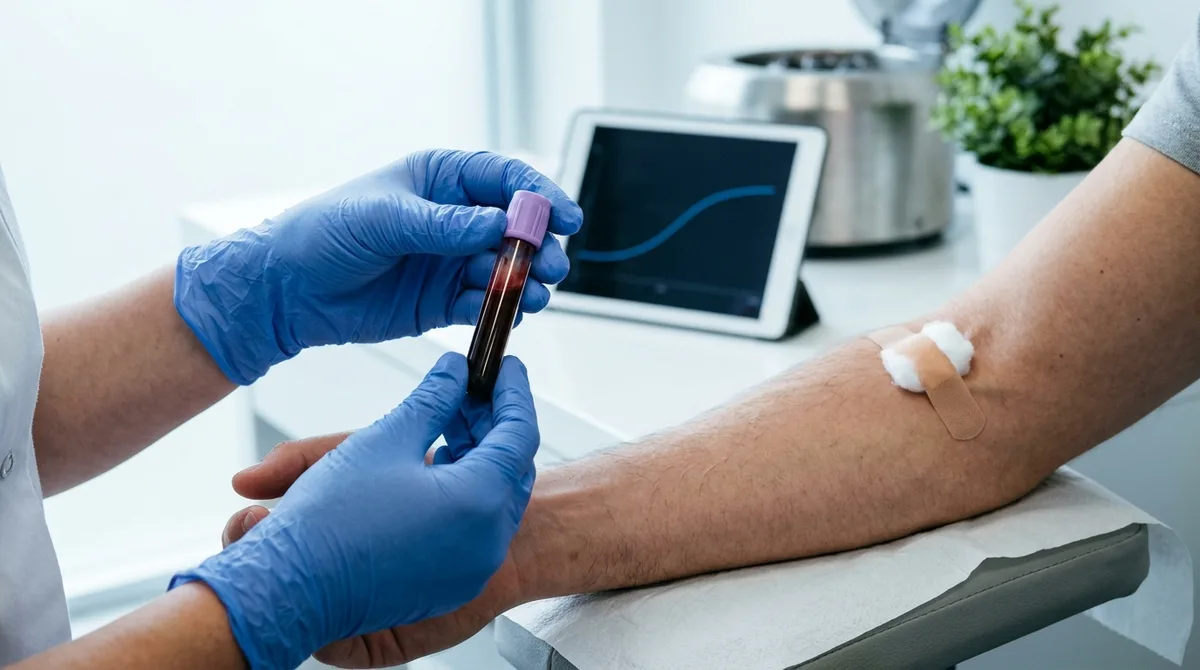
A biological-age test estimates how old your cells or tissues look by reading molecular patterns. A change in that estimate is a measurement, not a forecast of how many years you have left.
Most clocks are built from DNA methylation or blood proteins and calibrated to match chronological age. Because they respond to many influences, from diet and medication to an active illness, a clock can move for reasons unrelated to lifespan. A dramatic number on a report may therefore say very little about your future.
Consider a recent trial of TM5614. The four-month open-label study enrolled 20 adults aged 50 to 75, and its report described two DNA-methylation clocks shifting by 3.4 and 1.9 years. Only 19 participants were included in the efficacy analyses. The same report recorded one mild liver-function abnormality that might have been related to treatment, and no other serious adverse effects. It also said that whether such biomarker changes extend healthspan requires further testing.
A September 2026 analysis in Nature Biotechnology looked at rentosertib, a drug tested in people with idiopathic pulmonary fibrosis, a serious lung disease. Six proteomic aging clocks were applied to samples from 42 participants in a 12-week Phase 2a trial, and 21 of 54 treatment-versus-placebo comparisons reached statistical significance. The authors cautioned that these clocks cannot separate effects on aging from effects on the disease itself. A clock result in a sick population therefore tells you little about healthy ageing.
Telomere lengthening and regenerative stem-cell therapies follow the same pattern. Telomeres, the protective caps on chromosomes, shorten as cells divide, and extending them is an appealing idea. However, the approaches remain early-stage. Small or short studies can reveal a biological signal, but showing that anyone will live longer or stay healthier for decades requires larger, longer studies.
When you meet a new result, ask three practical questions. How many people were studied, and was there a comparison group? How long did the effect last? Does the outcome measure a clock reading, or something you would notice in your daily life, such as walking, thinking, or living independently?
What Are You Really Paying For at Longevity Clinics and Events?
What you are really paying for at a longevity clinic or event is access, convenience, and reassurance, not proven extra years. Conference agendas often feature speakers with impressive titles, startup showcases with polished slides, and tiered tickets, including hybrid passes that let you watch from home. These features make an event feel authoritative, but none of them shows that a product works.
Clinic programs follow the same logic. Monthly longevity programs are often priced at $349 or $499 for a 12-month term, plus a one-time $350 onboarding and assessment fee. Medication and follow-up laboratory costs may also fall to the patient, so the monthly figure is only part of the bill. Premium executive memberships in Los Angeles can be advertised starting at $79,000 per year, including diagnostics and a dedicated care team. That is a provider’s stated price for services. It tells you what the membership costs, not what it does for your lifespan.
Price and polish can make a program feel like a guarantee, yet they are features of a business. A high fee may reflect staffing, premises, and marketing as much as results.
Before you commit, ask what is measured. Is the headline result a biomarker, a symptom score, or something you would notice, such as walking, working, or living independently? Ask over what period the measurement was taken, because a change seen after a few months says little about a decade of living. Ask whether the people reporting the results have any financial stake in the program, and whether there was a comparison group. Finally, add up the full annual cost, including medication and laboratory fees, and compare it with what you would expect to gain.
Who Gets to Live Longer, and at What Social Cost?

Radical life extension would most likely reach the wealthy first, and its social costs would fall on everyone else. Longevity is already unequal. A US analysis of data from 2001 to 2014 estimated a life-expectancy gap of 14.6 years for men and 10.1 years for women between the richest and poorest 1% of Americans. That gap exists before any expensive new therapy arrives.
Money tends to flow in the same direction. Venture capital and angel investors fund longevity startups because they expect returns from customers who can pay premium prices. Wealth-management firms increasingly bundle health services with investment advice for high-net-worth clients. The earliest buyers of any new treatment are therefore likely to be people who already have the most money, time, and access to specialists.
The ethical stakes go beyond individual fairness. A December 2025 article in the AMA Journal of Ethics argues that radical life-extension therapies introduced into societies with substantial wealth and power inequality could undermine the civic virtues that liberal democratic governance needs. If a small group gains decades of extra life while most citizens do not, the shared public life that democracy depends on could come under strain.
Access decisions raise questions of fairness that individual purchasing cannot resolve. Choosing to pay for a membership may be reasonable for you, but it does not answer who should be eligible, who should pay for trials, or whether public health systems should cover treatments that only some people can afford. Those are collective decisions, and a private transaction cannot settle them.
So before you treat access as a personal choice, ask who the system would leave behind.
Which Rules Protect You in Longevity Trials?
In the United States, three sets of rules shape what you are told and what you may be offered in longevity research: how regulators judge health claims, how people in studies are protected, and how trials are registered for public view.
The first set starts with a surprising point. The FDA’s guidance says aging is a natural process and not itself a disease, so aging is not treated as a condition to be cured. However, claims about conditions associated with aging can count as disease claims, depending on how they are worded and presented. A promise to slow aging in general is therefore judged differently from a claim to treat a specific age-related condition.
The second set protects people who take part in research. Under 45 CFR Part 46, the US Department of Health and Human Services rules, legally effective informed consent is generally required before you join a study, unless a specified exemption or waiver applies. FDA rules may also apply when a study is an FDA-regulated clinical investigation. Before you sign, ask who sponsors the study, which rules it follows, and what happens to you if you are harmed.
The third set is transparency. ClinicalTrials.gov, run by the U.S. National Library of Medicine, lets you search registered studies by condition or drug name. Take ER-100, a recruiting US Phase 1 study that plans a single dose for up to 18 participants with glaucoma or NAION, a type of sudden optic nerve damage. Follow-up can last up to five years, and the estimated completion date is March 2032. A Phase 1 study mainly tests safety and dosing in a small group.
A registry entry shows that a study is planned or running, and a clinic’s program is not automatically a registered study. Even for substances that have been examined closely, none has been proven to extend human lifespan or healthspan. Do not start taking one without talking to a doctor first.
Is a Longer Life Worth the Moral and Existential Costs?

A longer life is not yet clearly worth its moral and existential costs, because the costs arrive now while the benefit remains unproven. Autonomy is the first test. Choosing a treatment is only autonomous if you understand what is known, what is guessed, and what nobody has measured yet. When a clinic reports a biomarker change without explaining that it may never become extra years, your consent rests on an incomplete picture.
Then comes the question of meaning. Suppose a program did add years. You would still need to decide what those years are for, and whether they would be spent with the partner, children, and friends who give your current life its shape. Decades lived apart from the people you love may feel more like a loss than a gift.
Selling hope raises a different problem. A person facing a serious illness such as idiopathic pulmonary fibrosis or glaucoma may be especially open to a promise of more time, and a polished premium program can make that hope feel like a plan. Pressure to decide quickly, combined with fees that are hard to recover, can turn a wish into a costly commitment.
Investors and providers share responsibility here. Those who fund a longevity startup, and those who sell its services, decide how results are framed, whether uncertainty appears in the headline, and whether a biomarker is presented as a promise. Their wording shapes what you believe you are buying, so they carry an obligation to state the limits plainly.
Ask yourself what you hope a longer life would give you. Then consider whether that goal could be pursued in ways the evidence actually supports.
Deciding Whether Longevity Is Worth It for You
Start by asking what outcome a program actually promises. If the headline is a biomarker, such as a clock reading, ask what clinical outcome it is meant to change, such as falls, hospital stays, or the ability to climb stairs. Then ask for the published results, not a summary slide.
Next, search ClinicalTrials.gov for the drug or condition by name, and read the eligibility criteria and consent terms of any study you find. If the program appears nowhere in the registry, ask the clinic why. Take a written list of all fees, medication costs, and laboratory tests to an independent doctor, and ask about the risks of each before you commit.
Finally, weigh the financial, social, and personal costs against evidence that remains unresolved. Habits linked to functional ability, such as regular physical activity, adequate sleep, and close friendships, cost far less and do not require a contract.
Weighing Longevity Claims Before You Commit
Your next step is smaller than choosing a clinic. Pick one program you are considering and write down the single outcome it claims to change, along with the period over which that outcome was measured. If the answer is a biomarker, set the claim aside until the results are published and outside researchers have examined them.
Then ask for three documents: the study protocol, the informed consent form, and the complete fee schedule. A legitimate program should hand these over without hesitation. If it refuses, or asks you to sign before you have read them, treat that refusal as information.
Give yourself time. Tell the provider that you will decide after a second opinion, and get that opinion from a doctor who has no financial stake in the program. A deadline that expires this week is a sales tactic, not a scientific requirement.
Check whether the study you have heard about is actually registered, and read its status carefully. The ER-100 entry, for example, listed no results when it was last updated on May 19, 2026, so a registered study may have nothing to report yet. Until real results exist, put your energy into what you can control: staying active, sleeping well, and keeping the relationships that give your days their meaning.
Frequently Asked Questions
1. Can a longevity clinic membership be cancelled if the results disappoint?
Whether you can cancel a longevity clinic membership depends on the written membership agreement, so ask for that document before you pay anything. Check the notice period, whether any fees are refundable, and whether the one-time onboarding and assessment charge, such as the $350 fee some programs list, is returned if you leave early. A clinic that will not explain its cancellation terms in writing is giving you important information.
2. How can I check whether a longevity trial is recruiting in my country?
Search ClinicalTrials.gov, the registry run by the U.S. National Library of Medicine, by condition or drug name, and read each record’s status and locations. The registry only lists studies that have been registered there, so if you live outside the United States, also search your own country’s trial registry. A study marked as recruiting may still have no sites near you, so check the location list before making plans.
3. Do hybrid conference tickets give the same access to sessions as attending in person?
Hybrid tickets do not always give the same access, so read the ticket terms before you buy. Confirm which sessions are included in the remote pass, whether recorded talks are available afterward, and whether online attendees can ask questions or join networking sessions. A cheaper remote pass may leave out the sessions and conversations that make an in-person event worth the price.
4. How can I verify a speaker’s credentials before paying for a longevity event?
Start by checking the speaker’s institutional profile, which should name a university, hospital, or company and a role you can confirm. Search PubMed for the speaker’s published papers to see whether their work has been reviewed by other researchers, and note whether the papers concern the topic they will present. Also ask the organizers whether the speaker has a financial interest in any product or clinic they are promoting, since financial ties can shape how a product is presented.
5. What does open-label mean for a trial like TM5614?
An open-label trial is one in which participants and researchers know which treatment is being given, so nothing is hidden from either side. The TM5614 study was open-label and ran for four months with 20 adults aged 50 to 75. Because nobody was blinded, expectations and attention can influence results, which is one reason a biomarker shift in such a study should be treated cautiously.
6. Do research consent protections apply to a paid longevity clinic program?
Not automatically. Under 45 CFR Part 46, legally effective informed consent is generally required before you take part in research, but a paid clinic program is not automatically a research study. If a program is presented as a study, ask whether it is registered, who sponsors it, and which rules it follows, since those answers determine which protections apply to you.