
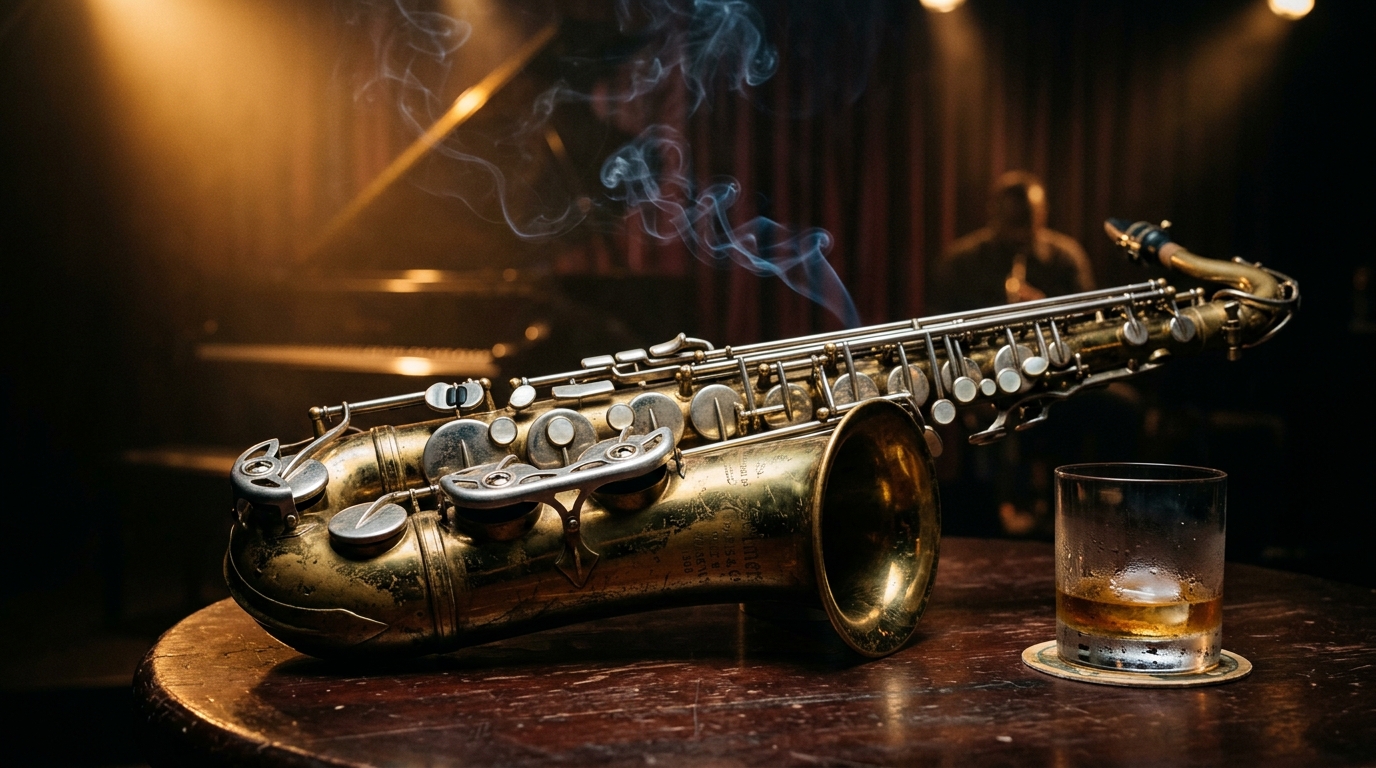
When you listen to a masterfully executed solo, you aren’t just hearing notes; you are witnessing a living, breathing argument for spontaneity. The philosophy of jazz invites you to step beyond the melody and ask what it actually means for a piece of music to exist without a fixed script. You’ll find that a jazz standard isn’t a rigid museum piece, but a flexible tradition that evolves every time a musician breathes new life into it.
By exploring this field, you discover that improvisation is less about solo genius and more about a sophisticated form of distributed cognition. You are looking at a model for embodied ethics where every performer must balance their individual voice with the needs of the collective conversation. Understanding these ontological shifts helps you see jazz not just as a genre, but as a profound exercise in intercultural dialogue and human connection.
Key Takeaways
- A jazz standard is a living, corrigible tradition that exists through the act of performance rather than as a static, written score.
- Improvisation is a form of distributed cognition where creative intelligence is shared across an ensemble through radical listening and real-time dialogue.
- The jazz ensemble serves as a model for embodied ethics, requiring performers to balance individual expression with the needs of the collective conversation.
- Jazz philosophy provides a blueprint for modern life by treating unexpected challenges as opportunities for creative redirection rather than failures.
Defining The Ontology Of The Jazz Standard
When you listen to a recording of a jazz standard like Autumn Leaves, you might wonder where the actual piece of music resides. In the world of classical music, the ontology of a work is often tied directly to the written score, which serves as a fixed blueprint for every performance. However, jazz challenges this traditional view by treating the lead sheet as a mere skeleton rather than the body itself. You are witnessing a shift where the music is not a static object found on paper, but a living entity that exists specifically through the act of playing. The work lives in the tension between a shared structural memory and the immediate, spontaneous choices made by the musicians in the room.
This unique ontological status means that a jazz standard is best understood as a corrigible tradition that evolves every time it is performed. You can think of the standard as a network of historical renditions where each new interpretation adds a fresh layer of meaning to the original theme. Instead of a singular truth, the music functions through distributed cognition, where the creative process is shared among the ensemble members in real time. Every performance becomes a distinct mode of being that honors the past while simultaneously rewriting it. By engaging with the music this way, you see that the standard is never truly finished, but is instead a continuous conversation that remains open to change.
As you explore this philosophy, you realize that the identity of a jazz work is defined by its fluidity and its capacity for intercultural dialogue. The essence of the music lies in its refusal to stay the same, making every rendition a unique event that can never be perfectly replicated. This perspective positions improvisation not as a secondary decoration, but as the fundamental heartbeat of the genre. When you hear a soloist take a daring new path through a familiar melody, they are not just playing a song, they are expanding the very definition of what that song can be. Ultimately, the jazz standard is a collaborative journey that invites you to value the beauty of the present moment over the permanence of a written record.
Improvisation As A Dialogic Mode Of Being
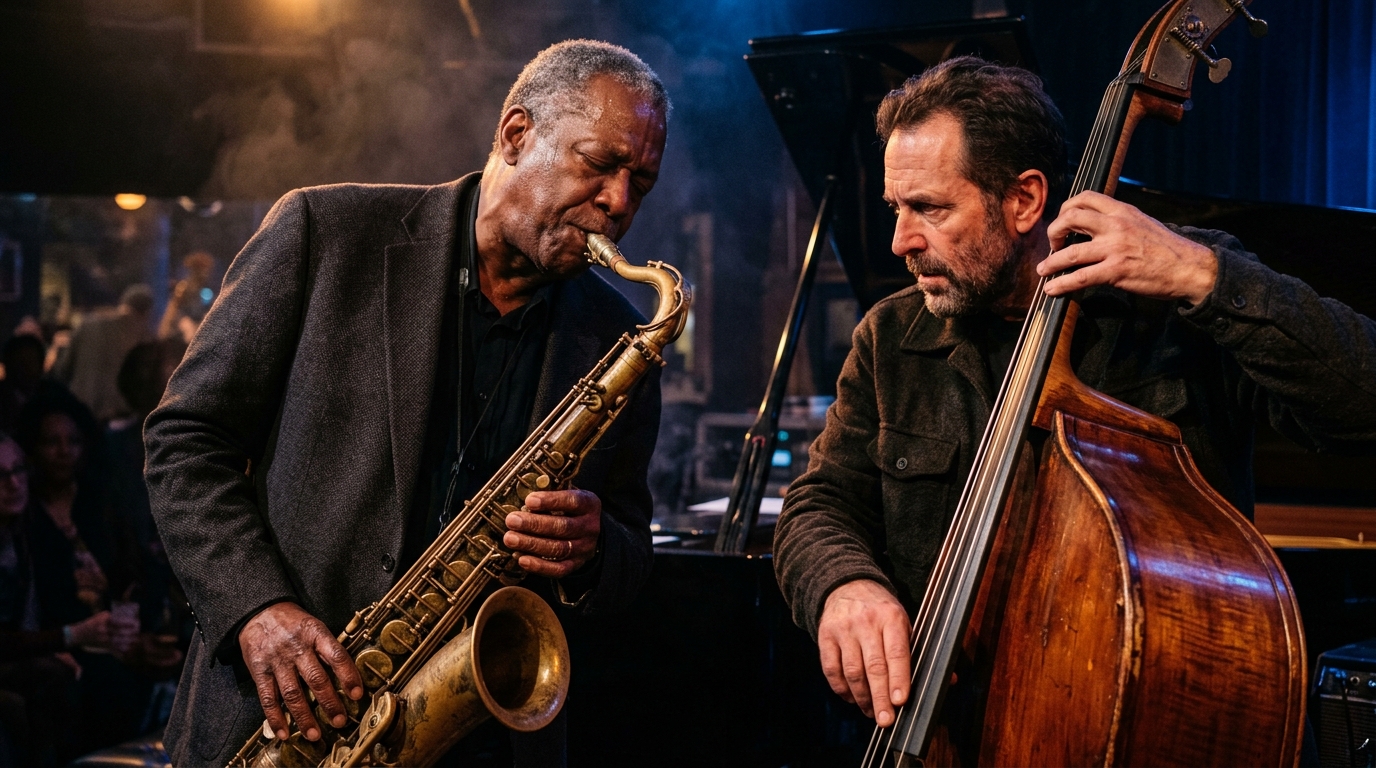
When you listen to a jazz quartet, you are witnessing a sophisticated form of distributed cognition where the music exists not on a page, but in the shared space between performers. This process challenges the traditional idea that a musical work is a fixed object, suggesting instead that the art is a living, breathing dialogue. You can think of the chord changes as a flexible architecture that provides safety without demanding conformity. Within this structure, musicians engage in a real time exchange of ideas, responding to subtle cues and shifts in rhythm. This tension between pre established rules and spontaneous invention creates a unique ontological space where the performance itself becomes the primary work of art.
You might notice that improvisation is far from random noise, as it actually requires a disciplined mastery of musical language to communicate effectively with others. It functions as a model for embodied ethics, where each player must listen as intensely as they speak to maintain the collective flow. By treating the melody as a corrigible tradition, the performers allow the music to evolve and adapt through their interaction. This dialogic mode of being means that no two performances are ever identical, because the social and emotional context of the room shapes the creative output. You are not just hearing a song, but rather observing a group of minds solving complex problems in a beautiful, public display of cooperation.
The Ethical Framework Of Collective Creativity
When you step into the world of a jazz jam session, you are witnessing more than just musical talent; you are seeing a living laboratory for ethical human interaction. In this space, the traditional hierarchy of a composer and performer dissolves, replaced by a distributed form of leadership where every participant must remain hyper aware of their peers. You quickly realize that to contribute meaningfully, you must first master the art of radical listening, ensuring your voice supports the collective sound rather than egoistically drowning it out. This mutual responsiveness creates a fragile yet beautiful bond, showing you how vulnerability serves as the foundation for true cooperation.
This dynamic of collective creativity offers you a compelling blueprint for democratic engagement in your everyday life. Just as a jazz soloist relies on the rhythm section to provide a stable ground for exploration, healthy societies depend on a balance between individual expression and communal support. You can see the tension between structure and spontaneity not as a conflict, but as a necessary dialogue that allows for growth and innovation. By viewing the jazz ensemble as a model, you begin to understand that ethical relationships are not about following a rigid script, but about navigating shared spaces with grace and empathy.
The beauty of this philosophical approach lies in how it treats every mistake as an opportunity for redirection rather than a failure. When you engage with others through this improvisational lens, you learn to embrace the unpredictability of human connection with a sense of curiosity. This shift in perspective encourages you to value the process of building something together over the pursuit of a perfect, preordained outcome. Ultimately, the philosophy of jazz teaches you that the most profound harmonies emerge when you are willing to lose yourself in the collective flow of the moment.
Jazz Philosophy As A Guide To Modern Life
You can view the philosophy of jazz as a practical roadmap for navigating the complexities of your daily life. While many people see jazz as just a genre of music, it actually serves as a profound model for embodied ethics and distributed cognition. When you embrace the jazz mindset, you learn to treat every unexpected challenge as a prompt for creative dialogue rather than a mistake to be feared. This shift in perspective allows you to move away from the rigid pursuit of perfection and toward a more fluid, adaptive way of being. By understanding that a performance is a living tradition, you gain the freedom to innovate within the structures of your own world.
Living with a jazz philosophy means you are constantly negotiating the delicate tension between structure and spontaneity. You start to see your interactions with others as a form of collective creativity where the outcome is not predetermined by a fixed score. Instead of following a strict script, you learn to listen deeply and respond to the nuances of the present moment with agility. This approach fosters a sense of resilience, as you realize that the beauty of life often emerges from the way you handle the wrong notes. By viewing your experiences as a continuous, corrigible tradition, you become an active participant in a beautiful, ever-evolving conversation.
Improvisation as a Blueprint for Living
Ultimately, the philosophy of jazz reveals that music is far more than a sequence of organized sounds. It is a living laboratory for existential exploration. By exploring the phenomenology of perception through the lens of performance, you can see a reflection of your own life. You are constantly balancing the scripts society provides with the spontaneous choices that define your individual character. Every performance serves as a reminder that true creativity is not about escaping rules, but about finding a unique voice within them.
When you listen to a jazz ensemble, you are witnessing a profound model of collective creativity and distributed cognition. The musicians do not just play alongside one another, they exist in a state of constant, empathetic dialogue where every note is a response to a partner. This interaction mirrors an embodied ethics where listening is just as vital as speaking. It suggests that our greatest achievements come from a willingness to be vulnerable and responsive to those around us. In this context, a blue note is not a mistake, but a deliberate exploration of the human experience.
As you move forward, carry the wisdom of the jam session into your daily routine. Jazz teaches you that the performance itself is the work of art, emphasizing the value of the present moment over a static finished product. This shift in perspective allows you to appreciate the beauty of imperfection and the power of intercultural dialogue. Whether you are a dedicated musician or a curious listener, the branches of philosophy provide a toolkit for navigating a world in motion with grace. Every syncopated rhythm is an invitation to embrace the unknown and find harmony in the unexpected.
Frequently Asked Questions
1. What does it mean to say jazz is an argument for spontaneity?
When you hear a jazz performance, you are witnessing the idea that life does not require a fixed script to be meaningful. It proves that beauty can emerge from the immediate moment rather than from a pre-planned set of instructions.
2. Where does a piece of jazz music actually exist?
Unlike classical music which lives in a written score, jazz exists primarily in the act of performance. You can think of a standard as a living entity that resides in the tension between shared musical memory and the spontaneous choices made by musicians in real time.
3. Is improvisation just a solo effort by a talented musician?
Improvisation is actually a form of distributed cognition where the entire group works together to create something new. You are watching a collective intelligence in action, where every note is a response to what others are doing in that exact second.
4. How does jazz serve as a model for ethics?
Jazz functions as a form of embodied ethics because it requires you to balance your individual expression with the needs of the group. It teaches you how to maintain your unique voice while actively listening and contributing to a larger, collective conversation.
5. Why is a jazz standard described as a flexible tradition?
A standard is not a rigid museum piece but a network of historical renditions that evolves with every new player. You are participating in a corrigible tradition where each performance adds a fresh layer of meaning to the original theme.
6. How does the philosophy of jazz facilitate intercultural dialogue?
Jazz serves as a profound exercise in human connection because it creates a space for different voices to meet and interact. By engaging with its philosophical roots, you see how the genre uses musical language to bridge gaps between diverse backgrounds and perspectives.