

Every time you tap your card or click checkout, you are participating in a quiet movement known as the ethics of consumption. While it once felt like a niche lifestyle choice, choosing products that align with your values has become a massive global force, with the ethical retail market projected to soar toward $544 billion by 2032. You likely find yourself among the 89% of shoppers who have shifted their habits to be more eco-friendly, making choices where every purchase feels like a moral vote.
However, staying true to your principles isn’t always easy when your conscience clashes with your bank account. You might be willing to pay a premium for sustainability, yet like half of all shoppers, you’ve probably walked away from an ethical choice simply because the price tag was too high. Balancing personal integrity with economic reality is the defining challenge of our modern marketplace. Understanding this tension is the first step toward becoming a more intentional consumer without succumbing to exhaustion.
Key Takeaways
- The ethical retail market is a rapidly expanding global force projected to reach $544 billion by 2032, driven by nearly 90% of consumers who are actively shifting toward eco-friendly habits.
- Overcome the ‘value action gap’ by prioritizing progress over perfection and focusing on small, intentional micro-habits that fit your specific budget and lifestyle.
- Combat the sustainability price premium by adopting a philosophy of buying less but buying better, which prioritizes durability and long-term value over fast-fashion convenience.
- Look beyond surface-level marketing and greenwashing by verifying third-party certifications and supply chain transparency to ensure your spending supports genuine labor and environmental standards.
Bridging The Value Action Gap In Your Daily Shopping
You likely feel a familiar sense of guilt when you reach for a cheap, convenient garment despite knowing the environmental toll of fast fashion. This psychological tension is known as the value action gap, representing the space between your moral intentions and your actual purchasing behavior. While nearly ninety percent of global consumers report a desire to shop more sustainably, the reality of high price points often creates a significant barrier. Moving beyond this conflict requires you to move beyond perfectionism and focus on making intentional choices that align with your personal ethics. Understanding that your internal struggle is a shared global experience can help you approach your shopping habits with more clarity and less judgment.
Economic pressures have made it increasingly difficult to prioritize ethical standards when the sustainability premium can add nearly ten percent to your total cost. You might find yourself declining an eco-friendly product because your budget simply cannot accommodate the higher price tag, a situation faced by half of all shoppers today. To bridge this gap, you should focus on the philosophy of buying less but buying better to maximize the lifecycle of every item you own. This shift in perspective transforms ethical consumption from an expensive luxury into a practical strategy for long-term value. By prioritizing durability and transparency, you can support a market that is projected to double in size over the next decade.
Practical ethics in your daily life involve looking past flashy marketing to find brands that offer genuine accountability and fair labor practices. You do not need to overhaul your entire lifestyle overnight to be an ethical consumer, as small and consistent shifts in your dietary or clothing choices create significant collective impact. Try focusing on one specific category, such as groceries or footwear, where you feel most empowered to make a principled stand without causing financial strain. As you become more comfortable making these choices, the tension between your values and your actions will naturally begin to dissolve. Positioning yourself as an informed advocate for change allows you to influence the retail world through every dollar you spend.
Decoding Labor Standards And Environmental Impact Transparently
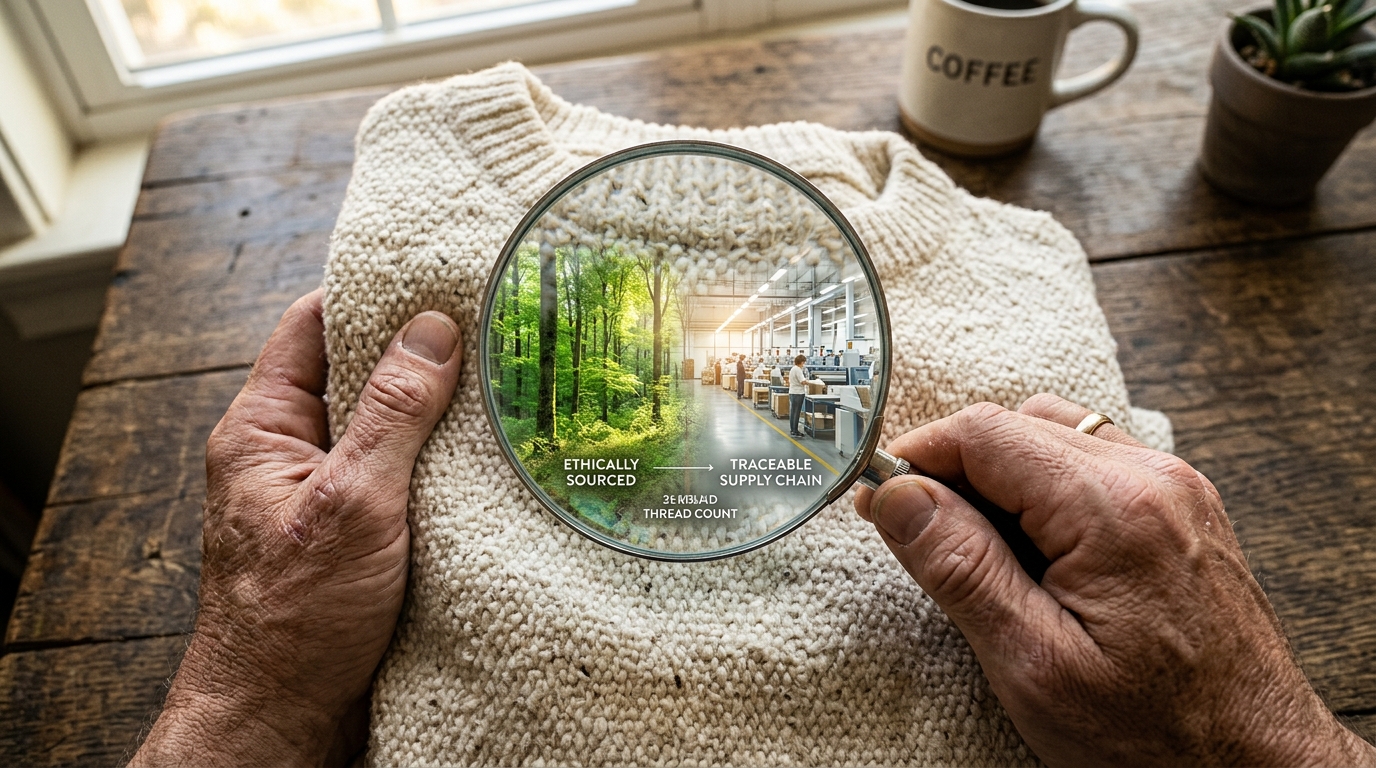
Choosing items in a modern grocery store or scrolling through an online marketplace can feel like a moral minefield when you are trying to align your purchases with your values. You have likely encountered labels like “natural” or “responsibly sourced” that sound promising but often lack the rigorous verification needed to prove they are not just greenwashing. True ethical consumption requires you to look beyond these surface-level marketing claims to investigate the actual labor standards and ecological footprints behind the brands you support. By understanding how to identify third-party certifications and supply chain transparency reports, you can ensure that your money supports fair wages and safe working conditions rather than exploitative practices.
The challenge of modern shopping is often found in the gap between your desire to do good and the economic reality of a higher sustainability premium. Research shows that while nearly 90 percent of global consumers are changing their habits to be more eco-friendly, many are still forced to balance these ethics against rising costs and decision fatigue. You can bridge this gap by prioritizing quality over quantity, especially in sectors like fast fashion where the human and environmental costs are notoriously high. Focusing on a few high-impact changes, such as reducing single-use plastics or choosing brands with transparent carbon reporting, allows you to make a tangible difference without feeling overwhelmed by the complexity of global trade. Adopting a modern philosophy of fashion can help you navigate these choices by focusing on pieces that truly represent your values.
Adopting a more conscious lifestyle is not about achieving perfect purity, but rather about making informed choices that reflect your personal integrity. When you decode the journey of a product from the raw materials to the finished item in your cart, you are reclaiming your power as a consumer to demand better industry standards. This transition from passive buying to active advocacy helps shift the market toward a future where ethical production is the norm rather than an expensive luxury. By staying curious and asking the right questions about how your goods are made, you transform everyday transactions into a powerful tool for global ecological and social progress.
Combatting Eco Exhaustion Through Sustainable Micro Habits
Managing the ethics of consumption often feels like a heavy burden when you are forced to weigh your personal values against the rising costs of living. While nearly 90 percent of people worldwide report a desire to shop more sustainably, the reality of a 10 percent price premium on ethical goods can lead to significant decision fatigue. You might find yourself paralyzed by the choice between a budget-friendly fast fashion item and a responsibly sourced alternative that strains your wallet. This tension creates a value-action gap where your intentions are high, but your capacity for change feels limited by economic pressure. By shifting your focus toward small, manageable choices, you can reclaim your agency without succumbing to the burnout of perfectionism.
The key to maintaining your moral integrity in a complex market is to prioritize micro habits that integrate seamlessly into your daily routine. Instead of attempting to overhaul your entire lifestyle overnight, you can start by making one intentional swap, such as choosing a single fair-trade staple or reducing your meat consumption by one day a week. These small shifts are statistically significant when practiced at scale, especially as sustainably marketed products now account for a quarter of all retail spending. You do not need to be a perfect consumer to be an ethical one, as the cumulative impact of many people making imperfect choices is far greater than a few people being flawless. This approach allows you to stay ethically engaged while protecting your mental energy from the overwhelming weight of global climate responsibility.
Understanding the complex frameworks behind supply chains helps you see that every small refusal to participate in waste is a powerful moral statement. You are essentially voting with your dollar for a future that values transparency and human rights over rapid turnover and disposability. By anchoring your habits in these practical reflections, you transform the ethics of consumption from a source of stress into a sustainable part of your personal identity. This shift helps prevent the individual self-interest that often leads to the depletion of our collective environmental health.
Final section
Embracing the ethics of consumption does not require you to achieve a state of flawless minimalism or total self-sacrifice. You can begin by acknowledging that every small adjustment, from choosing a fair-trade coffee to opting out of a fast fashion trend, contributes to a massive global shift. While the ethical retail market is projected to exceed 544 billion dollars by 2032, your personal success is measured by the consistency of your intentions rather than the size of your budget. Focus on making informed choices that align with your core values while remaining realistic about the economic pressures of modern life. By translating complex moral frameworks into simple daily habits, you turn the act of shopping into a meaningful expression of your worldview.
Closing the value action gap requires you to practice conscious consumption with a sense of grace and patience. You might find yourself unable to pay the nearly ten percent sustainability premium on every item, and that is a perfectly acceptable part of the journey. The goal is to move away from impulsive habits and toward a more intentional lifestyle where you consider the people and resources behind the products you use. True progress happens when you prioritize transparency and durability over temporary convenience or social perfection. As you continue to refine your habits, remember that a community of millions making imperfect but better choices is far more impactful than a few people doing it perfectly.
Turning Your Values into Global Impact
The ethics of consumption means acknowledging that your daily choices carry significant moral weight in a complex global market. While the jump from fast fashion to sustainable textiles or shifting your dietary habits can feel overwhelming, these decisions are practical applications of deep philosophical frameworks. You are part of a massive shift where ethical retail is projected to exceed 544 billion dollars by 2032, proving that individual actions aggregate into a global force that influences major brands. By viewing every purchase as a vote for the type of world you want to inhabit, you transform mundane chores into meaningful acts of advocacy.
Balancing your personal values against economic pressures is a challenge that requires both grace and intention in the current financial climate. Although nearly 90 percent of global consumers are changing their habits, the reality of the sustainability premium means that cost remains a significant barrier for many. You do not have to be a perfect consumer to make a difference, as even small shifts toward ethically marketed products contribute to the 25 percent of retail spending now dedicated to sustainability. Focus on closing the gap between your intentions and your actions by making informed, incremental changes that respect both your budget and your conscience.
Ultimately, your journey toward ethical consumption is about moving past exhaustion and reclaiming your agency as an informed participant in the economy. The transition from a niche movement to a mainstream standard shows that your demand for transparency and fairness is working. As you continue to refine your lifestyle, remember that your influence extends beyond the checkout counter to the very core of how goods are produced and valued. By remaining curious and committed to environmental ethics principles, you serve as a vital link in the chain toward a more equitable and sustainable future for everyone.
Frequently Asked Questions
1. What exactly does the ethics of consumption mean for me?
The ethics of consumption is the practice of using your purchasing power as a moral vote to support products and professional services that align with your personal values. Every time you checkout, you are participating in a global movement that prioritizes social and environmental impact over mere convenience.
2. Why do I feel guilty when I buy something that isn’t sustainable?
You are likely experiencing the value action gap, which is the psychological tension that occurs when your moral intentions do not match your actual shopping behavior. It is a common experience for most global consumers, especially when price and convenience create barriers to making ethical choices.
3. How can I shop ethically if I am on a tight budget?
You can balance your integrity with economic reality by focusing on intentionality rather than perfection. Start by making small, consistent shifts in your habits and remember that your internal struggle is part of a shared global challenge to make sustainability more accessible.
4. Is the ethical retail market actually growing?
Yes, ethical consumerism is moving from a niche lifestyle to a massive global force that is projected to reach 544 billion dollars by 2032. Your shift toward eco-friendly habits puts you among the 89 percent of shoppers who are actively changing the modern marketplace.
5. How do I avoid eco-exhaustion while trying to be a better consumer?
You can avoid burnout by moving beyond the need for perfection and focusing on progress within your financial means. Understanding that high price points are a legitimate barrier will help you approach your habits with more clarity and less self-judgment.
6. What is the first step toward becoming a more intentional shopper?
The first step is recognizing the tension between your conscience and your bank account as a starting point for growth. By understanding current economic pressures, you can better manage your choices and make decisions that reflect your principles without compromising your financial stability.