
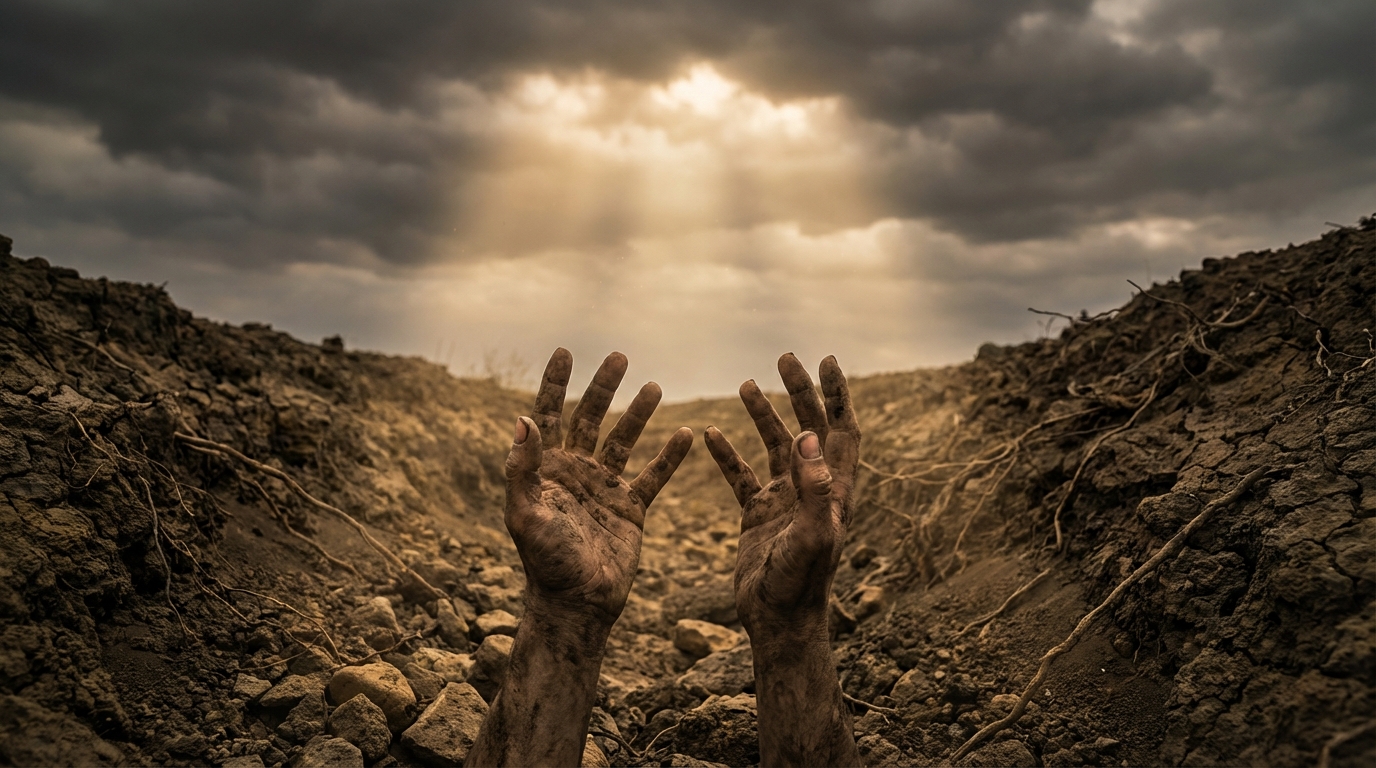
Have you ever looked at the news, witnessed a devastating natural disaster or senseless tragedy, and wondered how a perfectly good and all-powerful God could allow it to happen? You aren’t alone in asking this profound question. For centuries, theologians and philosophers have wrestled with what is known as the problem of evil. It is a deeply personal puzzle that challenges the very foundation of how we understand a divine creator.
When you examine this concept closely, you will find it usually takes two distinct forms. The logical argument questions whether it is fundamentally possible for an all-knowing, all-powerful, and all-good being to coexist with any suffering at all. Meanwhile, the evidential argument looks at the staggering severity of worldly pain, like a child’s terminal illness, and asks whether such profound heartbreak makes a benevolent God highly unlikely. Grappling with these ideas does not require a theology degree, just a curious mind willing to explore one of humanity’s most enduring paradoxes.
Key Takeaways
- The problem of evil challenges the coexistence of an all-powerful, benevolent God and worldly suffering through two main frameworks: logical impossibility and evidential unlikelihood.
- Suffering acts as an unavoidable byproduct of human autonomy, as genuine love and moral significance require the absolute freedom to choose between right and wrong.
- Hardships serve as a necessary moral training ground for spiritual development. Overcoming adversity cultivates essential human virtues like courage, resilience, and empathy that cannot exist in a painless world.
- Grappling with these profound theological paradoxes does more than exercise the intellect; it actively refines personal compassion and strengthens the foundation of an ethical worldview.
Logical And Evidential Dilemmas Of Evil
When you examine the problem of evil, you will quickly encounter two primary frameworks philosophers use to structure this debate. The first of these is known as the logical problem, which presents a strict paradox regarding the existence of a perfect deity. According to this argument, an all-powerful, all-knowing, and completely good God is logically incompatible with the presence of suffering in the world. If a supreme being possesses infinite goodness, that being would naturally want to eliminate all evil. Because that same being is also all-powerful and all-knowing, they would have both the capability and the awareness to stop suffering before it starts. Since we clearly see that evil exists, this framework concludes that such a flawless creator simply cannot exist alongside it.
Moving beyond strict logical impossibilities, the second framework asks you to consider the evidential problem of evil. This approach acknowledges that a perfect God and some level of suffering might technically be able to coexist in theory. However, it focuses heavily on the sheer volume and extreme severity of the anguish we observe in reality. You might look at the devastation caused by massive natural disasters or the heartbreaking reality of terminal illnesses in young children. The evidential argument suggests that while a loving God might allow minor hardships for human growth, the staggering amount of horrific, seemingly pointless suffering provides strong evidence against the existence of that benevolent creator.
Exploring these two distinct dilemmas helps you grasp exactly why this theological paradox has troubled scholars for centuries. The logical argument forces you to wrestle with the rigid definitions of divine perfection and absolute power. On the other hand, the evidential argument appeals directly to your human empathy and your observations of the natural world. Both frameworks challenge thinkers to either rethink their understanding of a supreme being or find a compelling reason why a purely good creator permits profound tragedy.
The Free Will Theodicy And Human Choice

When you consider the complex paradox of an all-powerful God allowing suffering, the concept of human agency offers a compelling explanation. The free will theodicy suggests that for your actions to have true moral significance, you must possess the ability to choose between right and wrong. If a divine creator forced you to only do good things, your actions would resemble those of a programmed machine rather than a conscious human being. Genuine love, compassion, and kindness require the authentic freedom to act otherwise. Without this fundamental autonomy, the profound depth of human relationships and moral triumphs would be entirely impossible.
Giving you this extraordinary gift of choice inherently comes with a monumental risk. Because you have the power to choose kindness, you also have the undeniable capacity to cause harm. Philosophers argue that God cannot logically grant you true freedom while simultaneously preventing you from making bad decisions. If divine intervention constantly stopped people from hurting one another, the reality of human choice would be merely an illusion. Therefore, the existence of evil is often viewed not as a direct creation of God, but as an unavoidable byproduct of granting humanity genuine self-determination.
Understanding this theological framework helps you see the profound weight placed on your daily decisions. While the presence of suffering remains a deeply painful reality, this perspective frames it as the heavy cost of a meaningful existence. A universe where you can freely choose to love your neighbor is ultimately considered more valuable than a safe but robotic world. By understanding the free will theodicy, you can better appreciate the delicate balance between divine omnipotence and your own moral responsibility.
Soul-Making Theodicies And Spiritual Development
When you grapple with the existence of suffering, one of the most compelling philosophical responses invites you to view the world as a moral training ground. This concept is often called a soul-making theodicy, and it suggests that human beings are not created as perfectly finished products. Instead, you are placed in an environment specifically designed to challenge you and foster your spiritual development. If an all-powerful and all-good God simply handed you absolute perfection, you would lack the genuine free will required to choose goodness on your own. Therefore, encountering difficulties and obstacles becomes a necessary part of your journey toward achieving true moral maturity.
To understand this perspective fully, you have to ask yourself whether certain profound virtues could even exist in a universe completely devoid of pain. Think about the deep compassion you feel when helping a friend through a crisis, or the immense resilience you build after facing a personal failure. In a world where nothing ever goes wrong, concepts like courage and empathy would have no real meaning or practical application. The soul-making approach argues that human adversities are actually essential ingredients for cultivating these irreplaceable traits. By facing the very real presence of evil and hardship, you are given the unique opportunity to forge a stronger, more empathetic character.
Embracing this philosophical framework does not instantly erase the sting of tragedy, but it does offer a powerful lens for processing the problem of evil. It shifts your focus from asking why a benevolent creator allows suffering to exploring what that suffering might ultimately produce within you. You are challenged to see your struggles not as arbitrary punishments, but as vital catalysts for profound personal growth. While the sheer scale of worldly pain remains a difficult paradox to unravel, this perspective provides a deeply meaningful way to reconcile hardship with spiritual evolution.
Making Sense of the Ultimate Paradox
Examining the problem of evil takes you through some of the most profound paradoxes in human history. You have seen how the logical and evidential problems challenge the very concept of an all-powerful, all-knowing, and all-good creator in a world filled with suffering. At the same time, exploring various theological defenses reveals how thinkers have attempted to reconcile human free will and spiritual growth with the presence of hardship. These philosophical debates do not always offer easy answers, but they highlight the deep human desire to find meaning and order in a seemingly chaotic universe. Engaging with these concepts allows you to appreciate the historical and intellectual weight behind centuries of religious and ethical thought.
Wrestling with these heavy theological questions does much more than just exercise your intellect. When you confront the realities of suffering and the moral dilemmas they create, you actively refine your own sense of compassion and justice. This ongoing philosophical journey encourages you to look closer at your personal beliefs and the ways you respond to adversity in everyday life. Grappling with the problem of evil ultimately deepens your empathy for others and strengthens the foundation of your ethical worldview. You emerge from this exploration not just with a better grasp of complex religious debates, but with a more thoughtful approach to the shared human experience.
Frequently Asked Questions
1. What exactly is the problem of evil?
Have you ever wondered how a perfectly good and all-powerful God could allow senseless tragedies to happen? The problem of evil is a philosophical and theological puzzle that questions how divine benevolence and omnipotence can coexist with worldly suffering. It challenges you to examine the very foundation of how a divine creator interacts with our universe.
2. What is the logical argument against God based on evil?
The logical problem presents a strict paradox regarding the existence of a perfect deity. It suggests that an all-powerful, all-knowing, and completely good God is logically incompatible with the presence of any suffering. If a supreme being has infinite goodness and power, they would eliminate all evil, meaning the existence of pain proves such a creator cannot exist.
3. How does the evidential argument differ from the logical one?
While the logical framework claims God and evil are strictly impossible to mix, the evidential argument looks at the staggering severity of real-world pain. When you consider profound heartbreak like a terminal illness, this approach asks whether such extreme suffering makes a benevolent God highly unlikely. It focuses on the probability of a loving creator rather than absolute logical proof.
4. Do I need a theology degree to understand these concepts?
You absolutely do not need formal theological training to grapple with these profound ideas. All you need is a curious mind and a willingness to explore one of humanity’s most enduring paradoxes. These frameworks are deeply personal puzzles that anyone can examine and reflect upon.
5. Why do philosophers separate the problem into two distinct forms?
Philosophers use these two frameworks to carefully structure a highly complex debate. Breaking it down helps you evaluate whether suffering makes God absolutely impossible or just highly improbable based on the evidence. This separation allows you to analyze the nuances of divine power and human pain with greater clarity.
6. How does God’s omniscience fit into this dilemma?
An all-knowing or omniscient God would possess complete awareness of all past, present, and future suffering. When you combine this infinite knowledge with ultimate power, the paradox deepens. It forces you to ask why a supreme being would not intervene if they are fully aware of the pain before it even starts.
7. Can a perfectly good God coexist with natural disasters?
Natural disasters present a unique challenge because they cause devastating harm without any human malice involved. When you witness these senseless tragedies, you are forced to question how a flawless creator could design a world where such destruction occurs. This specific type of suffering is a central focus when evaluating both the logical and evidential dilemmas.