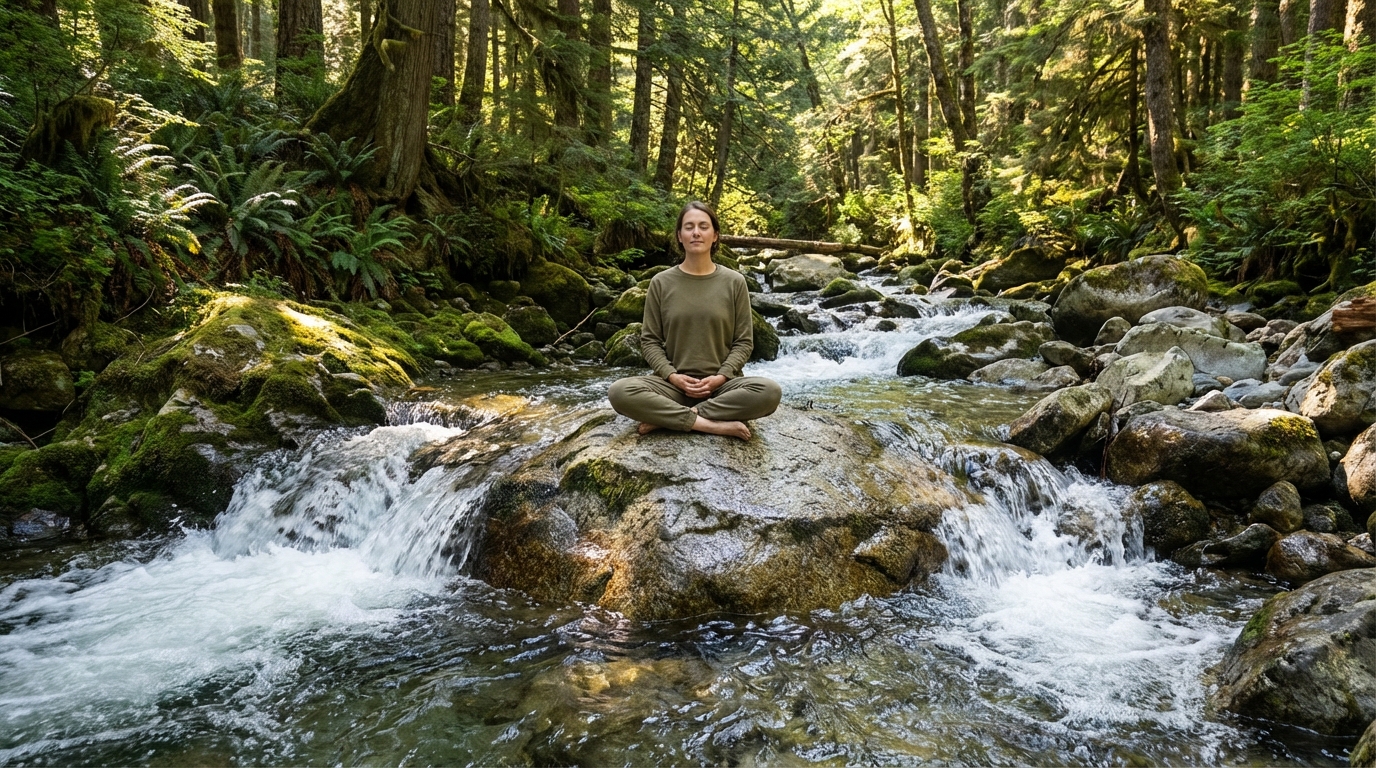
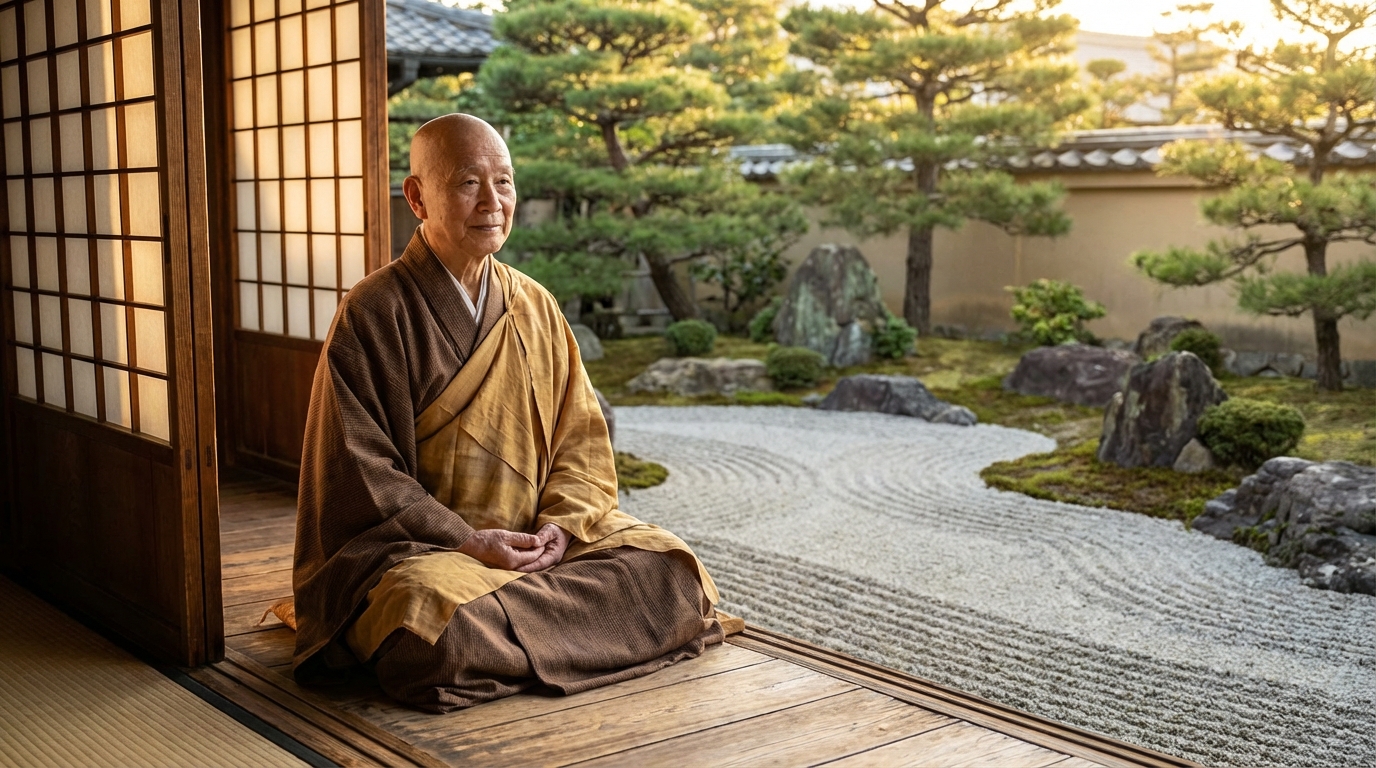
When you begin exploring Zen Buddhism, you might expect to find a strict list of commandments or a complex theology to memorize. Unlike many other religious traditions that rely heavily on scripture, Zen invites you to look inward rather than upward for answers. This path is less about adhering to rigid dogmas and more about an experiential process toward understanding your own mind. Instead of asking you to believe in external deities, Zen challenges you to strip away layers of conceptual thinking to reveal what is already there. It cultivates a direct realization of reality that transcends words and intellectual study.
The practice of zazen, or seated meditation, serves as the primary method for uncovering truth in this tradition. You are not trying to become something new or attain a distant holiness. Instead, you are waking up to your innate Buddha nature. Zen teaches that every being possesses this enlightened mind, yet it often remains obscured by our constant stream of thoughts and attachments. By sitting in stillness and observing the breath, you learn to experience the present moment without the filter of judgment or analysis. This direct experience allows you to touch the essence of non-duality and emptiness that defines the Zen perspective.
Key Takeaways
- Zen Buddhism teaches that you already possess an innate “Buddha nature,” meaning enlightenment is about uncovering your existing wholeness rather than becoming something new.
- The core practice of Zazen, or seated meditation, emphasizes “just sitting” to cultivate direct presence and observe reality without judgment or attachment.
- Zen challenges the illusion of separation through the concepts of emptiness and non-duality, revealing that the self is fundamentally interconnected with the universe.
- Rather than relying on rigid scripture or intellectual study, the tradition prioritizes looking inward to achieve a direct, experiential realization of truth.
Realizing Your Innate Buddha Nature
Zen Buddhism operates on the radical premise that you are already whole and complete just as you are. Unlike other spiritual paths that suggest you must acquire holiness or wisdom from an external source, Zen insists that your true nature is already awakened. Think of this innate Buddha nature like a brilliant blue sky that always exists behind passing storm clouds. The confusion and stress of daily life are merely temporary weather patterns obscuring the clarity that resides permanently within you. You do not need to create the sun. You simply need to let the clouds drift away to see the light that has been there all along.
This perspective fundamentally shifts how you approach your spiritual practice. Instead of striving to build a better version of yourself, the work becomes a process of subtraction and unlearning. You peel away the layers of social conditioning, ego-driven desires, and conceptual thinking that hide your original face. Through the practice of direct observation, you begin to dissolve the false separation between yourself and the universe. Realization is not an achievement to be grasped in the future. It is an immediate recognition of what is true right now.
Many students find it paradoxical that the harder they search for enlightenment, the more elusive it seems to become. Zen masters often remind their students that seeking Buddha outside of one’s own mind is like searching for spectacles while wearing them. When you stop chasing after an idealized state of perfection, you naturally settle into the perfection of the present moment. This belief empowers you to trust your own intuition and experience rather than relying solely on scriptures or authorities. Realizing your Buddha nature is simply coming home to the self you never actually left.
Zazen and the Practice of Just Sitting
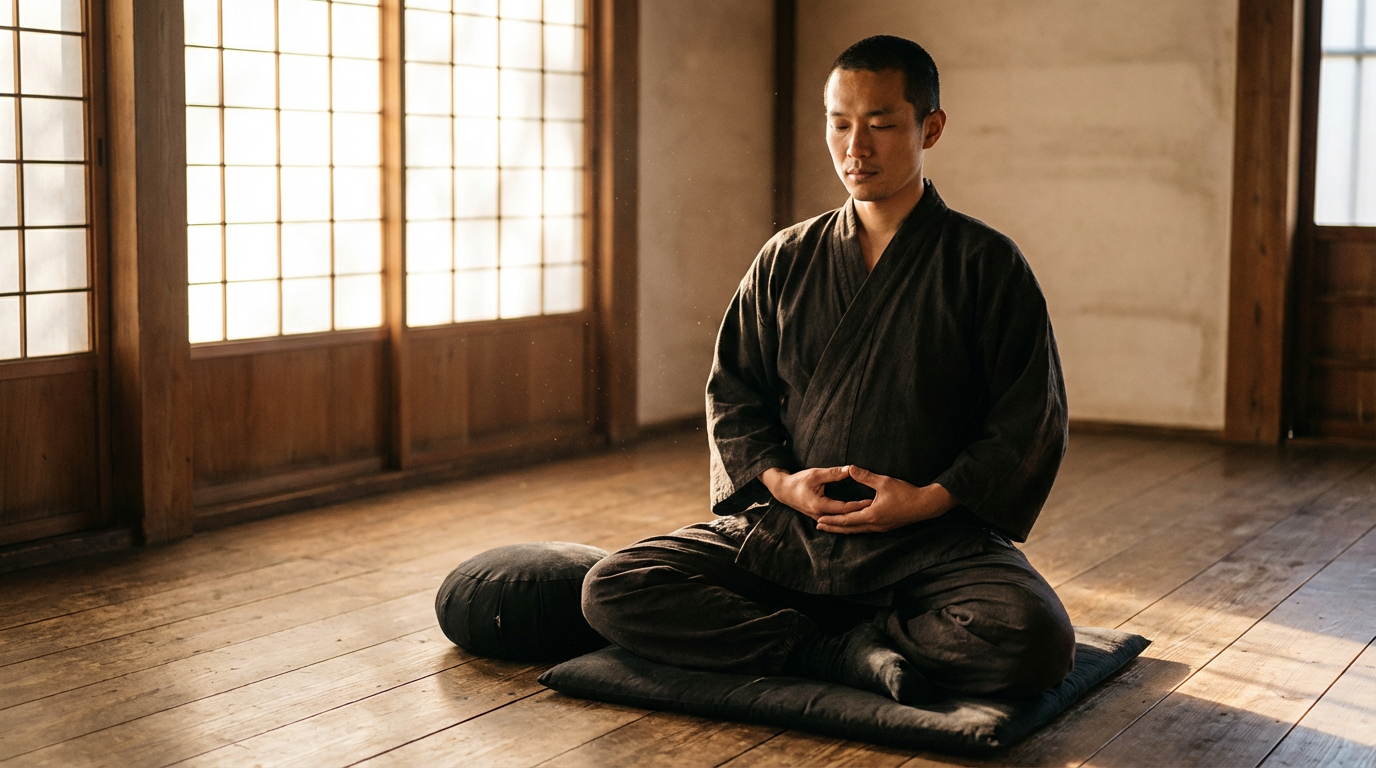
Zazen, a form of seated meditation, asks you to let go of goal-oriented striving. Unlike other methods where you might meditate to achieve a specific state or insight, Zen teaches that the act of sitting is itself the expression of enlightenment. You are not trying to become a Buddha. You are realizing the Buddha nature that already exists within you. This approach is often called “just sitting” because it requires nothing more than your complete, undivided presence. By simply being with reality as it is, you bridge the gap between where you are and where you think you should be.
As you settle into this practice, you inevitably encounter the paradox of “thinking not-thinking.” This concept does not mean you must forcefully empty your mind or suppress every thought that arises. Instead, you acknowledge thoughts as they come without clinging to them or pushing them away, much like watching clouds drift across a vast sky. You remain alert and aware, allowing mental activity to manifest and dissolve without getting caught in the narrative. Through this detached observation, you cultivate a mind that is open, fluid, and unburdened by everyday conceptual limitations.
Your physical posture serves as the foundation for this mental clarity, uniting the body and breath in a single focused effort. By aligning your spine and tucking your chin, you create a structure that supports wakefulness and prevents the drowsiness that often accompanies relaxation. You are encouraged to focus on your breath, counting inhalations and exhalations to anchor your attention in the present moment. This rigorous attention to form reveals that body and mind are not separate entities but deeply interconnected aspects of your existence. The discipline of your body directly shapes the stability and depth of your mind.
Emptiness and the Non-Dual Perspective
The profound concept of Sunyata, or emptiness, often causes confusion for beginners. This term does not imply a bleak void or nothingness. Rather, it suggests that things lack a fixed, separate existence on their own. When you look closely at what you call your “self,” you discover it is actually a flowing collection of thoughts, feelings, and physical sensations rather than a solid entity. Realizing this interdependence allows you to see that you are not isolated from the world around you. Instead of existing apart from the universe, you are fundamentally woven into its ever-changing fabric.
Moving beyond the illusion of separation leads you to the liberating perspective of non-duality. Our minds naturally categorize experiences into opposing binaries like good versus bad, success versus failure, or self versus other. Zen practice invites you to step back from these rigid labels and experience reality exactly as it unfolds without immediate judgment. By dropping the constant need to classify everything, you open yourself to a more direct and vibrant engagement with life. This shift in perspective transforms how you relate to conflict and suffering, replacing resistance with a deep sense of peace.
Understanding emptiness naturally cultivates a profound sense of compassion for all living beings. Once you see that boundaries between you and others are merely conceptual, their suffering begins to feel indistinguishable from your own. This insight moves your practice from an intellectual exercise on the cushion to a lived reality in the marketplace or office. You begin to act with natural kindness not because a rule tells you to, but because you recognize the essential unity of all existence. This lived wisdom is the true fruition of studying Zen Buddhism beliefs.
Uncovering Your Innate Buddha Nature
Understanding Zen requires looking inward rather than seeking answers outside yourself. You possess an innate Buddha nature that is already complete and waiting to be realized through direct experience. This philosophy suggests that enlightenment is not a distant goal to force upon yourself. It is a natural state you uncover by peeling away layers of confusion. Instead of relying solely on ancient scriptures or rigid doctrines, you are encouraged to trust your own insight. By recognizing this inherent potential, you shift from striving for something new to awakening to what has always been present.
Your exploration of these beliefs finds its strongest expression in the practice of zazen. This discipline asks you to simply sit with full awareness, focusing on your posture and breath without chasing wandering thoughts. Through this quiet dedication, you cultivate a profound sense of presence that extends far beyond the meditation cushion. It is not about escaping reality. It is about engaging with it completely and finding clarity in the mundane moments of life. Consistent practice allows you to bypass conceptual thinking and touch the essence of your true mind.
Embracing Zen also means accepting the non-dual nature of existence where boundaries between self and other begin to dissolve. You learn to see past the illusion of opposites, understanding that concepts like absolute and relative are deeply interconnected. This perspective relies on the wisdom of emptiness, which describes the fluid and interdependent state of all phenomena. When you stop clinging to rigid definitions, you open yourself to a more flexible and compassionate way of living. Such a shift in perception offers a path to genuine freedom and a deeper harmony with the world around you.
Frequently Asked Questions
1. Does Zen Buddhism rely on strict commandments or scriptures?
Unlike traditions that rely heavily on scripture, Zen invites you to look inward rather than adhering to rigid dogmas. It is less about memorizing rules and more about an experiential process toward understanding your own mind. You focus on observing your own reality directly instead of following a list of orders.
2. Do I need to believe in a god to practice Zen?
Zen does not ask you to believe in external deities or complex theologies. Instead, it challenges you to strip away layers of conceptual thinking to reveal what is already there. The focus is on a direct realization of reality that transcends intellectual study.
3. What is zazen and why is it important?
Zazen, or seated meditation, is the primary method for uncovering truth in this tradition. By sitting in stillness and observing your breath, you learn to experience the present moment without filter or judgment. This practice allows you to touch the essence of non-duality and emptiness.
4. What does it mean to have an innate Buddha nature?
This concept suggests that you are already whole and complete just as you are without needing to acquire holiness from an external source. Your enlightened mind is like a blue sky that exists permanently behind the temporary clouds of thoughts and attachments. You simply need to let those clouds drift away to see the light within.
5. Is the goal of Zen to become a new person?
You are not trying to become something new or attain a distant holiness through this path. The aim is to wake up to the innate Buddha nature you already possess. It is a process of revealing your true self rather than constructing a new identity.
6. How does Zen view the role of intellectual study?
Zen cultivates a direct realization of reality that transcends words and intellectual study. While concepts have their place, the tradition encourages you to look beyond analysis to find answers. True understanding comes from direct experience rather than memorizing theology.