
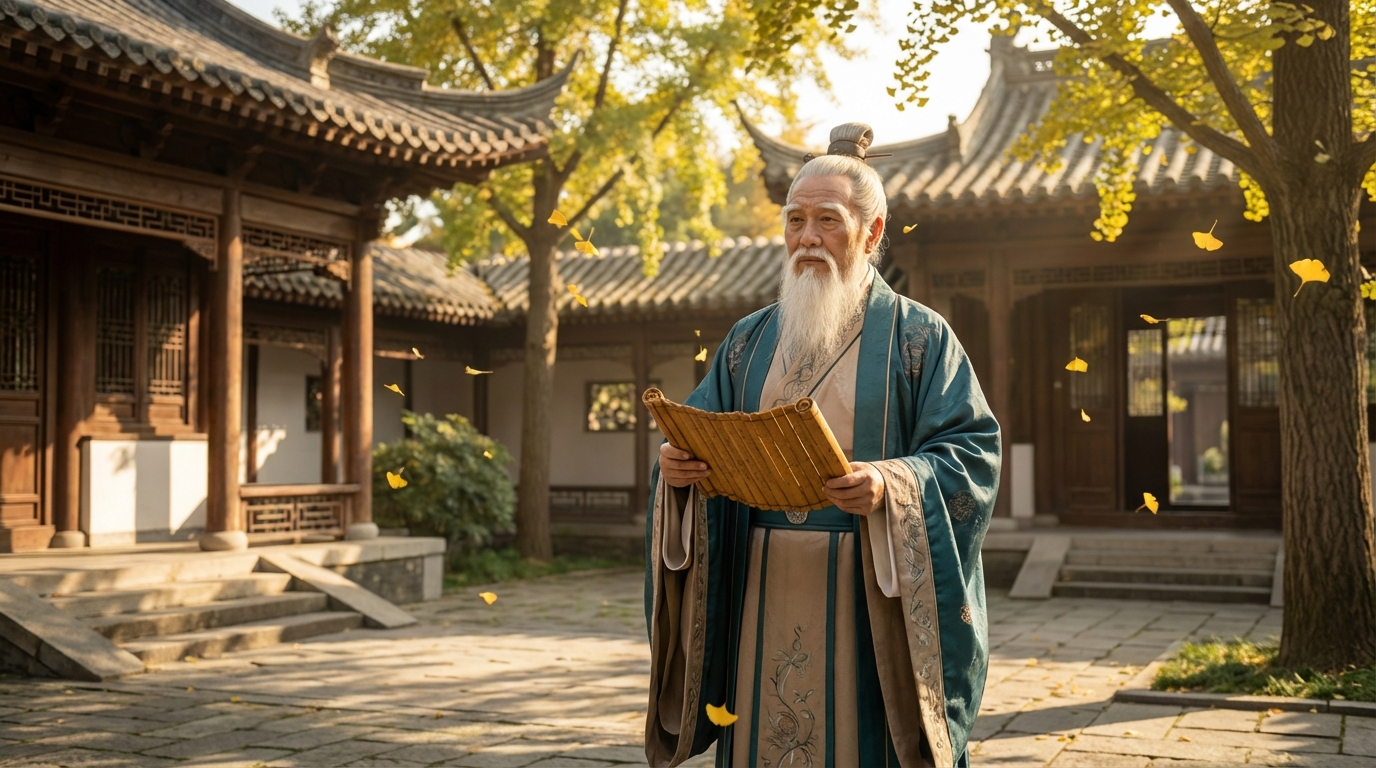
You might associate Eastern philosophy with solitary meditation or mystical enlightenment, but the teachings of Kong Fuzi offer a far more practical path. When you ask exactly what Confucianism is, you uncover the ethical backbone that has held East Asian society together for millennia. Unlike the abstract spirituality of Taoism or Zen, this philosophy focuses entirely on the present moment. It presents Confucius not as a god to be worshipped, but as a teacher who believed that social order begins with your own moral character.
This system invites you to master the balance between inner benevolence and outward ritual. You will discover how specific hierarchical bonds provide a blueprint for handling complex social interactions with grace. By understanding these ancient principles, you gain a timeless framework for cultivating personal virtue and achieving social harmony.
Key Takeaways
- Confucian philosophy balances Ren (inner benevolence) with Li (outward ritual), ensuring that good intentions are effectively expressed through structured social etiquette.
- Social harmony relies on mastering five primary hierarchical relationships, where stability is maintained through mutual responsibility rather than absolute control.
- The ultimate goal of self-cultivation is to become a Junzi, or superior person, who acts out of righteousness and principle rather than personal gain.
- Ethical character is forged through active participation in society and human connection, distinguishing this practical framework from the solitary introspection of other Eastern traditions.
The Twin Pillars of Ren and Li
Central to Confucian thought is Ren, often translated as benevolence or humaneness, which represents your inner capacity for compassion and love. However, Confucius taught that good intentions are insufficient if they remain locked inside your mind without a proper outlet. This is where Li, or ritual propriety, provides the necessary structure for expressing that kindness to the world. You can think of Ren as the soul of a musician and Li as the instrument they play to create music. Without the external forms of etiquette and social grace, your inner virtue lacks a clear medium to reach others effectively.
While adhering to Li might seem like following rigid rules, these social rituals are transformative tools for self-cultivation. When you practice bowing, speaking politely, or honoring your ancestors, you physically enact respect and mold your character. This performative aspect curbs selfish impulses and aligns your personal desires with the greater needs of the community. By mastering these outward forms, you help maintain a harmonious society where everyone understands their role and treats one another with dignity. Consequently, the friction of daily life decreases through shared expectations and mutual courtesy.
Mastering the Five Great Relationships
Confucian ethics rely on the belief that society functions best when everyone understands their specific place in human connection. Confucius identified five primary bonds that serve as the structural foundation for all social interaction. These essential relationships include ruler to subject, father to son, husband to wife, elder brother to younger brother, and friend to friend. Unlike the fluid nature of Taoist philosophy, this system relies on distinct hierarchies where age and status command respect. By accepting your designated role within this framework, you help establish a stable and predictable order that benefits everyone.
While most of these bonds are vertical, they are governed by mutual responsibility rather than absolute control. A father is expected to offer guidance and protection, while the son returns this benevolence with filial piety and loyalty. Even the relationship between friends, the only bond based on equality, requires strict adherence to mutual trust and integrity. You must recognize that holding a position of authority always comes with a corresponding duty to care for those who look up to you. When you uphold your specific obligations, you prevent conflict and nurture a supportive environment.
Viewing your daily interactions through this lens shifts the focus from personal desires to collective well-being. Confucius taught that a well-ordered state is simply a reflection of well-ordered families and interpersonal connections. If you act with propriety as a sibling, parent, or citizen, you strengthen the moral fabric of the entire community. This philosophy suggests that social chaos arises not from external forces, but from individuals failing to honor their specific commitments to others. Ultimately, mastering these five relationships provides the practical guidance you need to achieve social harmony.
Cultivating Character to Become the Junzi
A central goal of Confucian practice is becoming a Junzi, often translated as a “superior person” or “gentleman.” Unlike Western notions of aristocracy where status is inherited by blood, this form of nobility is earned through the rigorous refinement of your character. You are expected to engage in a lifelong process of self-cultivation, constantly polishing your morals to align with virtue. Confucius believed that anyone, regardless of background, holds the potential to achieve this state of excellence through dedicated effort and learning. By focusing on your internal development, you contribute to the stability of the wider world.
To understand this ideal better, look at its opposite, known in the texts as the xiaoren or “small person.” While the small person makes decisions based on personal gain, profit, or convenience, the Junzi acts solely out of righteousness. The superior person seeks harmony rather than mere conformity, standing firm in their principles even when it is difficult. This distinction serves as a daily mirror for your actions, challenging you to ask whether you are driven by self-interest or a commitment to the greater good.
Distinguishing Confucian Ethics from Taoist Flow

While you might be drawn to the Taoist principle of Wu Wei or effortless flow, Confucianism asks you to take a different path through intentional effort. Instead of retreating to nature to find harmony, this philosophy insists that you cultivate virtue within human society. Confucius believed that order does not happen spontaneously; it requires your active participation in rituals and relationships. You can think of Taoism as the unstructured freedom of the natural world, while Confucianism provides the necessary structure for civilization. This distinction shifts your focus from internal acceptance to external responsibility.
When you practice Taoist thought, you view yourself as one small part of a vast cosmos. In contrast, Confucianism defines you specifically by your roles and where you stand in relation to others. It emphasizes that a structured hierarchy is not oppressive but is the framework that allows love and respect to flourish. You are encouraged to polish your character like a gem through discipline rather than leaving it in its uncarved natural state. This focus on deliberate cultivation drives Confucian ethics.
It is helpful to view these two distinct schools not as enemies but as complementary sides of the East Asian soul. Many scholars suggest that you wear your Confucian hat when handling work or family obligations to ensure stability and respect. Then, you might switch to your Taoist robes when seeking personal restoration and spiritual freedom in nature. By balancing these perspectives, you avoid becoming too rigid in your duties or too detached from your responsibilities. Understanding this duality gives you a more complete picture of how to live a balanced life.
Forging Your Character Through Human Connection
While empires rise and fall, the ethical framework laid out by Confucius has survived for over two millennia. You can still see the profound influence of these teachings in the high value placed on education and the deep respect for elders found throughout East Asian cultures today. Unlike the solitary path of meditation often associated with Zen, this philosophy insists that your character is forged primarily through your interactions with others. By emphasizing family cohesion and social responsibility, Confucianism offers a stable anchor in a fragmented world.
Adopting these principles does not require you to abandon your current beliefs. Instead, it invites you to look closely at the quality of your daily relationships. When you approach your interactions with the intention of benevolence and the structure of proper etiquette, ordinary moments transform into opportunities for personal growth. This intentional approach fosters a connection that extends from your immediate family to the broader community. Understanding Confucianism empowers you to find purpose not just in looking inward, but in actively building a harmonious world around you.
Frequently Asked Questions
1. Is Confucianism considered a religion or a philosophy?
You should approach this tradition as a practical ethical philosophy rather than a religion focused on the afterlife. It centers entirely on the present, urging you to create social order through the development of your own moral character.
2. What is the difference between Ren and Li?
Ren refers to your inner benevolence or humaneness, while Li is the ritual propriety that gives that kindness structure. You need both to function well, as Ren is like the soul of a musician and Li is the instrument used to play the music.
3. Why does Confucianism place so much emphasis on rituals?
Social rituals are not merely rigid rules but tools for your self-cultivation. By physically enacting respect through etiquette or polite speech, you mold your character and learn to handle complex social interactions with grace.
4. How does this philosophy differ from Taoism or Zen?
Unlike the abstract spirituality or solitary meditation associated with Taoism and Zen, Confucianism focuses on practical social ethics. It provides you with a blueprint for handling hierarchical bonds and achieving harmony within your community.
5. Do followers of Confucianism worship Confucius as a god?
Confucius is viewed not as a god to be worshipped, but as a wise teacher who offered a path to virtue. His role is to guide you in mastering the balance between inner goodness and outward social responsibility.
6. How can these ancient teachings help me today?
These principles offer you a timeless framework for handling modern relationships with integrity. By understanding the balance of inner virtue and outward respect, you gain a strategy for personal growth that contributes to social harmony.