
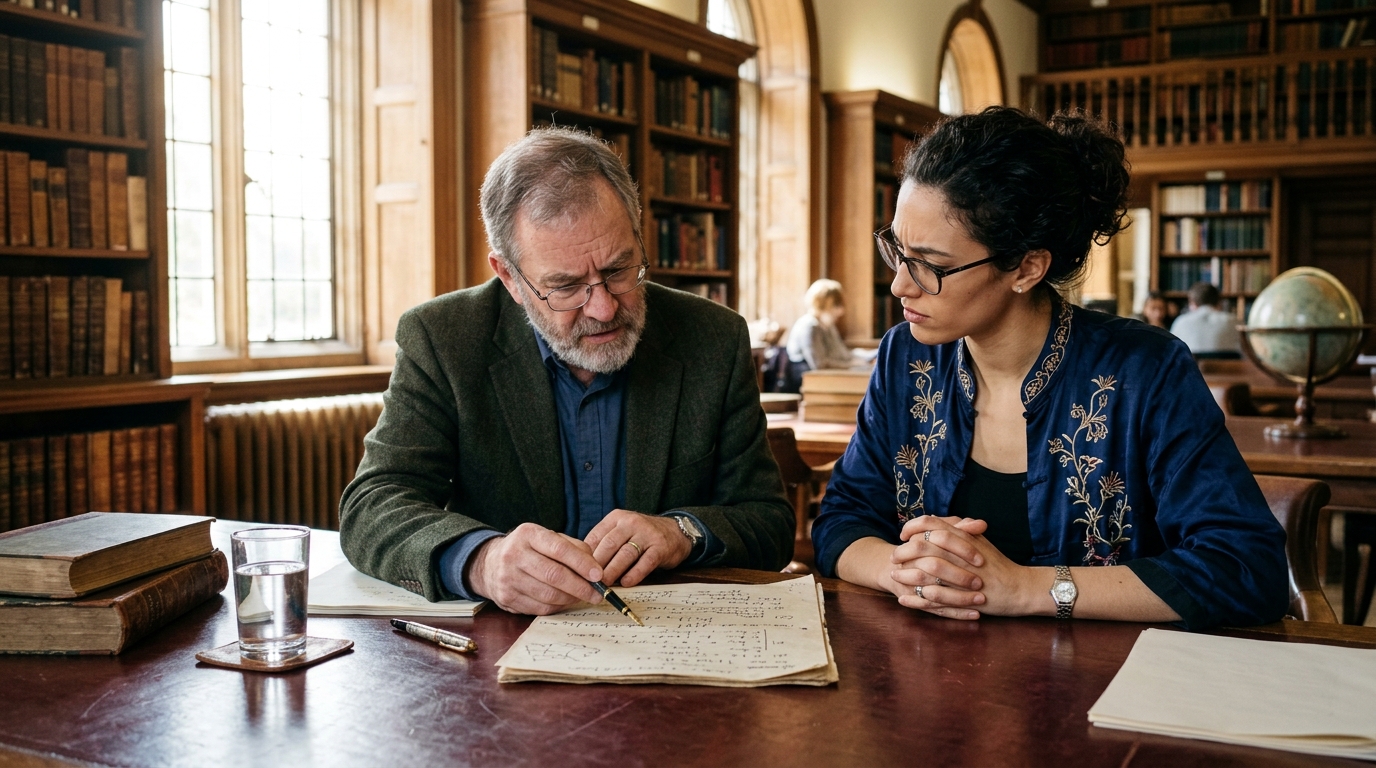
Imagine you’ve spent hours analyzing a complex issue, only to discover that a friend you deeply respect, someone just as smart and well-informed as you, has reached the exact opposite conclusion. This unsettling moment is the heart of epistemic peer disagreement, a challenge that forces you to question the reliability of your own logic. When two people share the same evidence and cognitive skills yet end up at a stalemate, it creates a profound tension between standing your ground and admitting you might be wrong.
Navigating these intellectual standoffs requires more than just confidence; it demands a clear understanding of how we weigh our own certainty against the perspectives of others. You are essentially looking for a rational way to resolve the friction that occurs when two equal minds collide. By exploring the mechanics of cognitive and evidential equality, you can transform these frustrating debates into a structured pursuit of truth.
Key Takeaways
- Epistemic peerhood requires both cognitive equality and evidential equality, meaning you and your counterpart possess similar reasoning skills and have analyzed the exact same set of facts.
- Conciliationism and the ‘Equal Weight View’ suggest that when an intellectual peer disagrees with you, the most rational response is to lower your confidence and meet them in the middle.
- The ‘Steadfast View’ maintains that holding your ground is a form of intellectual integrity, as private intuitions and unique cognitive processing can make it rational to trust your own judgment over social consensus.
- Treating disagreement as a collaborative tool for refinement rather than a personal conflict allows you to identify cognitive biases and pressure-test your assumptions to reach a more accurate version of the truth.
Defining the Epistemic Peer and the Parity Requirement
When you find yourself locked in a debate with someone who seems just as capable as you, you are likely encountering the specific phenomenon of epistemic peerhood. To qualify as a true peer in a philosophical sense, your counterpart must first meet the standard of cognitive equality. This means you recognize that they possess a similar level of intelligence, logical reasoning skills, and intellectual honesty as your own. In these scenarios, you cannot simply dismiss their conclusion as a result of a lapse in judgment or a lack of mental sharpness. Instead, you have to acknowledge that their mental machinery is working just as effectively as yours, which is exactly why their disagreement feels so significant.
The second half of this equation is evidential equality, which ensures that you and your peer are working from the exact same set of facts. It is not enough to be equally smart if one person has access to a secret document or a specific life experience that the other lacks. For a true peer disagreement to occur, you must both have explored the same arguments and weighed the same data with the same level of diligence. When you realize that someone has looked at every single piece of evidence you have and still reached a different conclusion, the social dynamic of the argument shifts. You are no longer just correcting a mistake, but rather facing a deep challenge to your own perspective.
This combination of cognitive and evidential parity creates a unique intellectual tension that demands a thoughtful response. If you truly believe your peer is just as likely to be right as you are, then their disagreement serves as a powerful piece of counter-evidence against your own view. You are forced to ask yourself why two equally equipped minds, looking at the same map, ended up at different destinations. Navigating this parity requirement is what transforms a casual chat into a serious epistemic puzzle. By understanding these two pillars, you can better determine when a disagreement requires you to stand your ground or when it might be time to humble your own convictions.
Conciliationism and the Equal Weight View
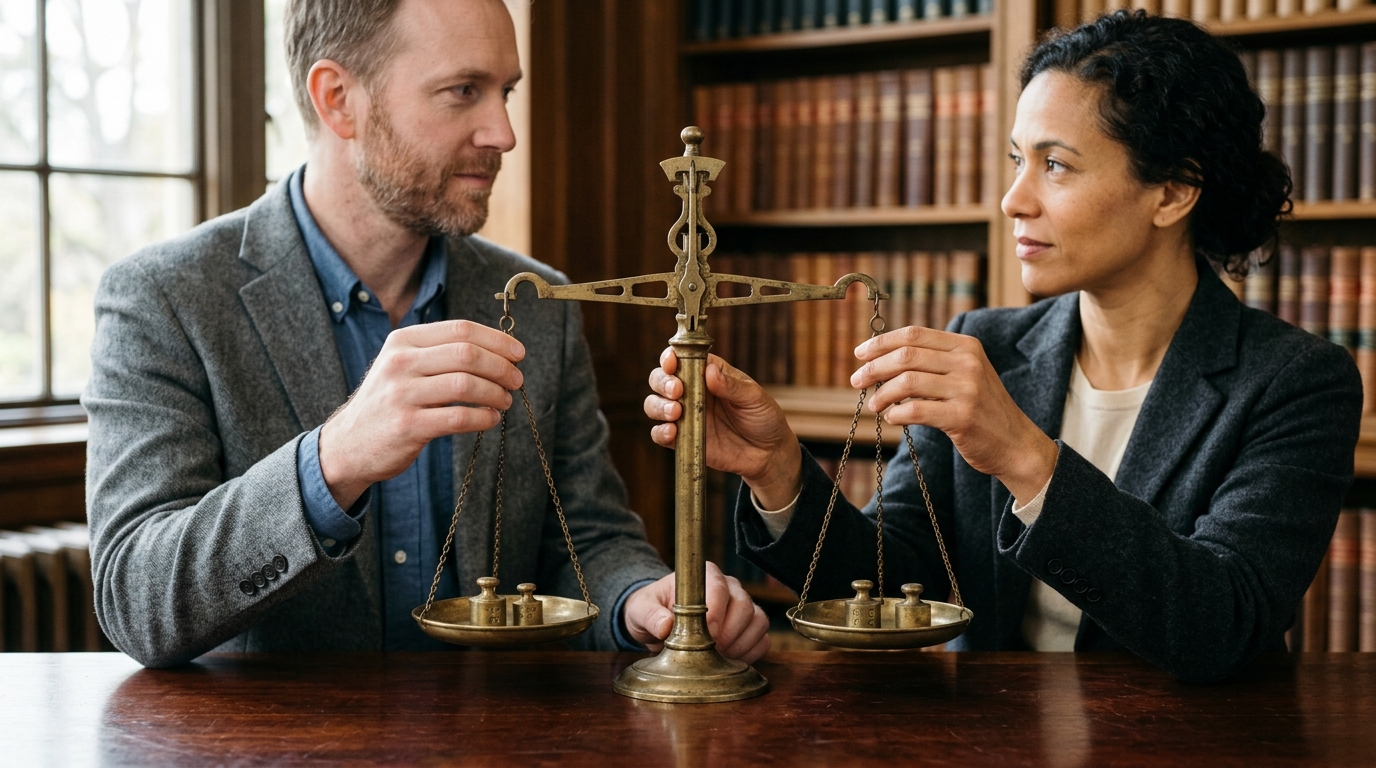
Imagine you find yourself in a heated debate with a friend who is just as sharp, well informed, and unbiased as you are. In the world of social epistemology, this person is your epistemic peer, meaning they have access to the same evidence and possess the same cognitive skills to process it. Conciliationism suggests that when you discover such an intellectual equal disagrees with you, your first instinct should not be to dig in your heels. Instead, this perspective encourages you to treat their differing conclusion as a powerful piece of evidence that you might have made a mistake. By acknowledging their competence, you realize that your own certainty is no longer as secure as it felt moments ago.
The Equal Weight View takes this humble approach a step further by offering a specific mathematical way to handle the conflict. It argues that you should give your peer’s opinion exactly as much weight as your own, effectively splitting the difference between your two positions. If you were eighty percent confident in a theory and your peer is only twenty percent confident, the rational move is to meet in the middle at fifty percent. This shift prevents you from falling into the trap of intellectual egoism, where you might unfairly favor your own perspective simply because it is yours. Lowering your confidence in this way reflects a commitment to the truth rather than a desire to be right.
Adopting this conformist stance can feel uncomfortable because it requires you to set aside your personal conviction in favor of a more balanced outlook. However, this method acts as a vital safeguard against the blind spots and cognitive biases that affect even the most brilliant minds. When you treat a peer’s challenge as a reason to recalibrate, you transform a social conflict into an opportunity for greater accuracy. This practice does not mean you lack principles, but rather that you value the search for truth over the comfort of certainty. Embracing this level of intellectual modesty ensures that your beliefs remain grounded in a shared reality rather than an isolated bubble.
Steadfastness and the Rationality of Holding Your Ground
While many philosophers suggest you should split the difference when an equal disagrees with you, the steadfast view offers a compelling alternative that honors your own intellectual agency. This perspective argues that you are not always required to abandon your conviction just because a peer sees things differently. You might possess private evidence, such as internal intuitions or subtle insights, that is difficult to articulate but remains incredibly relevant to your conclusion. By maintaining your position, you acknowledge that your first person perspective carries a unique weight that cannot be easily balanced out by a third person observation.
Holding your ground does not mean you are being stubborn or irrational in the face of conflict. Instead, it recognizes that even between equals, the way you process a specific set of facts is deeply tied to your personal cognitive background. You might perceive a particular nuance in the evidence that your peer simply overlooks, making it rational for you to trust your own judgment over a collective average. This approach protects the diversity of thought necessary for intellectual progress, as it prevents everyone from defaulting to a middle ground that might be further from the truth.
Ultimately, the rationality of being steadfast depends on the depth of your reflection and the quality of your internal reasoning. When you have carefully scrutinized your own biases and still feel the pull of your original conclusion, you are exercising a form of intellectual integrity. You are essentially betting on the idea that your private grasp of the truth is more reliable than the social pressure to conform. This allows you to navigate the social dynamics of disagreement without losing the personal insights that define your unique perspective on the world.
Applying Epistemic Humility to Real World Conflict

When you encounter a high stakes disagreement in politics or ethics, your first instinct might be to assume the other person is simply missing a key piece of information. Epistemic peer disagreement challenges this assumption by asking how you should respond when you realize your opponent is just as informed and capable as you are. Recognizing someone as an epistemic peer means admitting they have access to the same evidence and possess the same cognitive tools to process it. This realization can be a humbling experience because it forces you to confront the possibility that your own logic might be flawed. By adopting this framework, you can move away from personal attacks and toward a more rigorous evaluation of why two rational minds reached different conclusions.
Navigating these intellectual conflicts with grace requires a shift from a defensive posture to one of collaborative inquiry. In fields like science or medicine, peer disagreement often serves as a catalyst for deeper research rather than a reason for immediate dismissal. You can apply this same professional rigor to your personal and social life by slowing down and asking what specific interpretation of the evidence led to the rift. Intellectual humility does not mean you must abandon your convictions, but it does require you to lower your confidence levels when an equal mind disagrees. This approach fosters a culture of mutual respect where the goal is to find the truth rather than to win an argument at any cost.
Practicing this level of intellectual grace helps you stay grounded when discussing sensitive topics like social justice or economic policy. Instead of viewing a peer as an obstacle to be overcome, you can view their perspective as a necessary check on your own cognitive biases. This mindset allows you to navigate complex debates with a sense of curiosity that can actually strengthen your own understanding of the subject. When you treat disagreement as a tool for refinement, you transform a potential conflict into an opportunity for personal growth and clearer thinking. Ultimately, acknowledging the intelligence of your peers makes you a more effective and persuasive communicator in any high stakes environment.
Finding Clarity Through Intellectual Humility
Recognizing that an intellectual equal can look at the same evidence and reach a different conclusion is a humbling realization that fundamentally shifts your approach to conflict. When you acknowledge your own fallibility, a heated argument transforms from a battle of wills into a collaborative investigation. You stop viewing the other person as an obstacle to be overcome and start seeing them as a vital check on your own cognitive blind spots. This shift in perspective allows you to move past the frustration of being challenged and toward a more rigorous understanding of the truth. By embracing the possibility that you might be wrong, you open the door to a more nuanced and accurate worldview.
Engaging with an epistemic peer offers a unique opportunity to refine your reasoning through the lens of someone just as capable as you are. Instead of retreating into defensive certainty, you can use the disagreement to pressure test your assumptions and identify gaps in your logic. This process of intellectual friction is one of the most powerful tools available for seeking the truth in a complex world. It encourages a level of intellectual honesty that is rarely found in echo chambers where everyone agrees. Ultimately, treating disagreement as a signal for further inquiry rather than a personal affront helps you build a more resilient and well informed belief system.
Frequently Asked Questions
1. What exactly makes someone an epistemic peer?
You can consider someone an epistemic peer when they possess a similar level of intelligence, logical reasoning skills, and intellectual honesty as you. To truly meet this standard, they must also have access to the exact same information and evidence you used to reach your conclusion.
2. Why is it so difficult to ignore a peer’s disagreement?
When you encounter a peer who disagrees, you can no longer blame the friction on a lack of intelligence or missing information. Because you recognize their mental machinery is as effective as your own, their opposing view serves as a powerful signal that your own reasoning might be flawed.
3. What is the parity requirement in intellectual debates?
The parity requirement is the dual standard of cognitive and evidential equality that defines a true peer relationship. It ensures that both you and your counterpart are starting from the same facts and processing them with equal mental sharpness, which creates a genuine rational stalemate.
4. Can I still consider someone a peer if they lack certain facts?
No, because epistemic peerhood requires evidential equality. If one of you has access to data or experiences that the other does not, the disagreement is likely a result of that information gap rather than a fundamental difference in how you process the truth.
5. How should I respond when a peer reaches a different conclusion?
You should treat the disagreement as a reason to re-evaluate your own certainty and check for potential biases. Since you respect your peer’s intellectual capacity, their dissent provides a structured opportunity for you to refine your logic and pursue a more accurate understanding of the issue.
6. Is epistemic peerhood just about being equally smart?
Intelligence is only half of the puzzle, as intellectual honesty and the quality of your reasoning tools also play a major role. You must be able to trust that your peer is working toward the truth with the same level of integrity and care that you are applying to the problem.