
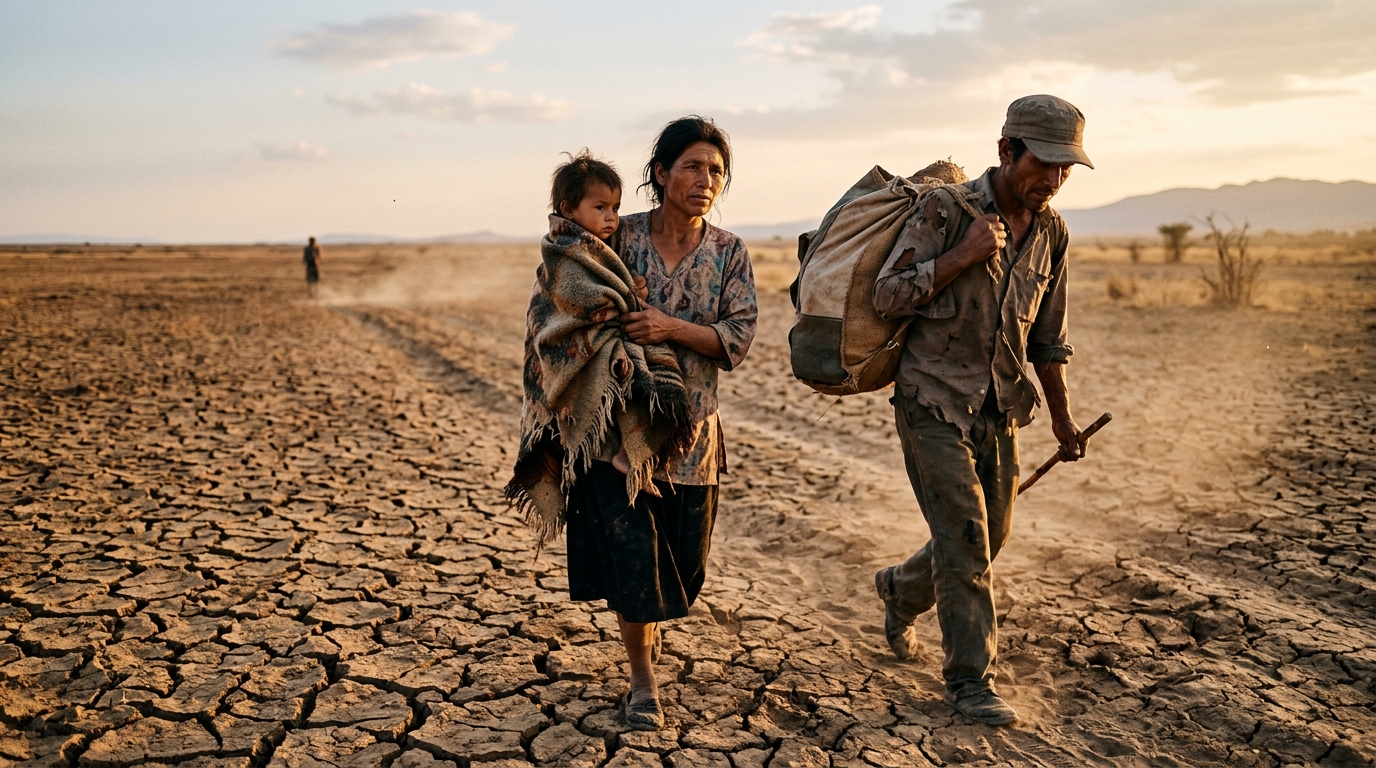
Imagine being forced to pack up your life and leave your ancestral home, not by choice, but because rising seas or severe droughts left you no alternative. This is the reality for millions of people worldwide, making climate migration justice one of the most critical human rights frameworks of our time. You might already know that vulnerable groups, such as Small Island Developing States and Indigenous communities, face the worst climate impacts, but the core issue comes down to systemic equity. Simply put, the populations bearing the heaviest burdens of environmental displacement contributed the least to global greenhouse gas emissions.
Addressing this historical imbalance requires looking beyond emergency relief to uphold two fundamental rights: the right to stay and the right to move with dignity. Protecting the right to stay demands global climate funding for local adaptation, allowing communities to build resilience and safely remain in their homelands. Yet, when relocation becomes unavoidable, justice requires ensuring that displaced individuals can migrate legally, securely, and with their human rights intact. By understanding these dual pillars, you can see how global policy must shift to honor historical responsibility and protect human dignity on a warming planet.
Key Takeaways
- Climate migration justice addresses a fundamental global inequality: communities facing the worst environmental displacement contributed the least to global emissions, creating a clear moral and financial obligation for high-emitting nations.
- Effective climate justice requires balancing two core pillars: providing adaptation funding so vulnerable communities have the right to stay, and establishing legal pathways for dignified mobility when remaining is no longer viable.
- Evolving loss-and-damage mechanisms and international legal frameworks are shifting climate displacement away from short-term charity toward formal accountability and enforceable human rights.
- Global policy must reframe climate displacement as a proactive form of climate adaptation and a human rights imperative rather than a border security crisis.
Historical Emissions and the Disproportionate Burden
When you trace the origins of today’s climate crisis, you immediately encounter a striking paradox of global inequality. For over a century, heavy industrialization and fossil fuel consumption in wealthy nations drove global economic growth while pumping billions of tons of greenhouse gases into the atmosphere. Yet, if you look at where the most devastating impacts occur today, the map shifts dramatically toward regions that contributed the least to this crisis. Low-income nations, Small Island Developing States, and Indigenous communities historically produced a mere fraction of global carbon emissions. Despite this minimal carbon footprint, these very populations are now losing their ancestral lands, water sources, and livelihoods to rapidly rising sea levels and extreme weather.
To truly understand climate migration justice, you have to look beyond simple weather patterns and recognize the profound loss of political sovereignty involved. When rising tides swallow an island nation or persistent droughts make an entire region uninhabitable, citizens are not merely relocating to a new neighborhood. You are witnessing the erosion of sovereign states, cultural heritage, and fundamental self-determination. Recent global shifts in humanitarian policy rightly demand that international bodies view this displacement through the lens of human rights rather than mere environmental misfortune. When you lose your homeland because of actions taken halfway across the world, compensation and dignified legal protections become matters of strict international justice.
This historical imbalance places an inescapable moral and political obligation on the world’s highest-emitting nations. If you consider the principles of basic fairness, those who created the risk must share in the cost of the remedy. Climate migration justice insists that wealthy countries provide robust financial support so vulnerable communities can build resilient infrastructure and stay in place whenever possible. When staying is no longer safe, this framework ensures that displaced people can move across borders with legal recognition, dignity, and preserved rights. By acknowledging this historical debt, you help shift the global narrative from passive charity to real accountability and systemic equity.
Balancing the Right to Stay and Dignified Mobility

When you look at the reality of climate displacement today, you quickly realize that climate migration justice is not a one-size-fits-all equation. At its core, this framework demands that communities least responsible for global emissions receive the financial and structural support required to remain in their ancestral homelands safely. You can think of this as securing the right to stay, which relies heavily on high-emitting nations fulfilling their historical obligations through robust adaptation funding. By investing in resilient coastal infrastructure, sustainable agriculture, and localized flood protections, vulnerable regions can defend their cultural heritage and economic stability. Ultimately, true equity begins by giving people the genuine choice to build a secure future right where they are, rather than forcing an unwanted departure.
At the same time, you must also recognize that local adaptation has its limits, especially as sea levels rise and extreme weather permanently reshapes habitability. When staying home is no longer viable, the focus must shift toward guaranteeing dignified mobility through legal pathways and internationally protected human rights. Too often, displaced populations face severe bureaucratic hurdles or legal ambiguity because traditional frameworks fail to explicitly cover environmental displacement. You can advocate for progress by supporting policies that establish clear climate visas, cross-border resettlement programs, and labor opportunities that treat moving populations with respect. When relocation becomes inevitable, treating migration as a proactive, rights-based strategy ensures that people do not simply survive, but thrive in their new surroundings.
Balancing these two imperatives requires you to view climate migration through a lens of global justice rather than isolated emergency responses. By pairing local financial compensation with expanded international mobility frameworks, the global community can honor both human agency and historical responsibility. You can see how this dual strategy prevents forced displacement while simultaneously removing the panic and suffering often associated with chaotic, unplanned moves. As the humanitarian conversation increasingly focuses on the specific rights of displaced populations, this balanced approach ensures that human dignity remains paramount regardless of geography. Navigating this path allows you to champion a world where staying is sustainable, moving is safe, and basic rights are universal.
Loss Damage and the Evolving Legal Framework
When you look at traditional humanitarian responses, climate displacement was often treated as an unpredictable tragedy that required emergency charity. Today, international legal shifts are transforming that narrative by centering accountability and historical responsibility. Through evolving loss and damage mechanisms, the global community recognizes that communities least responsible for greenhouse gas emissions should not bear the financial and human costs alone. Instead of viewing displaced populations as passive recipients of temporary aid, these frameworks redefine them as rights-bearing citizens entitled to formal justice and legal redress. This fundamental shift establishes that securing financial compensation for lost homelands is not an act of generosity, but a matter of legal obligation.
You can see this transition gaining momentum through international advisory opinions and treaty negotiations that challenge old political boundaries. For vulnerable regions like Small Island Developing States and low-income coastal nations, these legal precedents provide critical leverage on the world stage. These legal avenues empower communities to demand support for both in-situ adaptation, which protects their right to remain in their ancestral lands, and dignity-focused migration programs when staying is no longer safe. By linking loss and damage directly to core human rights standards, international law ensures that cultural preservation and economic survival are protected. As a result, affected populations gain concrete legal tools to hold historically high-emitting nations accountable for systemic loss.
As you follow these evolving legal developments, you will notice that the conversation has permanently expanded beyond basic environmentalism. You are witnessing a profound philosophical transformation where climate mobility is understood as a defining issue of modern global equity. This elevated legal recognition guarantees that climate-displaced individuals are active participants in shaping international policy rather than forgotten statistics. Moving forward, your understanding of human rights must account for how these loss-and-damage mechanisms restructure international solidarity. Ultimately, this new legal era offers a blueprint for a world where global citizenship means equitable protection for everyone, regardless of geography.
Why You Must Rethink Climate Displacement as Justice
As you examine the evolution of political philosophy, it becomes clear that climate displacement is no longer just a distant environmental forecast. Recent humanitarian shifts have thrust the rights of uprooted populations into the center of international discourse, demanding that you look at border policies through the lens of fundamental human rights. When you consider how low-emitting nations and vulnerable coastal communities bear the heaviest burdens of global warming, the philosophical debate shifts from abstract ethics to urgent political accountability. Traditional frameworks of sovereignty must adapt to honor both the right to stay in one’s homeland through adaptation finance and the right to seek safe refuge when remaining is no longer viable. Recognizing this reality allows you to see that true climate justice requires aligning global policy with basic human dignity.
Reframing global mobility as a shared moral imperative challenges you to rethink how nations distribute responsibility for displaced peoples. When severe weather patterns and rising seas force communities to move, treating cross-border migration solely as a security issue fails to address the underlying historical equities at play. You can help lead this conversation by viewing migration not as a crisis to be managed, but as a necessary and legitimate form of climate adaptation that demands collective action. Supporting equitable climate finance for impacted regions alongside dignified pathways for those who must relocate creates a far more resilient global system. Ultimately, your engagement with these complex ideas helps build a world where human rights do not end at a nation’s border, ensuring that safety and stability remain accessible to all.
Frequently Asked Questions
1. What exactly is climate migration justice?
Climate migration justice is a human rights framework that addresses the core inequality of the climate crisis. When you look at environmental displacement through this lens, you recognize that the people facing the worst impacts contributed the least to global emissions. It advocates for systemic equity by holding high-emitting nations accountable while protecting vulnerable communities.
2. Who is most affected by climate-induced displacement?
Vulnerable populations, particularly in Small Island Developing States, low-income nations, and Indigenous communities, face the most immediate threats from rising seas and extreme droughts. These communities lose their ancestral homelands despite producing a mere fraction of historical carbon emissions. Their displacement highlights a profound global imbalance that demands targeted financial and legal support.
3. What does the right to stay mean in practice?
The right to stay focuses on providing vulnerable communities with the resources they need to remain safely in their homelands. When you support this right, you advocate for global climate funding dedicated to local adaptation and infrastructure resilience. It ensures that moving away from home remains a choice rather than an unavoidable necessity forced by environmental degradation.
4. What does it mean to move with dignity?
Moving with dignity means that when climate displacement becomes unavoidable, individuals are granted legal protections, secure passage, and full human rights in their new home. Justice requires moving away from temporary emergency responses toward proactive legal pathways. This ensures that displaced individuals are welcomed and supported rather than left vulnerable during relocation.
5. Why are historical emissions so important to climate justice?
Historical emissions highlight the fundamental responsibility wealthy nations carry for today’s environmental disruptions. For over a century, heavy industrialization in developed countries drove economic growth while releasing billions of tons of greenhouse gases into the atmosphere. Recognizing this history allows you to see why high-emitting nations have a duty to fund global adaptation and migration efforts.
6. How can international policy better protect climate migrants?
Global policy must shift from short-term emergency relief to long-term structural justice and formal legal recognition. By establishing clear international frameworks for climate displacement, nations can guarantee legal rights, social support, and path-to-residency options. When you support these policy shifts, you help create a global system that honors historical responsibility and protects human dignity.
7. How does climate migration justice differ from standard disaster relief?
Standard disaster relief provides short-term emergency aid after a crisis occurs, whereas climate migration justice addresses the root causes and long-term rights of displaced people. It emphasizes proactive adaptation funding before disaster strikes and secures legal status when relocation happens. By prioritizing systemic equity rather than temporary charity, it creates lasting solutions for vulnerable populations.