

You have likely experienced those moments where life feels like a relentless cycle of wanting, achieving, and then immediately searching for the next source of satisfaction. This persistent sense of lack is the cornerstone of Arthur Schopenhauer’s thoughts on suffering, a philosophy suggesting that pain isn’t a glitch in the system, but the system itself. By viewing existence through this lens, you can begin to see why your deepest desires often lead to a feeling of emptiness rather than lasting peace.
At the heart of this struggle is what Schopenhauer calls the Will-to-Live, a blind and irrational force that drives everything you do. Because this internal engine has no final destination or ultimate goal, you are often left in a state of constant striving that can never be fully satisfied. Understanding this metaphysical root allows you to move past the frustration of individual setbacks and recognize the universal patterns that govern the human experience.
Key Takeaways
- Human existence is driven by the Will-to-Live, a blind and irrational force that creates a state of perpetual striving and ensures that satisfaction is always temporary.
- Life functions like a pendulum, swinging constantly between the sharp pain of unfulfilled desire and the hollow boredom of achieving a goal.
- True relief from the cycle of suffering is found through aesthetic contemplation, which allows for temporary detachment from personal needs, and through compassion born from recognizing the shared struggles of others.
- Accepting suffering as the natural baseline of existence fosters resilience and releases the exhausting pressure to maintain artificial happiness.
The Blind Striving Of The Will To Live
You might often feel like your desires are a moving target, where the moment you achieve a goal, a new craving immediately takes its place. According to Schopenhauer, this is not a personal flaw but the result of a metaphysical force he calls the Will to Live. He describes this Will as a blind and irrational energy that drives everything in the universe without any ultimate purpose or endpoint. Because this force is fundamentally unquenchable, you find yourself in a state of constant striving that can never lead to permanent satisfaction. This perspective suggests that your feelings of restlessness are actually the engine of existence itself, pushing you forward through an endless cycle of wanting.
When you look closely at this cycle, you can see how it creates a balance between pain and boredom that defines much of the human experience. Schopenhauer argues that when your desires are frustrated, you feel the sharp sting of suffering, yet when they are quickly satisfied, you fall into a state of hollow apathy. This creates a pendulum effect where you are constantly swinging between the distress of longing and the emptiness of having nothing left to pursue. By recognizing the Will as an impersonal force, you can start to understand why happiness often feels so fleeting and hard to maintain. This grounded approach does not promise easy answers, but it offers a realistic framework for navigating the inherent challenges of being alive.
Life As A Pendulum Between Pain And Boredom
To understand Arthur Schopenhauer, you must first confront his view that life is fundamentally driven by an irrational, restless force he called the Will. You can think of this Will as a blind hunger that exists within you, constantly pushing you to desire, achieve, and acquire more. Because this internal drive is never truly satisfied, you often find yourself in a state of perpetual striving where the next goal always seems like the key to happiness. However, Schopenhauer argues that this is a cosmic trick, as the moment you satisfy one desire, a new one immediately takes its place. This cycle ensures that suffering is not just an occasional misfortune, but the very baseline of your human experience.
This constant pursuit of satisfaction inevitably leads to a phenomenon Schopenhauer famously described as the pendulum of life. When you are chasing a goal, you feel the sharp sting of want and the pain of deprivation, yet the moment you succeed, the thrill quickly evaporates into a hollow sense of boredom. You have likely experienced this after a major purchase or a career milestone, where the initial excitement is replaced by a strange, empty feeling of “what now?” This hollow sense of boredom is, for Schopenhauer, just as painful as the original longing because it reveals the inherent lack of meaning in the objects we pursue. You are essentially caught in a loop, swinging back and forth between the agony of desire and the crushing weight of spiritual emptiness.
While this perspective may seem bleak, it offers a refreshing dose of realism by validating why you might feel unfulfilled despite your outward successes. Instead of wondering why you aren’t perpetually happy, you can recognize that your restlessness is a natural byproduct of the human condition. Schopenhauer’s philosophy suggests that by acknowledging the futility of constant striving, you can begin to find small moments of peace through art, contemplation, or compassion. Understanding this pendulum doesn’t mean you should give up on your goals, but it does allow you to manage your expectations and seek a more grounded way of living. This shift in perspective helps you move away from the frantic search for permanent satisfaction and toward a more balanced, honest relationship with your own desires.
Understanding Suffering As Our Natural Positive State
While you might naturally view happiness as the goal of life, Schopenhauer invites you to consider a much more grounded and sobering reality. He argues that pain is the only positive state because it is the fundamental, ever-present reality of our existence. In his view, pleasure is merely negative because it only exists as the temporary absence of a desire or a lack. When you satisfy a hunger, you are not gaining a new positive state, but rather briefly removing the suffering of being empty. This perspective challenges the modern obsession with chasing highs by suggesting that our baseline is constant striving rather than peace.
You can understand this better by looking at the metaphysical engine Schopenhauer calls the Will-to-Live. He describes this Will as a blind, irrational force that drives every living thing to survive and reproduce without any ultimate purpose or end goal. Because your desires are endless, you are caught in a cycle where fulfilling one wish only leads to the next moment of boredom or a brand new craving. You are essentially a servant to an aimless pulse that ensures you remain in a state of perpetual wanting. By recognizing this, you can stop feeling like a failure for not being happy all the time and instead see your struggles as the natural human condition. This realization contrasts sharply with later thinkers who focused on becoming who you are through the active creation of personal values and the embrace of life’s vitality.
This shift in perspective provides a realistic framework for navigating the inherent challenges of your daily life. Instead of viewing suffering as a glitch in an otherwise perfect world, you can begin to see it as the very fabric of being alive. This realization does not have to be depressing, but can actually be quite liberating for your mental well-being. By lowering your expectations for constant bliss, you develop a more resilient and compassionate approach to yourself and others. You start to find a quiet kind of wisdom in acknowledging that life is difficult, which allows you to appreciate the small moments of relief for exactly what they are.
Finding Quiet Through Aesthetic Contemplation And Compassion
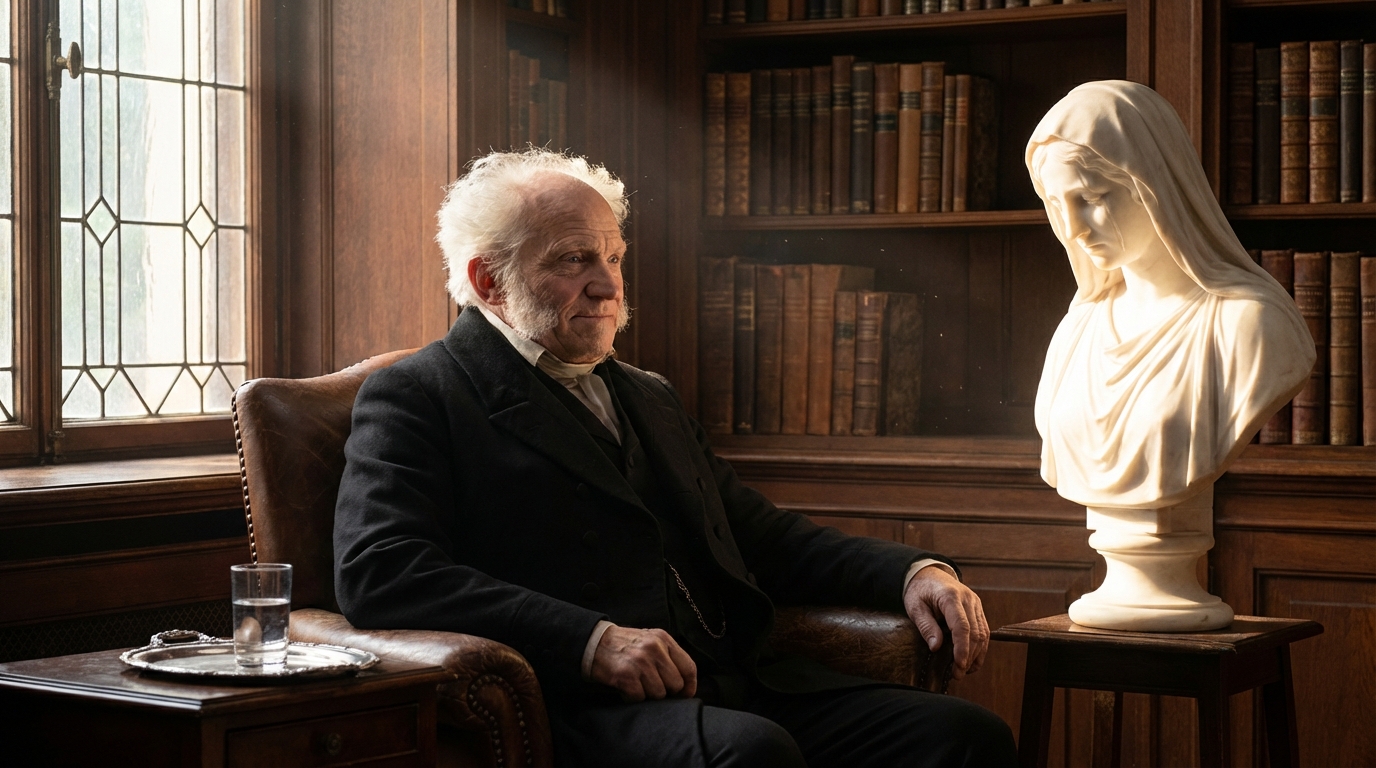
While Schopenhauer’s view of the Will as a source of endless striving may seem daunting, he offers a profound sanctuary through the experience of aesthetic contemplation. When you lose yourself in a masterpiece of art or the complex layers of a symphony, you are temporarily stepping outside the relentless cycle of desire and frustration. In these moments, you cease to be a slave to your individual needs and instead become a pure, knowing subject. This detachment provides a rare sense of peace because the object of your attention no longer serves a personal purpose. By focusing on the beauty of the world rather than what you can gain from it, you find a quiet stillness that the everyday world rarely permits.
True relief from this sense of struggle expands further when you transition from personal observation to a deep, shared empathy for others. Schopenhauer argues that once you recognize everyone is caught in the same cycle of the Will, your perspective shifts from competition to profound compassion. You begin to see the struggles of your neighbors not as separate events, but as reflections of your own internal experience. This realization breaks down the barriers of the ego and fosters a genuine kindness that transcends mere social politeness. By acknowledging this universal bond of suffering, you find a meaningful way to navigate the world with a softened heart and a clearer mind.
Choosing to embrace this pessimistic yet realistic framework allows you to find a unique kind of grounded hope. Rather than chasing an impossible state of permanent happiness, you can focus on minimizing the friction of existence through art and empathy. These tools do not delete the challenges of life, but they provide the necessary intervals of rest that make the journey manageable. You gain the ability to look at the world with honesty, accepting its flaws while cherishing the moments of quiet beauty you encounter. This balanced approach provides a sturdy foundation for living a life of depth, dignity, and quiet resilience.
Finding Resilience Through Radical Honesty
Embracing Schopenhauer’s honest look at hardship offers you a powerful tool for navigating the complexities of modern life with grounded expectations. By acknowledging that striving and dissatisfaction are inherent to the human condition, you can release the exhausting pressure to maintain a state of constant, artificial happiness. This perspective does not aim to breed despair, but rather to provide a realistic foundation that buffers you against the shock of inevitable setbacks. When you view challenges as a natural part of the Will-to-Live, you gain a sense of calm resilience that optimistic slogans often fail to provide. You may find that exploring the philosophy of happiness for a more grounded perspective actually makes the moments of peace and beauty in your life feel more significant and earned.
Recognizing the universality of suffering also fosters a deeper sense of connection between you and the rest of humanity. Schopenhauer believed that once you see the same blind striving in others that you feel within yourself, your natural response shifts from competition to compassion. This shared vulnerability serves as a bridge, reminding you that every person you encounter is navigating their own version of the same fundamental struggle. By adopting this outlook, you can move through the world with a gentler spirit and a more patient heart toward those around you. Ultimately, this philosophy invites you to replace the isolation of individual desire with a profound, collective empathy that enriches your daily interactions.
Frequently Asked Questions
1. What exactly is the Will to Live?
The Will to Live is a blind and irrational force that drives everything you do, acting as the internal engine of your existence. Because this energy has no final destination or ultimate goal, it keeps you in a state of constant striving that can never be fully satisfied.
2. Why do I feel empty even after achieving my goals?
You feel this emptiness because your desires are a moving target driven by a metaphysical force that is fundamentally unquenchable. The moment you achieve a goal, a new craving immediately takes its place, ensuring that satisfaction remains temporary.
3. Is suffering a sign that something is wrong with my life?
No, suffering is not a glitch in the system but the system itself. By viewing your life through this lens, you can recognize that pain and restlessness are universal patterns rather than personal flaws or individual setbacks.
4. How does Schopenhauer explain the relationship between pain and boredom?
Your life moves like a pendulum between the sharp sting of suffering when your desires are frustrated and the dull ache of boredom when they are met. This cycle creates a balance that defines much of the human experience, leaving little room for lasting peace.
5. Can I ever truly satisfy the Will to Live?
You cannot fully satisfy this force because it is an aimless energy without an endpoint. Understanding this allows you to move past the frustration of constant wanting and recognize the inherent nature of the human condition.
6. What is the benefit of understanding this pessimistic philosophy?
Gaining this perspective helps you move past the frustration of individual disappointments by identifying the universal roots of your struggle. It positions you to navigate life with a deeper sense of clarity regarding why lasting satisfaction feels so elusive. This clarity is often found in Schopenhauer’s reflections on the nothingness and suffering of life, which highlight the futility of our constant pursuits.