
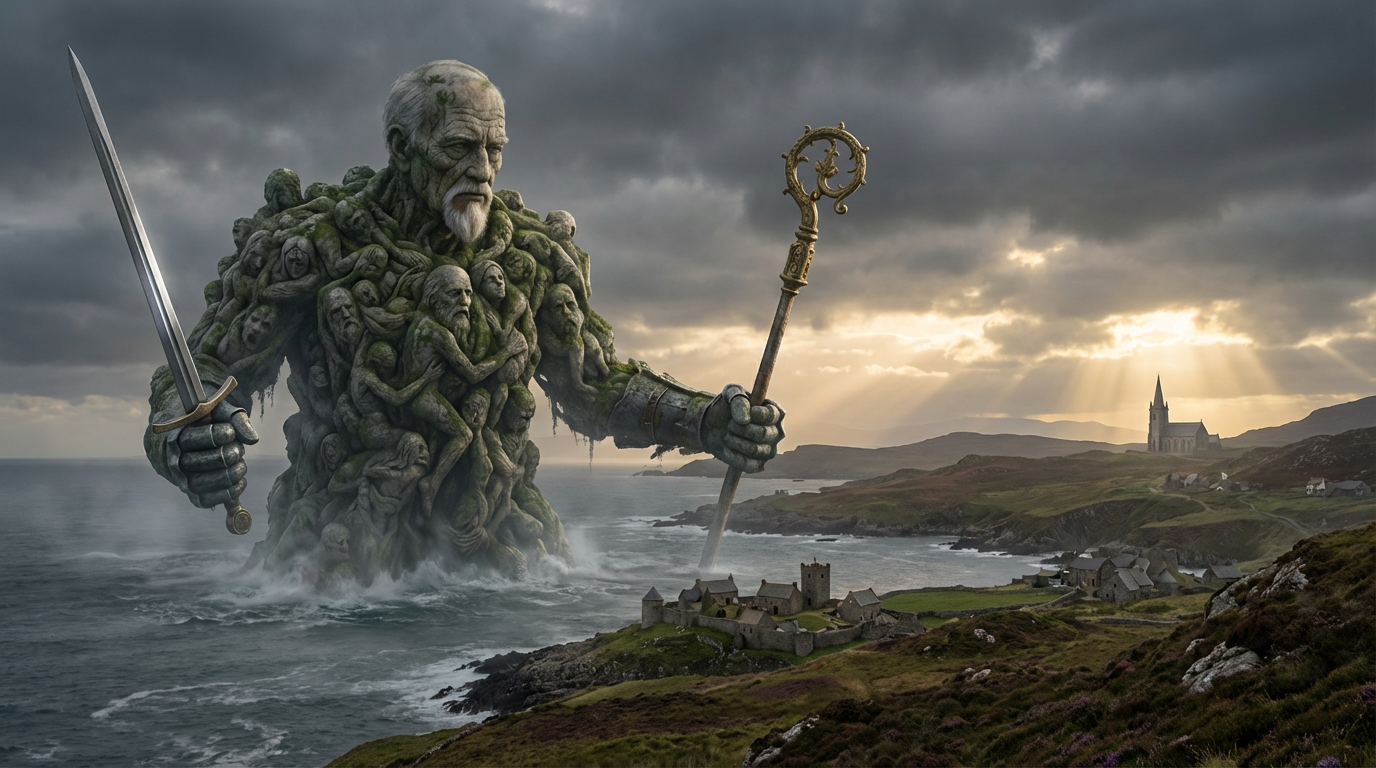
Imagine living in a world where you can never truly lower your guard, because every neighbor is a potential threat and there is no law to protect you. This chaotic state of nature is the chilling starting point for thomas hobbes leviathan, a masterpiece of political thought forged in the fires of the English Civil War. You might recognize his famous warning that life without a central power is solitary, poor, nasty, brutish, and short, a vision that forces you to question what you would sacrifice for the sake of simple security.
By exploring this text, you are examining the very origins of the social contract and the justification for modern government. Hobbes challenges you to consider whether you would trade your absolute freedom for the safety provided by an unquestioned sovereign power. It is a provocative look into human psychology and power dynamics that remains remarkably relevant to how you view authority and order today.
Key Takeaways
- The State of Nature is a chaotic ‘war of all against all’ where the absence of a central authority renders life solitary, poor, nasty, brutish, and short.
- To escape perpetual fear and violence, individuals must enter a social contract, surrendering their absolute natural rights to a single sovereign power in exchange for collective security.
- The Leviathan sovereign requires absolute, undivided authority over law, justice, religion, and property to effectively prevent civil war and maintain social order.
- The primary purpose of the state is to prioritize stability and safety over individual liberty, as even a restrictive government is preferable to the terrors of anarchy.
The Brutal Reality of the State of Nature
To understand Thomas Hobbes’s vision of government, you must first imagine a world where no laws or authorities exist to keep the peace. Hobbes refers to this hypothetical scenario as the State of Nature, a place where every individual possesses an absolute right to everything, including the bodies of others. Without a central power to overawe the population, you would find yourself in a constant state of insecurity where your neighbors are your greatest threats. In this environment, the lack of a common judge means that every person must rely on their own strength and wit for survival. This creates a psychological atmosphere dominated by the perpetual fear of a violent end at the hands of another.
If you lived in this lawless reality, your daily existence would be defined by what Hobbes famously calls a war of all against all. Because humans are driven by competition for resources, diffidence for safety, and a desire for glory, cooperation becomes impossible without a sovereign to enforce agreements. You would likely find that industry, culture, and science cannot flourish because there is no guarantee that the fruits of your labor will be protected. In such a chaotic vacuum, life is not a search for self-discovery or liberty, but rather a desperate struggle for preservation. Hobbes concludes that without the heavy hand of an absolute ruler, your life would inevitably be solitary, poor, nasty, brutish, and short.
This grim perspective serves as the ultimate justification for an authoritarian social contract that prioritizes order above all else. You are asked to think critically and consider whether the absolute freedom of the State of Nature is actually a curse that leads to total destruction. By highlighting the horrors of anarchy, Hobbes suggests that you should be willing to trade nearly all your personal rights to a Leviathan in exchange for basic security. This trade-off is the foundation of his political theory, positing that even the most restrictive government is preferable to the terrifying uncertainty of total independence. It is a sobering reminder that, for Hobbes, the primary purpose of the state is to save you from the inherent violence of your own nature.
Trading Freedom for Security via Social Contract
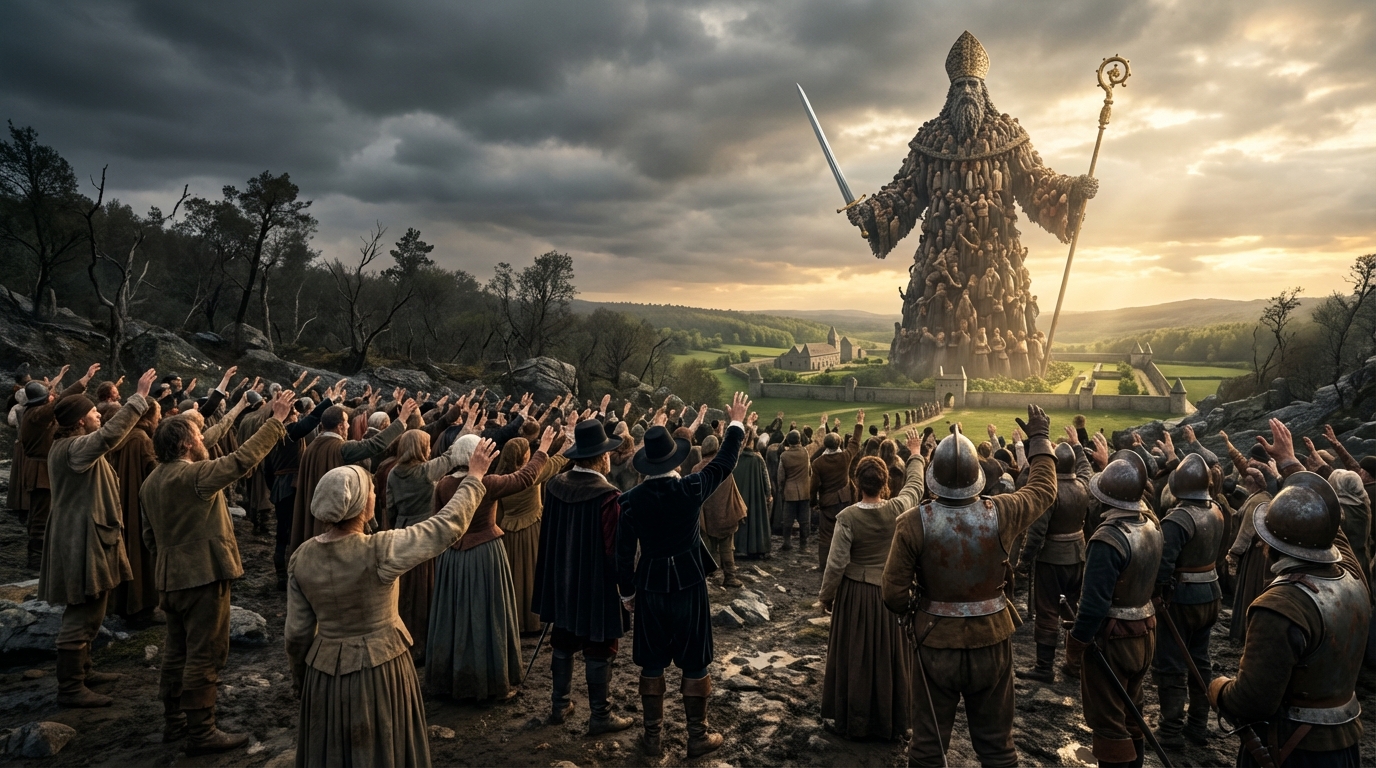
In the world of Thomas Hobbes, your understanding of a stable society begins with a start realization about human nature. He invites you to imagine a state of nature where no laws exist and every individual possesses an absolute right to everything, including your own life. Without a central authority to keep the peace, you would find yourself in a constant state of fear and competition against your neighbors. Hobbes famously argues that in this lawless environment, your life would inevitably be solitary, poor, nasty, brutish, and short. To escape this violent chaos, you must eventually seek a way to trade your dangerous natural freedom for the promise of collective safety.
The solution to this perpetual conflict is the social contract, a theoretical agreement where you and your fellow citizens decide to lay down your individual rights. By entering this pact, you are not just making a promise to one another, but you are collectively authorizing a single power to act on your behalf. This entity, which Hobbes calls the Leviathan, becomes the absolute sovereign with the total authority needed to enforce laws and maintain order. You essentially surrender your personal autonomy to this ruler in exchange for the protection of your life and property. It is a pragmatic, albeit authoritarian, trade-off designed to ensure that the horrors of civil war never return to your doorstep.
While modern democratic ideals often emphasize liberty and justice, Hobbes provides a necessary counterpoint by prioritizing security above all else. You might find his preference for an absolute ruler unsettling, yet his logic rests on the idea that even a harsh government is better than the terror of no government at all. This perspective forces you to consider the heavy price of peace and the extent to which you would sacrifice your rights to feel safe. By positioning the sovereign as the ultimate judge of what is necessary for public defense, Hobbes establishes a foundation for state power that remains a cornerstone of political theory. His work serves as a reminder that the stability of your daily life often relies on a deep, underlying agreement to uphold the authority of the state.
The Absolute Power of the Leviathan Sovereign
When you examine Hobbes’s vision for the state, you quickly realize that he leaves no room for half-measures or shared governance. To prevent the terrifying chaos of the state of nature, you must transfer your individual rights to a single, undivided authority known as the Leviathan. This ruler holds absolute authority over every facet of public life, including the creation of laws and the administration of justice. By concentrating power in one place, Hobbes argues that you eliminate the internal friction and power struggles that typically lead to civil war. You are essentially trading your personal autonomy for the guarantee of collective safety and a stable social order.
The reach of the Leviathan extends far beyond mere policing, as the sovereign also maintains total control over religion and the distribution of property. You might find it surprising that Hobbes insists the state must dictate public worship and doctrine to prevent religious factions from tearing the country apart. Property rights are not seen as natural or inherent, but rather as grants from the sovereign that can be altered to ensure the survival of the commonwealth. This authoritarian structure is designed to be airtight, leaving no legal ground for you or any other subject to rebel. In this framework, the only way to avoid a life that is nasty and brutish is to accept a ruler whose word is final and absolute. This rigid system illustrates how different branches of philosophy, such as ethics and political theory, intersect to address the problem of human conflict.
The Price of Your Peace and Security
Ultimately, Thomas Hobbes’s Leviathan forces you to confront a difficult question about the price of peace and the necessity of authority. While modern democratic values often prioritize individual liberty above all else, Hobbes serves as a sobering reminder that these freedoms are only possible within a stable society. By emphasizing the horrors of the state of nature, he challenges you to consider whether a strong, even authoritarian, government is a necessary evil to prevent social collapse. His work remains a cornerstone of political theory because it refuses to romanticize human nature, instead offering a pragmatic and sometimes chilling defense of absolute sovereignty.
You can see the enduring legacy of Hobbesian thought in contemporary debates regarding national security and civil liberties. Whenever a society chooses to increase surveillance or restrict certain behaviors in the name of public safety, it is operating within the framework Hobbes established centuries ago. His preference for order over liberty provides a vital counterpoint to more idealistic views of governance, pushing you to recognize the fragile balance between personal freedom and collective security. Understanding his perspective helps you appreciate the complexities of the social contract and the trade-offs required to maintain a functioning commonwealth.
As you reflect on the impact of this masterpiece, it becomes clear that Hobbes’s insights into fear and power are as relevant today as they were during the English Civil War. His insistence that a divided house cannot stand continues to influence how we perceive the role of the state in preventing internal conflict. While you might find his leanings toward absolutism uncomfortable, his rigorous logic demands that you justify your own beliefs about rights and justice. By engaging with his authoritarian perspective, you gain a more well rounded understanding of the forces that shape our modern political world and the enduring quest for stability.
Frequently Asked Questions
1. What exactly is the State of Nature?
The State of Nature is a hypothetical scenario where there are no laws, governments, or central authorities to maintain order. In this world, you have an absolute right to everything, which unfortunately leads to a constant, terrifying war of all against all.
2. Why did Hobbes describe life as solitary, poor, nasty, brutish, and short?
He used these famous words to illustrate the outcome of living without a common power to keep people in awe. Without security, you cannot engage in industry, culture, or stable society because your primary focus is always on surviving the next violent threat.
3. What is the Social Contract in Hobbesian terms?
The Social Contract is the agreement you make with others to give up your absolute natural rights in exchange for peace and protection. By collectively transferring your power to a sovereign, you create the security necessary to live a stable life.
4. Who or what is the Leviathan?
The Leviathan is the name Hobbes gives to the sovereign power or state that holds absolute authority over society. You can think of it as an artificial person or a powerful sea monster that uses its overwhelming strength to prevent civil war and maintain order.
5. Why does Hobbes believe humans are naturally competitive?
He argues that you are driven by three main causes of quarrel: competition for gain, diffidence for safety, and glory for reputation. These natural human impulses make it impossible for you to live peacefully with others unless there is a power that forces you to follow the rules.
6. Is the sovereign power allowed to be a tyrant?
Hobbes argues that an absolute sovereign is necessary to prevent the total chaos of the State of Nature, which he considers the worst possible outcome. While the power is vast, its primary purpose is your protection, and you generally trade your political voice for the guarantee of personal safety.