
The Yijian 2.0 launch marks a significant step in how AI systems are tested for safety, reliability, and accountability. Rather than measuring performance alone, this AI security evaluation platform examines how models respond to risks, explain their decisions, and follow responsible-use requirements. If you want to understand whether an AI system is ready for real-world use, Yijian 2.0 offers a broader way to assess it.
As generative AI becomes part of everyday products and critical workflows, weaknesses can remain hidden until they cause harm. Yijian 2.0 helps organizations identify vulnerabilities, diagnose model behavior, and strengthen protections before risks reach users. Its launch reflects a broader shift from asking whether AI works to asking whether it can be trusted.
Key Takeaways
- Yijian 2.0 is an AI ethics and security review agent designed to evaluate other AI systems for safety, robustness, explainability, harmful behavior, and compliance—not to function as a general-purpose chatbot.
- The platform enables organizations to identify vulnerabilities, diagnose model failures, and strengthen safeguards before AI systems reach users or affect critical workflows.
- Automated evaluation can improve the speed, scale, and consistency of AI oversight, but its conclusions depend on human-defined standards, training data, and governance assumptions.
- Yijian 2.0 should support—not replace—human accountability, with transparent evidence, independent testing, meaningful appeals, and human judgment required for consequential ethical decisions.
Yijian 2.0 Launch Introduction
Yijian 2.0 was reportedly unveiled at the 2026 World AI Conference in Shanghai as an AI ethics and security review agent. Developed through collaboration between a major financial technology organization and a leading university, it is designed to test AI systems for safety, robustness, explainability, and compliance. It is not intended to serve as a general-purpose chatbot. That distinction makes the launch more significant than a routine model release. You are looking at an attempt to build an AI system that can examine how other AI systems behave, identify risks, and help developers address them.
The central question is whether automated evaluation can become a trustworthy form of AI governance. Yijian 2.0 may detect harmful outputs, inconsistent safeguards, or failures to follow rules more quickly and consistently than human reviewers working alone. Yet ethical judgment involves context, competing values, and assumptions about acceptable behavior, so technical accuracy is not the same as moral authority. As you consider the launch, ask not only whether Yijian 2.0 can assess other machines, but also who defines its standards, how its conclusions can be challenged, and what happens when its judgment is wrong.
Yijian 2.0 Ethics Review Agent

Yijian 2.0 was presented at the 2026 World AI Conference in Shanghai as a proposed AI ethics review agent, placing automated governance at the center of international debate. Instead of generating answers for everyday users, it would examine how other AI systems behave across real or simulated situations. You could think of it as an independent reviewer that looks for safety risks, unfair outcomes, misleading explanations, privacy concerns, and possible compliance failures. Its assessments could help human teams decide whether a system is ready for deployment, requires additional safeguards, or should be redesigned. The larger question is whether machines can reliably assess the conduct of other machines without reproducing hidden assumptions or biases.
That role sets Yijian 2.0 apart from a general-purpose chatbot, which is built primarily to respond to prompts, and from a standard model-testing tool, which may focus on performance, accuracy, or technical robustness. An ethics review agent would connect test results to broader judgments about responsibility, transparency, fairness, and likely effects on people. For example, it might examine whether an automated decision system treats comparable users differently, explain why a harmful output occurred, and flag evidence that the system does not meet a stated policy. You should still view its conclusions as decision support rather than a final moral verdict, because human oversight remains essential when values, context, and competing rights are involved. Yijian 2.0 therefore represents not only a new security instrument, but also a test of how much authority society is willing to give automated reviewers.
Yijian 2.0 Automated Governance
Yijian 2.0, unveiled at the 2026 World AI Conference in Shanghai, places automated AI ethics review at the center of the governance conversation. You can think of it as an evaluation agent designed to test whether another AI system produces harmful outputs, makes biased decisions, behaves deceptively, exposes private information, or violates defined safety and compliance standards. Rather than relying only on occasional human audits, the system could examine large volumes of interactions and flag risks more quickly. That speed may help organizations identify weaknesses before they affect users at scale.
Its promise lies in making oversight more consistent, especially when the same tests can be applied across different models, use cases, and updates. You might use the results to compare performance, investigate why a system failed, or direct human reviewers toward the most serious concerns. Still, automated review does not eliminate the need for human judgment. Yijian 2.0 can assess conduct only according to the values, rules, benchmarks, and training data built into it, so a narrow or biased framework could produce confident but incomplete conclusions.
The launch therefore raises a larger question: can one machine effectively assess the ethics of another? Yijian 2.0 may strengthen governance by turning abstract principles into repeatable checks, but those checks must remain transparent, regularly tested, and open to challenge. As you evaluate its role, consider not only how accurately it detects risk, but also who defines harm, fairness, privacy, and acceptable behavior. Automated governance works best as a decision-support layer that improves accountability, rather than as a final authority on ethics.
Machines Policing Machines
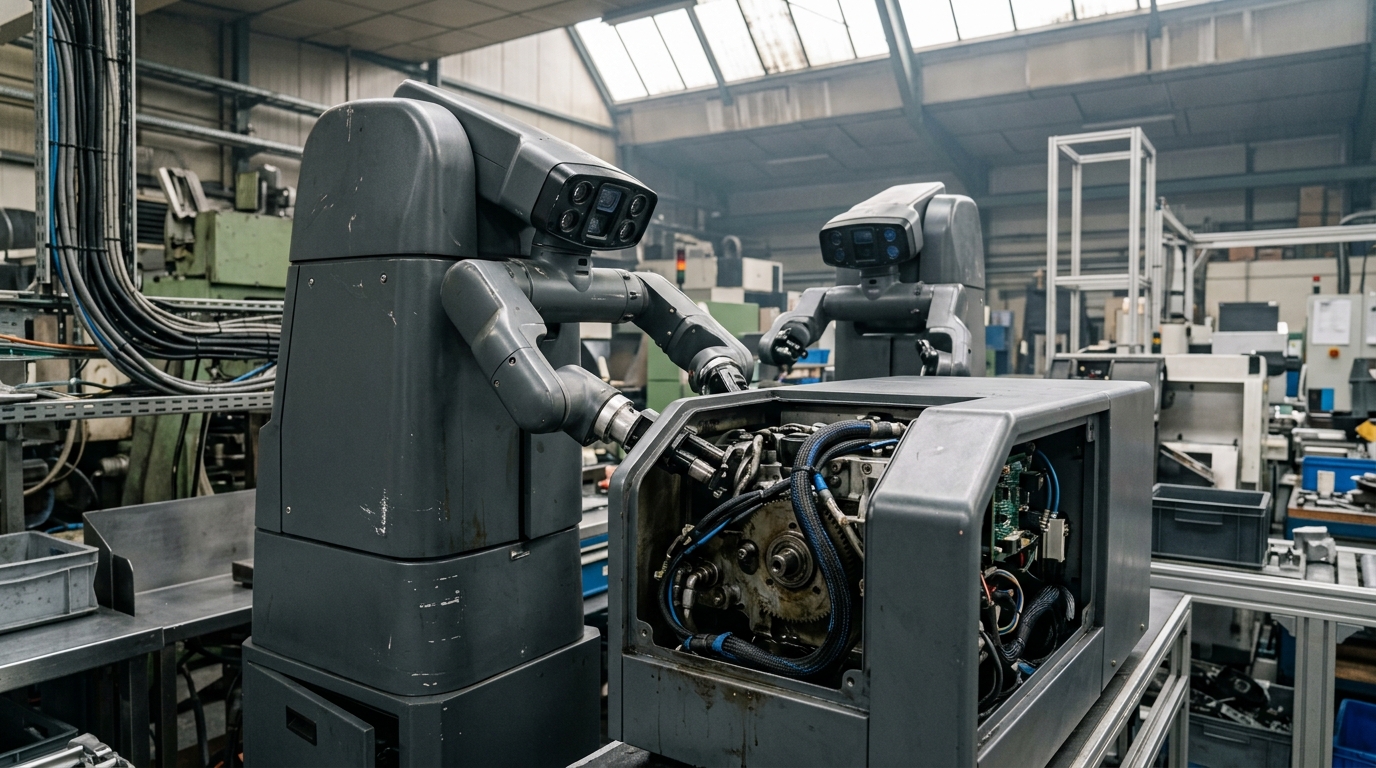
At the 2026 World AI Conference in Shanghai, the Yijian 2.0 launch placed a difficult question at the center of AI governance: can one machine reliably judge another? Designed as an AI ethics review agent, Yijian 2.0 evaluates systems for safety, robustness, explainability, and compliance. For you, the appeal is clear: automated oversight can test far more outputs, scenarios, and updates than human reviewers could manage alone. That scale could help identify harmful behavior before it reaches users, especially in high-volume applications.
Yet machine-based oversight can create a circular form of accountability if the evaluator inherits the assumptions, training data, or blind spots of the systems it reviews. A model may flag offensive language or obvious security failures while missing subtler discrimination, manipulation, or unequal effects on vulnerable groups. Its conclusions also require explanation, since a score without understandable evidence does little to support fair decisions or meaningful appeals. You should therefore treat Yijian 2.0 as an instrument for scrutiny, not an unquestionable moral authority.
Human review remains essential when an evaluation involves context, competing values, or potential harm that cannot be reduced to a technical rule. Machines can compare outputs against policies and detect patterns, but recognizing why a decision humiliates, excludes, or endangers someone may require lived experience and moral judgment. The strongest model of oversight is collaborative, with automated systems handling scale and people examining assumptions, exceptions, and consequences. Yijian 2.0 makes that partnership more practical while reminding you that efficient judgment is not necessarily ethical understanding.
Yijian 2.0 International Impact
Yijian 2.0 could broaden the global debate over whether AI can responsibly evaluate other AI systems. Presented as an ethics and security review agent, it is designed to test safety, robustness, explainability, and compliance rather than simply generate content. For you, the important shift is that oversight becomes partly automated, raising a difficult question: can a machine reliably judge the risks and moral boundaries of another machine? The answer may shape future discussions about independent review, human accountability, and the limits of algorithmic governance.
Governments may view the launch as a possible model for enforcing AI rules at scale while also examining how its design reflects China’s policy environment and regulatory priorities. Organizations could welcome faster testing and clearer compliance checks, but they may also worry about opaque criteria, data access, and whether one jurisdiction’s standards can be applied across borders. Researchers are likely to focus on reproducibility, bias, explainability, and the possibility that automated evaluators might reinforce assumptions built into their training and operating frameworks. These differing reactions could encourage policymakers to develop shared technical standards for AI audits, risk reporting, and human review.
Public trust will depend less on the novelty of Yijian 2.0 than on whether people can understand and challenge its decisions. If the system helps identify harmful behavior while preserving transparent evidence and meaningful human oversight, it could support greater confidence in cross-border AI cooperation. If its judgments appear politically shaped, inaccessible, or impossible to appeal, the launch could deepen concerns about automated governance and digital sovereignty. As you follow the international response, the central issue is not simply whether machines can assess machines, but who defines the rules, verifies the results, and remains accountable when the system gets them wrong.
Yijian 2.0 Launch Conclusion

Yijian 2.0 marks an important step in the development of AI safety and governance. Unveiled at the 2026 World AI Conference in Shanghai, the system is designed to evaluate other AI systems for safety, robustness, explainability, and compliance. For you, its significance lies not only in what the agent can diagnose, but also in the possibility of using machines to assess machine behavior. That approach could make reviews faster and more consistent, especially as AI systems become too complex for purely manual oversight. It also raises a difficult question: can an automated evaluator judge ethical risks without reproducing the assumptions and blind spots of its designers?
The launch represents a technical achievement and a social test at the same time. If you are expected to trust Yijian 2.0, you need to know how it reaches conclusions, what evidence it uses, and how its evaluations are challenged or corrected. Independent testing should examine whether the system performs reliably across languages, industries, and unfamiliar situations, while human decision-makers must remain accountable for consequential outcomes. Its credibility will ultimately depend on transparency, independent evaluation, and clear human responsibility rather than technical sophistication alone. Most importantly, the values guiding its decisions must be visible, open to debate, and worthy of the authority society may give them.
Yijian 2.0 Redefines AI Safety Reviews
The Yijian 2.0 launch at the 2026 World AI Conference in Shanghai highlights a significant shift in how you might think about AI safety. Rather than acting as a general-purpose chatbot, this AI ethics review agent is designed to examine other AI systems for risks involving safety, robustness, explainability, and compliance. Its purpose is to identify problematic behavior, clarify why it occurs, and support improvements before those systems affect real users. In that sense, Yijian 2.0 treats automated oversight as an essential part of responsible AI development.
The launch also raises a deeper question: can machines reliably judge the morality and safety of other machines? You can view Yijian 2.0 as a practical safeguard, but its assessments still depend on human-defined standards, training data, and governance decisions. Automated review may improve consistency and scale, yet it cannot remove the need for transparency, independent scrutiny, and human accountability. Ultimately, Yijian 2.0 is important not only for what it can detect, but also for prompting you to consider who should define ethical AI and how those judgments should be enforced.
Frequently Asked Questions
1. What is the Yijian 2.0 launch?
The Yijian 2.0 launch introduces an AI ethics and security review agent designed to evaluate other AI systems. It focuses on safety, reliability, robustness, explainability, and compliance rather than acting as a general-purpose chatbot.
2. Where and when was Yijian 2.0 reportedly unveiled?
Yijian 2.0 was reportedly unveiled at the 2026 World AI Conference in Shanghai. Its launch highlights growing interest in tools that can assess whether AI systems are ready for responsible real-world use.
3. What does Yijian 2.0 evaluate?
Yijian 2.0 evaluates how AI systems respond to risks, explain their decisions, follow safeguards, and comply with responsible-use requirements. It can also help identify harmful outputs, inconsistent protections, and weaknesses in model behavior.
4. How can Yijian 2.0 help organizations?
You can use Yijian 2.0 to identify vulnerabilities and diagnose problematic model behavior before an AI system reaches users. Its findings can guide developers as they strengthen safeguards, improve reliability, and address compliance concerns.
5. How is Yijian 2.0 different from a standard AI benchmark?
A standard benchmark usually measures performance on defined tasks, such as accuracy or speed. Yijian 2.0 takes a broader approach by examining whether an AI system is safe, explainable, robust, and aligned with responsible-use expectations.
6. Can Yijian 2.0 determine whether an AI system is ethical?
Yijian 2.0 can provide structured evidence about safety risks, policy violations, and potentially harmful behavior, but it cannot serve as the final authority on ethics. Ethical judgments require context, human oversight, and careful consideration of competing values that automated evaluation may not fully capture.
7. Why is the Yijian 2.0 launch important for AI governance?
The launch reflects a shift from asking only whether AI works to asking whether it can be trusted. By making safety and accountability part of the evaluation process, Yijian 2.0 supports a more practical approach to governing AI before failures cause harm.
8. Does Yijian 2.0 replace human reviewers?
No, Yijian 2.0 is best understood as a support tool rather than a replacement for human judgment. It may improve the speed and consistency of testing, while human reviewers remain essential for interpreting context, weighing values, and deciding what action is appropriate.