

Climate engineering ethics in 2026 centers on solar radiation modification (SRM), a set of proposed methods to reflect sunlight and temporarily cool Earth. Only a few outdoor experiments have been run so far, and the U.S. Government Accountability Office reports that technologies for deployment at climate-significant scales remain immature. For policymakers weighing a trial, the ethical questions arrive long before any equipment does.
Current rules are patchy. U.S. law requires reports to NOAA at least 10 days before a covered activity, yet NOAA collects those reports without regulating them, and Florida makes a prohibited atmospheric release a third-degree felony. The UN Environment Programme has also argued that SRM does not address the root cause of human-driven climate change, which makes the moral stakes of any trial hard to ignore.
Key Takeaways
- Before you back any solar radiation modification trial, require sponsors to publish their protocols, funding sources, and monitoring data, because transparency is what lets reviewers check promised benefits against possible harms.
- Solar radiation modification cannot address the root cause of human-driven climate change, since stratospheric aerosol injection and marine cloud brightening leave carbon dioxide and greenhouse gas buildup untouched and the cooling lasts only as long as the intervention continues.
- Under the Weather Modification Reporting Act and 15 C.F.R. Part 908, a report to NOAA is due at least 10 days before a covered activity, but NOAA collects these reports without regulating them, so you should never treat a filing as an approval.
- You can judge a small outdoor experiment by checking its design against five criteria (scientific rigor, safety, usefulness, engagement, and transparency) and asking whether it answers a real scientific question or only builds toward deployment.
- Cost figures such as the 2018 scenario’s estimate of $2 to $2.5 billion per year for stratospheric aerosol injection over its first 15 years rest on hypothetical assumptions, so you should ask which assumptions drive the total and whether monitoring and a safe shutdown plan are included.
What Solar Radiation Modification Is and Why Experts Call It No Fix
Solar radiation modification, or SRM, is a family of proposed methods that would reflect a slice of incoming sunlight back into space and lower surface temperatures for a while. Two approaches dominate the debate. Stratospheric aerosol injection (SAI) would release reflective particles high in the atmosphere, mimicking the cooling that follows large volcanic eruptions. Marine cloud brightening (MCB) would spray fine sea-salt particles into low clouds over the ocean so they reflect more light.
Neither method removes carbon dioxide or slows the buildup of greenhouse gases. A May 2026 working paper calls SRM speculative and argues that current science does not support it as a viable climate response, because it leaves the root cause of human-driven climate change untouched. That gap is why many experts treat SRM as a way to buy time rather than a fix.
The cooling is also temporary. It lasts only as long as the reflective material stays in the air and the intervention continues, so an abrupt stop could allow warming to rebound quickly. Any society that began SRM would face long-term dependence on repeated interventions, with no easy exit.
The engineering is far from ready. A 2018 Harvard-reported scenario estimated that stratospheric aerosol injection could cost about $2–2.5 billion per year over its first 15 years, but the deployment it modeled was hypothetical and highly uncertain. Real delivery at that scale would depend on hardware and logistics that have not yet been built.
Outdoor testing has been minimal. Only a handful of outdoor experiments have been run, and one planned U.S. experiment was cancelled amid safety or ethics concerns. Small field tests cannot show how the whole climate system would respond, which is why the distance between a trial and a deployment remains wide.
What Unintended Harms Should Worry Policymakers Most?
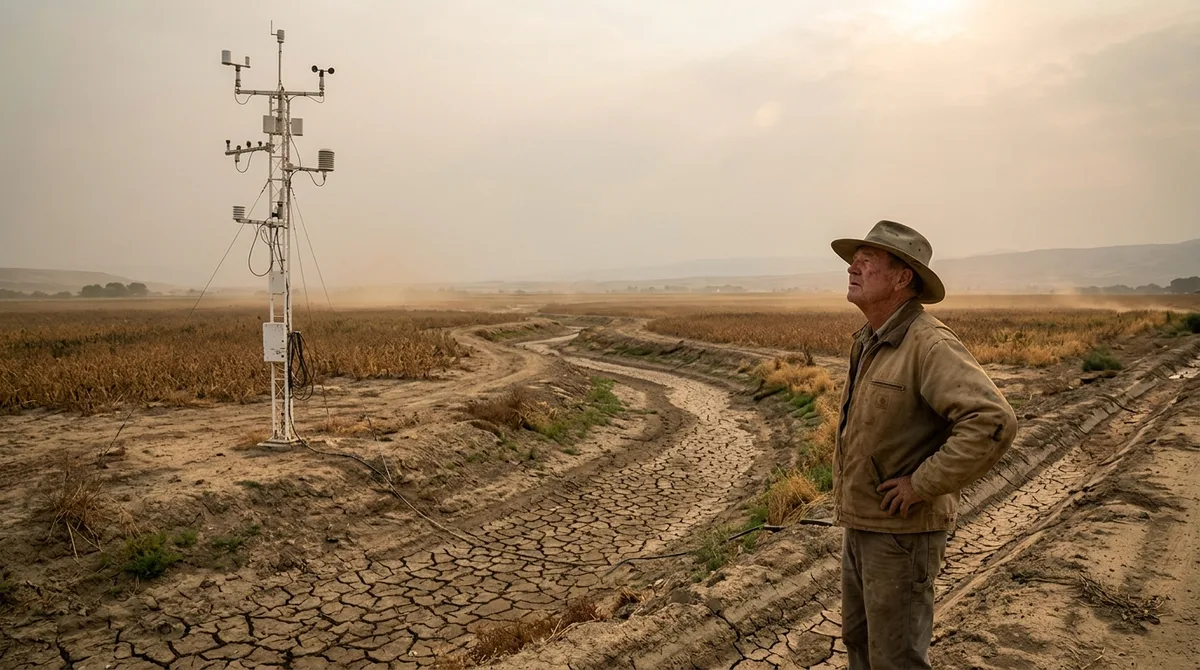
The harms that should worry policymakers most are the ones that change who bears risk and how governments behave, not only what happens in the sky. The UN Secretary-General’s Scientific Advisory Board warned that SRM could cause uneven cooling and climate variability, so one region might cool sharply while another sees shifted rainfall or altered seasons.
Moral hazard is the quieter danger. Once a cooling tool is available, governments may be tempted to delay cutting greenhouse-gas emissions, because the warming they can see looks managed. The temptation grows if the public believes the problem is being handled.
Dependence raises the stakes further. If a society began SRM and then stopped abruptly, the rapid rebound in temperatures could be dangerous. That means the decision to start may lock in obligations that future governments cannot easily escape, even if they never wanted the program.
Effects are also uncertain and uneven across regions. A project designed to cool the planet on average could still change rainfall patterns in farming areas that never agreed to host it. Those communities could carry the risks while the benefits flow elsewhere.
Ecosystems raise similar questions. The Convention on Biological Diversity noted in decision XI/20 that no geoengineering approach then met basic criteria for effectiveness, safety, and affordability. It also identified major gaps in knowledge about biodiversity impacts, and those impacts may be distributed unequally across places and over time. Harm could land far from a project’s launch site and surface years after it began.
Policymakers reviewing a proposal should therefore ask which regions the models cover, who gets a voice in the decision, and what would happen if the program were halted tomorrow.
Who Gets to Consent When a Whole Planet Is Affected?
Almost everyone under the sky a sunlight-reflecting project would change is excluded from the decision to start it, which makes consent one of the central unresolved questions for policymakers. A reflective aerosol layer or sea-spray cloud does not respect borders, so a choice made in one capital could shift rainfall in a farming region that never agreed to host the experiment. No comprehensive global framework yet settles who must be asked, who must be informed, and who can refuse. International instruments address specific risks, but they do not add up to a full rulebook for solar radiation modification.
The European Group on Ethics in Science and New Technologies took this problem seriously in its 2024 opinion, which calls for a moratorium on large-scale SRM deployment. Its recommended path rests on three commitments: a precautionary approach, participatory deliberation that brings affected people into decisions, and social and environmental responsibility for the consequences. Precaution here means that uncertainty counts against rushing ahead, not in favor of it.
When you review a proposal, ask who is at the table. Affected states, especially those downwind of a planned intervention, need a real voice rather than a courtesy notice. Indigenous communities and other vulnerable groups, whose food and water depend on local weather, should be consulted through their own institutions and in their own languages before anything launches. Civil society groups, including environmental organizations and researchers outside the project team, can challenge claims that sponsors have little reason to question.
Transparency ties these concerns together. If models, funding sources and monitoring data stay private, nobody outside the program can judge whether promised benefits outweigh the harms. Policymakers should require that these materials be published before consent is requested, not after the first aircraft takes off.
How Can a Small Experiment Be Judged Before It Starts?
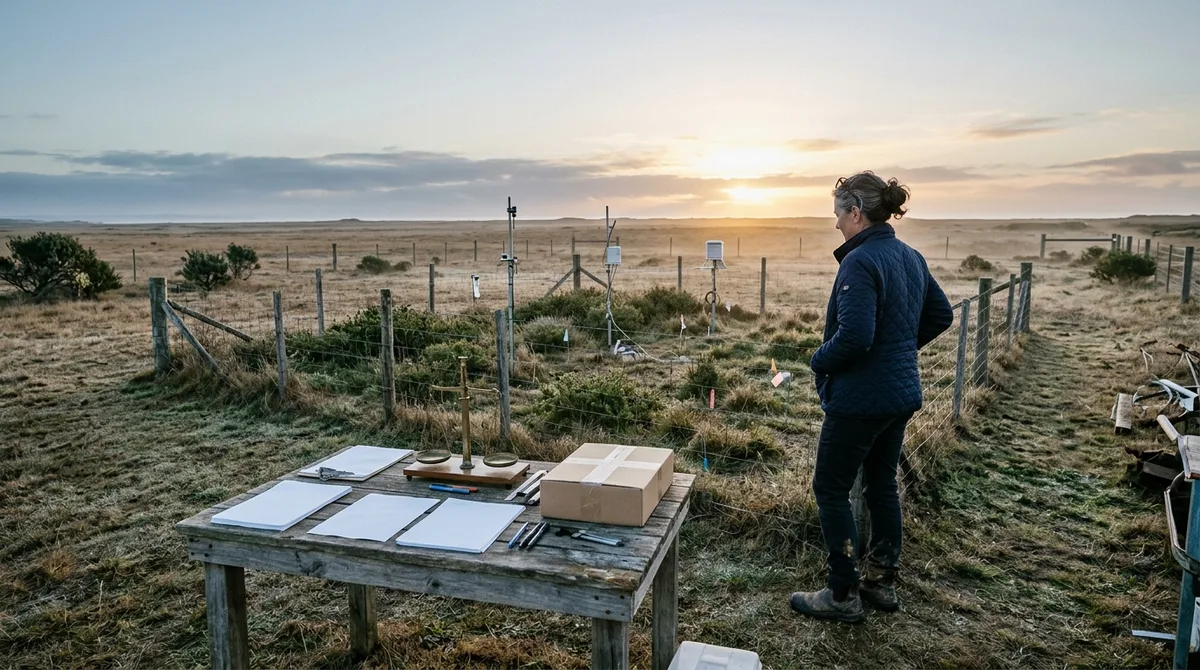
A small outdoor test can be judged before it starts by checking its design against five criteria and by asking whether it answers a real scientific question or prepares the ground for deployment. A July 30, 2026 philosophy paper in the European Journal for Philosophy of Science proposes those criteria: scientific rigor, safety, usefulness, engagement, and transparency.
Scientific rigor asks whether the experiment tests a clear hypothesis, defines its measurements in advance, and commits to publishing results, including unfavorable ones. Usefulness asks whether the answer would matter for understanding the climate system or for judging SRM itself, or whether the test would only demonstrate hardware.
Safety asks what the release could do to nearby air, rainfall and ecosystems, and whether it can be halted quickly if something goes wrong. Engagement asks whether downwind states, farming communities and Indigenous groups were consulted before approval, rather than informed after the decision was made.
Decision X/33, adopted in 2010, calls for no climate-related geoengineering that may affect biodiversity without an adequate scientific basis and appropriate risk consideration. It allows one exception: justified small-scale research in a controlled setting, and only after a thorough environmental assessment has been completed beforehand. Reviewers can treat that as a checklist: is there a scientific basis, is the setting genuinely controlled, and is the assessment finished before anything is released?
The same experiment can be legitimate or abusive, depending on its purpose. A test that answers an open question, at the scale that question requires, is defensible. A test that builds supply chains, aircraft modifications or public acceptance for a larger program is a step toward deployment dressed up as research. Ask sponsors which result would change their plans, and whether they would stop if the result came back unfavorable.
Transparency holds the other criteria together. Protocols, funding sources and monitoring data should be public before approval, so that reviewers can check each claim instead of accepting it on trust.
Where Do Reporting and Legal Rules Leave Dangerous Gaps?
The dangerous gaps sit between narrow U.S. reporting duties, a few state bans and international warnings that each cover only one kind of risk, and no comprehensive global framework ties them together. In the United States, the Weather Modification Reporting Act of 1972 and 15 C.F.R. Part 908 require that reportable activities, including specified solar-radiation-exchange activities, be reported to the National Oceanic and Atmospheric Administration (NOAA) at least 10 days before they occur and within 45 days after. NOAA collects those reports but does not regulate the activities, so a filed notice does not amount to an approval.
The reporting record is also unreliable. As of February 2025, only 4 of the 1,084 weather-modification reports in NOAA’s public database described solar-geoengineering activity. A Government Accountability Office sample suggested that over half of the reports it checked likely contained errors, so the database is a poor guide to what has actually been released into the sky.
State law fills in only a little. Florida Statute § 403.411 prohibits releasing substances into the state’s atmosphere for the express purpose of affecting temperature, weather, climate or sunlight intensity. A violation is a third-degree felony, with fines of up to $100,000 for covered persons and corporations. The ban is clear, but it reaches only releases within Florida, while a stratospheric plume crosses every state line.
International instruments are narrower still. In October 2023, parties to the London Convention and London Protocol said that prioritized marine-geoengineering techniques could cause widespread, long-lasting or severe harm. They cited considerable uncertainty about effects on marine environments and human health, and they said activities other than legitimate scientific research should be deferred. That warning covers ocean techniques, not stratospheric aerosols or the wider family of SRM methods.
Taken together, these rules leave the core questions open. None of them sets out who approves a trial, who must be consulted before it starts, or who answers for harm that crosses borders. Before a proposal moves forward, check which of these narrow rules it touches, and treat any area they leave silent as a gap to close before approval rather than a green light.
Would Anyone Pay for Deployment, and What Would Push Them to Start?
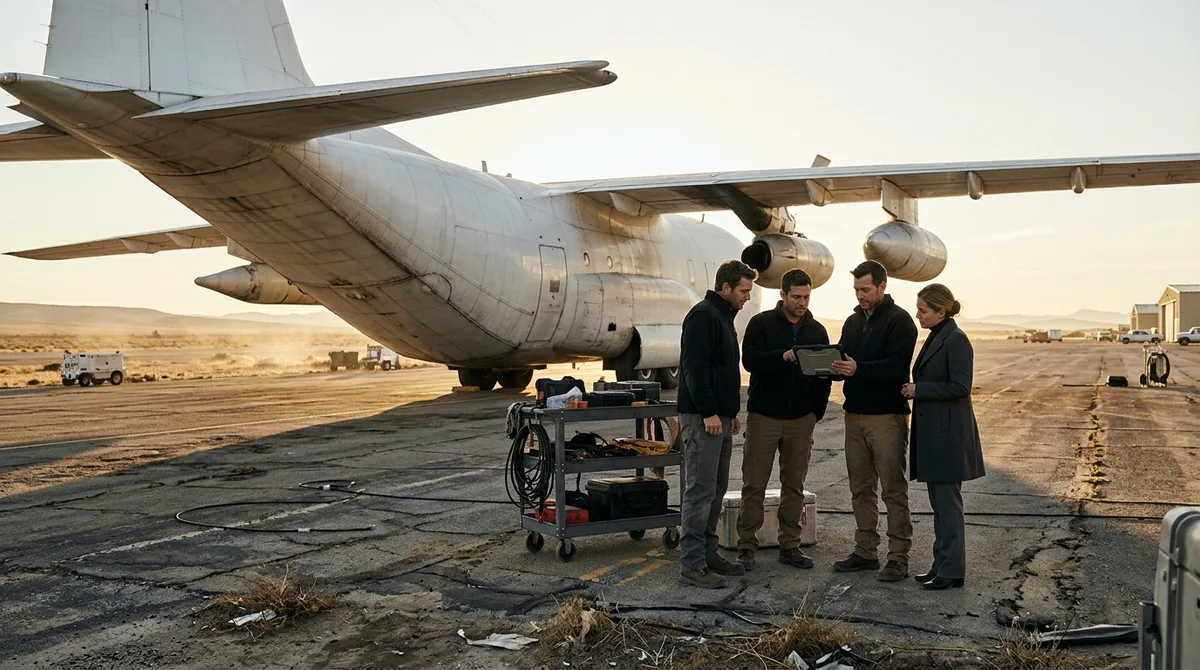
Deployment would only be paid for if governments or sponsors judged the cost worth bearing, and the clearest numbers come from a hypothetical engineering scenario. That 2018 model put stratospheric aerosol injection at roughly $2 to $2.5 billion per year over its first 15 years, and its authors described the deployment as highly uncertain. The same scenario assumed airframe development under $2 billion and $350 million to modify engines, with the modeled fleet growing from 8 aircraft in year one to just under 100 within 15 years. These are scenario assumptions, not forecasts of what a real program would charge.
The cost comparison is where financial pressure begins. Set against the long, expensive work of cutting emissions, a program with an annual price in the low billions can look like a bargain. A government facing budget limits or public frustration with rising temperatures might find that figure easier to justify than an economy-wide transition. That pressure works quietly. Once money has gone into aircraft, contracts and facilities, officials have strong reasons to keep the program running, even when new evidence points the other way.
When you review a cost estimate, ask which assumptions produce the total, what the figure leaves out, and whether it includes monitoring and a safe shutdown plan. Then ask who gains financially if the program continues.
Questions to Ask Before Backing Any Trial
Before any meeting on approval, put the proposal through a written checklist. Ask the sponsors for the protocol, funding sources, and monitoring plan, and do not schedule a vote until those documents are public.
Next, check which narrow rules the project touches. Confirm whether a NOAA report was filed at least 10 days before the activity, and compare the filing against the February 2026 report on NOAA’s weather-modification database to see how reliable such records have been. If the project would release anything into Florida’s air, check it against Florida’s ban as well.
Then test the design. Does the experiment answer an open scientific question, and would the sponsors accept an unfavorable result? Has the environmental assessment required for small-scale research been completed before release?
If you work for an NGO or a research group, ask for a seat in the consultation rather than a copy of the press release. Send written questions asking which downwind states and farming communities were consulted, in what language, and what would happen if the program were halted on its first day.
Finally, set a review date. Write down the conditions that would end the trial early, and schedule a public review before any further funding is committed.
Frequently Asked Questions
1. What separates a small research experiment from a deployment project in regulatory terms?
A small research experiment falls under the narrow exception in CBD decision X/33, which allows justified small-scale research in a controlled setting only after a thorough environmental assessment is finished. No comparable exception exists for large-scale deployment, and no comprehensive global rule sets the exact line between the two. Reviewers should therefore check the purpose of a test, since one built to develop aircraft, supply chains, or public acceptance for a larger program can be deployment in practice.
2. Who is responsible if an SRM experiment causes harm across national borders?
No comprehensive global framework assigns responsibility for harm that crosses borders from an SRM experiment. The U.S. reporting system collects notices without regulating the activity, and Florida’s ban reaches only releases within the state, so neither answers who pays for or answers for transboundary damage. Until a proposal names that party in writing, the silence should be treated as a gap to close before approval.
3. Do any international treaties currently ban solar geoengineering outright?
None of the international instruments described in this guide bans solar radiation modification outright. The London Convention and London Protocol parties in October 2023 asked that marine geoengineering activities other than legitimate scientific research be deferred, and CBD decision X/33 restricts climate-related geoengineering without an adequate scientific basis. Each of these addresses specific risks, so no single instrument covers the full family of SRM methods.
4. How should a government verify that weather-modification reports sent to NOAA are accurate?
Start by treating NOAA’s public database as a starting point rather than proof, since GAO estimated that over half of the reports it sampled likely contained errors. Reviewers can check whether each filing was made at least 10 days before the activity and whether its description matches the sponsor’s own plans. Only 4 of the 1,084 reports in the database described solar-geoengineering activity as of February 2025, so a missing or misdescribed filing is hard to catch from the database alone.
5. Can transparency requirements be enforced if a private company funds an SRM experiment?
Enforcement is hardest when a private funder controls the protocols and monitoring data, because no comprehensive framework compels private sponsors to disclose them. The most practical lever is an approval condition: a government or review body can refuse to proceed until protocols, funding sources, and monitoring data are published. Writing that condition into a permit or contract gives regulators something concrete to enforce, including the option to halt the project if material is withheld.