
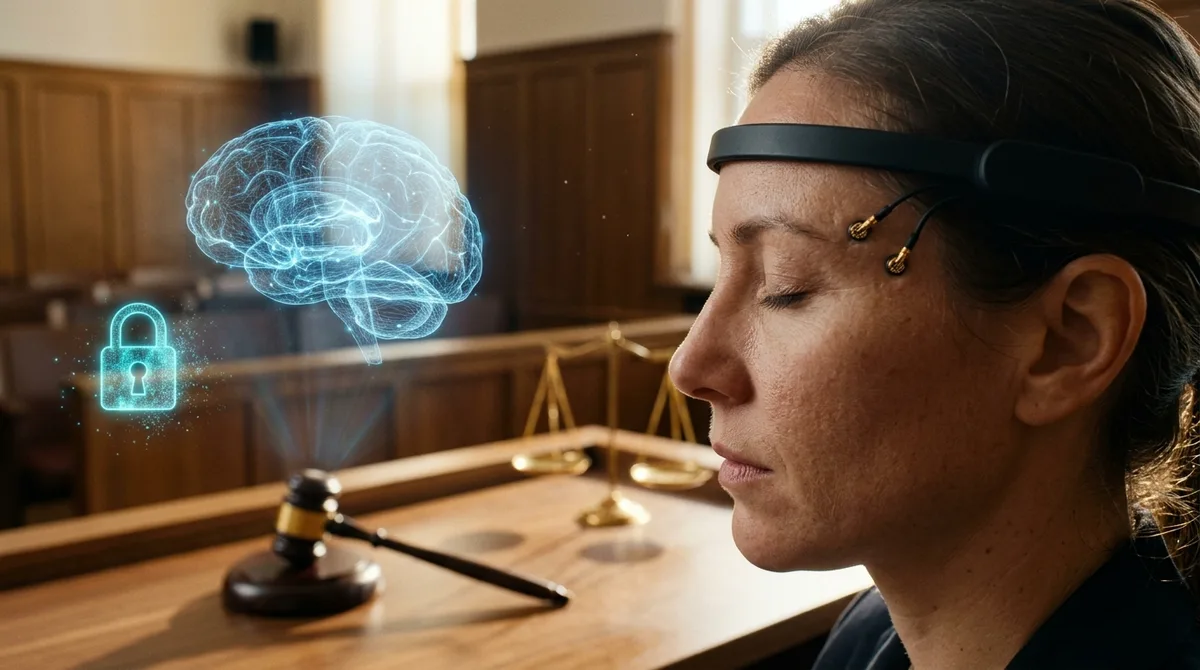
Neuroethics legislation in 2026 has no single comprehensive U.S. neurotechnology statute, so the rules that apply to brain data come from a patchwork of state privacy laws, medical-device guidance, and international ethical standards. Colorado was an early example. House Bill 24-1058, effective August 7, 2024, added biological data, including neural data, to the state’s definition of sensitive data. California’s SB 1223 took a similar route under the California Consumer Privacy Act, and Connecticut’s neural-data provisions took effect July 1, 2026, which is one reason July has become a focal point for legal discussion.
Other efforts take different shapes. Vermont’s Act 101, signed May 18, 2026, recognizes individual rights to neural data privacy and freedom of thought. At the federal level, the Management of Individuals’ Neural Data Act of 2025, introduced September 29, 2025, would have the Federal Trade Commission study neural-data governance rather than create a new privacy regime. Internationally, UNESCO adopted its Recommendation on the Ethics of Neurotechnology on November 11, 2025. Before you read any of these rules, it helps to ask whether each one imposes a legal obligation or offers guidance.
Key Takeaways
- Neuroethics legislation in 2026 has no single comprehensive U.S. neurotechnology statute, so you need to sort each rule governing brain data into either a binding legal obligation or guidance before you rely on it.
- Colorado’s House Bill 24-1058, effective August 7, 2024, added neural data to the state’s definition of sensitive data, while California’s definition covers only nervous-system measurements not inferred from non-neural information, so you should read each statute’s exact text.
- Vermont’s Act 101, signed and effective May 18, 2026, recognizes individual rights to neural data privacy, freedom of thought, and protection from unauthorized access to or manipulation of brain activity, and its Artificial Intelligence Advisory Council must report to the General Assembly by January 15, 2027.
- The Management of Individuals’ Neural Data Act of 2025, known as the MIND Act and introduced as Senate Bill 2925, would direct the Federal Trade Commission to study neural-data governance and would not by itself create a new privacy regime that companies must follow.
- A July 27, 2026, governance review in Communications Medicine identified five gaps in implantable brain-computer interface privacy rules: reliance on conventional de-identification, limited individual control, conflated consent, limited misuse guardrails, and underspecified ownership of brain data.
What Counts as Neuroethics Legislation in 2026?
Neuroethics legislation in 2026 consists of state privacy laws, medical-device guidance, and international ethical standards, because the United States has no single comprehensive neurotechnology statute. Each layer comes from a different source and carries different legal weight.
Neuroethics is the field that asks what brain science and brain technology should and should not do to people. It asks, for example, who may read someone’s neural activity and whether a device that changes brain signals could alter a person’s sense of self. Neurorights are the claims that follow from those questions, including mental privacy, freedom of thought, and protection from unauthorized manipulation of brain activity. Some of these claims now appear in statute, while others remain proposals.
Neural data is the information these rules protect. Colorado defines it as information generated by measuring activity in an individual’s central or peripheral nervous system that can be processed by or with a device. California’s wording is narrower in one respect: it covers nervous-system measurements that are not inferred from non-neural information. Under that wording, a conclusion about brain state drawn from typing patterns or eye movements may fall outside the definition, so the exact text matters.
Before you read any rule, sort it into one of two categories. A binding obligation is a legal requirement, and failing to meet it can lead to enforcement. Guidance is a recommendation that shows how a regulator expects a requirement to be met. The FDA’s 2021 guidance on implanted brain-computer interfaces is an example. It offers recommendations on nonclinical testing, feasibility, and pivotal clinical-study design for devices meant to restore motor or sensory capabilities in people with paralysis or amputation.
International standards work similarly. UNESCO’s Recommendation on the Ethics of Neurotechnology recommends that member states take appropriate legislative or other measures to give effect to its principles within their own jurisdictions. Until a country turns those principles into its own law or policy, they guide debate rather than binding anyone.
The second distinction is between consumer neurotechnology and clinical BCI data. Consumer devices, such as headbands and wearables that record brain signals for sleep, focus, or fitness, are usually governed mainly by privacy law. Clinical BCI data comes from implanted or surgically placed systems used in hospitals, clinics, and research studies, where medical-device rules, research ethics review, and patient consent procedures also apply. The same type of signal can therefore sit under very different rules depending on where it was collected.
Clinical rules are still taking shape. A 2025 U.S. Government Accountability Office report stated that, at the time, the FDA had not granted marketing authorization for any implantable device for BCI use. For implanted systems, much of the current ethical oversight therefore happens in research and investigational settings.
July 2026 is a useful focus for this reason. Several state provisions have recent effective dates, and a governance review published July 27, 2026, in Communications Medicine examined implantable BCI data and identified five gaps: reliance on conventional de-identification, limited individual control, conflated consent, limited misuse guardrails, and underspecified ownership. Those gaps show where the law still has holes.
Which State Laws Already Protect Neural Data?

Several U.S. states already treat neural data as sensitive personal information, and they did so by extending privacy laws that existed before brain data became a concern. Colorado, California, and Connecticut each reached that result by different routes, and the differences in their wording matter.
Colorado’s approach is the most direct extension. The state already had a category of sensitive data in its privacy law, and the amendment widened that category to include biological data, with neural data as one part of it. The Colorado Revised Statutes define neural data by its source and its processing: measurements of activity in the central or peripheral nervous system that a device can process. The emphasis on devices reflects a concern with signals that machines can capture, store, and analyze, not only with biology in general.
California took a different path. The bill, chaptered as Chapter 887 of the Statutes of 2024, added neural data to the category of sensitive personal information in the California Consumer Privacy Act. Its definition centers on the measurement itself, covering nervous-system activity that is not inferred from non-neural information. That line between direct measurement and inference has practical consequences. A conclusion about someone’s mental state drawn from their typing rhythm or eye movements is handled differently from a reading taken directly from the nervous system.
Why do the definitions differ so much? Each legislature wrote in its own statutory vocabulary, responded to its own examples, and worried about different gaps. Colorado focused on what a device can process, while California focused on how the data was obtained. A company selling a single headset in both states cannot assume that one definition covers both, so you should read each statute’s text rather than relying on a summary.
Connecticut’s neural-data provisions took effect July 1 and were enacted through Public Act 25-113, which operates within the Connecticut Data Privacy Act. The same extension logic applies: an existing privacy statute already governs sensitive data, and neural data was added to that framework. If you need the precise scope, consult the Public Act itself, because its exact wording determines which obligations attach to which data.
Two widely known frameworks are often mentioned in this context, but neither automatically covers consumer neural data. The Health Insurance Portability and Accountability Act applies mainly to healthcare providers, health plans, and their business partners, so a consumer headband sold directly to shoppers usually falls outside it. Clinical data collected by a hospital or clinic may fall inside HIPAA, which is why the same kind of signal can sit under different rules depending on who collects it. The General Data Protection Regulation applies broadly to personal data in the European Union and does not list neural data by name. Health and biometric data receive stronger protection under it, and brain signals may fall into those categories depending on how they are used. Neither regulation, however, answers the question of how a U.S. consumer device should handle neural data, which is where the state laws come in.
What Does Vermont’s Act 101 Mean for Neurological Rights?
Vermont’s Act 101 recognizes neurological rights as protections that individuals hold under state law, rather than only telling companies how to handle brain data. The act recognizes rights to mental and neural data privacy, to freedom of thought, and to protection from unauthorized access to or manipulation of brain activity. It took effect on May 18, 2026, the same day it was signed.
The difference between a right and a data-handling rule is easiest to see through an example. A data-handling rule might require a company that sells a sleep-tracking headband to obtain consent before sharing its readings with advertisers, and to delete those readings when a customer asks. Those duties fall on the company. A right stated in law starts from the person instead. It says that an individual has a protected interest in their own brain activity, a claim that does not depend on how a company happens to write its privacy policy. A right also shapes how other rules are read, because regulators and courts can ask whether a narrower rule respects it. In short, a data rule asks what a company must do with a file, while a right asks what a person is owed in the first place.
Freedom of thought raises questions that privacy law alone does not answer. Neuroimaging, which measures brain activity, and related decoding methods are being studied for their ability to estimate what a person is attending to, feeling, or intending. Privacy statutes govern who may store, share, or sell such information. Freedom of thought asks a broader question: should anyone be able to read or influence a person’s mental states without that person’s agreement, even when no file is created or shared? A device that alters neural activity raises a manipulation concern of its own, which is why the act pairs privacy with protection from manipulation.
Mind-reading remains a contested capability. Laboratory studies have decoded some brain signals under tightly controlled conditions, and the gap between those experiments and everyday consumer products is one reason lawmakers are debating these issues now. Because the technology is still developing, the rights in the act are partly about anticipating misuse before it becomes routine. Freedom from unwanted access to thought is a concern that predates any single device, which is why neurorights advocates describe brain privacy as a matter of personal liberty as well as consumer protection.
The act also looks ahead. It directs the Artificial Intelligence Advisory Council to report to the General Assembly by January 15, 2027, including recommendations on further statutory protections for neurological rights. Those recommendations are still pending and have not yet become law. Until they do, the rights in Act 101 are the operative text, and any further protections would arrive only through later legislation.
For a company or research group working with neural data, the practical step is to map which signals a product collects, then check each applicable statute against that map. Colorado, California, and Connecticut define or regulate neural data in different ways, and Vermont’s rights add a layer that goes beyond data handling. Reading the text of each law, and watching the council’s January 2027 report, will show where the expectations are heading.
Why Is Federal Neurotech Regulation Still Unsettled?
The federal picture is unsettled because Congress has not passed a comprehensive neural privacy law, so federal agencies apply older statutes, device rules, and guidance to brain data. The most direct federal proposal so far asks for a study rather than a new set of rules. The Management of Individuals’ Neural Data Act of 2025, known as the MIND Act, was introduced as Senate Bill 2925 and would direct the Federal Trade Commission to study how neural data is governed and to report to Congress.
That distinction matters for anyone planning compliance. A study can inform later legislation, but on its own the MIND Act does not create a new privacy regime that companies must follow. Until Congress acts on a bill that imposes duties, consumer neural data is handled mainly through state statutes and general federal consumer protection principles.
Implanted brain-computer interfaces follow a different track. The Food and Drug Administration oversees them as medical devices, which means developers move through device pathways that test safety and effectiveness before a product reaches patients. The agency’s guidance for implanted devices describes what developers should show in laboratory testing, feasibility work, and pivotal trials for devices meant to restore movement or sensation. Guidance explains what the agency expects, so a team that follows it has a clear roadmap, but the guidance itself is not a new statute.
Device review answers a specific question: is the device safe and effective for its intended use? It does not, by itself, decide who may store, analyze, or sell the signals a device records once a patient has left the clinic. That gap is one reason clinical and consumer data can end up under overlapping but incomplete rules.
The regulatory gap is also visible in the market. A 2025 Government Accountability Office report found that the FDA had not granted marketing authorization for any implantable device used for brain-computer interfaces at the time of the report. For developers, this means most implanted systems remain in investigational settings, where research protocols and trial oversight set much of the day-to-day expectation. Rules for routine clinical use are still being worked out as devices move through testing.
Export controls raise a further question that federal law has not clearly settled. Governments generally use export controls to limit the transfer of certain technologies to other countries, and policymakers are now asking whether brain-computer interface hardware, software, or related data should fall under such controls. The difficulty is that the same device may serve medical research, consumer use, and sensitive applications. This section describes only the policy question, not any specific rule, because the answer depends on how agencies classify these technologies.
Military uses of brain-computer interfaces raise separate questions that civilian statutes do not directly address. Consent becomes harder to define when a service member’s participation may be shaped by orders and chain-of-command relationships. Chain of command also raises a related issue: who decides whether a device is used, and who is accountable if it fails or is misused. Data collected in a military setting adds a third layer, because it is unclear who owns neural recordings made during training or operations and who may access them later.
If you work on a neurotechnology project, the first federal question is which pathway applies: a device review, a research protocol, a consumer privacy obligation, or a defense-related arrangement. Each pathway carries different duties, and a project that crosses several of them will need to answer to each one separately.
How Do International Standards Shape National Neurotech Rules?
International standards shape national neurotech rules by offering shared ethical principles that countries can choose to adopt, so they influence law without automatically creating it. UNESCO’s Recommendation on the Ethics of Neurotechnology, adopted on November 11, 2025, is the clearest current example.
The recommendation asks member states to take appropriate legislative or other measures to give effect to its principles within their jurisdictions. The phrase “or other measures” matters. A government can respond through a statute, a regulator’s guidance, a code of practice, or a national ethics framework, and the word “appropriate” leaves each country to decide what fits its own legal system. A statute is different because it imposes a binding obligation. When a state neural-data law applies to a company, the law itself sets the duty and the route for enforcement. A UNESCO principle carries no such force until a government writes it into its own rules.
That makes the recommendation more of a template than a rulebook. When you read a principle such as mental privacy in an international text, the useful question is whether your country has translated it into statute, regulatory guidance, or nothing yet.
Governments also need to know what ordinary people think before they decide which principles to adopt. The UK’s Information Commissioner’s Office commissioned a citizens’ jury on neurotechnology and neurodata, and Nesta’s report describes how 20 members of the UK public took part in three online sessions over two weeks in March 2026. A jury of this kind does not make law. It gives regulators a structured view of public expectations on questions such as who should be able to see brain data and what counts as meaningful consent.
Regulators also pay attention to the commercial stakes. The ICO’s 2024 Tech Horizons report cited a forecast that the neurotechnology market could be worth £14 billion by 2026. A forecast of that size suggests more companies will collect neural signals and more data will move through commercial systems, which turns a specialist concern into one that affects many people.
Neurodata rarely stays inside one country. A research team may analyze recordings in a different country from the one where a participant lives, and a consumer device may send signals to servers elsewhere. Regional hubs of regulators, researchers, and policy groups shape which principles spread, because a principle drafted in one place often becomes the reference point for later national drafts. Principles that appear in widely discussed international texts are therefore more likely to reach other legal systems than principles that stay confined to one jurisdiction.
If you handle neural data that crosses a border, map the rules at both ends of the transfer. Check whether the receiving country has turned UNESCO’s principles into law or policy, and confirm which home-country statute still governs the data before it leaves. Keeping a written record of which rule applies at each step will make later compliance reviews much easier.
Where Do Implantable BCI Privacy Rules Still Fall Short?
Implantable BCI privacy rules still fall short in five areas: they rely on conventional de-identification, give individuals limited control, conflate consent, offer few guardrails against misuse, and leave ownership of brain data underspecified. A governance review published July 27, 2026, in Communications Medicine sets out these five gaps for data from implanted systems. Each one affects people differently, so it helps to take them in turn.
De-identification usually means removing names, birth dates, and similar identifiers before data is shared. Brain recordings are harder to anonymize than that, because the signal patterns themselves can be distinctive enough to link back to one person. When combined with other information, such as the time of day a device is used or the settings a patient chose, a file labeled anonymous may still point to a specific individual.
Limited individual control is the second gap. An implant may record continuously, and a patient may not be able to see what is stored, pause collection, or request deletion without going through the manufacturer or clinic. Developers can address this by building viewing, export, and deletion tools that a patient can use without technical help.
Conflated consent is the third gap. When clinical care, research, and product improvement appear in one form, a patient may agree to all three without realizing they are separate uses. Care is the reason the patient had the implant. Research may involve sharing signals with outside teams, and product improvement may use recordings to refine software the patient never sees. Separate choices for each purpose let a patient accept one and decline another.
Informed consent also depends on cognitive load. A person living with a device that restores movement may be tired, taking medication, or still learning how the system feels. Asking that person to weigh retention periods, third-party access, and secondary uses in a single sitting is a heavy request. Short layered explanations, time to reconsider, and a trusted person present at the discussion can make the choices more meaningful.
The fourth gap is limited misuse guardrails. Many rules state what is forbidden without describing the technical safeguards that prevent it. Access logs, encryption of signals in transit, restrictions on which employees may query raw neural data, and periodic audits turn a prohibition into something that can be checked. These controls are much easier to design at the start than to add after a device is in patients.
Underspecified ownership is the fifth gap. Who owns a recording: the patient, the hospital, the device maker, or the sponsor of a research study? Without a clear answer, disputes can arise when a company is acquired, a study ends, or a device is discontinued. Agreements should state who holds the data, how it is returned or destroyed, and what happens to recordings if the device is retired.
Privacy-by-design in neurotechnology patents offers developers a way to act before any rule requires it. A patent filing describes how an invention works, so a team can build protections into the claimed design itself. Examples include on-device processing, where signals are decoded inside the implant and only summaries leave it, and data minimization, where the signal pipeline discards raw recordings that the product does not need. Choices like these shape the product from the start, which is easier than retrofitting privacy after patients already rely on the system.
How Do Clinical and Research Ethics Fit Into the Picture?
Clinical and research ethics fill the gaps that legislation leaves open. Questions about trial participants, lab-grown tissue, death, and digital memory are settled mostly through review boards, professional norms, and institutional choices. A statute can say what a company may do with a data file, but it rarely says what a research team owes a person after the study that gave them an implant has ended.
Deep brain stimulation offers a clear example. Some participants in trials of this therapy have had electrodes implanted to treat conditions such as Parkinson’s disease, and when a trial closes, the sponsor’s support may end before the device does. Ethicists ask whether sponsors owe participants continued stimulation, maintenance, battery replacement, or a managed removal, and who pays for each of those. Many of these answers appear in trial agreements and ethics approvals rather than in public law, so if you are a participant, read the protocol to learn what was actually promised.
Neural organoids raise a different question. These are small three-dimensional clusters of cells grown in a laboratory that can resemble parts of the developing brain. Researchers are asking whether tissue that shows electrical activity could ever deserve moral consideration, and who should make that judgment. In most research settings, institutional review and stem-cell oversight committees decide case by case, and their standards differ from one institution to another.
Brain death and organ donation show how definitions shape consent. Many legal systems treat death as the irreversible loss of all brain function, yet clinicians and philosophers still debate whether that whole-brain standard captures what matters about a person. Because donation depends on a death determination, disagreement about the definition affects what donors and families are told. Neuroethicists add a further question: whether brain-based tests should be interpreted differently in people who use neurotechnology.
Digital afterlife tools present another hard case. Some companies offer chatbots or avatars built from a deceased person’s messages, voice recordings, or social media posts, and families sometimes use similar tools with people living with dementia. The central questions are whether the person consented while they could still decide, whether a simulation might mislead relatives or the person themselves, and who controls the data once that person can no longer object. Dignity and honesty become practical design decisions here, not only philosophical ones.
The field’s own habits matter too. Mentorship determines which early-career researchers remain in neuroethics, and publishing norms decide whose arguments are read and cited. Regional hubs in different parts of the world bring different clinical experiences, legal traditions, and cultural assumptions about the mind, and sharing those perspectives across borders makes neuroethical guidance sturdier. If you are a student entering the field, look at whose work your reading list includes and whether mentors from outside your own country have shaped it.
Following the Neurorights Debate Beyond 2026
Start with one question: which of these rules actually binds the people you are thinking about? Pick a single state law, such as Vermont’s Act 101 or Connecticut’s Public Act 25-113, and read its full text before reading any summary of it. Then read UNESCO’s recommendation alongside it and note which of its principles have no matching statute yet.
Keep a dated record of new developments. Vermont’s Artificial Intelligence Advisory Council must report to the General Assembly by January 15, 2027, and its recommendations will remain proposals until the legislature acts on them. Follow the MIND Act’s progress in Congress too, since a bill that asks for a study differs from one that sets duties for companies.
Philosopedia’s articles and educational content can help you sort each new rule into a right, a binding obligation, or a recommendation. If you find a factual error in an article, send it through the site’s contact form and label it as a correction. If you disagree with how an argument is framed, say so as a question of interpretation. The editors treat those two kinds of feedback differently, and suggested topics are welcome through the same form.
Frequently Asked Questions
1. Does a consumer EEG headband count as neural data under Colorado or California law?
A consumer EEG headband that records brain signals generally fits Colorado’s definition of neural data, which covers measurements of central or peripheral nervous system activity that a device can process. Under California’s wording, the headband qualifies when it measures nervous-system activity directly, but a mental-state guess drawn from typing rhythm or eye movements may fall outside the definition. Because the exact text decides the outcome, read each statute’s definition before assuming a wellness wearable is covered.
2. Do HIPAA and GDPR apply to neural data collected by a university research lab?
HIPAA does not automatically reach a research lab just because it records brain data, since it applies mainly to healthcare providers, health plans, and their business partners. A university lab falls under HIPAA only if it works in one of those roles, such as a clinical unit that bills for care. The GDPR applies to personal data in the European Union and does not name neural data, but brain signals may be treated as health or biometric data depending on how the lab uses them.
3. Can an employer require workers to wear a brain-monitoring device, and is that legal in any state?
The laws discussed in this article are privacy statutes, and none of them describes workplace use of brain-monitoring devices, so no state’s employment rule is covered here. What the article does show is that Colorado and California treat neural data as sensitive, which means an employer collecting such data should check whether those statutes apply to its activities. Read the statute’s text and consult an employment lawyer in your state before relying on any answer.
4. What would an FTC study under the MIND Act change for app developers or everyday users?
As introduced, the Management of Individuals’ Neural Data Act of 2025 would not change daily obligations for app developers or everyday users, because it asks the Federal Trade Commission to study neural-data governance and report to Congress. A study could inform later legislation that sets duties for companies, but until Congress passes such a bill, developers and users would continue under the existing mix of state statutes and general consumer protection principles. Following the bill’s progress in Congress will show whether that changes.