
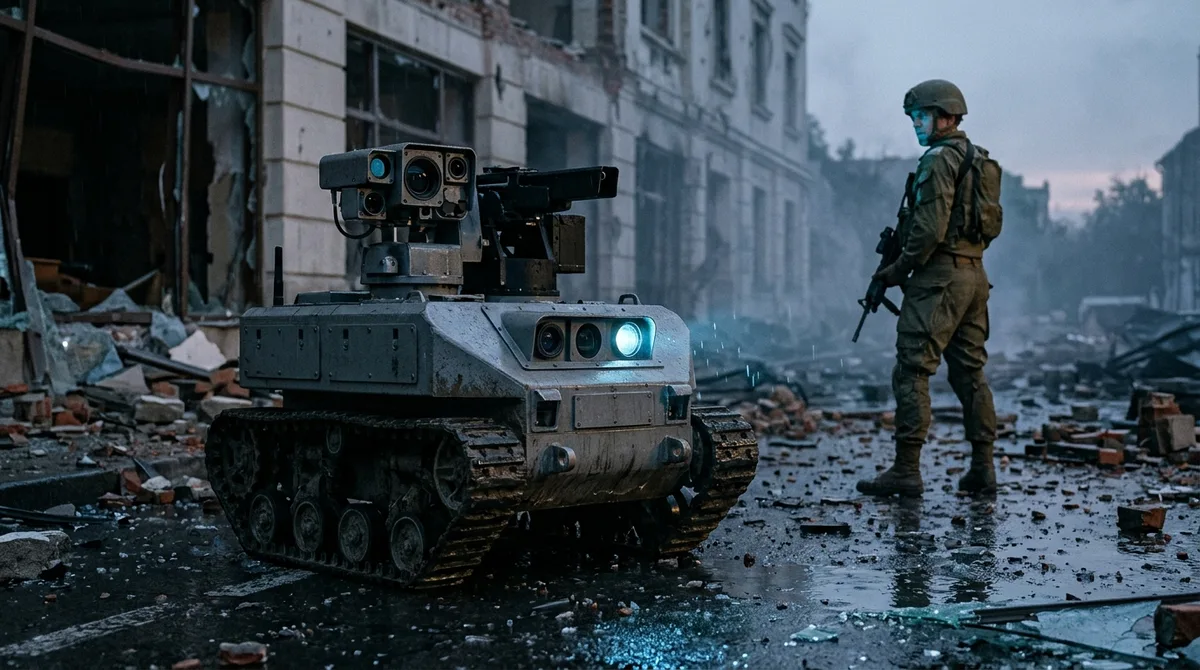
Picture a weapon that chooses its own target and gets it wrong: when it makes a lethal mistake, who answers for it? That question sits at the center of the debate over autonomous weapons, and answering it starts with definitions, yet international bodies still lack a single settled one. The UN Group of Governmental Experts describes such a system as an integrated combination of weapons and technological components that can select and engage a target without human intervention.
Existing law reaches these weapons only in part. Article 36 of Additional Protocol I requires states to review new weapons for legality, yet no protocol under the Convention on Certain Conventional Weapons specifically regulates them. Militaries are writing their own rules, too. The U.S. Department of Defense’s Directive 3000.09, dated January 25, 2023, requires appropriate human judgment over the use of force. Since thoughtful people disagree on these points, this article maps those disagreements so you can weigh them yourself rather than declaring a winner.
Key Takeaways
- Before judging any autonomous weapon, settle its definition, since the Red Cross phrasing draws the line differently from the UN’s.
- Treat each software update as a possible trigger for a new weapons review, because a single pre-fielding check may miss how a deployed system changes.
- Machines that lock onto a target from one reading risk breaching the duty to call off attacks when the facts change.
- Commanders should learn a fielded system’s known limits before authorizing use, since accountability for mission fit rests with the commander.
- Mass buys of cheap drones multiply every targeting error, as the Army’s 2026 plan for 30,000 one-way-attack aircraft shows.
What Counts as an Autonomous Weapon?
An autonomous weapon is a system that, once activated, can find a target and apply force to it without a person making each decision. The International Committee of the Red Cross uses shorter wording: weapons that select and apply force to targets without human intervention. The two phrasings differ, and that difference determines which machines fall inside the category.
It helps to picture a dial rather than an on-off switch. At one end sits a semi-autonomous system, which might flag a vehicle or steady a turret while a human decides whether to fire. Further along, the machine chooses the target and strikes, and a person only sets the mission or can stop it. Much of the debate centers on “meaningful human control,” which refers to how much understanding, timing, and ability to intervene a person must retain. Critics call the phrase vague, but supporters argue it gives lawyers and engineers a usable standard.
The boundary question does not stop at lethal weapons. Systems that jam radios, disable vehicles, or entangle people without killing them raise the same issue, and their legal status is less settled. Whether such a device counts as a weapon at all, and whether its autonomy deserves the same scrutiny, remains open.
Keep two questions apart as you read. The definitional question asks what belongs in the category. The illustrative question asks whether a specific machine fits it. A vivid example, such as a loitering munition that circles a battlefield before diving onto a target, can persuade you of a moral verdict while quietly hiding a disagreement about the definition. Settle the definition first, then test the example, and only then judge the ethics.
Does International Humanitarian Law Already Apply?
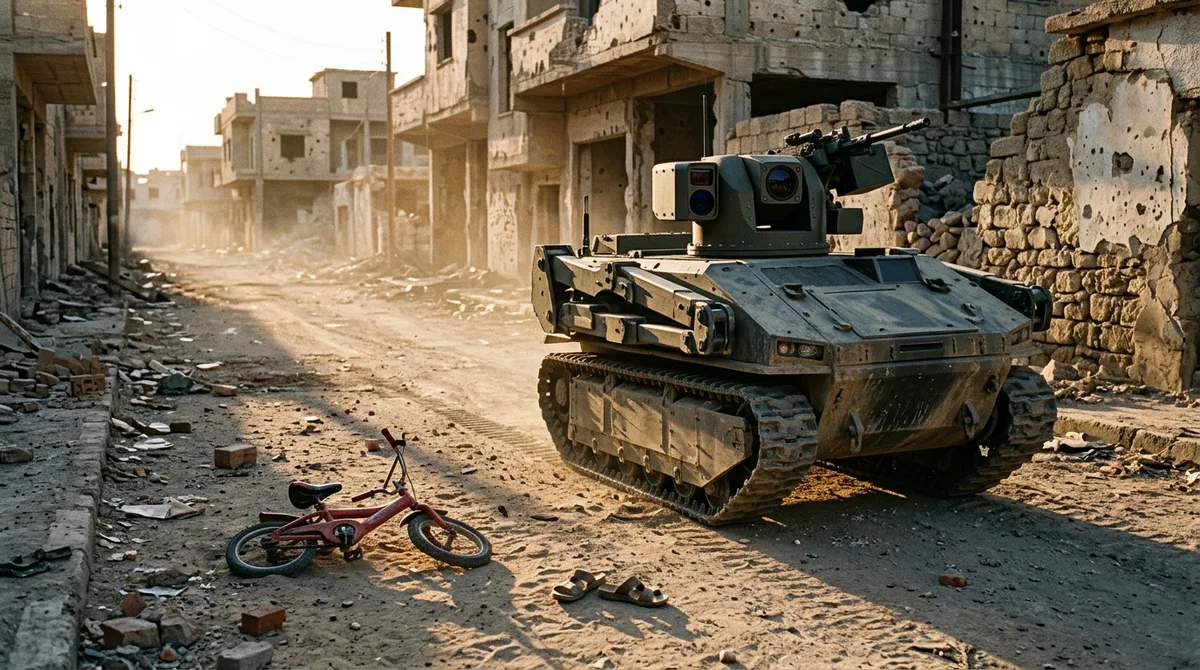
Yes, international humanitarian law already applies to autonomous weapons, even though no treaty was written specifically for them. The rules of armed conflict do not lapse because a machine selects the target. Principles such as distinguishing soldiers from civilians and taking precautions to limit harm still bind the people who design, buy, and use these systems.
The gap lies in the details. The UN’s autonomous-weapons FAQ confirms that no protocol under the Convention on Certain Conventional Weapons specifically regulates these systems, so no dedicated set of rules governs them directly.
The main legal tool that does apply is the weapons review. Under Article 36 of Additional Protocol I, a state must determine, while studying, developing, acquiring, or adopting a new weapon, means, or method of warfare, whether its use would be prohibited in some or all circumstances by applicable international law.
Here the debate splits. Supporters of the current framework argue that case-by-case reviews are flexible enough to judge each new system on its merits, and that writing new treaties takes years. Critics respond that a single review before fielding may not capture how a system behaves once it is deployed, especially when its software changes or it operates in unfamiliar conditions. For them, existing rules are a starting point, not a complete answer.
The same questions appear in cyber operations. A piece of malicious code is a means of attack that can be aimed at a military network, yet it can also spread into hospitals, water systems, or power grids. Lawyers ask whether it can be directed at a lawful target and whether its foreseeable effects on civilians are proportionate, just as they would for a missile. That overlap suggests the autonomy debate is part of a longer question about how old rules fit new means of war.
Can a Machine Tell a Soldier from a Civilian?
No machine can yet be trusted to make these calls alone, because the core rules of targeting rely on judgments that are hard to reduce to sensor readings. Start with distinction. International humanitarian law requires attackers to separate combatants from civilians, and civilians keep their protection unless they take a direct part in hostilities. A camera can see a person holding a rifle, but it cannot easily tell whether that person is a fighter, a hunter, a guard, or a civilian defending their home.
Proportionality asks a harder question. Commanders must weigh the military advantage expected from an attack against the civilian harm it may cause. A machine would need a numerical stand-in for values that people still argue about. How much civilian harm is acceptable to destroy a bridge? No sensor can answer that.
Precaution goes further. Attackers must take feasible steps to avoid or minimize civilian harm, such as verifying a target, choosing the timing of an attack, or calling it off when new information appears. A system that reads a changing scene once and then acts may fail that duty, even when each individual reading seems accurate.
Bias adds another layer. A recognition model learns from its training data, and if that data contains fewer examples of certain groups, clothing, or settings, its errors will fall unevenly on those groups. The Political Declaration on Responsible Military Use of Artificial Intelligence and Autonomy calls for personnel training to address system limitations and automation bias, the tendency of operators to trust a machine’s output too readily.
Urban warfare makes all of this harder. In a dense city, fighters, civilians, schools, markets, and homes can sit side by side on the same street. A weapon hidden in a doorway or a fighter wearing ordinary clothes leaves few clear signals. The more those signals blur, the more the decision depends on human judgment that a machine may not be able to replicate.
Who Is Responsible When a Machine Picks the Target?
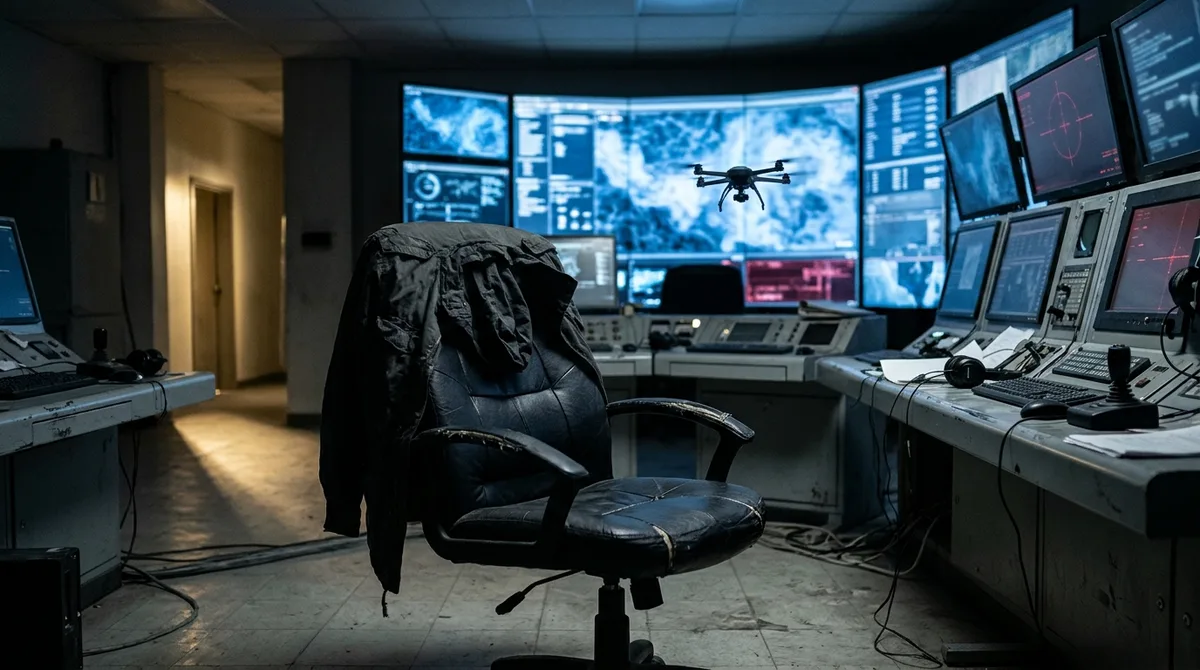
Responsibility falls on the people who design, authorize, deploy, and supervise an autonomous weapon, because no machine can carry blame in the usual sense. States answer for their armed forces under international law, individual operators can face personal liability for unlawful killings, and commanders can be held accountable for crimes their subordinates commit when they knew or should have known and failed to act. A weapon cannot be prosecuted, fined, or made to apologize, so the practical question becomes who held the controls.
Command responsibility is where the accountability gap becomes visible. A commander who fields an autonomous system takes on duties over its testing, its known limits, and the conditions under which it may operate. The Pentagon’s own policy requires senior review and approval before a covered system is formally developed and again before it is fielded, subject to listed exceptions.
Human judgment ties these duties together. The same policy requires appropriate human judgment over the use of force, which places the burden on people rather than on software. Critics note that a person who only approves a system in advance may not truly judge each strike, and that is where the idea of meaningful control returns.
Some philosophers describe a “responsibility gap”: when a learning system acts in ways its designers did not foresee, no single person seems to have intended the harm. Most responses reject the idea that the gap is empty. Designers answer for foreseeable failures in how they built and tested a system, operators answer for how they used it on a given day, and commanders answer for whether the system was fit for that mission. Responsibility is shared, though dividing the shares after a tragedy can be difficult.
Where Contractors and Militaries Share Human Control
Responsibility rarely rests with one actor. Governments set the legal framework, militaries choose and field systems, and private firms often write the software, build the hardware, and sometimes operate the systems themselves. When a contractor builds a targeting component, the question of who answers for its conduct turns on contract terms, supervision, and what the firm knew about the system’s limits.
Under DoD Directive 3000.09, covered systems generally need senior review and approval before formal development, then a second approval before fielding, subject to listed exceptions. These checkpoints let officials reject a design before money and hardware are committed. Testing and documentation make responsibility traceable. Records showing who tested what, which limits were known, and who signed off allow investigators to reconstruct decisions after a failure. The political declaration on responsible military AI calls for exactly this kind of auditable development documentation.
A policy inside one government does not settle international obligations. The Pentagon’s rules govern its own programs, while the weapons review duty in Article 36 binds states that are party to Additional Protocol I. When the U.S. joined the declaration’s implementation launch on November 13, 2023, the State Department reported that 45 states were endorsing it. That broad support shows shared concern, but a shared statement is not the same as a treaty binding every government.
Why Do Cheap Drones Raise Harder Questions?
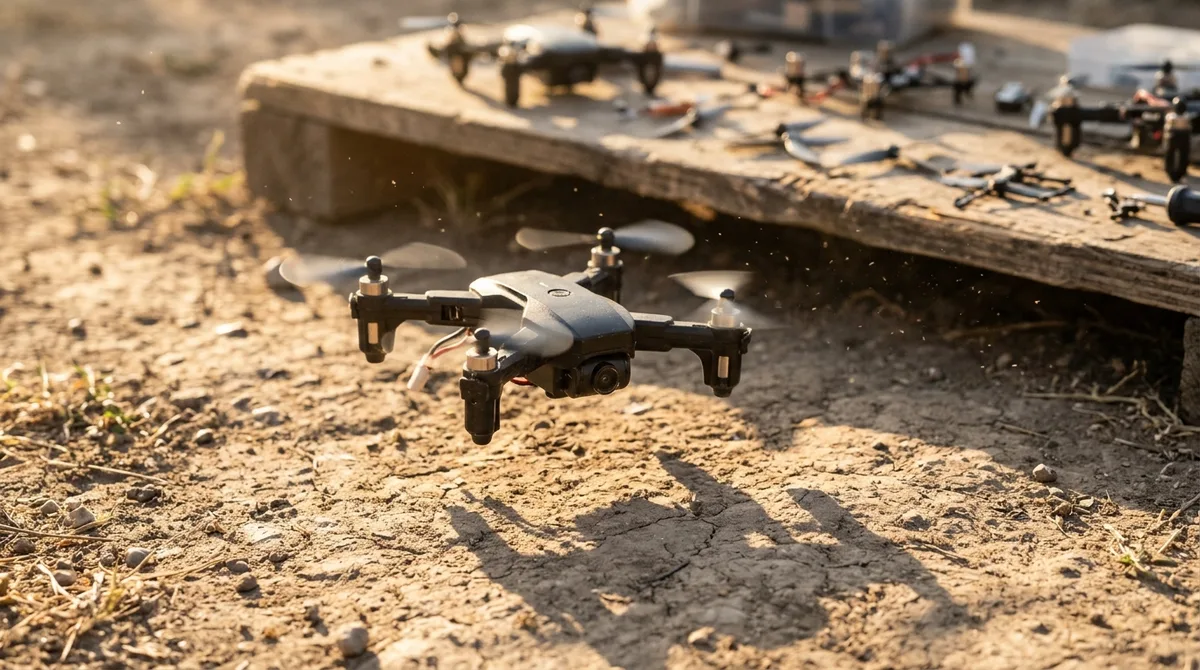
Cheap drones raise harder questions because low prices make mass use possible, and mass use multiplies every error a machine might make. When a weapon costs little, a military can buy it by the tens of thousands, and each unit with its own targeting software is one more place a mistake can happen.
The U.S. Army’s planned 2026 drone buy shows the scale. Its first phase would seek 30,000 one-way-attack small unmanned aircraft at $5,000 each, and later phases aim to lower the unit price to $2,300. These figures belong to that program alone, not to the market as a whole, but they show how falling prices could push commanders toward systems that need less continuous human attention.
Price also changes the ethics of drone strikes. Remotely piloted strikes have been debated for their legal and moral risks, and many critics see them as a bridge to autonomy. Once a pilot’s role shrinks to approving a target that software has flagged, the remaining human check may be thin. Cheap, numerous platforms make that bridge easier to cross.
A 2026 U.S. Army article reported a $150,000 unit cost for Ukraine’s Sky Sentinel, an AI-powered turret that autonomously detects, tracks, and engages aerial threats. That price is far higher than the drones above, and it applies only to this one system. Still, it shows how autonomous engagement is being built into real defensive equipment.
Cheap systems also complicate war crimes prosecution, because investigators depend on digital evidence. Logs showing what a system detected, sensor data showing what it saw, and software records showing which version was running all help reconstruct a strike. Without them, a court may not be able to tell whether a deadly error came from a bad target, a faulty sensor, or a command that was never given.
Where Are the Diplomatic Talks Heading?
Diplomatic talks are still moving toward an answer, and no binding global treaty on autonomous weapons exists yet. The most concrete step so far is the Political Declaration on Responsible Military Use of Artificial Intelligence and Autonomy. It asks states to conduct legal reviews of military AI, keep senior officials overseeing high-consequence applications, produce auditable development documentation, and train personnel on system limits and automation bias. Broad endorsement shows shared concern, but the declaration does not itself impose binding obligations.
The main multilateral forum is the Convention on Certain Conventional Weapons. Its Group of Governmental Experts on lethal autonomous weapon systems was scheduled for 10 meeting days, March 2–6 and August 31–September 4, 2026, and its work was meant to feed the next major decision point.
That decision point is the Seventh CCW Review Conference, scheduled for Geneva from November 16 to 20, 2026. Its agenda is where states will decide whether the current approach is enough or whether something new should be negotiated.
States and experts disagree about what should come next. Some seek a prohibition on certain autonomous weapons, arguing that decisions to kill should never be handed to machines. Others prefer regulation that sets limits, reviews, and human control requirements while keeping lawful uses open. A third group opposes new binding rules, arguing that existing humanitarian law and national policies are sufficient and that treaties could lock in rules before the technology is understood. Each position leaves a different gap, and none has yet settled the debate.
Where to Take the Debate Next
If you work in policy or procurement, start with one question: for each component in your system, does it identify, select, or engage a target, and who can intervene before it does? Write the answers down with named people attached. That record is the practical core of the accountability problem, and it is the material investigators will need after a failure.
If you design or supply components, compare your contract terms with the duties described above. Ask whether your documentation would show which limits were known, which software version was running on a given day, and who approved fielding. Then ask whether a weapons review under Article 36 would cover the software updates you plan to ship, not just the original design.
If you are a student or a general reader, follow the debate in the order it unfolds. Track the expert group’s sessions in 2026, then the Seventh Review Conference in November. Write a one-page memo that compares the three positions on prohibition, regulation, and no new binding rules, and argue which gap you think is most dangerous. Then rewrite the memo as if you held the opposite view. Testing your position against its strongest opponent is the fastest way to learn whether it holds.
Frequently Asked Questions
1. Do the two sides of the debate agree on anything at all?
Almost every position accepts that existing humanitarian law governs autonomous weapons, even those who want new treaties. Most participants also treat human responsibility as the anchor of the discussion. They disagree mainly about how much human control is enough and whether new binding rules are needed.
2. What would count as meaningful human control in practice, and who decides?
In practice, meaningful human control means a person can grasp what a system is doing, act early enough to halt it, and see enough of the situation to judge a particular strike. No single authority settles that standard. Militaries write it into their own policies, lawyers test it through weapons reviews, and states negotiating under the Convention on Certain Conventional Weapons would have to agree on a shared version if they write one into a treaty.
3. Are the ethics of autonomous weapons different from the ethics of older weapons like landmines?
Yes, in one central respect. A landmine is placed in a location and then waits, so the person who laid it decided where it would sit but not which specific person it would hit. An autonomous weapon makes a selection at the moment of attack, so the moral question shifts from where a weapon was placed to whether a machine should be trusted to choose its victims. Both raise concerns about indiscriminate harm.
4. How can a student test a claim that a weapon is fully autonomous?
Start by asking the claimant to name which functions the system performs alone, such as detecting, selecting, or engaging a target, and which of them a person can override. Then compare the claim with independent evidence, such as official documentation, testing reports, or expert analysis from sources other than the company or government promoting the system. A claim that cannot point to verifiable records of how the system behaves in practice deserves more skepticism than one that can.
5. Why do some online discussions defend autonomous weapons on moral grounds?
Defenders often argue that a machine does not act from fear, revenge, or exhaustion, which are common drivers of wartime atrocities. Some also argue that sensors could reduce certain errors that stressed or frightened soldiers make, and that refusing such systems could leave a military with weaker protection for its own people. Critics respond that these advantages assume the technology works as promised, and that a machine can repeat an error across many strikes in a way a single soldier usually cannot.