
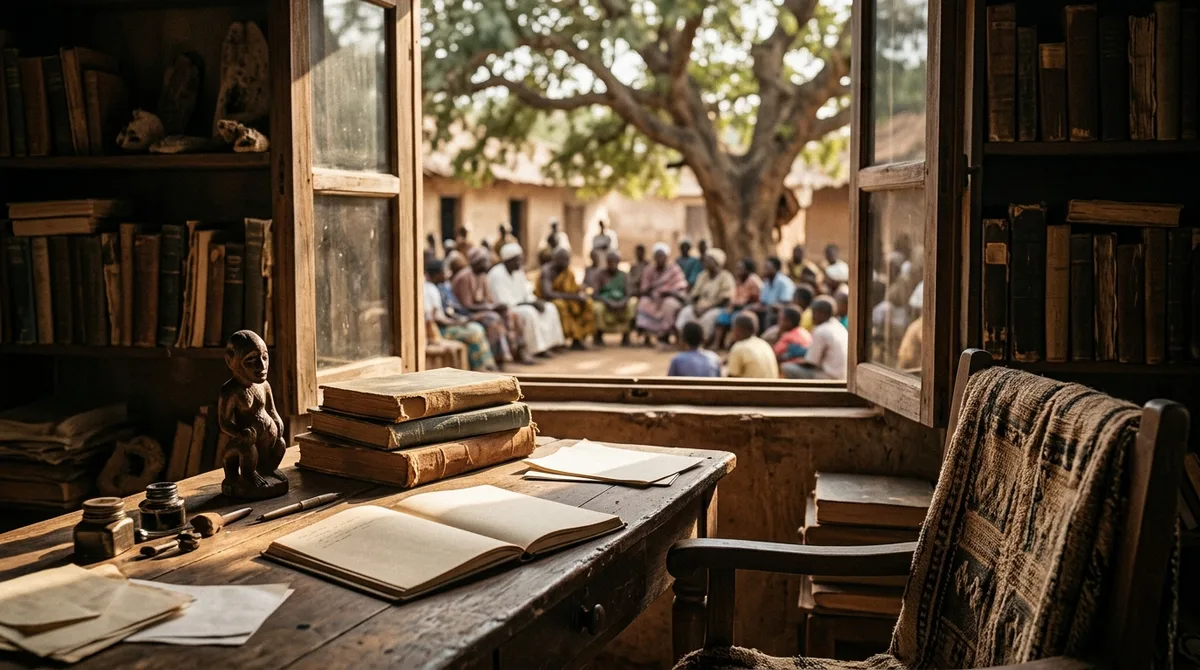
Ethnophilosophy research in 2026 includes Donald Mark C. Ude’s article “Disentangling and Re-Directing the Ethnophilosophy Project,” published on 6 October 2026 in Philosophy Compass, volume 21, issue 5, as article e70132. Ude sorts out the debate’s competing positions, engages three recent interventions, and proposes a future-oriented agenda built on his social-imaginaries framework.
Ethnophilosophy means philosophy grounded in African oral traditions and the views of traditional sages. Ude argues that the debate has shaped African philosophy over the past four decades, and that its future direction is at stake.
Key Takeaways
- Ude’s article “Disentangling and Re-Directing the Ethnophilosophy Project,” published on 6 October 2026 as article e70132 in volume 21, issue 5 of Philosophy Compass, sorts out the ethnophilosophy debate’s competing positions and proposes a future-oriented agenda for African ethnophilosophy.
- Ude’s social-imaginaries framework, first set out in his 2024 article in The Philosophical Forum, lets you treat African cultural and epistemic resources as dynamic and internally varied rather than as fixed cultural essences.
- Ude’s social-imaginaries approach avoids static essences, sweeping generalizations, and romanticizing an idyllic past while still permitting critical philosophical engagement with African cultural and epistemic resources.
- Henry Odera Oruka’s sage-philosophy project recorded individual sages’ critical reflections on the supreme being, personhood, freedom, equality, death and the afterlife, so you can test their claims with the same tools you would apply to Plato or Kant.
- James Tartaglia’s 2024 Metaphilosophy article, first published on 15 April 2024, argues that the ethnophilosophy debate can illuminate philosophy in general, not only the nature and future direction of African philosophy.
Ude Revisits Ethnophilosophy in a New Philosophy Compass Article
Donald Mark C. Ude’s “Disentangling and Re-Directing the Ethnophilosophy Project” appeared on 6 October 2026, as article e70132 in volume 21, issue 5 of the journal. Rather than retelling the debate’s full history, the article sorts out its competing positions and critically engages three recent interventions. It then proposes a practical, future-oriented agenda for African ethnophilosophy. Ude argues that the debate has shaped African philosophy for four decades and that the raison d’être of African philosophy is at stake.
The agenda draws on Ude’s social-imaginaries framework, which he first set out in a 2024 article in The Philosophical Forum, first published on 29 January 2024. In that article, he argued that social imaginaries let philosophers treat African cultural and epistemic resources as dynamic and internally varied, rather than as fixed cultural essences. The approach, he contended, avoids sweeping generalizations and romanticizing an idyllic past while still permitting critical philosophical engagement with those resources.
The debate itself remains contested. Some scholars seek to defend or redirect ethnophilosophy, while others stress its risks of collectivism and overgeneralization. Ude’s article takes a position within that dispute rather than closing it.
Why the Debate Asks What African Philosophy Is

Ethnophilosophy raises a question that sounds simple but is hard to answer: what makes a claim philosophical rather than merely cultural? If African philosophy rests on shared beliefs passed down through oral traditions, critics ask whether it counts as philosophy in the full sense. Ude argues that this question puts the raison d’être of African philosophy at stake.
Critics raise two main worries. The first is collectivism, the habit of treating a whole people’s thought as one voice, which can flatten individual thinkers who disagree with one another. The second is sweeping generalization, where a view held by a few sages is presented as “the African view” of mind, ethics or the divine.
Defenders accept these risks but argue that such thought deserves serious philosophical treatment. Some of them aim to redirect ethnophilosophy rather than abandon it. Henry Odera Oruka, the Kenyan philosopher, distinguished four trends in African philosophy: ethnophilosophy, nationalist-ideological philosophy, professional philosophy, and African sage philosophy. His sage-philosophy project looked for critical reflection by individual sages on the supreme being, personhood, freedom and death.
Social Imaginaries as a Way Forward
Ude’s framework asks you to see African cultural and epistemic resources as a living field of shared understandings rather than a fixed inheritance. Social imaginaries, a term Charles Taylor popularized, are the pictures people hold of how their society works and what it expects of them. Because such pictures are argued over, revised, and passed on unevenly, they can be treated as material for critical thinking rather than as one settled doctrine.
In his 2024 article in The Philosophical Forum, volume 55, issue 1, pages 71–86, first published on 29 January 2024, Ude argues that this approach avoids three pitfalls. It rejects static essences, the idea that African thought has one unchanging core that outsiders can list. It avoids sweeping generalizations, because a framework that expects internal variety cannot easily claim that one sage’s view speaks for a whole region. It also refuses to romanticize an idyllic past, treating earlier communities as places of debate and disagreement rather than harmony.
The payoff is a way of engaging these resources critically. You can ask whether a claim is persuasive, who holds it, and which objections it faces.
Oruka, Sage Philosophy and the Religious Questions
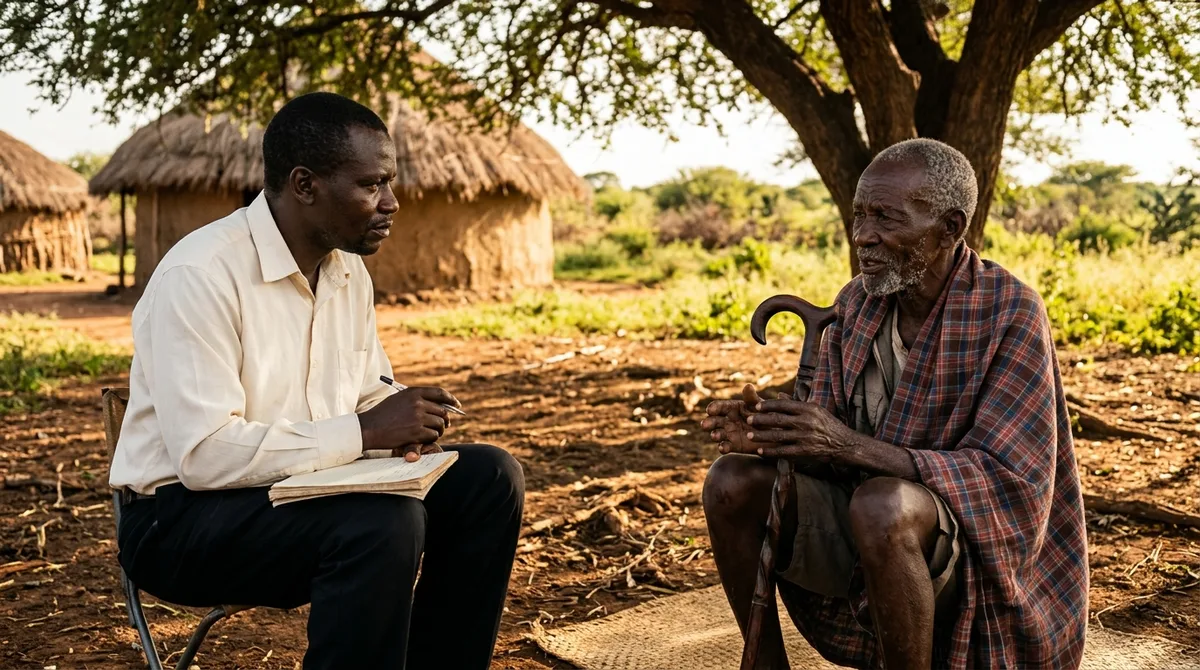
Oruka’s project asked a different question from the one ethnophilosophy often posed. Rather than asking what a community’s shared beliefs contain, he sought out individual sages and recorded their critical reflection on the supreme being, personhood, freedom, equality, death and the afterlife. His aim was to gather evidence that African sages reasoned critically, questioning and testing claims rather than simply repeating them.
These topics belong to the philosophy of religion, and in many African contexts they are part of everyday life as well as abstract argument. Whether a supreme being exists, and what survival after death could mean, are also metaphysical questions. Claims about equality and freedom bring in ethics and political philosophy. When a sage argues that a person’s worth does not depend on birth or status, you can test that claim with the same tools you would apply to Plato or Kant.
Whether the Debate Can Inform Philosophy Beyond Africa
James Tartaglia’s 2024 article, “Ethnophilosophy as a global development goal,” appeared on 15 April 2024 in Metaphilosophy. Tartaglia defines ethnophilosophy broadly, as philosophy based on, inspired by, or embodied in African oral traditions or the views of traditional African sages. He argues that the debate can illuminate philosophy in general, not only the nature and future direction of African philosophy.
The debate also has a postcolonial dimension. Who decides what counts as philosophy, and whose ways of reasoning enter the canon, are questions that colonial history made pressing. The 2022 Springer volume Ethnophilosophy and the Search for the Wellspring of African Philosophy brings these questions together across 20 chapters and 328 pages. Its chapter by L. Uchenna Ogbonnaya, “Beyond the Universalist Critique and the Particularist Defence of Ethnophilosophy,” takes up the central dispute. Universalist critics judge ethnophilosophy by shared standards of reason, while particularist defenders argue that it must be understood on its own terms.
Where the Ethnophilosophy Debate Goes Next

The ethnophilosophy debate remains contested. Some scholars defend the project or seek to redirect it, while others stress its risks of collectivism and overgeneralization. Ude’s agenda is practical and future-oriented, asking how African cultural and epistemic resources can drive critical philosophy now.
Conferences and calls for papers are one place where the discussion continues. Watch for sessions on African and Africana philosophy, and follow Ude’s article to see how the exchange develops. You can also send questions, feedback or suggested topics to Philosopedia through the site’s contact form.
Test the Debate Yourself
If you want to test the debate for yourself, start with James Tartaglia’s article in Metaphilosophy, volume 55, issue 2, pages 147–161. It shows how ethnophilosophy bears on philosophy in general. Read it alongside Ude’s October 2026 article, and compare how each author frames what is at stake.
Then choose one sage from Oruka’s sage-philosophy collection and ask three questions about their argument: what it claims, which objections it faces, and whether it speaks for one thinker or for a whole community. Students can use this as a seminar exercise, and general readers can try it in an afternoon.