
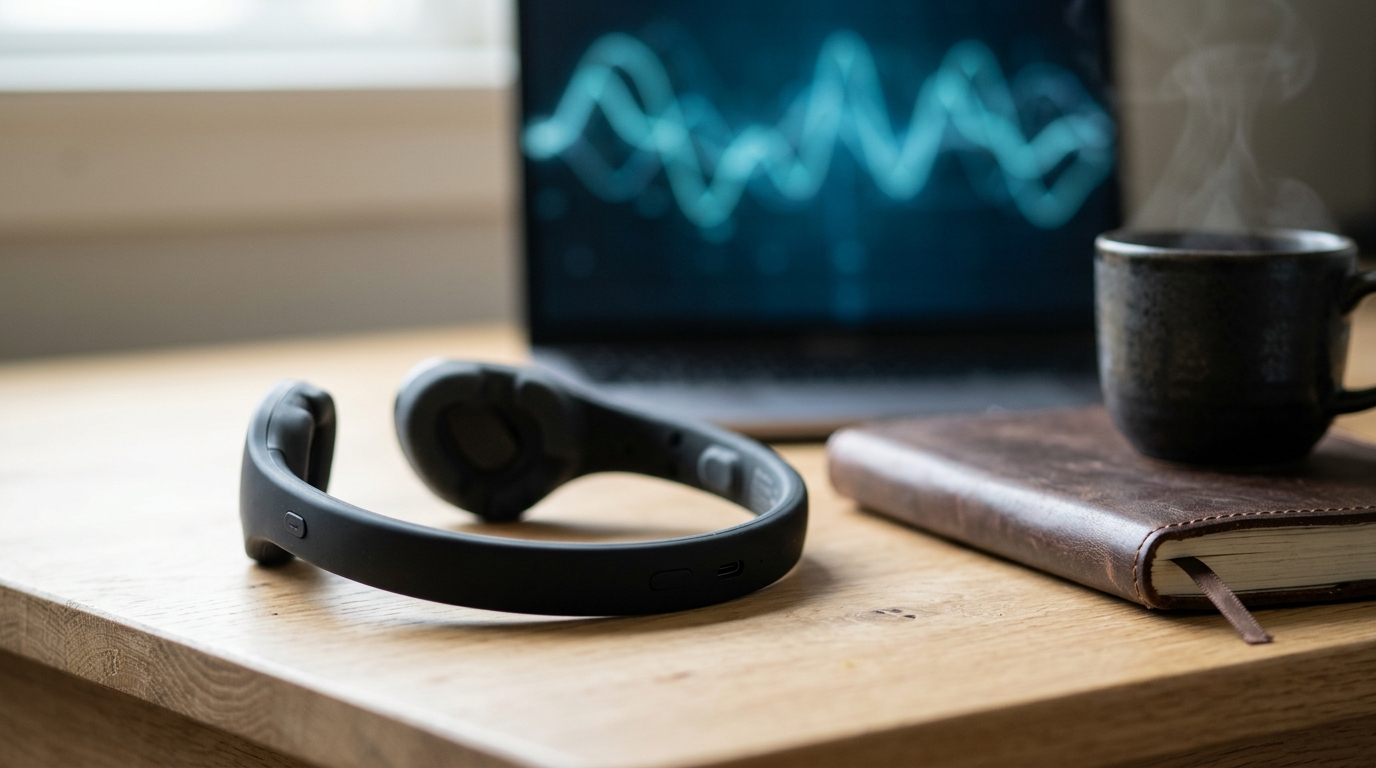
Neurotech privacy is worth weighing only under narrow conditions. A consumer EEG headband such as the Muse 2, listed at $249.99, may suit low-stakes wellness or hobby use if its data practices and limits are acceptable to you. Whether a brain implant is worth it is a different question, since implants such as Neuralink’s N1 are investigational and not for sale.
Privacy rules are still patchy. Colorado’s HB24-1058, in effect since August 7, 2024, and California’s SB 1223 both treat neural data as a distinct category, but your protections depend on where you live. Internationally, UNESCO adopted its Recommendation on the Ethics of Neurotechnology in November 2025. A global standard, however, does not replace reading a product’s privacy policy before you buy.
Key Takeaways
- Consumer EEG headbands such as the Muse 2, listed at $249.99, are the neurotech you can actually buy today, while Neuralink’s N1 implant is investigational and not for sale.
- Before you buy a headset, check whether its privacy policy states how long raw brain-signal readings are kept, whether they are shared with third parties, and how you can delete them.
- Your protection for neural data depends on where you live, since Colorado’s HB24-1058 (in effect since August 7, 2024) and California’s SB 1223 treat neural data as a distinct category while many other places say nothing specific about it.
- Consumer headsets cannot read your mind or serve as diagnostic tools, and movement such as jaw clenching, blinking, or turning your head makes their readings unreliable, so you should treat the data as rough signals and involve a doctor in any health decision.
- Start with one modest task, such as a short sleep experiment, and choose the Muse 2 at $249.99 over the Muse S Athena at $474.99 if the company’s data answers are clear.
What Can You Actually Buy Today?
Today, what you can actually buy is a consumer EEG headband, not a brain implant. The Muse 2 is listed at $249.99 and the Muse S Athena at $474.99 on Muse’s U.S. store, so consumer headbands fall roughly in the $250 to $475 range. These are the prices you will face, and they are the ones to compare against your budget.
These headbands are non-invasive EEG wearables. They rest on your head and pick up electrical activity from the scalp, and they are aimed at wellness, sleep tracking, or personal experimentation. You put one on, pair it with an app, and review what it reports. Nothing is inserted into your body, and the device stays on the outside of your head.
Implants belong to a different category. Neuralink describes its N1 implant as investigational and not for sale, and it says the device records neural activity through 1,024 electrodes spread across 64 threads. You cannot add an N1 to your cart. Neuralink’s route to participants runs through research, as laid out in its PRIME Study brochure, which estimates a six-year study with a primary phase of about 18 months.
So when you ask whether neurotech is worth it, you are almost always asking about headsets, and that shapes everything that follows. A headset’s value depends on what you plan to do with it, how the company handles the data it collects, and whether its readings are good enough for your purpose. Implants matter for the broader debate, but for a shopper, they are mainly a boundary to recognize. If a product page mentions implants next to a headset, check which of the two you could actually take home.
How Well Do Consumer Headsets Read Your Brain?
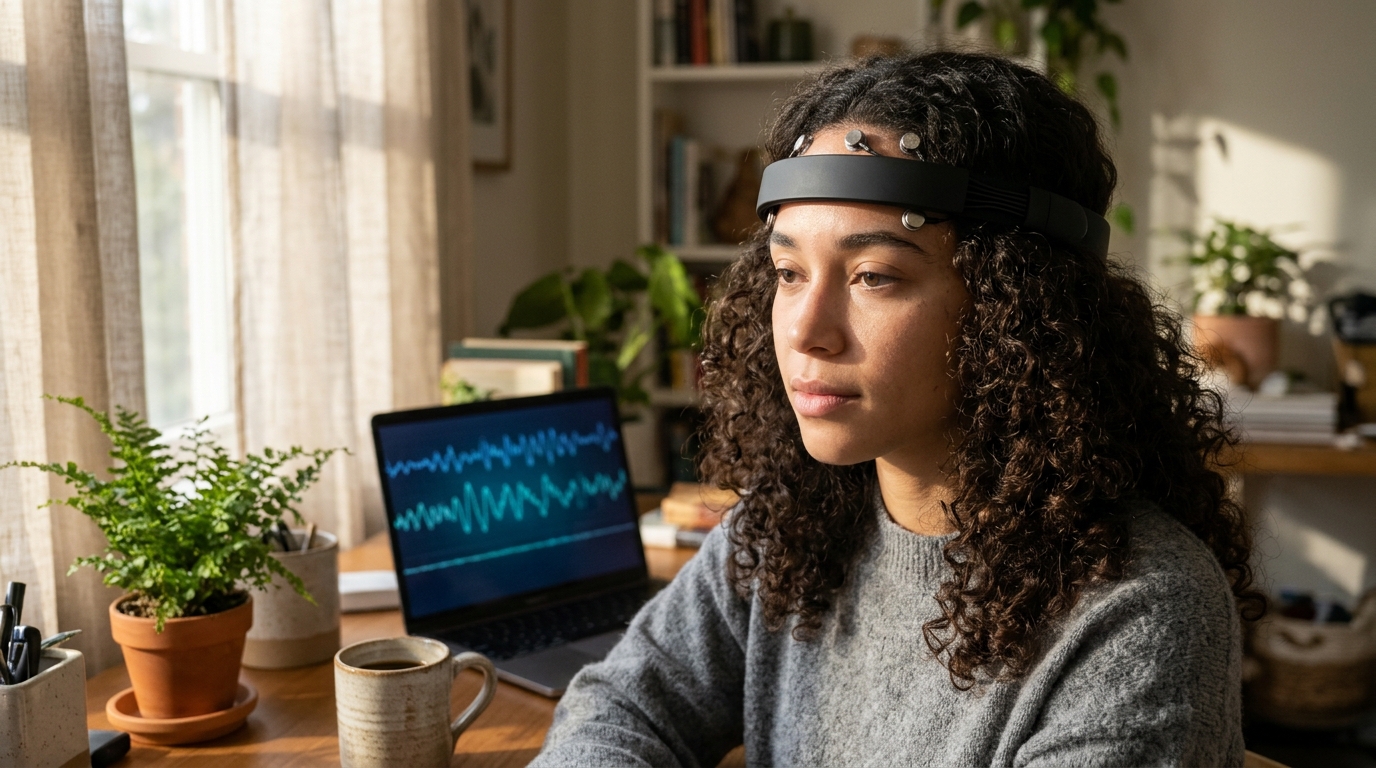
No, a consumer headset cannot read your mind, and it is not a diagnostic tool. It picks up faint electrical activity from your scalp, and whether that is useful depends on the job you give it.
The research gives a sense of how these devices are used. A 2024 scoping review in PLOS ONE identified 916 peer-reviewed studies using consumer-grade EEG since 2010, conducted across 83 countries. In that review, 44.54% of studies used the devices as an interface between a person and a computer or machine.
The same review cautions that consumer EEG signals are noisy. Movement artifacts, such as jaw clenching, blinking, or turning your head, can force researchers to remove individual trials or, in some cases, whole participants from their analyses. For you, that means a reading taken while you talk, walk, or fidget is less trustworthy than one taken while you sit still with the device properly fitted.
This is why usefulness depends on the intended task. A headset that gives you a rough sense of how relaxed you felt across several weeks asks far less of the signal than one you would rely on for a single important decision. Ask yourself what exactly you want the number to tell you, and what happens if it is wrong. If the answer is a bit of curiosity, the stakes are low. If a misleading reading could lead you to skip a doctor’s visit, the device is the wrong tool.
Treat these headsets as rough signals to explore, not as mind readers, clinical diagnostics, or verdicts about your brain or your health.
Is Your Brain Data Protected by Law?
Only in some places, and the protection is still taking shape. Colorado and California currently treat neural data as a category of its own in their privacy laws, while many other places say nothing about it specifically.
Why does neural data deserve its own label? Your browsing history shows what you clicked, but a stream of nervous-system measurements can reveal patterns about your attention, stress, or sleep that you never typed anywhere. Lawmakers have started to treat that kind of information with more care than ordinary personal data.
Colorado’s HB24-1058 defines neural data as information generated by measuring activity in a person’s central or peripheral nervous system that can be processed by or with a device. That wording is broad enough to cover headsets that record brain signals and send them to an app.
California took a different route. SB 1223 amended the California Consumer Privacy Act so that neural data falls under the definition of sensitive personal information, the category that carries extra limits on how it can be used. The amendment has one important exclusion: data inferred from non-neural information does not count. A tool that guesses your mood from your typing or your heart rate falls outside that definition, while a direct measurement of nervous-system activity falls inside it.
Protections are developing, but they depend on where you live. If you live in a state without a rule like these, or in a country that has not adopted one, your legal backing may be much thinner, so the company’s own promises carry more weight.
That is why reading the product’s data practices is the practical way to check coverage. Look for whether the company says it collects raw brain-signal readings, whether it calls them neural data, how long it keeps them, whether it shares them with third parties, and how you can delete them. If the policy is vague on any of these points, take that vagueness into account before you pay.
What Do International Ethics Rules Add for Shoppers?

International ethics rules set shared expectations for neurotechnology, but they do not give you a checklist to verify at checkout. In November 2025, UNESCO Member States adopted the Recommendation on the Ethics of Neurotechnology as an international standard-setting instrument. It calls for explicit consent and transparency, so a company should say clearly what it records and ask before using that data. It also warns against workplace use to monitor productivity or profile employees, which matters if someone suggests a headband for your job.
A UNESCO recommendation sets principles that governments can turn into their own rules. It does not, by itself, rewrite the privacy policy of the headset on your shelf. Its value to you is as a benchmark. When a product page promises privacy, you can ask whether the company meets the consent and transparency standard in plain language.
The U.S. Food and Drug Administration works at a narrower level. Its May 2021 guidance offers nonbinding recommendations on nonclinical testing and clinical-study design for implanted brain-computer interfaces meant to restore motor or sensory capabilities in people with paralysis or amputation. Nonbinding means the guidance describes what the agency recommends, not what a company must do.
For a shopper, the key point is scope. That guidance concerns clinical testing of implants, so it does not address consumer wellness headsets like the Muse 2. Judge a headset on its own terms: its stated purpose, its data practices, and the limits of its readings.
If you plan to bring a headset into your workplace, take the UNESCO warning seriously and talk with your employer before you start wearing it.
When Is the Trade-Off Worth It for You?
A consumer headset is worth it for you when the stakes are low and you accept both how the company handles your data and what the device can and cannot tell you. Think of it as a hobby gadget for curiosity about focus or evening wind-down, not something you would rely on for health decisions.
Start with the data. Before you buy, find out what the device records, how it is stored, and whether it is shared with third parties. Then check whether you can delete your readings and whether the company asks for explicit consent before using them. If the product page or privacy policy does not answer these questions clearly, treat that gap as a reason to wait.
Your tolerance for signal limits matters just as much. Movement artifacts from jaw clenching, blinking, or turning your head make single readings unreliable, so a headset works best for spotting rough patterns across several weeks. If a surprising number would send you to a doctor or make you doubt a healthy habit, the device is the wrong fit.
The implant comparison shows how much commitment real brain-computer research asks for. Neuralink’s PRIME Study brochure describes a minimum of two one-hour BCI research sessions per week, a schedule built around a clinical setting rather than your living room. Taking part is a sustained obligation, while a headset is a purchase you can set aside whenever you lose interest.
Use whatever a headset reports as a prompt for questions, such as whether you slept poorly or whether a breathing exercise seemed to help. Keep a doctor involved for anything that affects your health, because a consumer device is an exploration tool, not a diagnosis.
Deciding Before You Buy a Neural Headset

Before you buy, define one modest task, such as a short sleep experiment or a daily meditation habit. A headset that suits that goal does not need to do more. Then read the privacy policy of the device you are considering, whether it is a Muse 2 or a Muse S Athena, with that task in mind. Check whether the company calls its recordings neural data, how long it keeps them, whether it shares them with third parties, and whether you can delete them. Compare those answers with Colorado’s definition of neural data, California’s treatment of it as sensitive personal information, and the explicit consent and transparency standard in UNESCO’s recommendation. If the policy is silent on any of these points, treat that silence as a reason to wait. Share any readings you have with a clinician, who should make any decision about your health.
Deciding Before You Buy a Neural Headset
Start with the privacy policy, not the checkout button. Open the policy for the headset you are considering and copy every sentence that mentions brain signals, nervous-system data, or “neural data” into a note on your phone. Then compare those sentences against the questions in this article: how long raw readings are kept, whether they go to third parties, and how you delete them.
Next, write down the one task you want the headset to help with and the date you would stop using it. A short sleep check, with a consistent bedtime and a short review of the readings each morning, is a concrete test. Keep the device out of your cart until both lists are finished.
If a policy is silent on any of those points, email the company and ask directly. Keep the message short: which data it records from your head, how long it keeps the raw signals, and whether it shares them. If the reply is vague or never arrives, that answer is your decision.
If the answers are clear and you still want to try it, start with the lower-priced Muse 2 at $249.99 rather than the Muse S Athena at $474.99. You will learn whether the habit suits you before you spend more. Share any readings that worry you with a doctor, not only with the app.
Frequently Asked Questions
1. Is the cheaper Muse 2 enough for basic meditation or sleep tracking?
The Muse 2 is listed at $249.99 on Muse’s U.S. store, and it is aimed at wellness, sleep tracking, and personal experimentation, so it fits a modest meditation or sleep habit. It will not give you a clinical sleep assessment, so judge it by whether it helps you notice rough patterns over several weeks. Start there before paying the higher price of the Muse S Athena, which is listed at $474.99.
2. Can I ask a neurotech company to delete the brain data it has collected from me?
You can ask, and the company’s privacy policy is the first place to look for how to request deletion. If the policy does not explain the process, send a short written request asking the company to delete your raw readings and to confirm in writing once it has done so. How firmly you can enforce that request depends on the company’s own terms and on the privacy law where you live.
3. How can I tell whether a neurotech company shares or sells my neural data?
Search the privacy policy for words such as “sell,” “share,” “third parties,” and “service providers,” and read the sentences around each one to see what data they cover. If the policy does not state plainly whether neural data is sold or shared, email the company and ask before you buy. A vague or unanswered question is a reasonable reason to hold off, since unclear sharing terms leave you with little control over where your readings end up.