
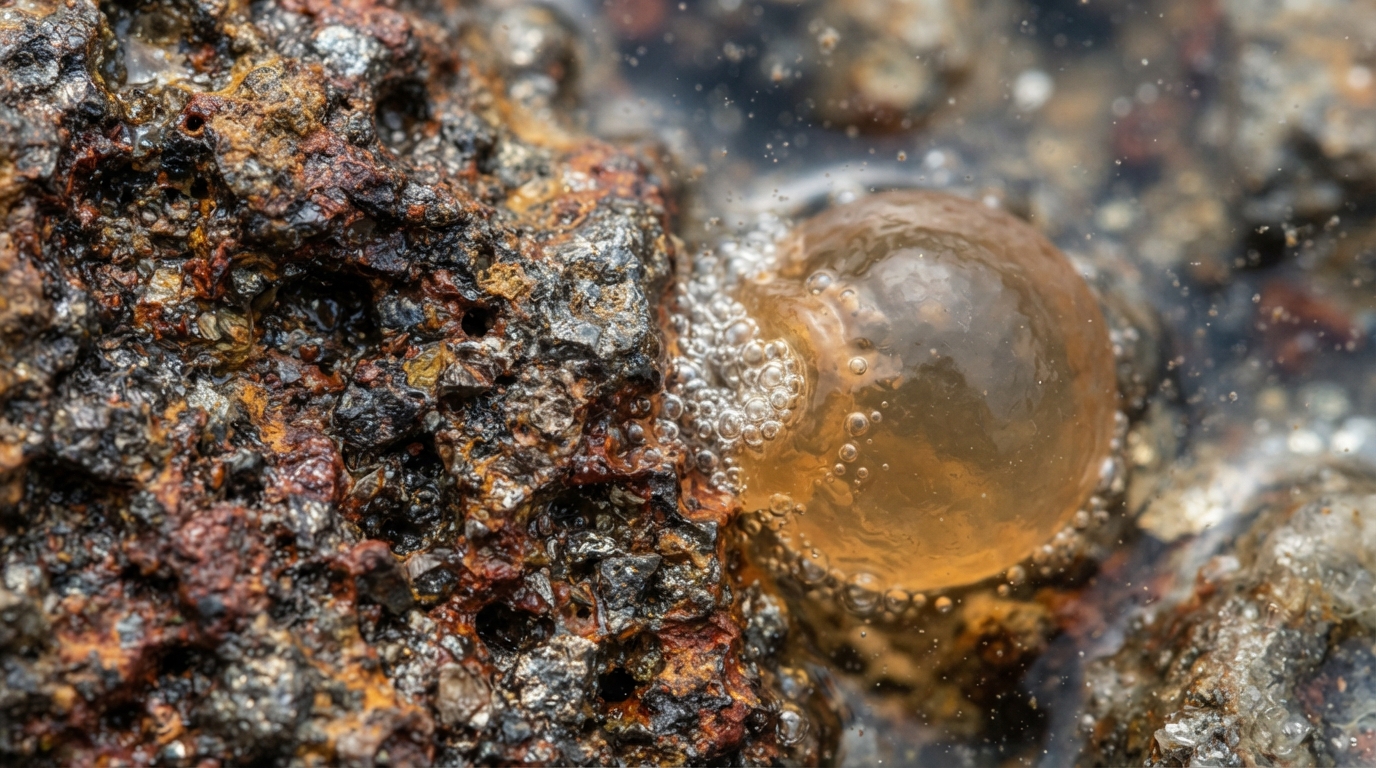
What if the first catalysts of life were not proteins or RNA, but tiny mineral particles? The mineral nanozymes theory proposes that naturally occurring nanoparticles on early Earth may have acted like enzymes by concentrating molecules and accelerating reactions needed for increasingly complex chemistry. By examining how these particles drive redox reactions, support molecular assembly, and protect fragile compounds, you can see a possible bridge between geochemistry and biology.
The underlying nanozyme chemistry is well established, but its role in the origin of life remains a compelling hypothesis rather than a settled conclusion. Understanding the theory requires separating what scientists have directly observed from what they are still testing about protocells, polymer formation, and the emergence of biological catalysis.
Key Takeaways
- Mineral nanoparticles may have acted as enzyme-like catalysts before proteins and RNA evolved, concentrating molecules and accelerating redox reactions, polymer formation, and other prebiotic chemistry.
- Iron- and manganese-rich minerals, metal sulfides, and clays could have helped organize chemical networks, protect fragile compounds, and support the formation of membrane components and protocells.
- Mineral nanozymes provide a plausible bridge between geochemistry and biology, suggesting that life may have emerged gradually through increasingly organized chemical systems rather than a single transformative event.
- The theory remains unproven: researchers still must demonstrate that mineral-catalyzed reactions could operate together under realistic early-Earth conditions and produce systems capable of self-reproduction, inheritance, and evolution.
Introduction To Mineral Nanozymes Theory
The mineral nanozymes theory proposes that naturally occurring mineral nanoparticles may have helped drive chemical reactions on early Earth before proteins and RNA evolved. You can think of these particles as inorganic catalysts with enzyme-like abilities, allowing them to accelerate reactions without being alive themselves. Many minerals are already known to support redox chemistry, concentrate molecules on their surfaces, and promote the formation of more complex compounds. The theory extends those findings into an origin-of-life hypothesis, suggesting that mineral nanozymes may have provided a bridge between simple geochemistry and increasingly organized chemical systems.
A June 2026 proposal brought renewed attention to the possibility that nanozymes helped transform inert matter into life-like chemistry. Under this view, mineral particles could have encouraged reaction networks, protected fragile molecules, and contributed to the development of protocell components in environments such as hydrothermal systems or mineral-rich pools. That does not mean the particles were alive or that they created life on their own. The evidence remains incomplete, and the transition from catalysis to biology is still unresolved. Instead, the mineral nanozymes theory gives you a scientifically grounded way to explore how nonliving matter might gradually develop cooperation, organization, and chemical behavior resembling the foundations of life.
Mineral Nanozymes Before Biological Enzymes
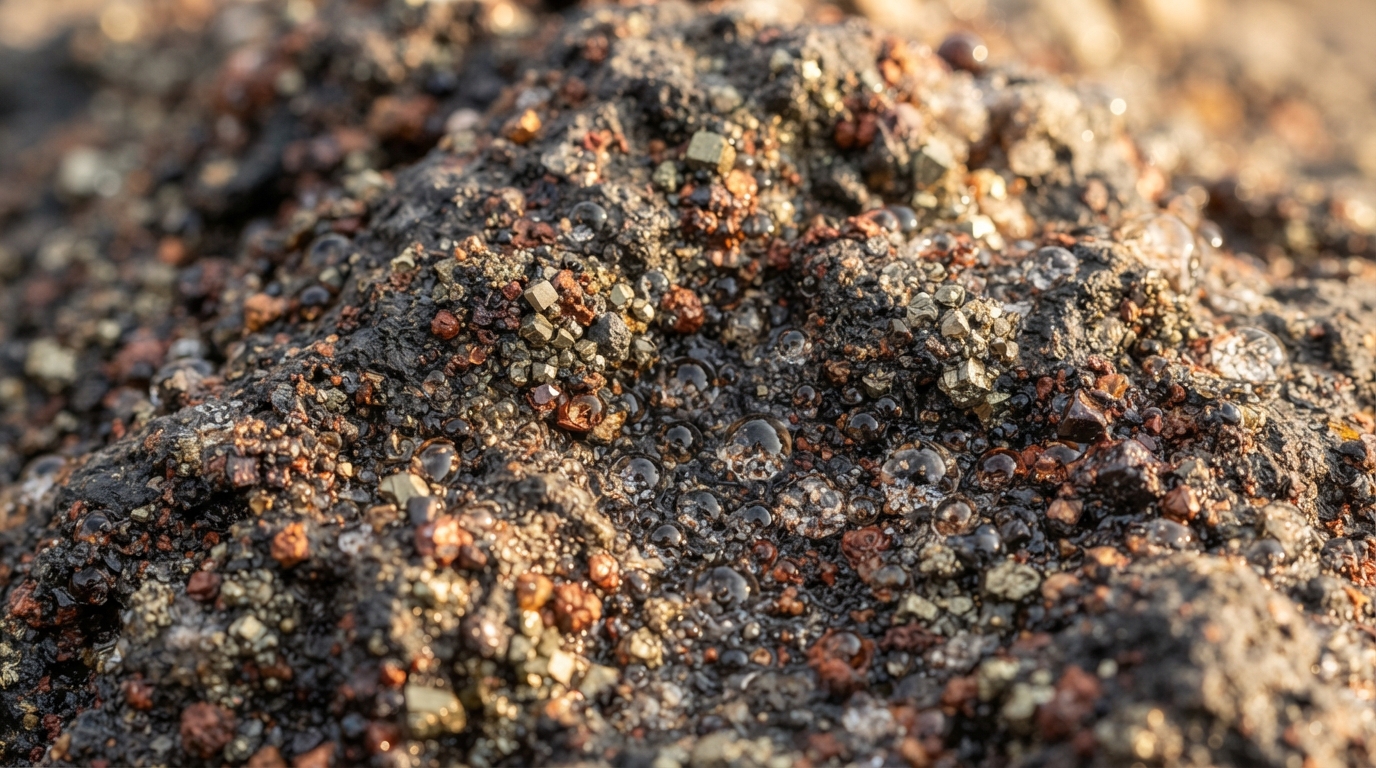
A nanozyme is a nanoscale material that accelerates a chemical reaction in ways that resemble a biological enzyme, even though it is not made from proteins. You can think of it as a reactive mineral surface that brings molecules together, transfers electrons, or helps break and form chemical bonds. Magnetite and iron sulfides can promote redox reactions, while manganese oxides can facilitate oxidation and the breakdown of organic compounds. Clays also provide charged, layered surfaces that can concentrate molecules and influence how they react. These catalytic behaviors are well established in inorganic chemistry and materials science, partly because nanoparticles have large, highly reactive surface areas.
The more ambitious mineral nanozymes theory asks whether similar particles helped chemistry move toward life before biological enzymes existed. In the proposal highlighted in June 2026, mineral nanozymes may have concentrated ingredients, protected fragile compounds, encouraged polymer formation, and driven reaction networks in early Earth environments. That possibility offers a compelling way for you to explore the boundary between nonliving matter and living systems, but it remains a hypothesis rather than a settled account of life’s origins. Demonstrating that a mineral can catalyze a reaction is not the same as showing that it assembled self-reproducing, evolving systems. The strongest conclusion is measured: mineral nanozymes could have been important chemical partners in prebiotic environments, while their central role in creating life still requires substantial experimental support.
Catalysis On The Early Earth
Mineral nanozymes theory proposes that naturally occurring mineral nanoparticles may have acted as primitive catalysts before proteins and RNA took over that role. You can think of these particles as tiny reactive surfaces that gathered otherwise dilute molecules and brought them into close contact. In hydrothermal systems, minerals rich in iron, sulfur, or other transition metals could have accelerated redox reactions, helping convert simple compounds into more chemically useful building blocks. Their uneven surfaces may also have supported polymer formation by holding molecules in place long enough for them to link together. This offers a plausible bridge between ordinary geochemistry and increasingly complex prebiotic chemistry.
The same mineral surfaces could have sheltered fragile organic compounds in environments shaped by wet-dry cycles, evaporation, and intense atmospheric radiation. As pools dried, minerals might have concentrated reactants and encouraged bond formation, while later rehydration redistributed the products into new chemical settings. In atmospheric environments, airborne mineral particles may likewise have offered reactive surfaces where gases and water-derived molecules interacted. These possibilities do not mean that minerals were alive, but they suggest that some behaviors associated with life, including selective concentration, energy management, and chemical persistence, may have emerged from nonliving matter. The theory therefore invites you to reconsider where the boundary between inert chemistry and biology truly begins.
Research into mineral nanozymes remains a developing field rather than a complete account of life’s origin. Scientists still need to determine which minerals were available, how stable their catalytic activity would have been, and whether these reactions could operate together under realistic early-Earth conditions. Even so, the concept gives you a compelling way to imagine life arising through a gradual transition from mineral catalysis to self-sustaining chemical networks. Rather than identifying one miraculous first molecule, it focuses on surfaces, cycles, and reactions that could have transformed inert matter step by step.
From Mineral Reactions To Protocells
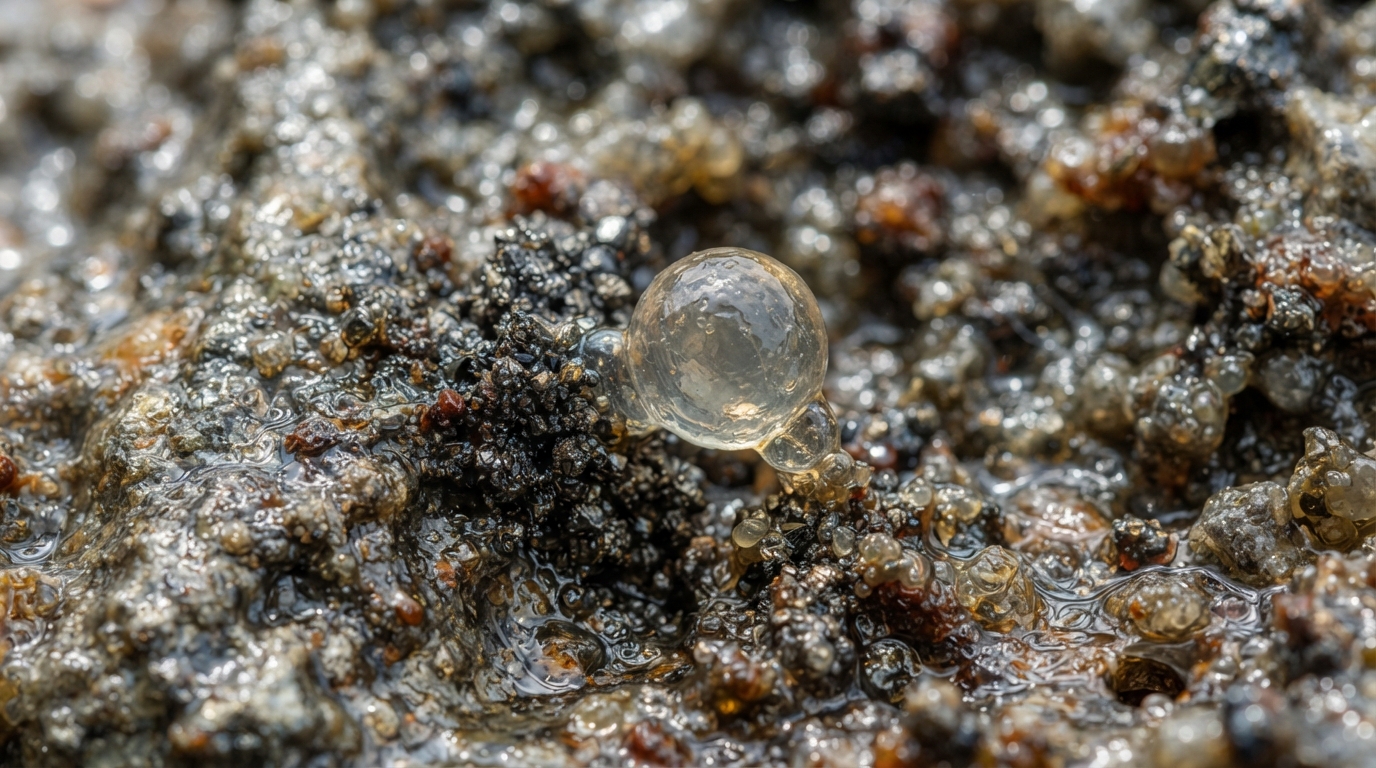
Mineral nanozymes theory proposes that naturally occurring mineral nanoparticles may have acted as primitive catalysts on early Earth, long before proteins and RNA took over that role. You can think of these particles as inorganic helpers that accelerated reactions, concentrated useful molecules, and made otherwise unlikely chemistry more efficient. Minerals containing iron, sulfur, nickel, or other reactive elements may have supported redox reactions and simple carbon chemistry in environments such as hydrothermal systems. Although the catalytic abilities of many nanoparticles are well established, their importance in the origin of life remains a compelling but incomplete hypothesis.
Over time, repeated mineral-catalyzed reactions could have linked separate chemical steps into increasingly connected metabolic networks. Those networks may have produced fatty-acid-like molecules and other compounds capable of assembling into membrane structures, creating compartments that kept useful chemistry together. Within such boundaries, mineral surfaces might also have helped protect fragile molecules, encouraged polymer formation, or supported rudimentary forms of molecular copying. You can picture this stage not as a sudden leap into biology, but as a gradual shift toward chemical systems with greater organization, persistence, and internal cooperation.
The proposed transition from mineral chemistry to protocells raises a deeper question about where life truly begins. A mineral nanozyme is not alive, yet its catalytic activity could have helped create conditions in which selection favored chemical systems that lasted longer, reproduced more reliably, or captured more resources. Once membrane compartments, reaction networks, and replicating molecules became linked, chemistry began to display properties we associate with biology, including continuity and adaptation. Protocells therefore represent a possible bridge between inert matter and living systems, while also reminding you that the boundary between the two may have emerged gradually rather than appearing in a single transformative moment.
Evidence Limits And Open Questions
Laboratory studies show that mineral nanoparticles can display enzyme-like activity under controlled conditions, including redox chemistry, molecular adsorption, and reactions relevant to forming organic compounds. You can therefore regard mineral nanozymes as plausible chemical helpers on early Earth, especially because minerals could concentrate reactants and provide reactive surfaces before proteins or RNA existed. Yet these experiments often use purified materials, carefully adjusted temperatures, and relatively high concentrations that may not reflect oceans, ponds, vents, or drying mineral surfaces. It remains unclear whether the same catalytic effects would persist amid salts, competing molecules, fluctuating pH, and repeated wetting and drying. The chemistry is credible, but the environmental setting still needs more realistic testing.
A second difficulty is that catalysis alone does not explain life. A mineral particle may accelerate several reactions without being selective enough to build a coherent network, and its surface can become blocked, dissolve, oxidize, or lose its active structure over time. You still need evidence that mineral nanozymes could sustain useful reaction cycles, protect their products, and operate reliably through changing conditions. More fundamentally, no laboratory demonstration has yet shown convincing self-reproduction or heredity in a mineral catalyst, the features needed for natural selection to preserve improvements. Without those capabilities, nanozymes may have supported prebiotic chemistry without crossing the boundary into evolving biology.
The central open question is how you get from helpful geochemical reactions to a system that stores information, reproduces, and evolves. One possibility is that mineral surfaces first organized chemical cycles, with later interactions among catalysts, membranes, and informational polymers creating increasingly autonomous protocells. However, that transition remains a chain of plausible steps rather than an experimentally established pathway. Future work must connect mineral composition and structure to long-term catalytic stability, reaction selectivity, inheritance-like behavior, and competition among evolving chemical systems. Until then, mineral nanozymes theory offers an intriguing bridge between inert matter and life, but not a complete account of how that bridge was crossed.
Mineral Nanozymes Theory Conclusion
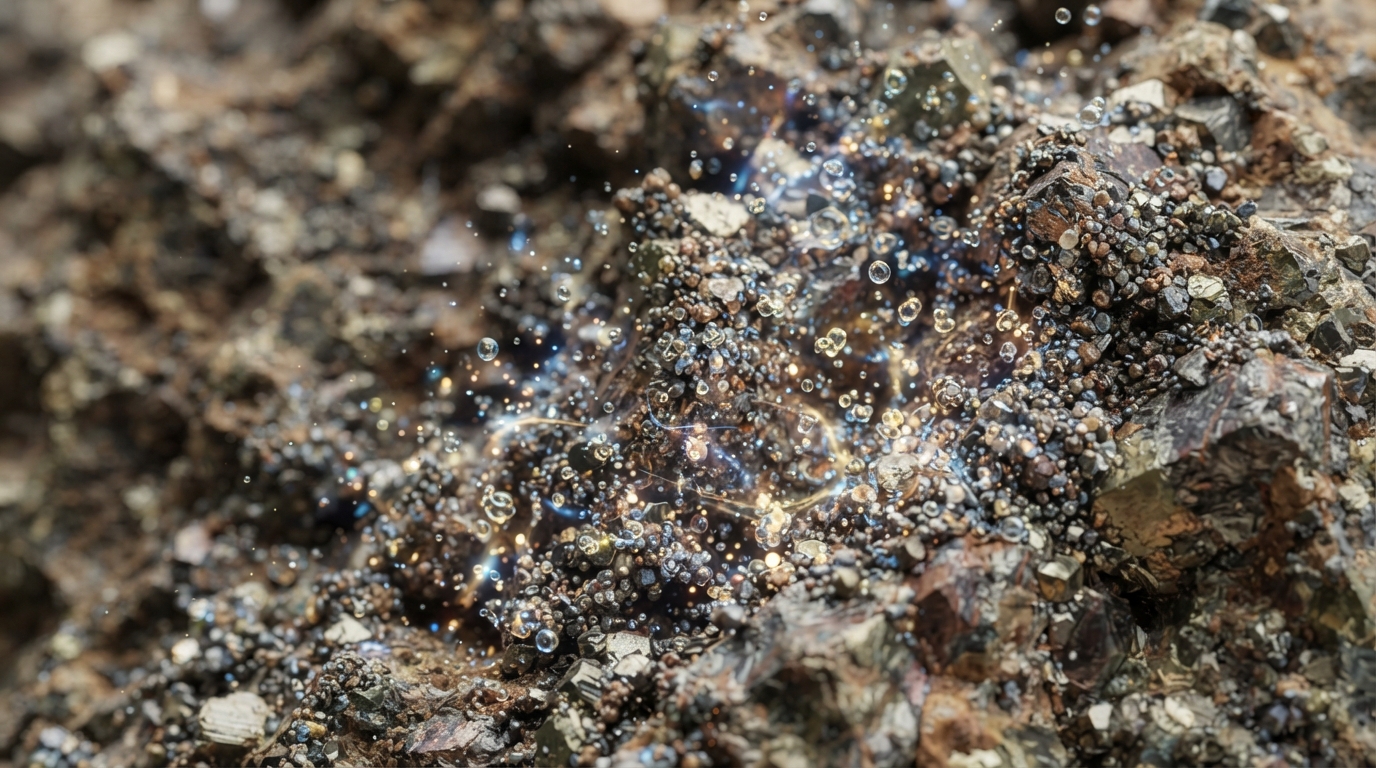
The mineral nanozymes theory offers you a compelling middle ground between ordinary geochemistry and modern biology. It begins with a well-supported observation: some naturally occurring mineral nanoparticles can display enzyme-like activity, accelerating reactions without being alive themselves. On early Earth, these particles may have concentrated molecules, promoted redox chemistry and polymer formation, or helped protect delicate compounds in changing environments. In that sense, mineral nanozymes could have served as chemical bridges, making increasingly complex reactions possible before proteins and RNA became life’s primary catalysts.
Even so, you should treat the theory as a promising framework rather than a settled account of life’s origins. Researchers still need to demonstrate how mineral-driven reactions could operate together, persist under realistic early-Earth conditions, and produce systems capable of growth, inheritance, and evolution. The theory does not yet prove that minerals transformed inert matter into life, nor does it resolve every philosophical question about when chemistry becomes biology. What it does provide is a valuable way to investigate the scientific and metaphysical boundary between the nonliving and the living, where familiar categories may have emerged gradually rather than all at once.
How Mineral Nanozymes Could Bridge Life and Geology
Mineral nanozymes theory places naturally occurring mineral nanoparticles at a possible bridge between geochemistry and biology. You can think of these particles as primitive catalysts that may have concentrated molecules, accelerated redox reactions, supported polymer formation, and helped protect fragile compounds on early Earth. Their enzyme-like activity is well established in materials science, but the claim that they transformed inert matter into life remains a developing hypothesis. The theory becomes compelling because it offers a mechanism for turning simple environmental chemistry into increasingly organized reaction networks.
The June 2026 proposal pushes this idea further by suggesting that nanozymes may have been catalysts in the transition from nonliving matter to the first living systems. For you, the deeper significance lies in how the theory challenges a strict boundary between the mineral and the biological, without requiring minerals themselves to be alive. Important questions remain about how these reactions operated in realistic early-Earth environments and whether they could produce sustained self-replication and evolution. Until experiments answer those questions, mineral nanozymes theory is best understood as a provocative scientific framework that connects established catalytic chemistry with one of life’s most enduring mysteries.
Frequently Asked Questions
1. What is mineral nanozymes theory?
Mineral nanozymes theory proposes that naturally occurring mineral nanoparticles may have acted as enzyme-like catalysts before proteins and RNA evolved. By concentrating molecules and accelerating reactions, these particles could have helped simple geochemical processes develop into more organized, life-like chemistry.
2. What is a nanozyme, and how is it different from a biological enzyme?
A nanozyme is a nanoscale material that produces enzyme-like catalytic activity without being made by living cells. Biological enzymes are usually proteins or catalytic RNA with highly specific structures, while mineral nanozymes rely on reactive surfaces, metal ions, defects, and other inorganic features to promote reactions.
3. How could mineral nanozymes have supported the origin of life?
Mineral nanozymes may have concentrated otherwise dilute molecules, accelerated redox reactions, and helped link smaller compounds into larger ones. They may also have protected fragile molecules from degradation, creating local chemical environments where increasingly complex reaction networks could develop.
4. Which minerals might have acted as natural nanozymes?
Potential candidates include iron- and manganese-containing minerals, metal sulfides, clays, and other minerals with reactive surfaces. Their catalytic behavior depends on factors such as particle size, surface structure, oxidation state, pH, temperature, and surrounding chemicals, so no single mineral is considered the definitive first nanozyme.
5. Where could mineral nanozyme chemistry have occurred on early Earth?
Likely settings include hydrothermal systems, mineral-rich pools, volcanic environments, and wet-dry cycles near shorelines. These locations could supply heat, chemical gradients, metal-rich minerals, and repeated concentration or dilution processes that support catalytic reactions.
6. Is mineral nanozymes theory proven?
The catalytic chemistry of many mineral nanoparticles is well established, but their specific role in the origin of life remains a hypothesis. Laboratory studies can show that minerals accelerate reactions or stabilize molecules, yet scientists still need to demonstrate how such activity could connect into sustained networks, polymers, and protocells under realistic early-Earth conditions.
7. Could mineral nanozymes have helped form protocells?
They may have contributed indirectly by helping produce or protect membrane components, polymers, and other molecules needed for protocell development. However, catalyzing individual reactions is not the same as creating a self-maintaining cell, so the connection between mineral activity and true protocells remains an active area of research.
8. Why is this theory important for understanding the origin of life?
The theory offers a possible bridge between nonliving geology and biological catalysis. It encourages you to view the emergence of life as a gradual transition in which mineral surfaces first organized and accelerated chemistry before biological molecules took over those functions.