

Imagine you are standing in a voting booth, torn between a choice that lowers your personal taxes and one that funds a local school you will never use. Jean-Jacques Rousseau argued that the true foundation of a free society depends on your ability to choose the latter, tapping into what he called the rousseau general will. This is not just a tally of what the majority wants in a moment of self-interest; it is the collective pursuit of the common good that exists when we look past our private biases.
Understanding this concept is essential if you want to grasp why modern democracies often feel so fractured and polarized. Rousseau makes a sharp distinction between the will of all, which is merely a messy collection of individual demands, and a unified sovereign voice that seeks justice for every citizen. By viewing the law not as a restriction but as an expression of your own highest values, you can begin to see the state as a partnership rather than a master.
Key Takeaways
- The ‘general will’ is fundamentally different from the ‘will of all’ because it prioritizes the collective common good over a mere tally of individual, selfish preferences.
- True political liberty is achieved when citizens act as both legislators and subjects, obeying laws that they have collectively authored for the benefit of the entire community.
- Being ‘forced to be free’ means that the community compels individuals to follow their own higher, rational reasoning rather than remaining slaves to their narrow, impulsive desires.
- Legitimate governance depends on shifting the focus of democratic participation from personal gain to a shared moral compass that ensures justice and equality for every citizen.
Distinguishing The General Will From The Will Of All
To understand the heart of Rousseau’s political theory, you must first grasp the vital distinction between the general will and what he calls the will of all. While the will of all is merely the sum of everyone’s private desires and selfish motivations, the general will represents a higher collective purpose aimed at the common good. You can think of the will of all as a simple tally of individual preferences, much like a group of friends trying to decide on a movie where everyone votes for their personal favorite. In contrast, the general will emerges when those same friends set aside their personal tastes to decide which film would be most beneficial for the entire group to experience together. This subtle shift in focus moves the conversation from “what do I want” to “what is best for us,” creating a foundation for true social harmony.
This distinction is particularly important when you consider how modern democratic processes often rely on a simple majority vote. For Rousseau, a majority opinion is not automatically the general will if the voters are only looking out for their own pockets or social standing. You might find it helpful to view the general will as a shared moral compass that guides a community toward justice and equality, rather than a mere competition of interests. When citizens act as part of the sovereign, they are asked to look past their private biases to identify laws that protect the freedom and well-being of every member of society. By prioritizing the collective interest over a collection of private demands, you help ensure that the resulting governance is truly legitimate and inclusive.
The Sovereign Power Of Collective Lawmaking
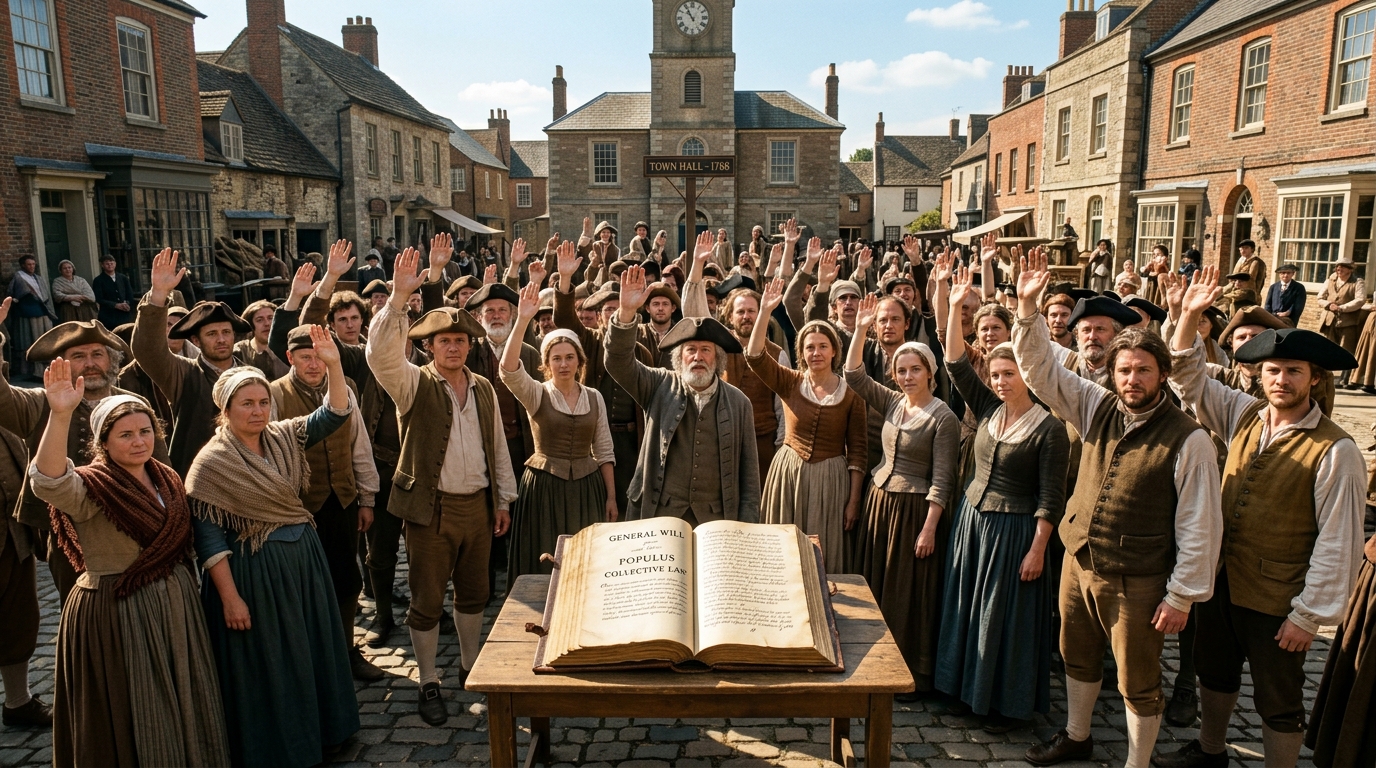
When you step into the role of a citizen in Rousseau’s framework, you are doing much more than just following rules handed down from above. You are participating in a unique dual identity where you act as both a sovereign legislator and a loyal subject of the state. This means that when you contribute to the formation of the general will, you are helping to craft the very laws that you will later be required to obey. By aligning your personal interests with the common good, you ensure that the authority of the state is not a form of external coercion but a reflection of your own rational choice. This creates a powerful connection between your individual freedom and the collective needs of your community.
The magic of this arrangement lies in the distinction between the general will and the mere sum of everyone’s private desires. While it might be tempting to think of lawmaking as a simple majority vote, Rousseau reminds you that true sovereignty requires looking past your own selfish gains to see what benefits the entire social body. When you act from this perspective, you are not losing your liberty to a faceless government, but rather gaining a higher form of moral freedom. You are essentially obeying yourself because the laws are born from a collective vision that you helped define. This process transforms the act of governance into a shared journey toward justice and a stable society.
Understanding this balance is essential for navigating the complexities of modern democracy and the responsibilities you hold as a member of the public. By recognizing that legitimate power flows from the people, you see that your voice is a vital component of the state’s moral authority. You are not just a passive observer of the legal system, but an active author of the social contract that keeps the community together. This relationship ensures that the laws remain grounded in fairness and the pursuit of the common interest. Ultimately, you find that true political liberty is found in the discipline of living under a system of rules that you have collectively authored for the benefit of all.
Unpacking The Paradox Of Being Forced To Be Free
At first glance, the idea of being forced to be free sounds like a total contradiction, but Rousseau invites you to look deeper into what true liberty actually means. You might think of freedom as the ability to do whatever you want at any given moment, yet Rousseau argues that this is merely being a slave to your own impulses and selfish desires. When you participate in the general will, you are choosing to follow a higher, rational law that you have helped create for the common good. By aligning your personal actions with this collective interest, you are actually liberating yourself from the narrow whims of your ego. Therefore, when the community compels you to follow the general will, it is simply bringing you back to the rational path you would have chosen for yourself if you were acting with perfect clarity.
This concept relies on a sharp distinction between your private interests and the shared needs of the community, which Rousseau calls the common good. You can imagine a scenario where everyone wants lower taxes for themselves, but everyone also recognizes that the city needs functional roads and schools to thrive. While your individual will might lean toward keeping your money, your role as a citizen understands that the collective benefit of infrastructure is more important. By setting aside your personal bias to support the general will, you achieve a form of moral freedom that transforms you from a solitary individual into a vital part of a sovereign people. This process ensures that the laws governing your life are not arbitrary impositions, but are instead the reflections of your own highest reasoning and civic commitment.
Redefining Your Role in the Common Good
Rousseau’s concept of the general will serves as a powerful reminder that your role in a democracy extends far beyond simply casting a vote for your own personal gain. By distinguishing the common good from the mere sum of individual desires, Rousseau challenges you to look past your private interests and consider what truly benefits the community as a whole. This perspective transforms the act of citizenship into a shared journey toward justice and collective well-being. Understanding this distinction helps you navigate the complexities of modern governance with a clearer sense of purpose and responsibility. It encourages a shift in mindset where you see yourself not just as a consumer of state services, but as an active participant in a living social contract.
The legitimacy of the state rests upon its ability to reflect this collective vision, ensuring that laws are more than just the dictates of a powerful majority. When you engage with the idea of the general will, you recognize that true freedom is found in following laws that you have helped create for the benefit of everyone. This intellectual framework remains vital today as we grapple with how thinkers like Thomas Hobbes and the Leviathan shaped modern authority and our understanding of social order. By prioritizing the common interest, you help uphold the moral foundation that keeps a society cohesive and fair. Ultimately, Rousseau’s insights empower you to advocate for a political system that honors the dignity and rights of every individual within the group.
Frequently Asked Questions
1. What exactly is the difference between the general will and the will of all?
The will of all is simply a collection of individual, selfish desires added together, like a group vote based on personal gain. The general will is a higher collective purpose that emerges when you set aside your private interests to focus on what is truly best for the community as a whole.
2. Does the general will always mean the same thing as a majority vote?
No, because a majority can still be motivated by selfish interests or private biases. You reach the general will only when the decision reflects the common good and treats every citizen with equal justice, regardless of how many people are in the voting block.
3. How can you determine what the general will is in a real-world situation?
You find the general will by looking past your personal taxes or private benefits and asking what law would be most fair for everyone. It requires you to act as a citizen first, seeking a unified voice that promotes social harmony rather than individual profit.
4. Does following the general will mean you lose your personal freedom?
Rousseau argues that you actually gain a higher form of freedom because you are obeying a law that you helped create through your own reason. By aligning your actions with the common good, you transition from being a slave to your impulses to being a master of your own civic life.
5. Why is this concept relevant to the political polarization we see today?
Modern democracies often feel fractured because we focus on the will of all, which is just a clash of competing private demands. When you shift your perspective to the general will, you begin to see the state as a partnership for justice rather than a battleground for individual interests.
6. Is it possible for the general will to be wrong?
The general will is always intended to be right and tend toward the public utility, though the people can sometimes be deceived about what that utility actually is. Your goal as a member of the sovereign is to remain informed and selfless so that the collective decision remains focused on genuine justice.