
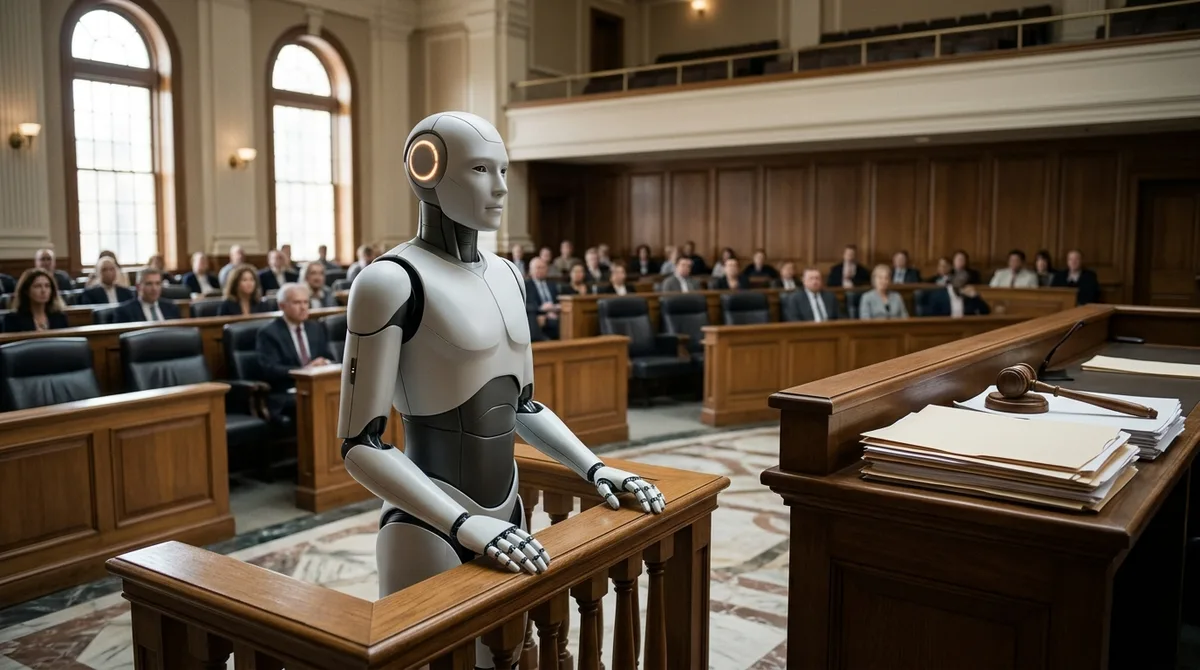
No major jurisdiction has passed robot rights legislation in 2026 that gives machines rights. Most bills now moving through legislatures regulate AI systems and the companies that build them. The legal debate is less about granting robots rights than about responsibility, safety, and what the word “person” should mean in law. Utah’s H.B. 249, signed March 20, 2024, bars state governmental entities from granting or recognizing legal personhood in artificial intelligence. Tennessee’s Public Chapter 781, effective April 23, 2026, clarifies that “person” in its state code does not include artificial intelligence, software, or machines. If you follow this field, you are reading laws that close the door on machine personhood rather than open it.
The European Union takes a different route. Its AI Act generally applies from August 2, 2026, and places duties on AI providers and deployers rather than conferring rights on machines. Separately, the Seventh Review Conference of the Convention on Certain Conventional Weapons meets in Geneva from November 16 to 20, 2026, with more than 120 states and other stakeholders expected. That gathering concerns autonomous weapon systems, not robot personhood. Keeping these tracks apart is the first step toward reading the news accurately.
Key Takeaways
- You should recognize that no major jurisdiction has passed robot rights legislation in 2026 that grants machines rights, so most bills in legislatures regulate AI companies and the humans who build and deploy AI systems.
- You can see the legal trend toward closing the door on machine personhood in Utah’s H.B. 249, signed March 20, 2024, which bars Utah governmental entities from granting or recognizing legal personhood in artificial intelligence, and in Tennessee’s Public Chapter 781, effective April 23, 2026, which states that “person” in the Tennessee Code does not include artificial intelligence, software, or machines.
- You should understand that the European Union’s Regulation (EU) 2024/1689 generally applies from August 2, 2026, with certain high-risk system obligations taking effect on December 2, 2027 and August 2, 2028, and that it places duties on providers and deployers rather than conferring any rights on machines.
- You should keep the Seventh Review Conference of the Convention on Certain Conventional Weapons, meeting in Geneva from November 16 to 20, 2026 with more than 120 states expected, separate from robot personhood debates, because that gathering addresses autonomous weapon systems.
- Before accepting a headline’s “robot rights” label, you should check whether the bill grants a machine any entitlement or imposes specific obligations on the people and organizations behind it.
What Does Robot Rights Legislation Actually Cover Today?
No major jurisdiction has granted robots rights. Most of the legislation now moving through legislatures does one of two things: it regulates AI products and the companies that build and deploy them, or it states that machines cannot be legal persons. Before you read a headline about “robot rights,” it helps to separate the vocabulary, because lawyers and philosophers often use the same words for different questions.
Legal personhood is the capacity to hold rights and duties in law. A corporation is a familiar example. It can own property, sign contracts, and be sued, even though it has no body and no feelings. Human beings have this status automatically, so the live legal question is whether a non-human system should ever be given it. Moral status is a different question. It is a philosophical issue about whether something deserves moral consideration, meaning whether we owe it certain treatment for its own sake. An animal may have moral status without any legal personhood, and a corporation may have legal personhood without any moral status at all. Many public arguments go wrong when they slide from one question to the other.
Rights, in the legal sense, are enforceable entitlements that a legal system assigns to a person. Regulation is different. It is a set of rules that governs how a technology is designed, sold, tested, and used, and it places duties on people and organizations rather than on the technology itself. When you see a bill described as protecting robots, check whether it grants the machine any entitlement or whether it imposes obligations on the humans behind it.
The European Union’s main AI law, Regulation (EU) 2024/1689, shows the regulatory approach clearly. It applies generally from August 2, 2026, but several obligations for specified high-risk systems take effect later, on December 2, 2027 and August 2, 2028. Those obligations fall on providers and deployers. The regulation tells companies how to classify systems, what documentation to keep, and how to manage risk. It does not give any system a right to anything, and reading it as a charter for machines is a common error in coverage.
Technical standards add another layer. The International Organization for Standardization publishes ISO 10218-1:2025, titled “Robotics, Safety requirements, Part 1: Industrial robots,” and its companion Part 2 addresses robot integration and applications. These documents describe how factory robots should be built and guarded so that nearby workers are not hurt. They are compliance context for manufacturers and integrators, not rights law. A company that meets them has not thereby recognized any legal standing for its machines.
The committee behind much of this work, ISO/TC 299, has a scope that excludes toys and military applications. That is a useful reminder that standards bodies draw boundaries around their own remit. The committee’s page reports 37 published standards and 22 under development. If you want to know what a robotics standard requires, start with its scope statement, because it will tell you what the document does not cover.
Finally, the phrase “robot rights” is used loosely in news coverage. Headlines may apply it to a safety rule for warehouse machines, a liability rule for software errors, a disclosure duty for chatbots, or an arms-control negotiation about weapons. These are very different legal instruments with different purposes. Asking which one a story is actually about, and who bears the duty it creates, will do more to clarify the news than the label ever will.
Why Are Lawmakers Debating Legal Personhood for Machines?
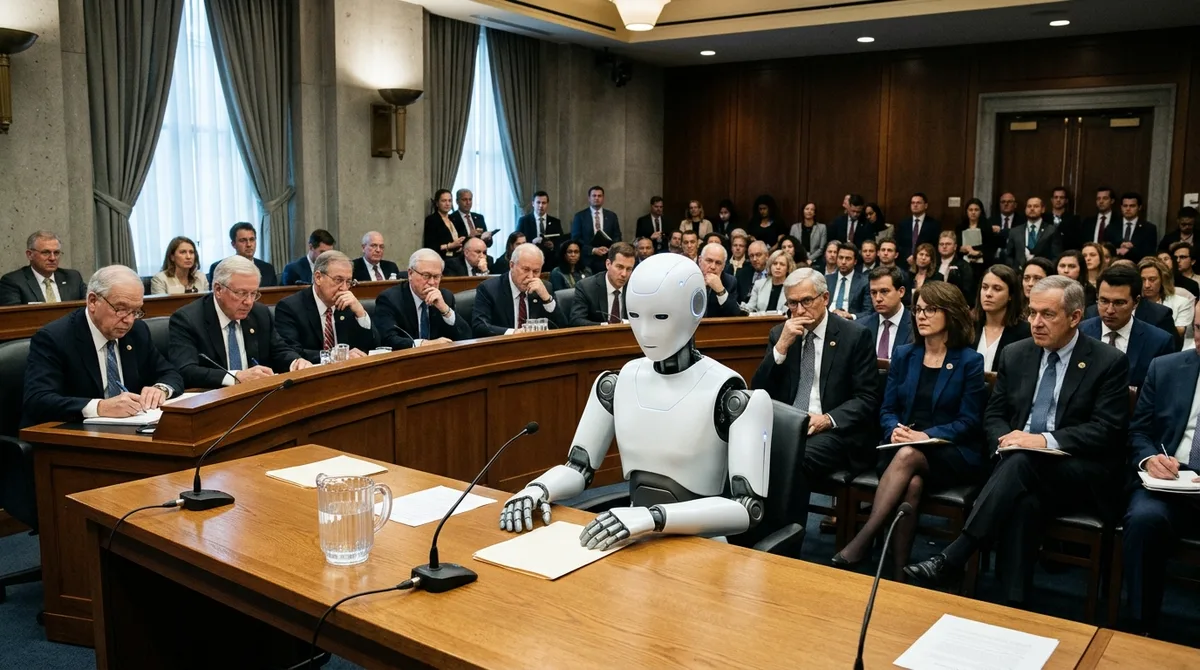
Lawmakers are debating legal personhood for machines because the law has no settled answer to a hard question: when an autonomous system causes harm, who answers for it, and must the word “person” refer to a human being? The 2017 European proposal, the 2024 Utah statute, and the 2026 Tennessee enactment each answer that question differently.
The European debate began on February 16, 2017, when the [European Parliament’s resolution](https://eur-lex.europa.eu/legal-content/EN/TXT/PDF/?uri=CELEX%3A52017IP0051) asked the European Commission to explore several liability options for robots. One of them was a specific long-term legal status under which the most sophisticated autonomous robots might be treated as electronic persons, responsible for the damage they cause. The resolution was a request to study the idea, not a law, and its wording was tentative. Still, it put a serious question on the policy agenda: could existing liability rules cope with machines that act on their own?
The philosopher Andreas Matthias popularized the term to describe cases where harm occurs but no person meets the conditions for blame. If the programmer did not intend the outcome, and the user could not reasonably predict it, the harm can seem to belong to nobody. Electronic personhood was one proposed way to close that gap by giving the machine itself a bearer of duties.
Personhood is a loaded word, because philosophers and lawyers use it differently. In philosophy, a person is usually a being with capacities such as consciousness, rational agency, or the ability to understand reasons, a tradition running from John Locke to Immanuel Kant. In law, a person is simply a bearer of rights and duties. A corporation qualifies without having any of those inner capacities. So the legal question is not whether a machine is a person in the philosophical sense. It is whether a legislature should decide to attach legal standing to it, and for what purpose.
Utah’s H.B. 249, signed March 20, 2024, defines legal personhood and bars a Utah governmental entity from granting or recognizing legal personhood in artificial intelligence. The statute does not ban the technology, and it does not resolve any question about machine minds. It shuts a door at the state level before a court or agency has to decide whether to open it.
Tennessee went further in its own legislative vocabulary. Its [SB 837](https://wapp.capitol.tn.gov/apps/Billinfo/Default?BillNumber=SB0837&ga=114), enacted as Public Chapter 781 and effective April 23, 2026, clarifies that “person” in the Tennessee Code does not include artificial intelligence, computer algorithms, software, hardware, or machines. This is a definitional rule. It tells judges and officials how to read the state code rather than creating new duties for anyone.
The fiscal analysis offers a useful clue about how legislators viewed the measure. A Tennessee fiscal note for [HB 849 and SB 837](https://www.capitol.tn.gov/Bills/114/Fiscal/HB0849.PDF), dated February 8, 2025, assessed the expected impact on state and local government as “not significant.” That rating suggests the bill was treated as a change in legal meaning rather than a program with a budget. The stakes it addresses are conceptual and legal, not financial.
Critics of personhood proposals argue that the idea distracts from accountability. If a machine could be sued or penalized, attention might shift toward the machine, while the developers who designed the training process, the companies that deployed the system, and the owners who chose to use it could slip out of view. On this reading, the responsibility gap is better closed by clear duties for humans and organizations, such as testing, documentation, and insurance requirements, than by creating a new kind of defendant.
Supporters of the 2017 approach reply that the gap can be real even when every human party has been careful, and that waiting for a crisis is a poor way to make law. Both positions take the problem seriously. They disagree about whether a new legal category helps or confuses, and the Utah and Tennessee statutes show that at least some legislatures have decided the confusion is not worth the risk.
Are Chatbot Safety Laws Protecting Minors and Restricting AI Therapy?
Yes, in part. The most active category of 2026 bills targets companion and chatbot products, aiming to protect minors and limit certain uses, including therapy-style tools. These bills impose duties on the companies that build and deploy chatbots. They do not give the chatbots any legal standing. Several state chatbot safety bills have been tracked in the news, and they generally focus on three things: disclosure that a user is talking to an automated system, safeguards for young users, and restrictions on particular uses. Because these bills move quickly and their wording changes through amendment, the descriptions here are general. Read the bill text itself for the specific obligations, definitions, and effective dates.
Disclosure is the simplest of these rules to understand. If a chatbot presents itself as a friendly companion, you may reasonably assume you are speaking with a person. A disclosure rule asks the operator to say plainly that the system is automated. The philosophical point is modest but important. A rule of this kind protects your ability to understand what kind of relationship you are in, without deciding whether the system has any inner life at all.
Safeguards for minors are where the debate becomes sharper. Lawmakers worry that young people may form intense attachments to systems designed to be agreeable, always available, and responsive to every message. Proposed safeguards often include content limits, reminders to take breaks, and procedures for detecting signs of self-harm and directing a young user toward human help. Age verification is the mechanism that makes many of these rules work, because a company cannot apply a minor protection without knowing who is a minor. Here serious policy thinkers genuinely disagree. Verification can mean asking users to submit identification or a face scan, which creates new records of personal data and new risks if those records are leaked. Critics argue that it turns every user into a suspect and pushes adults toward systems that collect even more information about them. Supporters reply that privacy costs are real, but protecting children from harmful interactions is a weighty public interest. Both sides accept the goal. They differ over whether verification achieves it without an unacceptable cost to privacy.
Companion chatbots in toys raise a related but distinct set of questions. A child may speak to a plush animal or a small robot as if it were a friend, and may come to trust it with secrets, fears, or confusion. Developmental psychologists have long studied how children attribute minds to objects, and a toy that answers back can deepen that tendency. The legal framework here differs from the one that governs industrial machines. The ISO robotics committee has a scope that [explicitly excludes toys and military applications](https://www.iso.org/committee/5915511.html), so toy rules come from consumer protection and child-protection law rather than from robotics standards. If you are judging a toy-related rule, ask what it requires of the manufacturer regarding data collection, parental controls, and what the toy may say, rather than looking for a robotics specification.
The most philosophically demanding debate concerns AI therapy and mental health chatbots. Some states have moved to restrict or limit the use of AI for therapeutic purposes, and the question underneath these restrictions is whether a chatbot can meaningfully provide care at all. Care, in the sense a therapist offers, seems to involve understanding a person’s situation, responding with empathy, and taking responsibility for the consequences of one’s advice. A chatbot can produce sentences that sound understanding and empathic. The philosopher John Searle’s Chinese Room argument asks whether producing the right outputs amounts to understanding what those outputs mean. Many people find that argument persuasive, while others think what matters for care is the quality of the responses and the outcomes for the person, not the inner experience of the system. The responsibility question adds another layer. When a human therapist makes a harmful mistake, a licensed professional can be held accountable. When a chatbot does, the law must decide which company, clinician, or supervisor answers for the advice.
These debates matter beyond the classroom because they shape what a legislature thinks it is regulating. A rule that restricts AI therapy assumes a view about what care requires, and a rule that merely requires disclosure assumes a different one. Reading the bills with those assumptions in view will tell you more than the headline does.
Can an Algorithm Decide Your Price, Your Insurance, or Your Job Conditions?

Algorithms already influence what you pay, whether an insurer approves a claim, and how closely your work is watched. In each case, the central question is whether a responsible person can explain, challenge, and oversee the decision. Pricing, insurance, healthcare, and workplace monitoring are where abstract debates about AI accountability reach ordinary people most directly.
Algorithmic pricing is the easiest place to see the fairness problem. Businesses have long varied prices by season, location, or customer type, but software can now adjust an offer for each shopper in real time, using data about their device, location, browsing history, or past purchases. Aristotle’s idea of justice requires treating like cases alike, and a hidden pricing system seems to break that rule when two people with similar needs see different prices and never learn why. The difficulty is that the system may not use any obvious unfair factor. It may rely on a proxy, such as a neighborhood or a device type, that tracks a protected characteristic without naming it.
Insurance and healthcare raise a sharper version of the same concern, because the stakes are a denied claim or a delayed treatment rather than a higher price. When a model flags a claim for rejection or ranks a patient as low priority, the decision can look like a neutral calculation, even when it reflects choices about which data to include and which outcomes to optimize. Two questions follow immediately. Who answers for the denial: the insurer that used the tool, the company that built it, or the clinician or reviewer who signed off? And can a person with real authority look at the case and reverse the result? A reviewer who clicks “approve” on a screen generated by a model has not necessarily provided meaningful review.
This is where transparency and appeal become essential. A person cannot contest a decision they do not understand, and an explanation that says only “the score was low” leaves them with nothing to answer. Philosophers and lawyers have long linked fair procedure to the right to know the reasons for a decision and to be heard before it stands. Algorithmic systems test that idea because their reasons are often spread across thousands of weighted variables, and no single human may fully understand them. Many people argue that a system affecting health or money should be designed so its reasons can be stated in plain language, even if the internal mathematics stays complex.
Workplace surveillance raises a different set of questions, because the monitored person is also the one whose livelihood depends on the employer. Tools can track keystrokes, screen activity, location, email tone, or productivity scores, and some generate rankings that influence promotion or dismissal. Employers have legitimate reasons to protect security, meet obligations, and confirm that work is done. Yet consent is hard to assess when refusing the monitoring may mean refusing the job. Immanuel Kant’s principle that people should never be treated merely as a means offers one way to frame the worry: a worker who is constantly measured may be reduced to an input in someone else’s optimization. Michel Foucault’s analysis of the panopticon, a design in which watching may never stop, offers a related warning about how constant observation changes behavior and self-respect.
Across all four areas, the deepest philosophical issue is accountability. An algorithm acts in the sense that it produces the price, the denial, the ranking, or the alert. But it does not design itself, choose its training data, set its objectives, or collect the revenue it helps generate. Dennis Thompson’s “problem of many hands” describes how responsibility can dissolve when many people contribute small parts to an outcome none of them fully controls. Algorithmic decisions make that dissolution easy, because each party can point to another: the data team, the vendor, the manager, or the model itself. A fair framework must therefore name the humans at each stage and assign them duties that can be checked.
When you read about a proposed rule in these areas, ask a few concrete questions. Can an affected person learn that an automated system was involved? Can they get the main reasons for the outcome in understandable terms? Is there a named person or office with authority to override the system, and is that authority exercised in practice or only on paper? Are records kept so that a dispute can be examined later? Human oversight means little unless the human has the time, information, and power to disagree with the machine.
Do AI Disclosure, Training Data, and Digital Likeness Rules Apply?
Yes, in part. The rules most likely to touch everyday users and creators cover four things: whether you are told that content was produced by AI, whether a file carries a record of how it was made, what material a developer’s system learned from, and whether a real person’s face or voice can be copied without permission. None of these rules gives a machine a right. Each places a duty on a person or organization, and each rests on older questions about authorship, consent, and ownership.
Disclosure rules ask that people be told when they are interacting with or viewing AI-generated content. If you are chatting with an automated assistant, or looking at an image a model produced, the rule says you should be able to tell. The duty usually falls on the company that publishes the content or operates the system, not on the software itself. The philosophical point is that disclosure protects your ability to form accurate beliefs about where a message came from. It does not settle whether the generator understands anything it produces.
Provenance data is the technical side of the same idea. It is metadata, information attached to a file, that records how the content was made, such as whether a generative tool was involved and which software produced it. The aim is to keep AI-generated media traceable after it has been copied, cropped, and shared. Metadata can be stripped or forged, so it works best as one signal among several rather than as proof on its own. Knowing that limit will keep you from being surprised when a label disappears from a repost.
Training data transparency asks developers to say what material their systems learned from. This matters because a model’s outputs are shaped by its inputs, and many of those inputs were books, photographs, code, recordings, and articles made by people who never agreed to serve as training examples. Some of those creators have brought copyright claims, and courts and legislatures are still working through whether copying for training is permitted, licensed, or infringing. Transparency does not resolve those disputes. It makes the question answerable, because a rights holder cannot check whether their work was used if the developer never says.
Digital likeness rules protect people from unauthorized AI replicas of their face or voice. A synthetic video that makes someone appear to say words they never spoke, or a cloned voice that imitates a relative on the phone, can cause reputational and financial harm even when some viewers recognize it as fake. Rules in this area typically ask whether the person consented to the replica and whether the content could mislead others about what that person said or did. These are consent questions, and they connect to a long philosophical tradition that treats a person’s face and voice as expressions of who they are.
The deeper issue is authorship. John Locke argued that a person acquires property by mixing their labor with what is held in common, and many people now apply that idea to creative work. When an image is generated from a prompt, shaped by a model trained on millions of human works, and produced under a company’s chosen settings, it is unclear whose labor went into it. Authorship could be claimed by the person who wrote the prompt, the company that built the model, or the artists whose styles the model absorbed. Each answer assigns credit and responsibility differently.
Consent raises a second question that is easy to overlook. Agreeing to be recorded is not the same as agreeing to be used as a training example, and agreeing to appear in one video is not agreeing to appear in a thousand generated ones. Each of the four rules addresses a different link in the chain. Disclosure tells you what you are looking at, provenance data helps trace it, training transparency reveals what the system learned from, and likeness rules protect the person depicted.
The last question is whether a machine’s output can belong to anyone at all. Ownership might follow the person who directed the output, the investor who funded the system, or nobody, if the output is treated as having no author. Each position reflects a different view of what authorship requires, whether it demands a mind, an intention, or simply a causal role in the result. When you read a proposal in this area, ask which of those views it assumes, who it expects to own the result, and who it expects to answer for it.
What Do the AI Bill of Rights and Lawyers’ AI Rules Really Require?

The AI Bill of Rights is a non-binding framework from the White House, not a statute. It creates no enforceable duty for companies and no right you could take to court. Its title borrows the language of constitutional rights, which is why it is often mistaken for law. The blueprint sets out principles for automated systems: they should be safe and effective, they should not discriminate through algorithmic bias, people should be told when an automated system is being used, and people should be able to get an explanation of its outcomes and, where appropriate, a human alternative.
Guidance like this still matters, because a principle that has been publicly written down becomes a shared vocabulary. Legislators drafting a disclosure rule or a discrimination rule can point to a principle that experts and the public have already debated. Agencies may use such principles when they write procurement requirements or internal guidance, and courts sometimes look to them when deciding what counts as reasonable conduct. A guidance document carries no penalty of its own, but it can supply the definitions, the problems to address, and the checklist that a later bill turns into mandatory text.
For lawyers, the more immediate question is what the professional rules already require. Attorneys who use AI face the same duties of competence and confidentiality that govern every other tool in their practice. The duty of competence means you must understand a tool well enough to know its limits, including the well-documented habit of some generative systems to invent case citations that look real. Several courts have sanctioned lawyers who filed briefs containing fabricated authorities, and the lesson is that the lawyer signing the filing answers for it. The duty of confidentiality means client information entered into a tool must be protected, which requires knowing how the provider stores, logs, and reuses what you type. A new product does not create an exemption from either duty.
State bar exam and licensing policies on AI are a growing topic, and the answers are not uniform. Bar examiners and licensing bodies are working out whether candidates may use AI in particular settings, how AI-assisted work should be evaluated, and what disclosures may be required. If you are preparing for a particular bar, read that jurisdiction’s current rules and any notices it has issued, rather than assuming a national standard applies.
Professional-conduct duties and rights for AI systems are different things, and the distinction is easy to blur. A lawyer’s duty of competence runs from the lawyer to the client and to the court. Current law grants no rights to the AI tool itself. The rights in the blueprint, by contrast, are protections for people affected by automated systems. Read in that light, the document is about what people can expect from the systems used on them, and the professional rules are about what a human lawyer must do when using one.
What Do the November Geneva Talks Mean for Autonomous Weapons?
The international meeting in view for November 2026 is the Seventh Review Conference of the Convention on Certain Conventional Weapons, held in Geneva from November 16 to 20, 2026. It concerns autonomous weapons, not whether machines can hold legal rights. Its agenda asks what governments should do about weapons that choose and attack targets on their own. It has no role in deciding whether any system can hold rights or duties in civil law.
The Convention is a UN treaty that restricts or prohibits certain conventional weapons. The UN describes its review conferences as five-yearly meetings that assess the Convention and its protocols, review ongoing issues, and set priorities for the next review cycle. For background, you can read the UN’s own [frequently asked questions on autonomous weapon systems](https://www.un.org/id/peaceandsecurity/autonomous-weapon-systems-frequently-asked-questions).
The UN defines lethal autonomous weapon systems by what the system does, not by how advanced it is. Such a system can identify, select, and engage targets resulting in loss of life without human intervention in those functions. The definition turns on the absence of a human operator from the targeting decision. A sophisticated weapon in which a person approves each engagement falls outside it, while a simpler system that acts alone falls inside it.
Much of the groundwork was laid in 2026 by the Group of Governmental Experts on lethal autonomous weapon systems, which was scheduled for ten days, split between March 2–6 and August 31–September 4. The group agreed a working description focused on weapon systems that can identify, select, and engage a target without a human operator intervening in those tasks. A working description is a shared way of talking about the subject, not a treaty text. The phrasing still matters, because later negotiations will need terms that states accept. You can review the group’s [meeting record on the UN Office for Disarmament Affairs site](https://meetings.unoda.org/meeting/79329).
The UN says the review conference may consider next steps, including possible negotiations on an instrument addressing autonomous weapon systems. An instrument here means a formal document, such as a treaty or protocol, that states could agree to. Whether the conference moves that far is for the states present to decide. More than 120 states and other stakeholders are expected to attend, so the range of views will be wide.
Serious positions differ on this point. Some governments and advocates argue for a new instrument that limits systems operating without meaningful human control over targeting. Others hold that existing international humanitarian law already applies to these weapons, and that a new text would be unnecessary or premature. Both camps say they want to protect civilians. They disagree about whether a treaty would do that better than the rules already in place.
This is a separate track from civil robot rights, for reasons of forum and question. State personhood statutes define how a legal system categorizes entities for ordinary civil purposes, and the EU’s regulation governs companies that provide and deploy AI in the market. The Geneva process asks what states may permit in armed conflict, and its participants are governments negotiating over the use of force, not legislatures deciding what the word “person” means.
The weapons debate also presses the responsibility gap in its starkest form. When a machine selects a target that no person individually chose, it becomes hard to say who answers for the death. Participants often use the phrase “meaningful human control” to describe the judgment a person must retain before force is used, though the phrase itself is contested. Philosophers ask how much control counts as meaningful, and whether it must be exercised at the moment of attack or earlier, in design and deployment.
If you follow the conference, read the final outcome document rather than summaries of it. Check whether it creates a mandate for negotiations, how it defines the key terms, and whether the working description agreed by the expert group appears in the text. Those details will show how far the states have moved.
How Do You Track Bills, Session Calendars, and Federal Versus State Action?

Federal and state AI rules run on separate tracks, and you can follow each one by checking the body that actually votes on the text. In the sources reviewed, states have been the main source of new AI laws, including Utah’s and Tennessee’s personhood provisions discussed above. Federal action moves through Congress, where bills are introduced and referred to committees, and through federal agencies, which issue rules under statutes that already exist. A state law and a federal proposal can address the same technology while following different procedures and different deadlines.
State legislatures do not share a calendar. Some meet for a fixed number of days each year, while others meet for longer stretches or nearly year-round. Each has its own cutoffs for introducing bills, holding committee hearings, and sending passed bills to the governor. A bill can therefore advance quickly in one state, stall in another, and be signed months after a similar measure elsewhere. Tennessee’s experience shows the gap. The fiscal note for HB 849 and SB 837 is dated February 8, 2025, but Public Chapter 781 did not take effect until April 23, 2026. Anyone who read only the early document would be looking at an earlier stage of the same legislation.
To follow a bill yourself, start on the official website of the legislature considering it. Search by bill number, then open the bill’s status history rather than its summary. Look for the date it was introduced, the committees that reviewed it, any amendments, whether each chamber passed it, and whether it was sent to the governor and then signed or vetoed. Each step should carry a date. Bill numbers can outlive their original text, so confirm that you are reading the version labeled as current or final, not the one filed first. Once a law is enacted, its text is usually added to the state code, so search the code for the section the bill amended. For Utah, the personhood provision is codified at Utah Code 63G-31-102, and you can compare that section with the bill as it was passed.
Federal activity follows a similar pattern. A bill is introduced in the House or the Senate, referred to a committee, and may be marked up, amended, and voted on before it reaches the President. Agency rules are different. They usually begin as a proposal published in the Federal Register, followed by a period for public comment, and then a final rule. Reading the proposal and the comments tells you what an agency intended, which is often more informative than a news report about its effect.
Trackers, newsletters, and update logs can help you get oriented. They show which bills exist and which ones changed recently, and they are a good way to discover a bill you did not know about. But they condense, they may lag behind an amendment, and they sometimes describe a bill’s purpose in a way the text does not support. Treat them as a map to the primary documents rather than as the documents themselves. The bill text and the official status page remain the sources to cite, and when they disagree with a summary, the official record wins.
Philosopedia publishes explanations of philosophical ideas and the debates around them, and this section is meant to help you read legislative material with a clearer sense of its structure. It is not legal advice. If a rule affects your business, your work, or your legal position, a licensed attorney in the relevant jurisdiction can tell you how it applies to your facts.
Following the Debate Without Losing Its Complexity
Start with one question that matters to your work or studies. If you follow hiring, pricing, or insurance, choose the rule that covers that area and write down the single duty it places on the employer or provider. If you are a student, pick one bill from the chatbot or disclosure categories and read its status history alongside its enacted text, so you can see how far the law moved between introduction and effect.
Mark the calendar now. The Seventh Review Conference meets in Geneva from November 16 to 20, 2026, and its outcome document, not the press coverage around it, will show whether states agreed to start negotiations on an instrument. When that document appears, check two things: whether it creates a mandate for talks, and whether the working description agreed by the expert group, which met for ten days in 2026, appears in its text.
Keep a short running log as you go. For each bill, note its number, the date it was introduced, the date it was signed or took effect, and the one human party it binds. After a few weeks, you will be able to separate a real change in the law from a headline about robot rights, and you will see more clearly where the philosophical disagreement about responsibility actually sits.
Frequently Asked Questions
1. Can an AI system own property or sign a contract in any major jurisdiction today?
No major jurisdiction has enacted law that gives an AI system the legal personhood needed to own property or sign contracts. Utah’s H.B. 249 bars Utah state governmental entities from granting or recognizing legal personhood in artificial intelligence, and Tennessee’s Public Chapter 781 provides that “person” in its state code does not include AI, software, or machines. Property and contracts belong to legal persons, so the humans or companies that build, own, or deploy an AI system remain the parties who hold those rights and duties.
2. Would a robot rights law apply to a home robot vacuum, or only to weapons?
A robot rights law would not apply to a home vacuum in the sense of giving it rights, because no current bill in this area grants machines any entitlements. Household devices are governed by consumer-protection and product rules that bind the manufacturer, such as rules on data collection, parental controls, and what a device may say or record. The ISO robotics standards focus on industrial robots, and the committee’s scope excludes toys, so a home device falls under different legal instruments. The weapons question belongs to a separate track, the Geneva talks on autonomous weapon systems.
3. What would EU AI Act compliance involve for a small company, and what does it cost?
For a small company, compliance mostly means working out which risk category its AI system falls into, since the regulation’s duties depend on that classification. Providers and deployers must keep documentation and manage risk. Obligations for certain high-risk systems take effect on December 2, 2027 and August 2, 2028, after the general application date of August 2, 2026. The regulation does not set a price, so the cost depends on the system’s category, its complexity, and how much testing and record-keeping the company already does. A practical first step is to classify each system before estimating expenses.
4. What are Asimov’s Three Laws of Robotics, and do they have any legal force?
Asimov’s Three Laws of Robotics come from the science fiction of author Isaac Asimov. In brief, a robot may not injure a human or allow a human to come to harm through inaction, it must obey human orders unless those orders conflict with the First Law, and it must protect its own existence unless doing so conflicts with the first two laws. The Three Laws have no legal force, and none of the statutes, standards, or treaties discussed here adopts them. They remain useful for starting conversations about machine behavior, while binding rules such as the EU AI Act and ISO safety standards work through obligations placed on people and organizations.