

You likely think of walking as a simple means to an end, a way to move your body from point A to point B or perhaps just a bit of light exercise. However, when you slow your pace and engage with your surroundings, you are participating in the profound philosophy of walking, a tradition that transforms a basic physical act into a creative superpower. Throughout history, the world’s greatest thinkers have discovered that the rhythmic movement of putting one foot in front of the other is the most effective way to unlock clarity and spark intellectual breakthroughs.
Whether you are navigating a bustling city street or a quiet forest path, you are following in the footsteps of the Peripatetics and the Romantics who viewed the journey as a site of deep reflection. You don’t need a lecture hall to find wisdom; you simply need to step outside and allow your movement to dictate the flow of your thoughts. By embracing this practice, you reclaim your agency in a fast-paced world, turning every stroll into a deliberate act of spiritual and intellectual discovery.
Key Takeaways
- Physical movement acts as a cognitive catalyst, synchronizing the rhythm of your stride with the flow of your thoughts to unlock creative breakthroughs and mental clarity.
- Embracing the ‘suspensive freedom’ of walking allows you to detach from social roles and digital distractions, reclaiming your authentic self through solitude and observation.
- Walking without a fixed destination transforms the journey into a moving classroom, where the environment—whether a natural forest or an urban street—serves as a site for deep intellectual inquiry.
- Adopting a peripatetic lifestyle turns a simple physical habit into a deliberate act of rebellion against a fast-paced world, prioritizing the process of discovery over the final destination.
Lessons From The Peripatetic School And Nietzsche
You can trace the roots of active thinking back to the Lyceum in Ancient Greece, where Aristotle established the Peripatetic school of philosophy. The name itself comes from the Greek word for walking about, reflecting his belief that the mind functions best when the body is in motion. As you step into your own daily walk, you are mirroring this ancient tradition of conducting deep inquiry through rhythmic movement. Aristotle found that the physical act of pacing helped him and his students break through mental blocks and organize complex ideas. By treating your stroll as a moving classroom, you transform a simple habit into a powerful tool for intellectual discovery and clarity.
Friedrich Nietzsche took this concept even further, famously claiming that only thoughts reached by walking have any true value. He spent hours wandering the rugged terrain of the Swiss Alps, believing that the rhythm of his feet was essential for triggering his most profound creative insights. When you find yourself stuck on a difficult problem, you might find that the best solution is to follow Nietzsche’s lead and head outdoors. He viewed sedentary life as a hindrance to the spirit and encouraged a direct connection between the stride of the walker and the pace of the prose. Embracing this philosophy allows you to use movement as a catalyst for your own brilliant breakthroughs.
Integrating these peripatetic practices into your modern routine offers a refreshing way to cultivate a more meditative mindset. You do not need to be a professional philosopher to experience the cognitive benefits that come from a purposeful walk through your local park or city streets. As your feet find a steady cadence, your brain naturally shifts into a state of flow that encourages expansive and original thinking. This intentional movement serves as a bridge between your physical presence and your inner world, helping you process information with greater depth. By simply putting one foot in front of the other, you are participating in a timeless ritual that nourishes both the body and the intellect.
Finding Suspensive Freedom In Nature And Solitude

When you step away from the noise of modern life and enter the stillness of the woods, you experience what Jean Jacques Rousseau called a state of suspensive freedom. This unique sensation occurs when you detach from your social roles, such as being an employee or a citizen, and simply exist as a living being in motion. By placing one foot in front of the other, you create a rhythmic space where the expectations of others begin to dissolve. This process allows you to shed the masks you wear in daily life, making room for a more authentic version of yourself to emerge. The path beneath your feet acts as a bridge between your clouded mind and the clarity found only in solitary movement.
Henry David Thoreau famously advocated for this kind of wildness, suggesting that walking is a way to reclaim your spirit from the mechanical world. As you navigate the natural world, your thoughts begin to mirror the organic patterns of the earth rather than the rigid structures of a digital schedule. This shift in perspective helps you realize that your worth is not tied to productivity, but to your capacity for observation and wonder. Finding solitude in nature serves as a powerful reset button for your mental well-being, grounding you in the present moment. By embracing this philosophy of Romanticism, you transform a simple stroll into a profound act of self-discovery and quiet rebellion against a busy world.
The Flâneur And The Art Of Urban Observation
To truly embrace the philosophy of the flaneur, you must first learn the art of slowing down in a world that demands speed. While the modern city often feels like a chaotic blur of transit and commerce, adopting this 19th century mindset allows you to transform a simple commute into a rich intellectual journey. By walking without a fixed destination, you open yourself up to the subtle rhythms of the street and the hidden stories etched into the architecture around you. This practice encourages a form of detached curiosity where you become a passionate observer of the human condition. You are not merely a pedestrian moving from point A to point B, but a philosopher finding profound meaning in the ordinary movements of the crowd.
As you wander through these urban areas, you can use your surroundings as a catalyst for deep, meditative thought. Much like the thinkers who found clarity in nature, you can find a unique kind of spiritual resonance within the steel and stone of the metropolis. Every storefront, passing conversation, and play of light on the pavement offers a chance to practice mindfulness and refine your perceptions. This intentional way of walking helps you break free from the mental loops of daily stress and reconnects you with the present moment. By integrating this observant movement into your routine, you turn the grit of the city into a canvas for personal reflection and creative inspiration.
Integrating Philosophical Walking Into Your Daily Routine
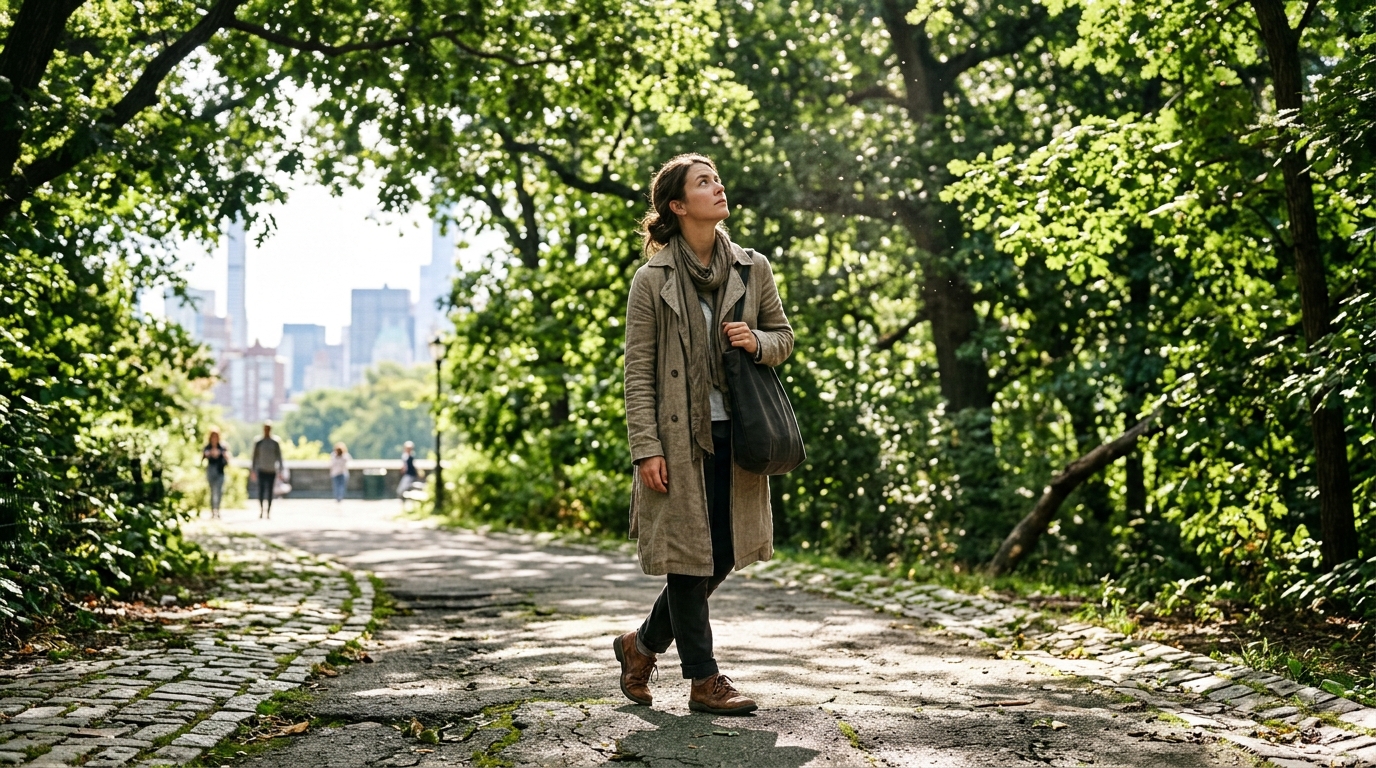
To transform your daily movement into a vessel for self-discovery, you must first shift your perspective from reaching a destination to inhabiting the journey itself. When you step out for your evening stroll, try to leave your digital distractions behind and focus on the rhythmic cadence of your footsteps. This physical repetition serves as a metronome for the mind, similar to the practice of the Peripatetics who believed that movement unlocked the gates of logic. By intentionally slowing your pace, you create a dedicated space where complex thoughts can breathe and settle into clarity. You are not just walking to clear your head, but rather walking to populate it with more deliberate and profound observations of your internal world.
You can embrace the spirit of the solitary romantic by observing how your environment mirrors your inner state of being. Pay close attention to the sensory details of your commute, such as the shifting light on the pavement or the sudden change in wind direction, as these external anchors keep you present. This practice of mindful observation prevents the mind from spiraling into mundane worries and instead encourages a state of detached curiosity. As you navigate through urban spaces or quiet parks, treat every street corner as a site for potential insight. Over time, these brief moments of intentional wandering will cultivate a creative superpower that allows you to approach life’s challenges with a renewed sense of perspective and calm.
Syncing Your Mind With Your Stride
When you step out your front door and begin to move, you are doing much more than simply traveling from one point to another. You are engaging in a timeless ritual that bridges the gap between your physical body and your wandering mind. In our modern, fast paced world, walking serves as a vital grounding mechanism that allows your thoughts to sync with the steady rhythm of your stride. This intentional movement creates a unique mental space where the noise of the day fades, leaving room for the kind of clarity that only arrives when you are unhurried. By making this practice a part of your daily life, you reclaim your ability to think deeply and observe the world with fresh eyes.
Adopting the philosophy of walking provides you with a lifelong tool for maintaining perspective, regardless of how chaotic life may become. Just as the great thinkers of the past found their best ideas on the trail or the city street, you can use each step to cultivate a sense of inner peace and intellectual vigor. This simple act of putting one foot in front of the other reminds you that progress is often gradual and that the journey itself holds the most value. It is a form of moving meditation that requires no special equipment, only your willingness to be present in the moment. As you integrate this habit, you will find that the path beneath your feet becomes a reliable sanctuary for both your lived body and your spirit.
Frequently Asked Questions
1. What exactly is the philosophy of walking?
The philosophy of walking is the practice of treating movement as a catalyst for deep thought and creativity. By focusing on the rhythmic nature of your stride, you transform a simple commute into a deliberate act of intellectual and spiritual discovery.
2. Who were the Peripatetics and why did they walk?
The Peripatetics were students of Aristotle in Ancient Greece who believed that the mind functions at its peak when the body is in motion. They conducted their lessons while walking around the Lyceum because they found that pacing helped organize complex ideas and break through mental blocks.
3. How does walking help you achieve mental clarity?
When you walk, the physical rhythm of your steps helps to dictate and stabilize the flow of your thoughts. This steady movement allows you to step away from the distractions of a fast paced world and reclaim your agency through focused reflection.
4. Why did Friedrich Nietzsche value thoughts reached while walking?
Nietzsche believed that truly valuable insights only occur when the body is active and engaged with the environment. He viewed sedentary thinking as stagnant, arguing that the most profound intellectual breakthroughs require the energy and movement found on a long trail. This active approach is a key part of Nietzsche’s philosophy and his call to embrace life’s vitality.
5. Do I need to be in nature to practice this philosophy?
You can engage in philosophical walking anywhere, from a quiet forest path to a bustling city street. The key is not the specific location, but your willingness to slow your pace and engage mindfully with your surroundings.
6. How can I start using my daily stroll as a tool for discovery?
Begin by treating your next walk as a moving classroom rather than just a way to get from point A to point B. Allow your movement to guide your curiosity and use the time to explore questions or ideas that require deeper inquiry.