Think about the street where you live: does it feel like it was designed for your well-being, or simply as a corridor for a car? For decades, the philosophy of urban planning focused on rigid functional separation, treating our cities like giant machines built for industrial efficiency rather than human connection. Today, that script is being flipped as we move toward a future where resilience and mental health take center stage.
You are witnessing a profound shift from cold, concrete zoning toward living urban fabrics that breathe and adapt to your needs. From the convenience of the 15-minute city to the restorative power of nature-based sponge cities, modern planning is becoming a deeply personal endeavor. By prioritizing human-centricity and neuro-urbanism, our streets are evolving into spaces that do not just house us, but actively support our cognitive and social lives.
Key Takeaways
- Urban planning is undergoing a paradigm shift from 20th-century industrial efficiency and car-dependency toward human-centric designs that prioritize mental health and social cohesion.
- The 15-minute city and post-zoning models serve as tools for social justice by dismantling systemic barriers, ensuring essential services are accessible to all residents regardless of income or mobility.
- Neuro-urbanism utilizes digital tools and psychological data to design environments that actively reduce stress and support the cognitive well-being of the population.
- Modern cities must evolve into resilient, nature-based ecosystems—such as sponge cities—that adapt to climate challenges while providing restorative green spaces for the community.
From Car Efficiency To Human Centricity
The shift from 20th-century urban design to modern philosophy represents a profound change in how you experience your daily environment. For decades, cities were engineered as giant machines for efficiency, characterized by rigid functional separation that pushed residential life far away from work and commerce. This model prioritized high speed transit and car ownership above all else, often at the expense of social cohesion and environmental health. When you look at these older layouts, you see a political choice that favored the flow of capital and machinery over the spontaneous interactions of human beings. Modern planning now challenges this legacy by asking who the city is actually for and whose needs are being neglected in the pursuit of speed.
You are currently witnessing a transition toward human centricity where the ethical implications of design take center stage. This new paradigm, often seen in the 15-minute city model, suggests that your time and mental well being are more valuable than the convenience of a highway. By bringing essential services within a short walk or bike ride, planners are actively dismantling the isolation created by car dependent sprawl. This philosophy treats the street not just as a conduit for traffic, but as a vital public space where community identity is formed and sustained. It is a move toward justice, ensuring that children, the elderly, and those without vehicles can navigate their world with dignity and ease.
As you explore these evolving urban fabrics, you will notice a growing emphasis on neuro-urbanism and psychological health. Designers are no longer just looking at blueprints, they are considering how a park or a sidewalk affects your stress levels and sense of belonging. This approach replaces the cold, grey infrastructure of the past with resilient, nature based solutions like sponge cities that manage water while providing green spaces. By integrating digital tools and flexible zoning, cities are becoming living ecosystems that adapt to your needs rather than forcing you to adapt to them. This evolution represents a commitment to creating urban spaces that are not only functional, but truly restorative for the people who call them home.
The 15-Minute City And Social Justice
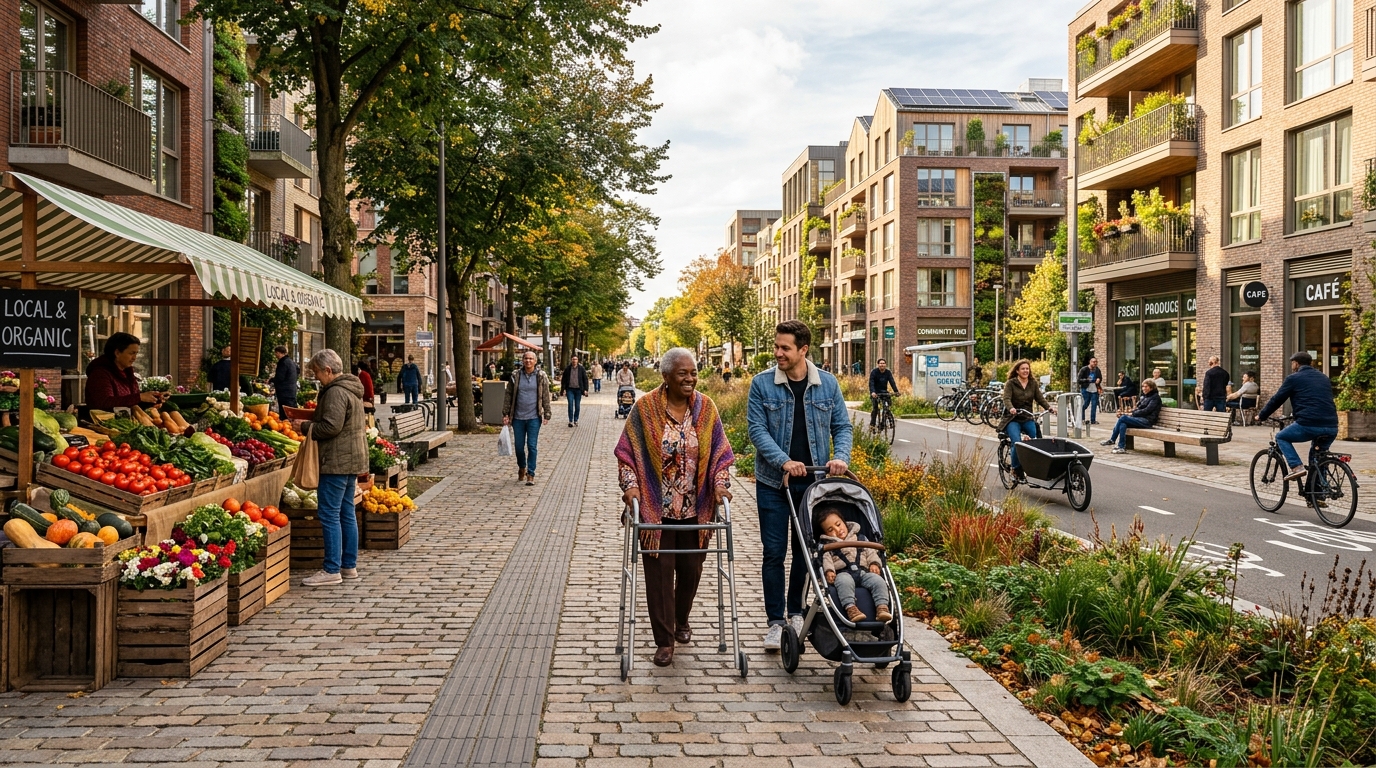
The 15-minute city model reimagines your neighborhood as a tool for ethical equity rather than just a collection of buildings. When you look at traditional urban design, you often see a system that forces long commutes and isolates low income communities from high quality resources. By prioritizing proximity to essential services, this philosophy seeks to dismantle those systemic barriers and ensure that your time is not stolen by a lack of infrastructure. This shift moves away from the car centric efficiency of the past toward a model where your access to healthcare, fresh food, and education is a fundamental right. It is a bold statement that your zip code should not determine your quality of life or your ability to thrive.
By decentralizing city resources, you empower local neighborhoods to become self sustaining hubs of social and economic activity. This approach directly challenges the rigid zoning of the 20th century that often left marginalized areas as food deserts or service gaps within the urban fabric. When you can reach everything you need within a short walk or bike ride, you regain the autonomy to invest in your local community and build stronger social bonds. This model treats urban planning as a moral obligation to provide every resident with the same level of convenience and dignity, regardless of their financial status. It transforms the city from a series of disconnected zones into a living network where justice is measured by the ease of your daily journey.
Neuro-Urbanism And The Ethics Of Well-Being
Neuro-urbanism represents a profound shift in how you think about the city, moving beyond mere aesthetics to prioritize the biological impact of the environment on your brain. By utilizing digital twins, which are highly detailed virtual replicas of urban spaces, planners can now simulate how specific layouts affects your stress levels and cognitive load before a single brick is laid. This approach challenges the traditional focus on car centric efficiency by treating your mental well-being as a primary design objective. You are no longer seen as just a commuter or a consumer, but as a biological being whose nervous system responds to every street corner and public square. These tools allow architects to identify and eliminate urban stressors that contribute to chronic anxiety and social isolation in modern life.
The ethics of this practice go deeper than comfort, as they directly address how social justice is etched into the physical world. When you consider who has access to calming green spaces or quiet residential zones, you begin to see urban planning as a political decision about who deserves to feel safe and healthy. Neuro-urbanism asks whether a city is truly successful if its design causes mental fatigue for marginalized communities while offering sanctuary only to the wealthy. By using data to advocate for cognitive equity, planners can ensure that restorative environments are distributed fairly across all neighborhoods. This philosophy transforms the city into a proactive tool for public health, ensuring that the structures around you actively support your mind instead of draining it.
Post-Zoning Fabrics And Organic Community Growth
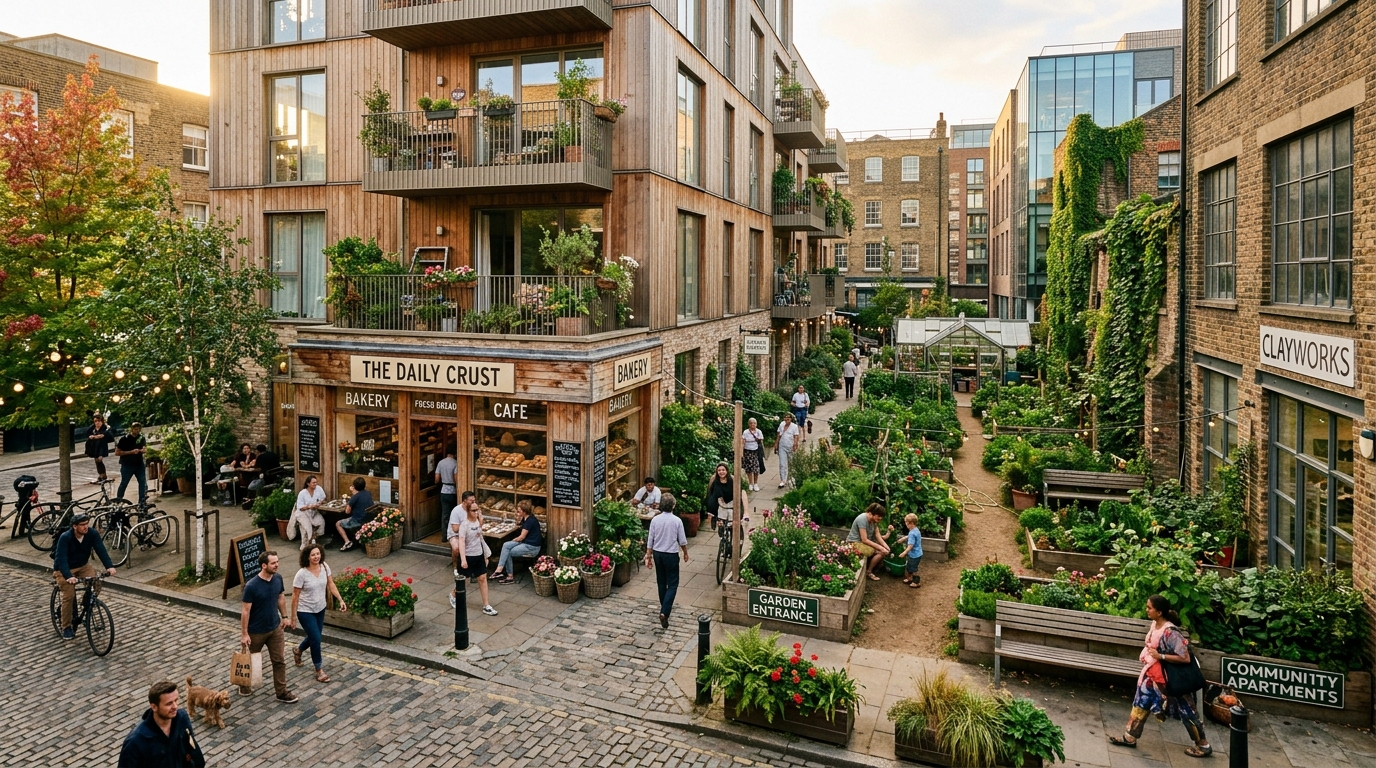
The shift toward post-zoning fabrics represents a fundamental change in how you experience your daily environment. For decades, rigid land-use codes forced a strict separation between where you live, work, and shop, often resulting in sterile neighborhoods and long commutes. By moving away from these legacy constraints, your community can begin to grow organically, allowing a local coffee shop to exist beneath an apartment or a small workshop to thrive on a residential street. This philosophical transition prioritizes human needs over bureaucratic efficiency, creating a more vibrant and adaptable urban environment. It treats the city as a living organism that evolves based on the actual behaviors of its residents rather than a static map designed by distant planners.
Embracing flexible urban fabrics is also a powerful move toward social justice and economic inclusivity. When you remove the barriers of traditional zoning, you create space for diverse housing types and small-scale entrepreneurship that were previously regulated out of existence. This inclusivity ensures that your neighborhood can serve a wider range of people, regardless of their income level or life stage. A resilient community is one that can repurpose its buildings as needs change, ensuring that infrastructure never becomes obsolete or exclusionary. By advocating for these flexible structures, you are supporting a future where the city belongs to everyone and reflects the unique spirit of the people who inhabit it.
The Ethics of Your Built Environment
Ultimately, the way our cities are built is not just a matter of engineering or logistics, but a profound reflection of our collective values and ethical priorities. You are more than just a resident passing through these spaces, as your daily interactions and choices help define the social fabric of your community. When you advocate for more walkable streets or support the integration of green spaces, you are participating in a political act that prioritizes human well-being over mere mechanical efficiency. By understanding the shift from car-centric models toward human-centered design, you can better appreciate how buildings shape our reality and how every sidewalk and park serves as a tool for justice and connection. Your voice is a critical component in ensuring that the 15 minute city or the principles of neuro-urbanism become a reality rather than just academic theories.
As we move toward a future defined by resilience and digital integration, your role as an active citizen becomes even more vital in shaping a more equitable urban environment. You have the power to demand that urban planning serves everyone, moving beyond rigid zoning toward flexible environments that adapt to the needs of diverse populations. This exploration into the philosophy of urban planning invites you to look at your neighborhood through a lens of possibility and shared responsibility. By engaging with local initiatives and staying informed about sustainable practices like nature-based water management, you help build a foundation for a city that truly belongs to its people. The cities of tomorrow are being designed today, and your perspective is the key to ensuring they are built with empathy, fairness, and a deep respect for the human spirit.
Frequently Asked Questions
1. What exactly is the philosophy of urban planning?
It is the foundational set of values that determines how your city is built and organized. This philosophy dictates whether your neighborhood prioritizes car traffic and industrial efficiency or focuses on your personal well-being and social connection.
2. How does the 15-minute city model change your daily life?
This model ensures that everything you need, from groceries to healthcare, is within a short walk or bike ride from your home. By reducing your reliance on cars, it gives you back your most precious resource, which is time, while fostering a stronger sense of local community.
3. What is the goal of neuro-urbanism in modern design?
Neuro-urbanism studies how the city environment affects your brain health and mental state. By using this data, planners can design streets that reduce your stress levels and improve your cognitive function through better lighting, greenery, and social spaces.
4. Why is the shift away from rigid zoning important for you?
Older zoning laws often isolated your home from your social and professional life, creating lonely and car-dependent suburbs. Moving toward a living urban fabric allows for mixed-use spaces where you can live, work, and play in a more vibrant and integrated environment.
5. What are sponge cities and why do they matter?
Sponge cities are a nature-based solution designed to absorb and filter rainwater instead of letting it flood concrete streets. This approach protects your home from climate-related risks while bringing more restorative green spaces into your immediate surroundings.
6. How does human-centric planning address social equity?
It moves away from designs that favor the flow of capital and machinery to prioritize the needs of all residents regardless of their mobility. By asking who the city is really for, this philosophy ensures that public spaces are accessible, safe, and welcoming for you and your neighbors. This approach often explores aesthetic functionalism theory to ensure that every design choice serves a meaningful purpose for the community.