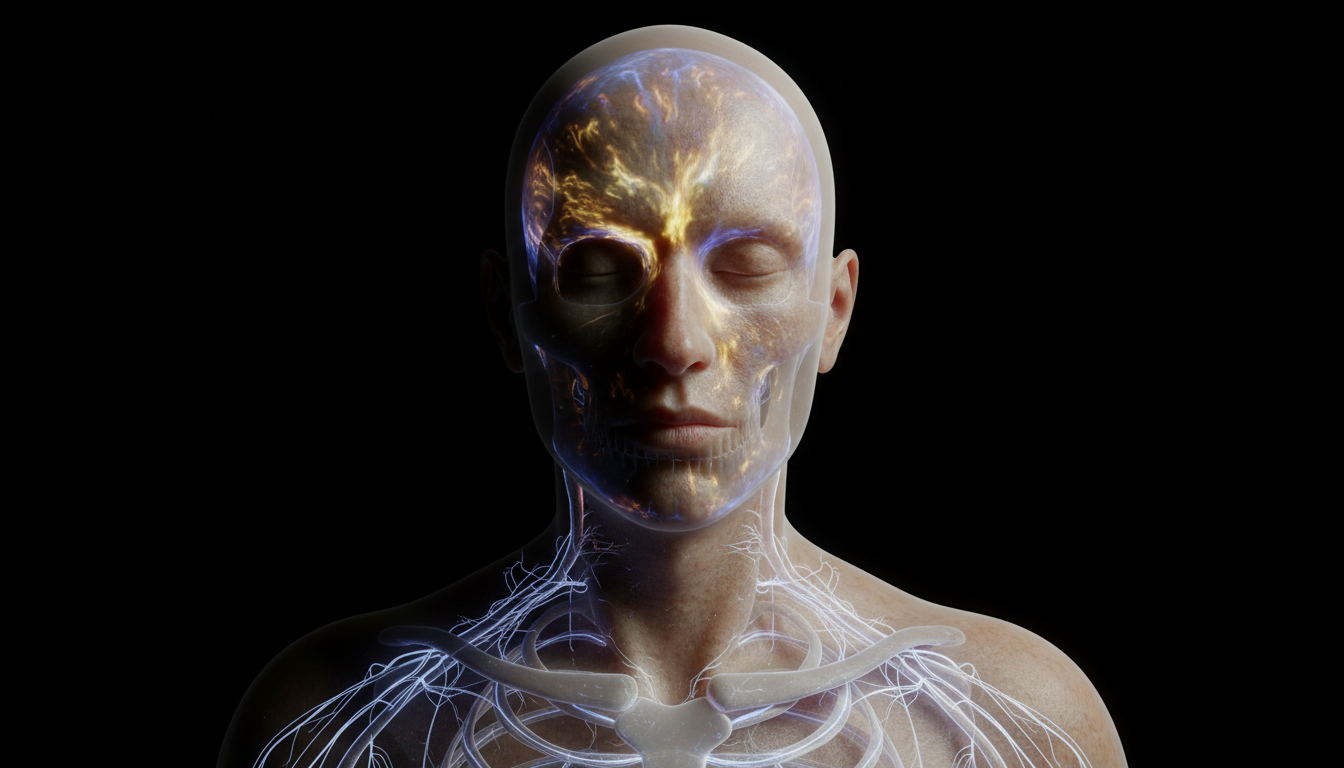

Imagine peeling an onion down to its core, only to find that once the layers are gone, nothing remains. This thought experiment lies at the heart of the bundle theory identity debate, challenging you to consider if you are a permanent soul or simply a collection of shifting perceptions. If you strip away your memories, your height, and your favorite color, is there a “you” left behind to hold those traits together, or are you just the sum of your parts?
Understanding this concept requires you to choose between the comfort of a fixed ego and the fluid reality of a property-based existence. While it might feel intuitive to believe in a solid, unchanging essence that persists from childhood to old age, many philosophers argue that we are merely bundles of ever-changing experiences. Exploring these perspectives helps you answer the profound question of what actually constitutes your existence in a world that is constantly in flux.
Key Takeaways
- The human identity is not a permanent, unchanging soul, but a dynamic ‘bundle’ of shifting perceptions, memories, and physical sensations.
- Stripping away individual traits like thoughts and experiences reveals no hidden core or fixed ego, proving that the self is the sum of its parts rather than a container for them.
- Personal identity is defined by psychological continuity and the flow of consciousness rather than a solid, indivisible substance.
- Embracing a selfless view of reality provides the freedom to evolve, as you are a continuous process of becoming rather than a static object bound to the past.
David Hume And The Bundle Of Perceptions
When you take a moment to look inward, you likely expect to find a permanent core or a soul that remains constant throughout your life. David Hume challenged this intuitive feeling by suggesting that if you carefully examine your own mind, you will never actually encounter a static self. Instead, you only ever find a fleeting series of perceptions like heat or cold, light or shade, and love or hatred. Hume argued that what you call “you” is actually just a bundle of perceptions. Without these specific experiences, there is no underlying substance that remains to define your identity.
Imagine an apple and try to strip away its redness, its crisp texture, and its sweet flavor. According to bundle theory, once you remove every individual property, there is no secret apple left behind to hold those traits together. You are very much like that apple, existing as a collection of shifting thoughts and sensations rather than a fixed entity. This perspective shifts the focus from a permanent soul to a dynamic flow of consciousness. It suggests that your identity is not a solid foundation, but a continuous and evolving process of perception.
This realization can be quite liberating because it means you are not bound to a rigid, unchanging essence. Since you are a collection of experiences rather than a static object, you are constantly being redefined by every new thought and feeling you have. Hume’s philosophy invites you to see yourself as a masterpiece in progress, where the self is simply the name we give to the theater of our minds. By accepting that there is no permanent ego, you can better appreciate the fluid nature of your own existence. This approach offers a profound alternative to traditional views of the soul and centers your identity on the lived experience of the present moment.
Dismantling The Ego Theory Of Personal Identity

The traditional Ego Theory suggests that at the center of your being, there is a permanent, unchanging soul or essence that makes you who you are. This perspective argues that while your body ages and your tastes change, a fixed core remains constant from birth until death. It is a comforting idea because it provides a sense of stability in an unpredictable world, implying that your identity is a solid substance. However, when you look closely at your internal life, you may find it difficult to pinpoint exactly where this permanent “you” actually resides. You are constantly shifting through different moods, memories, and physical states, which makes the idea of a static inner self feel increasingly disconnected from your daily reality.
Bundle Theory offers a radical alternative by suggesting that you are not a single, solid object, but rather a collection of ever-changing perceptions. Think of yourself as a bundle of thoughts, sensations, and experiences that are tied together by memory and causality. If you were to peel back every layer of your personality, your preferences, and your physical traits, David Hume argued that you would find no hidden core underneath. This means your identity is a dynamic process rather than a finished product, allowing you to see yourself as a flowing stream of consciousness. By embracing this view, you can better explain your changing nature, as it acknowledges that you are a different bundle today than you were a decade ago.
Derek Parfit And The Split Brain Paradox
Derek Parfit challenges your traditional intuition that you possess a single, indivisible soul or a permanent Ego at the center of your experiences. By looking at split-brain patients, where the connection between the two hemispheres of the brain is severed, Parfit illustrates how consciousness can effectively be divided into two separate streams. In these cases, one hand might perform an action while the other remains unaware of the intent, suggesting that there is no single “you” presiding over the machinery. This neurological reality supports the bundle theory by demonstrating that your sense of a unified self is actually a collection of distinct mental processes working in tandem.
When you apply this perspective to your own life, you begin to see yourself as a series of interconnected perceptions rather than a solid, unchanging entity. Parfit argues that personal identity is not what truly matters, but rather the psychological continuity of your memories, beliefs, and desires. Just as a rope is made of many overlapping fibers without a single thread running through the entire length, your life is a bundle of experiences held together by causal links. This shift in thinking encourages you to view your future and past selves not as a fixed “me,” but as a fluid sequence of events and mental states.
Ultimately, accepting the bundle theory means recognizing that you are a complex system of parts rather than a ghostly essence trapped in a body. If you remove the layers of your personality, your physical traits, and your specific memories, there is no hidden core left behind to find. This might feel unsettling at first, but it offers a profound sense of freedom from the rigid constraints of a permanent ego. You are a living, breathing collection of moments, constantly evolving as new perceptions are added to the bundle that makes up your existence.
Embracing A Selfless Approach To Reality

When you look inward to find a permanent soul or a fixed “me,” you might be surprised to find that there is no solid core waiting to be discovered. According to bundle theory, your identity is not a static substance but rather a vibrant collection of shifting perceptions, memories, and physical traits. David Hume famously suggested that if you were to strip away every specific thought, feeling, and sensation, nothing would remain behind to claim the title of the self. This perspective invites you to see yourself as a dynamic process rather than a finished product, allowing for a more flexible understanding of who you are in this very moment.
Embracing this selfless approach can be incredibly liberating because it removes the pressure to protect an unchanging ego. If you are a fluid bundle of properties, you are no longer tethered to past versions of yourself or limited by a rigid internal essence. This means that personal growth is not about uncovering a hidden truth, but about consciously curating the collection of experiences and habits that make up your current state. You gain the freedom to evolve without the fear of losing your true self, as change becomes the natural state of your existence.
This shift in perspective also deepens your connection to the world by breaking down the artificial barriers between you and your environment. When you stop viewing yourself as a separate, permanent entity, you can begin to see how your properties are constantly influenced by the people and places around you. You are part of a continuous flow of information and energy, where your identity is woven into the larger tapestry of reality. Recognizing this interconnectedness fosters a sense of empathy and presence, helping you live with a renewed sense of openness and wonder.
Your Identity as an Evolving Process
Embracing bundle theory allows you to release the heavy burden of maintaining a rigid, unchanging ego. When you stop searching for a permanent soul or a hidden essence beneath your experiences, you realize that you are a vibrant tapestry of thoughts, memories, and sensations. This shift in perspective transforms your identity from a static monument into a living, breathing process. You are not a fixed object defined by the past, but rather a continuous flow of perceptions that evolve with every passing second. By accepting that there is no core self to protect, you gain the freedom to live with greater fluidity and openness.
Viewing yourself as a collection of moments empowers you to let go of outdated labels that no longer serve your growth. Since you are a dynamic bundle of properties rather than a solid substance, you have the inherent permission to change your mind, your passions, and your habits. This philosophy suggests that as your perceptions shift, you essentially become a new version of yourself, unchained from previous versions of your identity. You can find peace in the fact that you are always in a state of becoming, shaped by the unique experiences you gather along the way. Ultimately, this approach turns the mystery of the self into an ongoing journey of discovery rather than a puzzle to be solved.
Frequently Asked Questions
1. What exactly is bundle theory identity?
Bundle theory is the philosophical idea that you are not a single, permanent soul or substance, but rather a collection of different properties and perceptions. Think of yourself as a bundle of memories, physical traits, and emotions that exist together without a hidden core holding them in place.
2. If I am just a bundle of perceptions, who is the person experiencing them?
In this framework, there is no separate observer standing behind your thoughts to experience them. The thoughts, feelings, and sensations themselves are what constitute your existence, meaning you are the flow of experience rather than a static entity watching the flow.
3. What happens to my identity if I lose my memories?
Since bundle theory suggests you are the sum of your parts, losing a significant part like your memory actually changes the composition of your bundle. You remain a collection of perceptions, but you become a different version of that bundle as your internal properties shift and evolve.
4. How did David Hume explain the lack of a permanent self?
Hume suggested that when you look inward, you only ever encounter specific sensations like heat, cold, or joy, but never a permanent self. He argued that because you cannot point to a single constant impression that stays the same your entire life, the idea of a fixed soul is simply a mental fiction.
5. Does bundle theory mean that I don’t actually exist?
You certainly exist, but your existence is defined by your properties rather than a mysterious underlying substance. You exist in the same way a bookshelf exists as a sum of its parts, where the object is real even if there is no secret essence inside it.
6. Why does it feel like I have a permanent ego if I am just a bundle?
Your mind naturally stringing together related memories and sensations to create a sense of continuity, much like how a film appears as a smooth story despite being made of individual frames. This illusion of a fixed ego provides you with a practical way to live, even if your underlying reality is constantly in flux.
7. How does the apple analogy help explain this concept?
If you strip away an apple’s redness, roundness, and sweetness, you find that nothing is left behind to be the apple. You are similar in that your identity is found within your traits and experiences, not in a hidden core that remains once those features are removed. This concept is closely related to The Ship of Theseus Paradox, which questions whether an object remains the same after all its parts have been replaced.